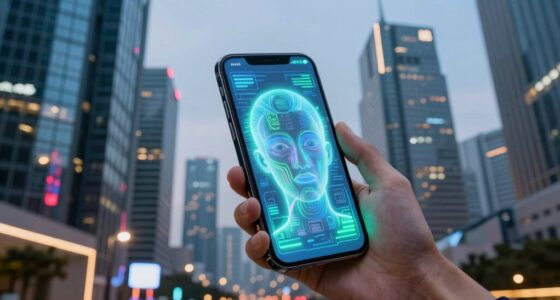
In 2026, deepfake verification tools matter more because advanced fakes are becoming almost indistinguishable from real content, making it harder for you to trust what you see and hear online. These tools use AI to analyze videos and images for subtle signs of manipulation, helping you verify authenticity quickly and efficiently. Protecting your reputation, safety, and access to truthful information requires staying ahead of evolving deepfake technology—exploring this further reveals how you can stay informed and vigilant.

Get business pricing on tech for your team
- Business-only prices and quantity discounts
- Tax-exempt purchasing
- Multiple users, one account, clear invoices
Key Takeaways
- Deepfake technology has become more realistic, making detection essential to prevent misinformation.
- Advanced AI-driven verification tools are necessary to identify subtle manipulation cues.
- The societal risks of deepfakes, like political destabilization and reputational harm, have increased.
- Continuous technological evolution demands more sophisticated verification solutions.
- Responsible use of verification tools helps maintain digital integrity and trust in online content.

How can you stay ahead of increasingly sophisticated deepfakes in 2026? The answer lies in understanding why deepfake verification tools are more vital than ever. As technology advances, so do the methods for creating hyper-realistic fake videos and images, making it harder for the untrained eye to tell what’s real and what’s fabricated. These technological advancements have made it possible for malicious actors to spread misinformation, manipulate public opinion, or even damage reputations with startling accuracy. That’s why robust verification tools are essential—not just for tech-savvy experts but for everyone who consumes digital content daily.
Deepfake verification tools serve as your first line of defense against deception. They leverage cutting-edge algorithms, often powered by artificial intelligence and machine learning, to analyze videos and images for signs of manipulation. These tools scrutinize subtle inconsistencies—such as unnatural blinking, irregular facial movements, or mismatched lighting—that the human eye might overlook. As deepfakes grow more convincing, relying solely on intuition or manual inspection becomes insufficient. Instead, you need these advanced tools to authenticate content quickly and reliably, especially when the stakes are high, like in politics, journalism, or legal proceedings. Incorporating advanced detection techniques is crucial for keeping pace with increasingly realistic deepfakes.
Ethical concerns surrounding deepfakes are also at the forefront of why verification tools matter. Misinformation can cause real harm—destabilizing democracies, inciting violence, or ruining lives through false accusations. As content becomes more deceptive, society faces tough questions about accountability and the responsible use of technology. Verification tools help strike a balance by empowering users to discern truth from falsehood, fostering a more informed and cautious digital environment. They act as a safeguard, ensuring that technological advancements aren’t exploited for malicious purposes, and help uphold ethical standards in digital communication.
In 2026, these tools are more sophisticated than ever, combining real-time analysis with AI-powered detection. They continuously adapt to new deepfake techniques, making it harder for fakes to go unnoticed. This ongoing evolution is vital because deepfake creators are constantly refining their methods, pushing the boundaries of realism. By investing in and utilizing these verification systems, you help create a safer online space where truth prevails over deception. Additionally, understanding deepfake detection techniques is crucial for staying informed about the capabilities and limitations of current tools. As the complexity of deepfakes increases, so does the importance of leveraging advanced verification methods that can keep pace with evolving threats. Ultimately, staying vigilant with reliable verification tools isn’t just about protecting yourself; it’s about maintaining the integrity of digital information in a world where technology’s rapid progress can be both a blessing and a danger.
As an affiliate, we earn on qualifying purchases.
Frequently Asked Questions
How Do Deepfake Verification Tools Adapt to Emerging AI Technology?
You see, deepfake verification tools adapt to emerging AI technology by constantly updating their algorithms to detect new manipulation techniques. They focus on transparency, ensuring users understand how decisions are made, and address ethical dilemmas around privacy and misuse. By integrating machine learning, these tools evolve quickly, staying ahead of deepfake creators. This ongoing adaptation helps you trust digital content, reducing misinformation and protecting your digital experiences.
What Industries Benefit Most From Advanced Deepfake Detection in 2026?
In 2026, industries like media, politics, and finance benefit most from advanced deepfake detection. You’ll find these tools help navigate ethical dilemmas by verifying authenticity, preventing misinformation, and safeguarding reputations. They also address regulatory challenges by ensuring compliance with evolving laws. As deepfakes become more sophisticated, your ability to detect and counteract manipulated content becomes vital, making these tools essential for maintaining trust and integrity across these sectors.
Are There Privacy Concerns With Deepfake Verification Methods?
You should be aware that over 80% of people worry about privacy when it comes to deepfake verification methods. Privacy concerns are valid, as these tools process sensitive data, raising questions about data privacy and security. Ethical implications also arise, such as potential misuse or surveillance. It’s essential to balance the benefits of deepfake detection with protecting personal privacy and ensuring ethical use, so trust remains intact.
How Effective Are Current Deepfake Detection Tools Against Highly Realistic Forgeries?
Current deepfake detection tools are improving, but highly realistic forgeries still challenge them, especially regarding synthetic authenticity. You’ll find that these tools often catch obvious fakes, yet skilled forgeries slip through, highlighting ongoing digital skepticism. As deepfake technology advances, you need more sophisticated tools that analyze subtle inconsistencies, ensuring you can trust digital content and maintain confidence in media authenticity.
Can Deepfake Verification Tools Keep up With Real-Time Deepfake Creation?
Deepfake verification tools struggle to keep up with real-time creation, challenging synthetic authenticity. As creators develop faster, these tools must adapt quickly to detect sophisticated forgeries. If they lag, misinformation spreads, raising ethical implications about trust and deception. You need advanced, real-time solutions to guarantee content integrity, protecting individuals and society from malicious deepfakes. Staying ahead requires continuous innovation and vigilance in the face of rapidly evolving deepfake technology.
As an affiliate, we earn on qualifying purchases.
Conclusion
By 2026, you’ll realize that deepfake verification tools are your best friends—until they become your worst enemies, that is. As these tools grow smarter, so do the fakes, making your ability to spot truth a constant game of cat and mouse. So, keep trusting technology, but don’t forget: in this digital age, your best defense might just be a healthy dose of skepticism—and a good sense of humor. After all, who needs reality when you have perfect illusions?
video authenticity verification device
As an affiliate, we earn on qualifying purchases.
As an affiliate, we earn on qualifying purchases.
As an affiliate, we earn on qualifying purchases.
Fall Picks
fall essentials
As an affiliate, we earn on qualifying purchases.