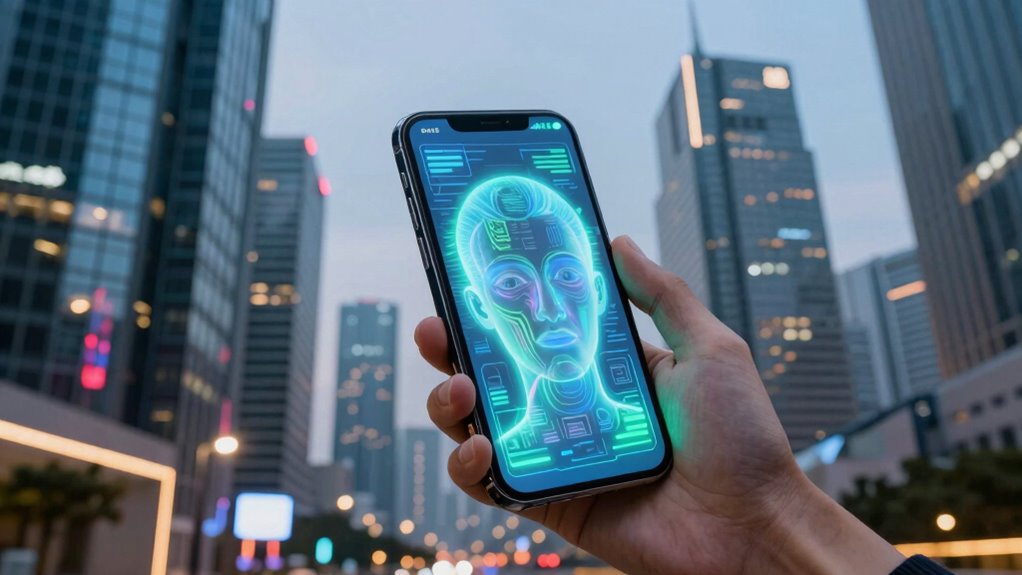

AI is transforming digital identity verification by enabling faster, more secure, and accurate processes. It uses biometric analysis like fingerprints, facial features, and voice patterns to confirm identities effortlessly. AI also boosts privacy with advanced encryption and decentralized storage. Combining biometric data with device info, location, and behavior helps detect fraud more effectively. As AI evolves, it adapts to new threats, making verification systems resilient. Keep exploring to discover how these innovations shape your digital experience.

Get tech for your team delivered free — and shop member deals
- Fast, free delivery on millions of items
- Access to Prime Big Deal Days deals on October 6–7
- Prime Video, Amazon Music and more included
Key Takeaways
- AI enables rapid and accurate biometric authentication using unique physical traits like fingerprints and facial features.
- Advanced AI algorithms enhance security through continuous monitoring and adaptive threat detection.
- Integration of multi-factor data analysis improves fraud prevention and user verification accuracy.
- AI-driven systems are designed to be inclusive, accommodating diverse biometric features and cultural differences.
- Ongoing AI development ensures digital identity verification remains resilient against evolving cyber threats.

Have you ever wondered how online platforms guarantee that you are who you claim to be? With the rise of digital transactions and remote interactions, verifying your identity has become more critical than ever. That’s where AI steps in, transforming how digital identity verification works behind the scenes. One of the key ways AI makes this possible is through biometric authentication. Instead of relying solely on passwords or PINs, AI-powered systems analyze unique physical traits—like your fingerprint, facial features, or even voice patterns—to confirm your identity. This method is not only more secure but also faster, allowing you to breeze through verification processes without remembering complex passwords or dealing with cumbersome security questions.
However, as biometric authentication becomes more prevalent, data privacy concerns grow. You want your biometric data to stay confidential, and that’s where AI-driven systems are under pressure to maintain high standards of security. Advanced encryption techniques and privacy-preserving algorithms help guarantee that your biometric information isn’t misused or stolen. Many platforms now employ decentralized storage or anonymization methods, making it increasingly difficult for cybercriminals to access your sensitive data. AI also enables continuous monitoring, which can detect suspicious activity in real-time, adding an extra layer of protection to your digital identity. Additionally, emerging trends in AI are pushing the boundaries of how verification systems adapt to new threats, ensuring ongoing robustness. Incorporating robust security measures is crucial as cyber threats evolve, and AI plays a key role in this ongoing effort.
AI’s influence on digital identity verification isn’t limited to biometrics. It also leverages machine learning to analyze vast amounts of data quickly, verifying your identity through various signals—such as your device information, location, or behavioral patterns. This multi-factor approach enhances accuracy, reducing false positives and negatives, and streamlines the onboarding process. For example, when you sign up for a new service, AI algorithms cross-reference your data with existing records, making the process seamless and secure. This dynamic verification process adapts over time, learning from new data, which helps platforms stay ahead of fraudsters trying to mimic genuine users. Continuous data analysis is crucial to maintaining the effectiveness of these systems and staying ahead of increasingly sophisticated cyber threats. As the security landscape continues to evolve, AI ensures that verification systems remain resilient against emerging tactics of cybercriminals. By combining different data points, AI systems create a comprehensive picture of user identity, making fraud detection more effective. Furthermore, understanding the importance of color accuracy in related fields like home cinema projectors underscores how precise data handling and calibration are vital for optimal performance, much like security systems depend on accurate data.
The integration of AI in digital identity verification also promotes inclusivity. It can recognize diverse biometric features and adapt to different languages or cultural nuances, making verification accessible to a broader audience. Despite these advancements, the challenge remains to balance security and privacy. As AI systems become more sophisticated, so do the tactics of those attempting to breach them. Responsible development and strict regulation are essential to assure that your biometric authentication remains a robust safeguard without compromising your data privacy. Ultimately, AI is reshaping how you verify your identity online—making it faster, safer, and more reliable while emphasizing the importance of protecting your personal information.
As an affiliate, we earn on qualifying purchases.
Frequently Asked Questions
How Does AI Handle False Positives in Identity Verification?
AI reduces false positives in identity verification by analyzing vast data sets quickly and accurately, minimizing human error. To handle AI bias, developers refine algorithms and use diverse data to guarantee fairness. You can trust that AI prioritizes data security, protecting your personal information during the verification process. This combination improves accuracy, reduces false positives, and ensures a secure, efficient identity check every time.
Can AI Verify Identities Across Different Languages and Scripts?
Did you know AI systems can recognize over 100 languages? You’ll find that AI excels at verifying identities across different languages and scripts through Multilingual recognition and Script adaptation. It analyzes diverse characters and writing styles, making it easier to authenticate identities worldwide. This technology adapts seamlessly to scripts like Latin, Cyrillic, or Chinese, ensuring accurate verification regardless of language barriers. So, AI makes global identity checks faster and more reliable than ever.
What Are Ai’s Limitations in Detecting Sophisticated Identity Fraud?
AI’s limitations in detecting sophisticated identity fraud include struggles with complex deception tactics that evade machine learning models. Data bias can hinder AI’s effectiveness, as it may not recognize emerging fraud patterns if trained on outdated or unrepresentative data. You should understand that AI continuously learns, but its ability to catch cunning fraud attempts depends on diverse, high-quality data and ongoing model updates to adapt to new threats.
How Is AI Adapting to New Types of Biometric Data?
You’ll find that AI adapts to new biometric data through advanced, adaptive algorithms that learn from fresh patterns. Notably, over 60% of biometric verification systems now incorporate machine learning to improve accuracy with emerging data types like voice and gait. These algorithms evolve continuously, enabling the technology to stay ahead of sophisticated fraud attempts while seamlessly integrating new biometric modalities into verification processes.
What Privacy Concerns Arise From Ai-Driven Identity Verification?
You might worry about privacy concerns with AI-driven identity verification, especially around data encryption and user consent. As AI processes sensitive information, there’s a risk of data breaches if encryption isn’t robust. Also, ensuring you give informed user consent is vital, so your data isn’t used without your permission. These issues highlight the significance of strong security measures and transparent policies to protect your privacy in digital verification processes.
facial recognition security device
As an affiliate, we earn on qualifying purchases.
As an affiliate, we earn on qualifying purchases.
Conclusion
As you navigate the evolving landscape of digital identity, AI acts like a vigilant gatekeeper, seamlessly verifying who you are with precision. Imagine trying to open a high-security vault—without the right key, you’re locked out. AI makes sure only the rightful owner gains access, reducing fraud by up to 70%. With AI’s help, your digital identity becomes a fortress—robust, trustworthy, and ready to face the future’s challenges with confidence.
As an affiliate, we earn on qualifying purchases.
multi-factor biometric authentication system
As an affiliate, we earn on qualifying purchases.
As an affiliate, we earn on qualifying purchases.
Fall Picks
fall essentials
As an affiliate, we earn on qualifying purchases.