
📊 Full opportunity report: The unbundling of the budget app. Why a conversational finance surface absorbs what the personal-finance apps charge for, and what survives the absorption. on ThorstenMeyerAI.com — validation score, market gap, and execution plan.

TL;DR

OpenAI launched a personal-finance feature within ChatGPT, absorbing the core data and insight functions of budget apps. This shift challenges standalone apps’ relevance, especially in passive aggregation, but high-trust, high-friction services may survive.

On May 15, 2026, OpenAI launched a new personal-finance feature inside ChatGPT, enabling users to connect over 12,000 financial institutions and receive real-time insights and answers grounded in their actual data. This development marks a significant shift in the personal-finance category, as a large-scale conversational surface now offers core aggregation and insight functions that traditionally belonged to standalone budget apps.

The new ChatGPT feature allows users to link their bank accounts via Plaid, creating a dashboard that displays spending, subscriptions, portfolios, and upcoming payments. Over 200 million people already ask ChatGPT financial questions monthly, and this launch integrates that behavior into a structured, interactive finance management surface.

This move follows the absorption of Hiro Finance’s team, a standalone AI personal-finance startup, into OpenAI earlier in April 2026. The transition exemplifies a broader trend: the core functions of budget apps—aggregation, categorization, insights—are now being integrated into a conversational AI layer, reducing the need for dedicated apps for these commodity tasks.

The Unbundling of the Budget App — Thorsten Meyer AI
UNBUNDLED
● DISPATCH / MAY 2026
THORSTEN MEYER AI · AGENTIC COMMERCE · § 02
AGENTIC COMMERCE · 02
PFM / UNBUNDLING
Essay · Consumer-Fintech Structural Reading · 2026-05-21

The unbundling
of the budget app.
Why a conversational finance
surface absorbs what the apps
charge for, and what
survives the absorption.

A budget app is a bundle of seven jobs. A conversational surface absorbs the four that are commodity — and leaves the three that are not.
Mint died in 2024 — 3.6M users — not because a competitor out-budgeted it, but because Intuit had a more valuable use for those users inside Credit Karma. Monarch rose from the vacuum: $75M at an $850M valuation, subscription-only, no ads. The category looked healthy. Then on May 15, 2026, OpenAI shipped a personal-finance surface inside ChatGPT — Plaid rails, 12,000+ institutions, 200M+ monthly finance questions — and one month earlier had acqui-hired the Hiro Finance team and watched its standalone app shut down. The unbundling made literal. The structural argument: a budget app bundles seven jobs, and the surface absorbs the four commodity ones — aggregation, categorization, net-worth, insight — as a free feature of a relationship monetized elsewhere. What survives is the behavior tier (YNAB), the relationship tier (Monarch), the trust tier — and the trust tier is strongest exactly where the surface is weakest. The category does not die. It splits. The middle hollows out.
7 → 3
Jobs a budget app bundles · only
three survive the absorption
200M+
Monthly ChatGPT finance questions
before the surface even launched
3.6M
Mint users orphaned in 2024 ·
the pattern’s first demonstration
$850M
Monarch valuation · priced for the
broad category, not the defensible one
THE UNBUNDLING OF THE BUDGET APP· MINT SHUT DOWN 2024 · 3.6M USERS· MONARCH $75M AT $850M· CHATGPT FINANCE · MAY 15 2026· PLAID · 12,000+ INSTITUTIONS· 200M+ MONTHLY FINANCE QUESTIONS· HIRO ACQUI-HIRE · APRIL 2026· STANDALONE APP SHUT DOWN APRIL 20· SEVEN JOBS · FOUR COMMODITY· AGGREGATION RENTED FROM PLAID· CATEGORIZATION AT THE AGGREGATOR· THE DASHBOARD YOU STOPPED OPENING· YNAB · BEHAVIOR CHANGE· MONARCH · COLLABORATION· TRUST TIER STRONGEST WHERE SURFACE WEAKEST· ROCKET MONEY · 10M+ MEMBERS· EMPOWER · WEALTH FUNNEL· READ-ONLY · INTUIT NEXT· THE MIDDLE HOLLOWS OUT· THE UNBUNDLING OF THE BUDGET APP· MINT SHUT DOWN 2024 · 3.6M USERS· MONARCH $75M AT $850M· CHATGPT FINANCE · MAY 15 2026· PLAID · 12,000+ INSTITUTIONS· 200M+ MONTHLY FINANCE QUESTIONS· HIRO ACQUI-HIRE · APRIL 2026· STANDALONE APP SHUT DOWN APRIL 20· SEVEN JOBS · FOUR COMMODITY· AGGREGATION RENTED FROM PLAID· CATEGORIZATION AT THE AGGREGATOR· THE DASHBOARD YOU STOPPED OPENING· YNAB · BEHAVIOR CHANGE· MONARCH · COLLABORATION· TRUST TIER STRONGEST WHERE SURFACE WEAKEST· ROCKET MONEY · 10M+ MEMBERS· EMPOWER · WEALTH FUNNEL· READ-ONLY · INTUIT NEXT· THE MIDDLE HOLLOWS OUT·
FIG. 01 — WHAT A BUDGET APP ACTUALLY BUNDLES
Seven jobs · one subscription · four commodity, three defensible
The app charges a single price for the bundle — the threat is not a better bundle but someone who unbundles it
1
Account aggregation · rented from Plaid / Yodlee / Finicity — the app does not do this itself
Commodity
2
Transaction categorization · increasingly done by the aggregator’s own transaction model
Commodity
3
Budgeting methodology · zero-based, flex, envelope — requires the user to participate
Defensible
4
Net-worth & investment tracking · display and calculation on aggregated data
Commodity
5
Goal setting & planning · data plus forward projection — partially defensible
Partial
6
Insight & explanation · “why am I always broke” — the most AI-native job in the bundle
Commodity
7
Collaboration · couples, households, advisors — a relationship product, not a data product
Defensible
Four of the seven jobs are commodity — the app rents aggregation, the aggregator increasingly does categorization, net-worth is calculation, and insight is the single most AI-native task in the bundle. Three are defensible — methodology (behavior change requires friction), goal-commitment (partially), and collaboration (a relationship product). The subscription price is justified by the bundle. The threat is someone who absorbs the four commodity jobs for free and leaves the app to justify its price on the three defensible ones alone.
FIG. 02 — THE ABSORPTION MAP · WHAT THE SURFACE TAKES AND WHAT IT LEAVES
The conversational surface absorbs the commodity jobs as a feature of a relationship monetized elsewhere
Same Plaid rails the apps rent · same aggregator-layer categorization · insight is the surface’s home turf
Absorbed by the surface
The four commodity jobs
  • Aggregation · same Plaid integration, 12,000+ institutions
  • Categorization · performed at the shared aggregator layer
  • Net-worth & dashboard · generated as a side effect of connection
  • Insight & explanation · the surface’s native strength, tuned to a finance benchmark
Left to the apps
The three defensible jobs
  • Behavior change · requires friction the surface is built to remove
  • Collaboration · multi-person workflow, not a single-user query
  • Trust / privacy · the surface’s structurally weakest flank
  • Action jobs · surface is read-only — for now
The surface is currently read-only (no money movement, trades, or bill payment; no full account numbers) and Pro-only ($100-$200/mo), with Plus next. This is the key qualification: the absorption is not yet a free-versus-paid contest — it is a premium feature of a premium subscription. The structural threat is directional: the absorption gets cheaper and broader from here, not narrower. The action jobs are the next frontier, foreshadowed by the planned Intuit integration.
FIG. 03 — THE HIRO TELL · THE UNBUNDLING MADE LITERAL
A standalone personal-finance app’s team absorbed into the surface, weeks before launch
The capability did not disappear — it relocated from a product you pay for into a feature of a relationship you already have
2024
Hiro Finance founded by Ethan Bloch (ex-Digit, acquired by Oportun 2021 for $200M+) · backed by Ribbit, General Catalyst, Restive · helped manage $1B+ assets
April 2026
OpenAI acqui-hires the Hiro team · ~10 employees join to build consumer-finance capability inside ChatGPT
April 20, 2026
Hiro shuts down its standalone app · the standalone product dies
May 15, 2026
ChatGPT personal-finance surface launches · the capability re-emerges as a feature of something larger
Hiro is the entire thesis enacted in a single sequence. A standalone AI personal-finance app could not sustain itself as a standalone product, and its team’s value was realized by being absorbed into the conversational surface. The capability migrated from a product you pay for into a feature of a relationship you already have — the unbundling, made literal, weeks before the launch it foreshadowed.
FIG. 04 — THE THREAT THAT PREDATED THE CHATBOT · ECOSYSTEM BUNDLING
The conversational surface is not a new threat · it is the largest instance of an old one
The category was already losing the structural argument to ecosystems that monetize the budgeting job elsewhere
Intuit / Credit Karma
Killed Mint, kept the users
Steered Mint’s 3.6M users into Credit Karma · integrated with TurboTax · monetizes lending, tax, product recommendations. The budgeting is a hook for a more valuable relationship.
Rocket Money
10M+ members, ecosystem-owned
Owned by Rocket Companies (public mortgage lender) · $2.5B+ saved via bill negotiation · distribution and bundling options a standalone subscription app cannot match.
Empower
Free dashboard, AUM funnel
Free aggregation and net-worth tracking as top-of-funnel for wealth management. The budgeting is subsidized by the assets-under-management relationship it produces.
The subscription-aligned app has to charge for the thing the ecosystem player gives away. Mint did not die because it was a bad budgeting product — it died because its owner had a more valuable use for its users. The conversational surface is that exact threat at maximum scale: OpenAI does not need the finance feature to be a profit center any more than Intuit needed Mint to be one. The finance surface is a feature of the ChatGPT relationship — the same relationship 200M people already bring financial questions to every month.
FIG. 05 — WHAT SURVIVES THE ABSORPTION
The category does not die · it retreats to the three jobs the surface cannot absorb
Smaller, higher-intent, higher-margin businesses — and the trust tier is strongest exactly where the surface is weakest
Survivor 1 · YNAB position
Behavior change
Requires friction, ritual, participation. A frictionless conversational answer actively undermines the mechanism of behavior change — the friction is the therapeutic agent. The surface is built to remove the exact friction the method requires.
Survivor 2 · Monarch position
Collaboration
Shared household finance is a relationship product — couples, families, advisors with equal access and shared goals. A multi-person workflow is not a natural fit for a single-user assistant answering one user’s questions about one user’s accounts.
Survivor 3 · subscription model
Trust & privacy
No ads, no data sale, “you are the customer.” This is the surface’s weakest flank — bank data through a general-purpose chatbot is a novel discomfort, and a company monetizing the broader relationship can least credibly make the clean promise.
The apps that understand which of their jobs survive — that stop selling commodity aggregation and start selling friction, relationship, and the privacy promise — survive as smaller, higher-intent, higher-margin businesses. The apps still selling “a nicer dashboard than your bank’s” do not. The $850M valuation that the post-Mint vacuum supported was priced for the broad category. The defensible category is narrower.
The category does not collapse into the chatbot. It splits into the part the surface absorbs and the part it cannot. The passive-dashboard middle hollows out. What survives is the behavior, the relationship, and the privacy promise a general-purpose surface can least credibly make.
Thorsten Meyer · The Unbundling of the Budget App · Agentic Commerce 02

Implications for the Personal-Finance App Ecosystem

This development significantly disrupts the standalone personal-finance app market. As conversational AI surfaces offer passive data aggregation and insights at near-zero marginal cost, the traditional value proposition of budget apps—serving as a dashboard—becomes less relevant. Only high-friction, trust-dependent services like behavioral coaching, household sharing, and privacy-focused apps are likely to persist independently, as they require relationships and trust that a general-purpose chatbot cannot easily replicate.

Amazon

bank account aggregation app

As an affiliate, we earn on qualifying purchases.

As an affiliate, we earn on qualifying purchases.

Background: The Rise and Shift of Personal-Finance Tools

The personal-finance app market was historically anchored by apps like Mint, which was shut down by Intuit in early 2024, leaving 3.6 million active users seeking alternatives. The vacuum was filled by new players like Monarch Money, which grew rapidly and raised significant funding. Meanwhile, OpenAI’s move to embed finance management into ChatGPT represents a structural shift: the core functions of aggregation and insight are now embedded in a broader conversational layer, challenging the traditional app model.

This shift is rooted in the recognition that many users engage passively with their financial data, making the data-and-insight layer ripe for integration into a conversational surface that monetizes broader relationships, rather than standalone apps focused solely on data display.

“The core functions of budget apps—aggregation, categorization, insights—are now being integrated into a conversational AI layer, reducing the need for dedicated apps for these commodity tasks.”

— Thorsten Meyer
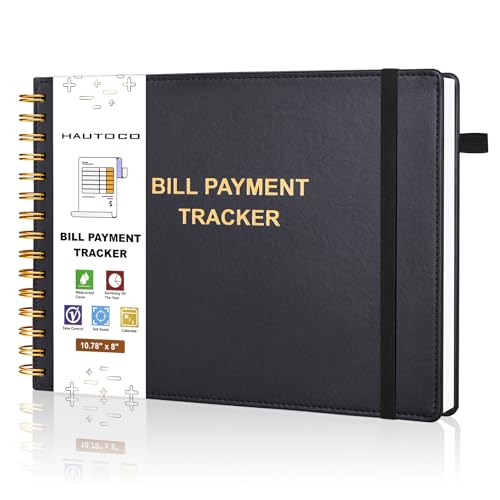
HAUTOCO Hardcover Bill Tracker Notebook Horizontal Monthly Bill Payment Organizer for Personal Budgeting Home Finance with 2 Storage Pocket Expense Checklist Tracking Planner 10.78 x 8'', Black

HAUTOCO Hardcover Bill Tracker Notebook Horizontal Monthly Bill Payment Organizer for Personal Budgeting Home Finance with 2 Storage Pocket Expense Checklist Tracking Planner 10.78 x 8'', Black

Easy To Track Your Bills: Keep track of small business or personal expenses with the HAUTOCO horizontal bill…

As an affiliate, we earn on qualifying purchases.

As an affiliate, we earn on qualifying purchases.

Unclear Aspects of the Transition to Conversational Finance

It remains unclear how consumer trust, privacy concerns, and behavioral change will be maintained outside dedicated apps. The long-term viability of standalone apps focused on high-friction, trust-based services in a landscape dominated by free, passive aggregation via chat remains uncertain. Additionally, the full extent of user adoption and how traditional apps will adapt to this shift are still developing.
SUSE Linux Enterprise Desktop 12 - Subscription Management Tool

SUSE Linux Enterprise Desktop 12 – Subscription Management Tool

As an affiliate, we earn on qualifying purchases.

As an affiliate, we earn on qualifying purchases.

Next Steps for Personal-Finance Ecosystem Adaptation

Expected developments include further integration of financial management features into conversational surfaces by other providers, and potential innovations in high-trust, high-friction services that emphasize privacy and behavioral support. Monitoring user engagement metrics and regulatory responses will be key to understanding how the market evolves in the coming months.

Financial Data Engineering: Design and Build Data-Driven Financial Products

Financial Data Engineering: Design and Build Data-Driven Financial Products

As an affiliate, we earn on qualifying purchases.

As an affiliate, we earn on qualifying purchases.

Key Questions

Will standalone budget apps become obsolete?

Not necessarily. While many passive aggregation functions are absorbed by conversational surfaces, high-trust, high-friction services such as behavioral coaching and household management are likely to persist independently.

How does this affect user privacy?

The integration raises questions about data privacy and trust, especially as broader relationships are monetized through conversational AI. The impact will depend on how companies handle privacy commitments.

Can budget apps compete with AI surfaces?

They may need to differentiate by emphasizing trust, privacy, and behavioral support, which are less easily embedded into general-purpose chat interfaces.

What is the future of financial data aggregation?

It is likely to be embedded increasingly into conversational interfaces, reducing the need for standalone dashboards but raising new questions about data control and user engagement.

Source: ThorstenMeyerAI.com

You May Also Like

Customer service + BPO. The operational-scale displacement.

Empirical evidence shows 8 million workers in India and the Philippines face widespread AI-driven displacement, leading to hybrid operational models.

GM just laid off hundreds of IT workers to hire those with stronger AI skills

General Motors has laid off over 600 IT employees to focus on hiring those with advanced AI expertise, signaling a shift in corporate tech strategy.

The Labor Displacement Data: What Q1-Q2 2026 Actually Shows

Initial 2026 data shows significant but concentrated AI-driven job cuts, especially among entry-level roles, with broader implications for labor markets.

IBM Stock Soars After Analyst Hails It as an Undervalued AI Gem

Highlighting IBM’s undervalued AI potential, an analyst’s praise sparks a stock surge—discover why this might signal a hidden growth opportunity for investors.