
📊 Full opportunity report: Can Year-Round Arm-Load Tracking Help Protect Youth Pitchers? on IdeaNavigator AI — validation score, market gap, and execution plan.

Get business pricing on tech for your team
- Business-only prices and quantity discounts
- Tax-exempt purchasing
- Multiple users, one account, clear invoices
TL;DR
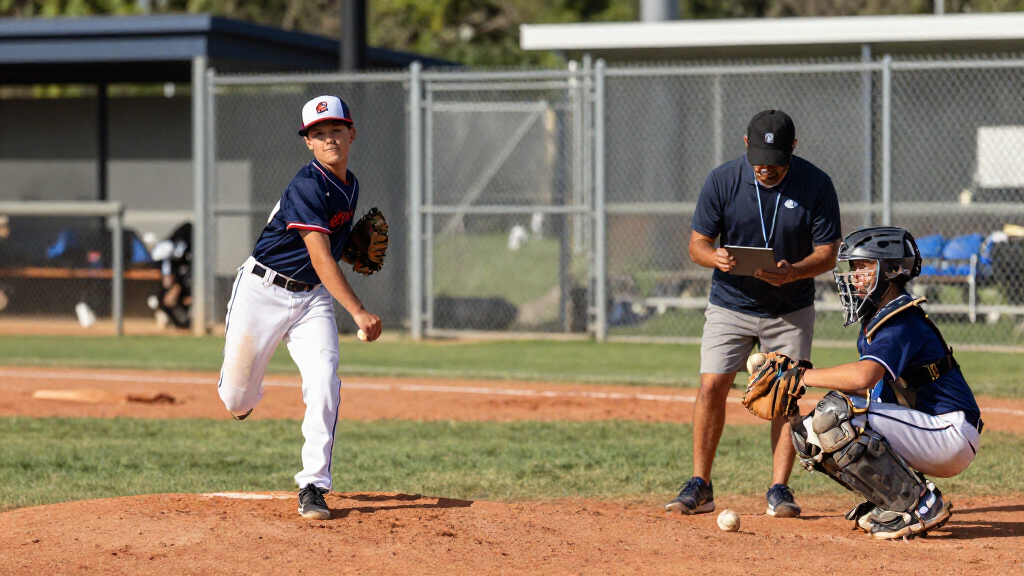
A product concept from IdeaNavigator AI proposes an app for parents to track a youth pitcher’s workload across school, travel and showcase teams. The source describes a suggested test involving 200 travel-ball families to measure logging consistency and whether alerts affect rest decisions; it reports no completed pilot or results.
IdeaNavigator AI has proposed an app that would help parents track a youth pitcher’s workload across school, travel and showcase teams. The proposal identifies a potential gap: teams may not share pitch counts. It describes a product idea, not a tested injury-prevention tool, and suggests a season-long study with 200 travel-ball families as a next step.
According to the IdeaNavigator AI proposal, parents could log pitching outings in a few seconds or import records from GameChanger. The proposed app would combine activity across a child’s teams, compare rolling workload with age-based guidelines, flag thresholds, suggest rest periods and create a report to share with coaches. These are planned features; the source does not report that the app has been built, evaluated or shown to prevent injuries.
The proposal targets parents of children pitching across school, travel and showcase seasons. It describes a family annual subscription as the business model, with team licenses as a possible expansion. To test demand and use, IdeaNavigator AI suggests recruiting 200 travel-ball families and tracking logging consistency over one season. The proposed assessment would also examine whether alerts changed rest decisions. The source reports no recruitment, pilot results, pricing or product release date.
Tracking Workload Across Teams
The IdeaNavigator AI concept argues that a combined record could help families and coaches see activity divided among multiple teams. If schedules and pitch counts are not shared, a coach may have only a partial picture of how often a young pitcher has thrown. A shared report could make that information easier to discuss when planning practices, games and recovery days.
But a workload log is not itself proof of lower injury risk. As the proposal acknowledges through its suggested pilot measures, an important test is whether families record data consistently and whether the information changes decisions about rest. Even a pilot measuring behavior would not by itself establish that the app reduces elbow injuries. That distinction matters for parents weighing a subscription and for teams considering a license.
Products Worth Considering

LG UltraGear 27-inch QHD OLED Gaming Monitor, 240Hz, 0.03ms, G-SYNC Compatible, FreeSync Premium Pro, HDR True Black 400

LG 27GR83Q-B 27-inch Ultragear QHD IPS Gaming Monitor

Samsung 32 Odyssey G5 QHD Gaming Monitor
As an affiliate, we earn on qualifying purchases.
IdeaNavigator AI frames the concept around youth players who move among organizations over the course of a year. The proposal says those teams may keep separate schedules and records, leaving parents to assemble a player’s activity. It notes that Pitch Smart guidelines already exist, while arguing that they do not automatically coordinate a child’s workload across a fragmented team schedule. The proposal provides no injury-rate data, citations or quantified measure of how often pitch counts are missed.
The source also cites concern about elbow injuries and surgery among young players as a rationale for the product, not as findings established by a study included with the proposal. The practical question it raises is whether parents can maintain a useful record through a full season and whether different coaches will act on it.
Pilot Results Are Not Available
IdeaNavigator AI reports no app launch, completed trial or measured outcome. It remains unknown whether the proposed logging process would capture all outings, whether imported records would be complete, or how the app would define and calculate workload thresholds. The concept does not specify the exact age-based rules, how it would handle practices or warm-ups, or how alerts would account for individual differences.
The proposal also does not say whether parents, coaches or players would be responsible for entering and checking information, how disagreements between team records would be resolved, or whether coaches would change schedules after receiving a report. Its 200-family sample is a suggested validation plan, not a study reported to be underway. The source provides no evidence that the product can prevent injuries.
Testing Use Over a Season
IdeaNavigator AI proposes recruiting 200 travel-ball families and following their use of the tracker for one season. The suggested measures are whether families log outings consistently and whether workload flags affect rest decisions. The proposal does not provide details such as recruitment timing, study methods, the definition of a changed decision or how results would be reported.
Those results could help assess whether the concept is practical for parents and coaches before any wider team-license plan is evaluated. Until a pilot is conducted and findings are reported, the app remains a proposed approach to tracking workload—not a demonstrated safeguard for youth pitchers.
Source: IdeaNavigator AI
Key Questions
Has the arm-load tracking app launched?
No launch is reported. IdeaNavigator AI’s proposal outlines possible features and a validation plan, but provides no release date or confirmation that a working app is available.
What would the app track?
In the IdeaNavigator AI proposal, parents would log pitching outings or import records. The app would combine activity across teams, compare rolling workload with age-based guidelines, flag thresholds and create reports for coaches.
Has the app been shown to prevent elbow injuries?
No evidence of injury prevention is reported. The proposal suggests a pilot to examine logging consistency and whether alerts change rest decisions; it does not report evidence that the app reduces injuries.
How would the idea be tested?
IdeaNavigator AI suggests a season-long test involving 200 travel-ball families. The proposed study would measure how consistently families log outings and whether workload flags affect decisions about rest.
Source: IdeaNavigator AI