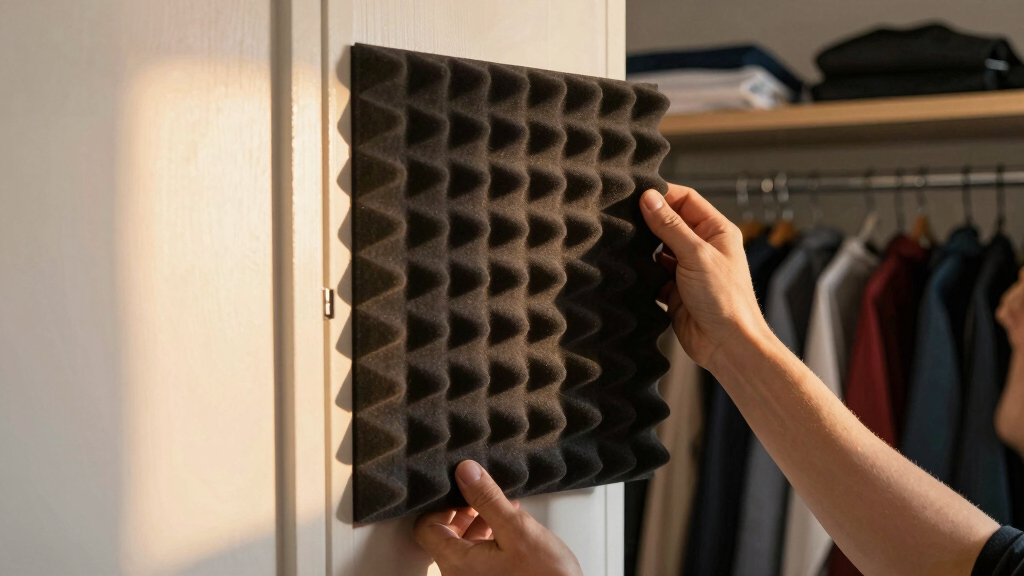

📊 Full opportunity report: Acoustic Dampening, Placement, and the “Rig in the Closet” Setup on ThorstenMeyerAI.com — validation score, market gap, and execution plan.

Get business pricing on tech for your team
- Business-only prices and quantity discounts
- Tax-exempt purchasing
- Multiple users, one account, clear invoices
TL;DR
Moving a high-power rig into a closet can significantly reduce noise and reflections if properly placed and treated. Effective sealing, acoustic treatment, and ventilation are key. This guide explains how to create a quiet, safe workspace in small spaces.
Moving a high-performance computer rig into a closet or small room is confirmed as the most effective way to significantly reduce noise and sound reflections, according to recent expert guidance. For detailed insights, see the original analysis on Acoustic Dampening, Placement, and the “Rig in the Closet” Setup. Proper placement, sealing gaps, and using absorption materials are critical to creating a controlled acoustic environment, while ventilation ensures hardware safety. This approach is increasingly popular among users seeking quiet, professional-quality setups in limited spaces.
Experts emphasize that relocating a rig into a closet drastically cuts noise levels and reflections more effectively than solely relying on foam or absorption panels. The key is strategic placement: positioning the equipment away from reflective surfaces and at reflection points like behind the mic, side walls, and ceiling. Sealing gaps around the door and walls with weatherstripping enhances sound isolation, preventing leaks and echo. Additionally, heat buildup is a major concern; proper ventilation using fans or ducted airflow is essential to maintain safe operating temperatures.
Materials such as blankets, rugs, foam panels, and bass traps can be used effectively if strategically placed. For example, covering the door and sealing gaps minimizes sound escape, while bass traps in corners address low-frequency muddiness. Proper airflow management involves placing intake and exhaust fans to create a gentle circulation of air, removing heat without introducing additional noise. These combined measures result in a quieter, more controlled environment suitable for audio recording or high-performance computing.
Acoustic dampening
& the rig in the closet.
The most powerful noise fix isn’t a material — it’s a floor plan. A rig you can’t hear because it’s in another room beats any amount of foam. Tap the approaches in Part 1 to see what actually works.
(another room)
(levers 1–4)
(door / barrier)
(acoustic foam)
Contain the noise, not the heat
Impact of Closet Setups on Noise and Hardware Safety
This approach matters because it enables users to operate high-powered rigs in shared or small spaces without disturbing others or compromising hardware longevity. Effective sound dampening and heat management in a closet setup can transform noisy, unmanageable environments into professional-quality workspaces, making high-performance computing and recording accessible in limited spaces. Proper implementation reduces noise pollution, improves audio clarity, and extends hardware lifespan by preventing overheating.
acoustic soundproofing foam panels for computer room
As an affiliate, we earn on qualifying purchases.
As an affiliate, we earn on qualifying purchases.
Background on Acoustic Treatment and Space Optimization
Traditionally, soundproofing and acoustic treatment are associated with professional studios, but increasingly, hobbyists and professionals are adapting small spaces like closets for their setups. Moving equipment into a closet is a common DIY solution for noise reduction, especially in shared living environments or apartment settings. Industry experts highlight that while foam panels and blankets are effective for dampening reflections, sealing gaps and managing airflow are equally important for achieving a quiet and safe environment. Learn more about acoustic treatment and space optimization. Recent guides and community forums have emphasized that placement and sealing are often more impactful than additional foam treatments alone.
Prior to this, many users experienced issues with echoes, heat buildup, and noise leakage, prompting a focus on integrated solutions combining acoustic treatment with ventilation. The concept of a 'rig in the closet' has gained popularity as a practical compromise between performance and space constraints, but it requires careful planning to avoid overheating and sound leaks.
"Relocating your rig into a closet can drastically reduce noise and reflections if you focus on placement, sealing, and ventilation." Acoustic Dampening, Placement, and the “Rig in the Closet” Setup.
— Thorsten Meyer, acoustic expert
ventilation fans for high-performance PC in closet
As an affiliate, we earn on qualifying purchases.
As an affiliate, we earn on qualifying purchases.
Remaining Questions on Long-Term Hardware Safety and Effectiveness
While the benefits of closet setups are well-supported, some uncertainties remain regarding long-term hardware safety, especially concerning heat dissipation in sealed environments. The optimal ventilation solutions for different rig sizes and configurations are still being explored, and user experiences vary based on space constraints and equipment load. More data is needed on the durability of DIY ventilation methods and the effectiveness of various sealing techniques over extended periods.
weatherstripping door seal for soundproofing
As an affiliate, we earn on qualifying purchases.
As an affiliate, we earn on qualifying purchases.
Next Steps in Optimizing Closet-Based Rig Setups
Future developments will focus on refining ventilation solutions tailored for small, sealed environments, possibly integrating smart temperature controls. Users are encouraged to experiment with different airflow configurations and monitor temperature metrics to find the best balance between noise reduction and hardware safety. Industry experts suggest that ongoing research and shared community experiences will continue to improve best practices for 'rig in the closet' setups, making them more reliable and accessible.
bass traps for low-frequency sound control
As an affiliate, we earn on qualifying purchases.
As an affiliate, we earn on qualifying purchases.
Key Questions
Can I completely soundproof my closet setup?
No, complete soundproofing is difficult in small spaces without extensive modifications. Focus on dampening reflections and sealing gaps for effective noise reduction.
What materials are best for acoustic treatment in a closet?
Thick foam panels, moving blankets, rugs, and bass traps are effective. Cover reflection points and corners for the best results.
How do I prevent my hardware from overheating in a closet?
Use ventilation solutions such as exhaust fans, ducted airflow, and temperature monitoring to maintain safe operating temperatures.
Is sealing gaps enough to isolate noise?
No, sealing gaps reduces noise leakage but should be combined with acoustic dampening for optimal sound control.
How much acoustic treatment is necessary?
About 20-30% wall coverage with absorption panels at reflection points is generally effective, but it depends on the specific room and equipment.
Source: ThorstenMeyerAI.com
Fall Picks
fall essentials
As an affiliate, we earn on qualifying purchases.