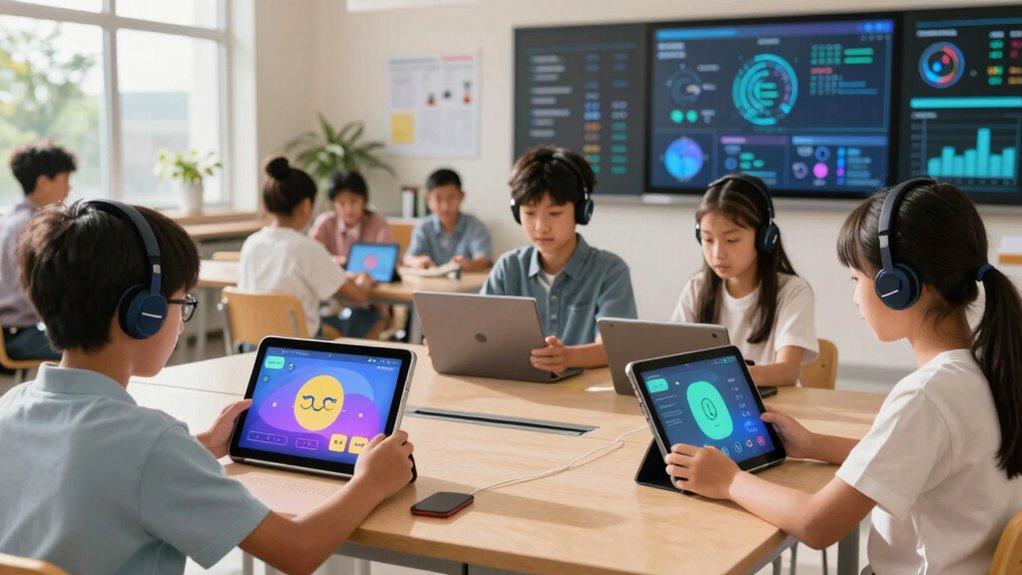

AI hardware helps make inclusive education more accessible by offering real-time, personalized support for students with diverse needs. It aids those with speech or visual impairments through speech synthesis, recognition, and image description. These devices also break language barriers with instant translation tools, fostering a more welcoming classroom. Adaptive learning technology adjusts challenges based on individual progress, boosting confidence and participation. If you’d like to discover more ways AI hardware promotes inclusion, keep exploring.

Get business pricing on tech for your team
- Business-only prices and quantity discounts
- Tax-exempt purchasing
- Multiple users, one account, clear invoices
Key Takeaways
- AI hardware enables real-time translation and communication tools for multilingual and speech-impaired students.
- Assistive devices powered by AI adapt to individual learning needs, fostering independence and confidence.
- Adaptive learning hardware personalizes educational content based on student performance data.
- Visual and auditory recognition technologies enhance accessibility for students with disabilities.
- Continuous hardware innovations improve the robustness and effectiveness of inclusive educational tools.
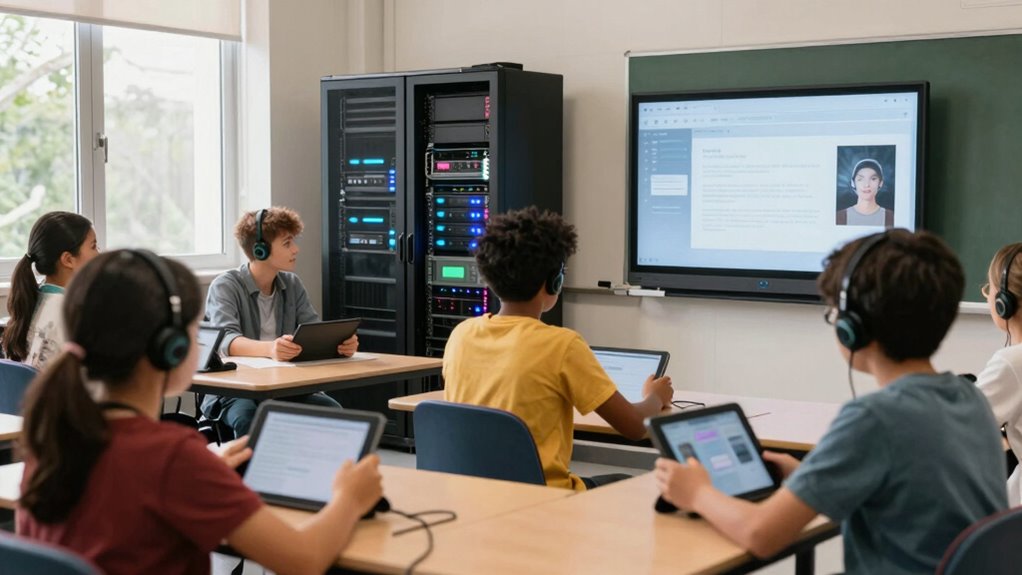
Artificial intelligence hardware is transforming inclusive education by making learning more accessible and personalized for students with diverse needs. With this technology, you gain tools that support various learning styles and overcome barriers that might have previously restricted participation. Assistive devices powered by AI are at the heart of this change, providing real-time support for students with disabilities. For example, AI-driven speech recognition and synthesis help students with speech impairments communicate more effectively, while visual recognition systems assist those with visual impairments by describing images or reading text aloud. These devices adapt to individual needs, guaranteeing each student receives tailored support that fosters independence and confidence.
AI-powered assistive devices support diverse needs, fostering independence and confidence in inclusive learning environments.
Another significant benefit of AI hardware in inclusive education is language translation. For students who speak different languages or are learning in a language that isn’t their first, real-time language translation tools break down communication barriers. These devices and applications enable students to understand and participate in lessons without the delay or confusion that language differences might cause. As a result, you can facilitate a more inclusive classroom environment where every student feels valued and capable of engaging fully. This technology also supports teachers by providing instant translations, allowing them to address linguistic diversity more efficiently and focus on delivering quality instruction. Moreover, ongoing advancements in AI hardware continue to expand the capabilities of these translation tools, making them even more accurate and reliable. Additionally, the integration of hardware innovations enhances the overall robustness and effectiveness of AI-powered educational tools.
AI hardware also enhances personalized learning experiences. By collecting and analyzing data on each student’s progress, AI systems can recommend customized learning paths. Whether a student struggles with certain concepts or excels in specific areas, the technology adapts to provide appropriate challenges and support. Adaptive learning tools can further improve engagement by adjusting content in real time based on student responses. This level of personalization ensures that no student is left behind because of their unique learning needs or pace. It empowers you to create an environment where every learner can thrive, regardless of their abilities or background. Furthermore, integrating high-quality projection technology can improve visual engagement and help accommodate various learning environments, making the educational experience even more inclusive. Additionally, ongoing advancements in AI-powered hardware expand the possibilities for adaptive learning tools tailored to individual needs.
AI speech recognition device for disabilities
As an affiliate, we earn on qualifying purchases.
As an affiliate, we earn on qualifying purchases.
Frequently Asked Questions
How Affordable Is AI Hardware for Underfunded Schools?
AI hardware can be affordable for underfunded schools, but cost barriers and funding challenges remain significant. You might find discounted or donated equipment, and some governments or organizations offer grants to help offset costs. While initial expenses can be high, investing in scalable, cost-effective solutions guarantees more schools access AI technology. With strategic planning and external support, you can overcome financial hurdles and bring inclusive AI tools into your educational environment.
What Training Is Needed for Teachers to Use AI Tools Effectively?
You need targeted teacher training to use AI tools effectively. Focus on building AI literacy so you understand how these tools work and their potential. Engage in professional development sessions or workshops that teach practical applications and troubleshooting. By increasing your AI literacy, you’ll become more confident integrating AI hardware into your classroom, enhancing student learning experiences. Continuous learning is key to staying updated and making the most of AI technology in education.
How Does AI Hardware Address Language Barriers in Education?
You might think AI hardware can’t bridge language gaps, but it actually excels through real-time language translation and cultural adaptation. By processing multiple languages instantly, it helps students understand lessons regardless of their native tongue. This technology fosters inclusivity, making learning accessible and engaging for diverse classrooms. So, instead of feeling left out, students embrace a more connected, culturally responsive educational experience with AI hardware’s support.
Can AI Hardware Adapt to Different Learning Styles and Disabilities?
Yes, AI hardware can adapt to different learning styles and disabilities by implementing personalization strategies and accessibility features. You benefit from tailored content that matches your unique learning pace and preferences, whether you learn visually, auditorily, or kinesthetically. Accessibility features like voice recognition or screen readers help address disabilities, ensuring you have equal opportunities. This adaptability makes education more inclusive, engaging, and effective for everyone.
What Are Privacy Concerns Related to AI Hardware in Classrooms?
You might think AI hardware in classrooms raises significant privacy concerns, but evidence shows that data security measures can effectively protect user privacy. However, breaches could expose sensitive student information, making it vital to implement robust encryption and strict access controls. While AI offers great benefits, maintaining transparency about data collection and usage is essential to guarantee trust and safeguard student privacy.
real-time language translation device
As an affiliate, we earn on qualifying purchases.
As an affiliate, we earn on qualifying purchases.
Conclusion
By harnessing AI hardware, you open the door to a more inclusive classroom, where every student’s needs are met with personalized support. Think of AI as a bridge that connects diverse learners, transforming obstacles into opportunities for growth. As technology continues to evolve, your role becomes that of a navigator guiding students through this new landscape—ensuring no one is left behind on the journey to equitable education.
adaptive learning hardware for education
As an affiliate, we earn on qualifying purchases.
As an affiliate, we earn on qualifying purchases.
assistive visual recognition device
As an affiliate, we earn on qualifying purchases.
As an affiliate, we earn on qualifying purchases.
Fall Picks
fall essentials
As an affiliate, we earn on qualifying purchases.