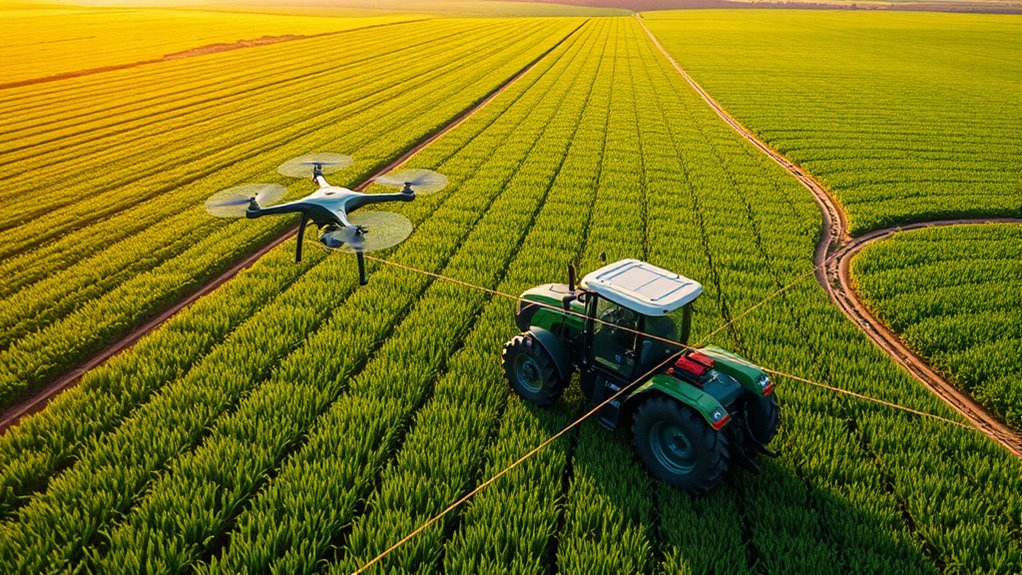

AI is transforming agriculture by helping you monitor crops precisely with IoT sensors, drones, and satellite imagery. It enables smarter resource management, reducing water, fertilizers, and pesticides while improving soil health. With data-driven strategies, you can boost yields, detect pests early, and optimize planting schedules. As adoption grows and new innovations emerge, you’ll find even more ways to farm sustainably and profitably—discover how these advancements can work for you as you explore further.
Key Takeaways
- Precision AI uses IoT sensors, drones, and satellite imagery for real-time crop monitoring and decision-making.
- AI-powered computer vision detects weeds, pests, and diseases early, reducing chemical reliance.
- Autonomous machinery and drones perform tasks like spraying and monitoring, increasing farm efficiency.
- AI analytics optimize planting schedules, resource use, and yield forecasting for higher productivity.
- Digital platforms integrate data for smarter resource management, sustainability, and enhanced profitability.

ECOWITT GW1206 Soil Moisture Tester Kit, Includes GW1200 IoT Wi-Fi Gateway and WH51 Soil Moisture Sensor, 915 MHz
【2024 Latest Wi-Fi Gateway Weather Station】: With bulti-in temperature, humidity, and barometric pressure 3-in-1 sensor, the Ecowitt GW1200…
As an affiliate, we earn on qualifying purchases.
As an affiliate, we earn on qualifying purchases.
Revolutionizing Crop Monitoring With AI Technologies
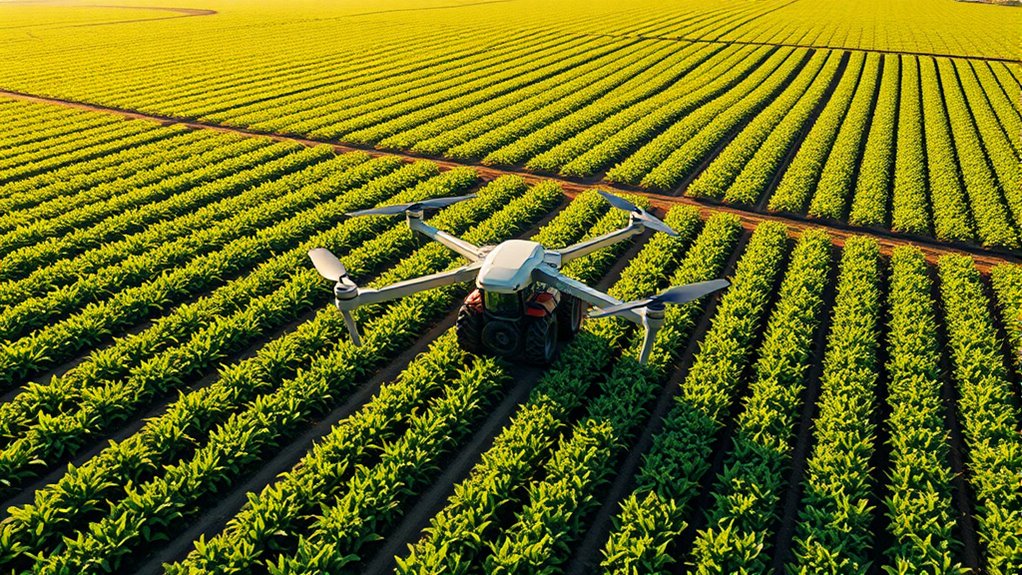
Revolutionizing crop monitoring with AI technologies has transformed how farmers assess and manage their fields. You now rely on IoT sensors, drones, and satellite imagery to gather real-time data on soil moisture, crop health, and pest presence. This constant flow of information allows you to detect early signs of disease, drought stress, or pest infestations at a leaf or field level. AI-powered computer vision can identify weeds and pests with precision, reducing chemical use and environmental impact. Autonomous drones and robots perform tasks like spraying, pollination, and monitoring, increasing efficiency and lowering labor costs. With AI-driven analytics, you can forecast yields accurately, make informed decisions, and respond quickly to emerging issues—ultimately optimizing your crop management practices. To ensure sustainable and compliant use of these technologies, understanding regulatory compliance is crucial for integrating AI tools effectively and responsibly. Additionally, leveraging data security measures helps protect sensitive farm information from cyber threats and unauthorized access. Incorporating crop health monitoring tools that analyze spectral data can further enhance your ability to detect issues early. Implementing sustainable farming practices supported by AI insights can further enhance environmental stewardship and long-term productivity.
AI in Agricultural Technology: The Brains Behind Smart Farming’s New Direction: How Advanced Tools, Drones, and Autonomous Systems Are Redefining Modern Farming
As an affiliate, we earn on qualifying purchases.
As an affiliate, we earn on qualifying purchases.
Enhancing Resource Management and Sustainability
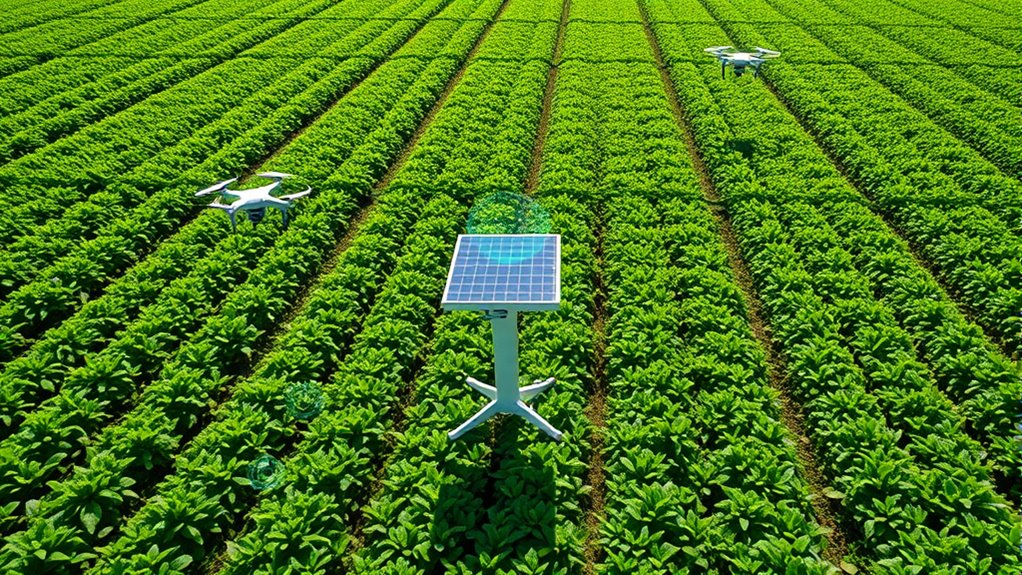
AI plays a crucial role in enhancing resource management and promoting sustainability in agriculture. It helps you use water, fertilizers, and pesticides more efficiently, reducing waste and lowering costs. By analyzing real-time data from sensors, AI enables precise application tailored to each crop’s needs, preserving soil health and minimizing environmental impact. Automated irrigation systems calibrated by AI maximize water efficiency, especially important amid climate variability. Additionally, AI-driven insights support regenerative practices that improve soil quality and sequester carbon. Implementing smart farming technologies allows for better adaptation to changing environmental conditions, ensuring long-term productivity and sustainability. Leveraging sustainable practices promotes environmentally responsible farming that aligns with eco-friendly initiatives. Incorporating precision AI techniques further optimizes resource distribution and crop yields by leveraging detailed analytics. Utilizing soil health monitoring systems helps maintain optimal conditions for crop growth and long-term farm viability.

DVB Finder BT03 Satellite Finding Tool Finder Support VCM Mode Full Selection Support for iOS APP Connectivity
[Easy to Use] : Equipped with clear led lights, this satellite finding tool allows for quick identification of…
As an affiliate, we earn on qualifying purchases.
As an affiliate, we earn on qualifying purchases.
Increasing Yields Through Data-Driven Strategies
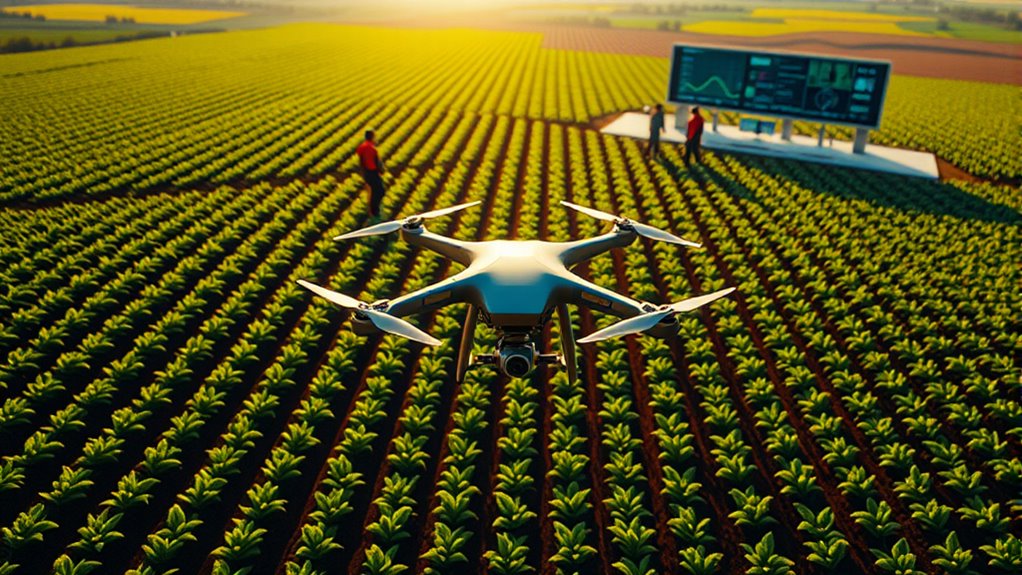
You can boost your crop yields by using AI to optimize planting schedules based on weather and soil data. Real-time nutrient monitoring helps you adjust inputs precisely, reducing waste and maximizing growth. Predictive yield analytics give you accurate forecasts, so you can plan harvests and market strategies more effectively. Additionally, leveraging high-resolution imaging can assist in detecting plant stress and disease early, further enhancing crop management efforts. Moreover, integrating automation technology can streamline labor-intensive tasks and improve overall farm efficiency. Incorporating soil health data can also support sustainable farming practices by maintaining optimal conditions for crop growth. Implementing precision agriculture techniques ensures resource use is optimized, promoting long-term sustainability and resilience.
Optimized Planting Schedules
Optimized planting schedules leverage data-driven insights to boost crop yields and improve resource efficiency. By analyzing weather patterns, soil conditions, and historical data, AI helps you determine the ideal planting windows for each crop. This guarantees crops grow during excellent conditions, reducing risks and increasing productivity. AI models can also forecast future climate trends, allowing you to adjust schedules proactively. Additionally, understanding website performance metrics can help you evaluate the effectiveness of your scheduling strategies and make data-informed improvements.
Real-Time Nutrient Monitoring
Real-time nutrient monitoring allows you to adjust fertilizer application precisely when and where it’s needed, boosting crop yields and reducing waste. IoT sensors and AI analyze soil nutrient levels continuously, providing immediate insights into nutrient deficiencies or excesses. With this data, you can optimize fertilizer use, ensuring plants receive exactly what they require for healthy growth. This targeted approach minimizes environmental impact by preventing over-fertilization, which can leach into waterways. Automated systems alert you to nutrient imbalances, enabling timely interventions that improve crop quality and consistency. By leveraging real-time data, you can maximize resource efficiency, lower operational costs, and enhance sustainability—all while increasing overall productivity. This data-driven strategy transforms traditional fertilization into a precise, adaptive process. AI-powered solutions are increasingly adopted in agriculture, further enhancing the effectiveness of these monitoring systems. Soil nutrient levels are central to implementing sustainable farming practices and achieving optimal yields. Additionally, integrating precision agriculture techniques can further refine nutrient management, leading to more sustainable and profitable farming operations.
Predictive Yield Analytics
Predictive yield analytics harnesses the power of AI and big data to forecast crop production with high accuracy. By analyzing historical data, weather patterns, soil conditions, and real-time sensor inputs, you can make smarter decisions that boost yields. This approach helps identify potential shortfalls early, allowing you to adjust practices proactively. Additionally, integrating Chevrolet Tuning techniques into farming equipment can enhance machinery performance, leading to more efficient operations and better crop outcomes. Moreover, understanding nanotechnology advancements can open new avenues for targeted delivery systems and crop protection methods.
- Leverages machine learning models for precise yield predictions
- Integrates real-time and historical data for all-encompassing insights
- Enables better planning for harvest timing and resource allocation
- Reduces risks by anticipating weather impacts and pest outbreaks
Using predictive analytics, you can optimize inputs, improve crop management, and maximize profitability. This data-driven strategy not only increases yields but also enhances sustainability by reducing waste and resource use.
autonomous farm spraying robots
As an affiliate, we earn on qualifying purchases.
As an affiliate, we earn on qualifying purchases.
Adoption Trends and Market Growth in AgTech
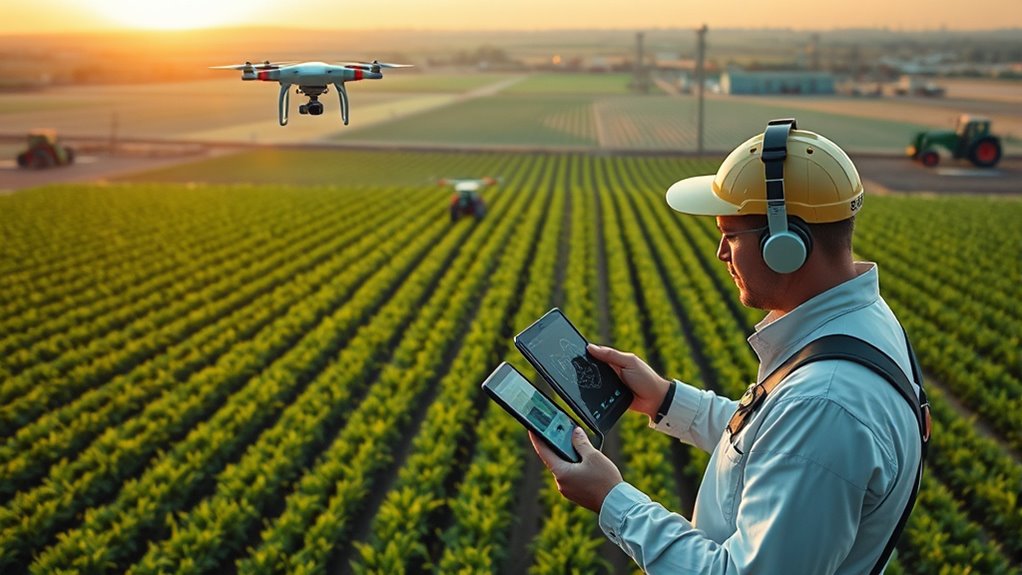
Adoption of AI technologies in agriculture is rapidly gaining momentum across the globe. You’ll see widespread use of GPS guidance and autosteer systems, with over 75% of farmland acres in many regions now equipped. The global AgTech market, valued at $26 billion, is projected to hit $74 billion by 2034, driven by AI and data analytics growing at a 24.1% CAGR. Small and medium-sized farms are leading the way, deploying AI for scalable, sustainable solutions amid rising costs and labor shortages. Investment is shifting toward AI-driven data platforms, robotics, and crop monitoring tools, fueling sector growth. As technologies advance swiftly, farmers and stakeholders must adapt continuously to stay competitive and maximize benefits from these innovations. Embracing precision agriculture can optimize resource use and improve crop yields, further accelerating sector growth. Additionally, the integration of AI security ensures that sensitive data and automated systems remain protected against cyber threats, safeguarding the integrity of these technological advancements. Moreover, ongoing developments in data analytics facilitate better decision-making and predictive insights, enabling farmers to respond proactively to environmental and market changes. Advances in sensor technology also allow for more detailed environmental monitoring, which enhances the effectiveness of resource management strategies. Innovations in automated machinery are further transforming traditional farming practices, leading to increased efficiency and productivity.
AI-Driven Solutions for Pest and Disease Control
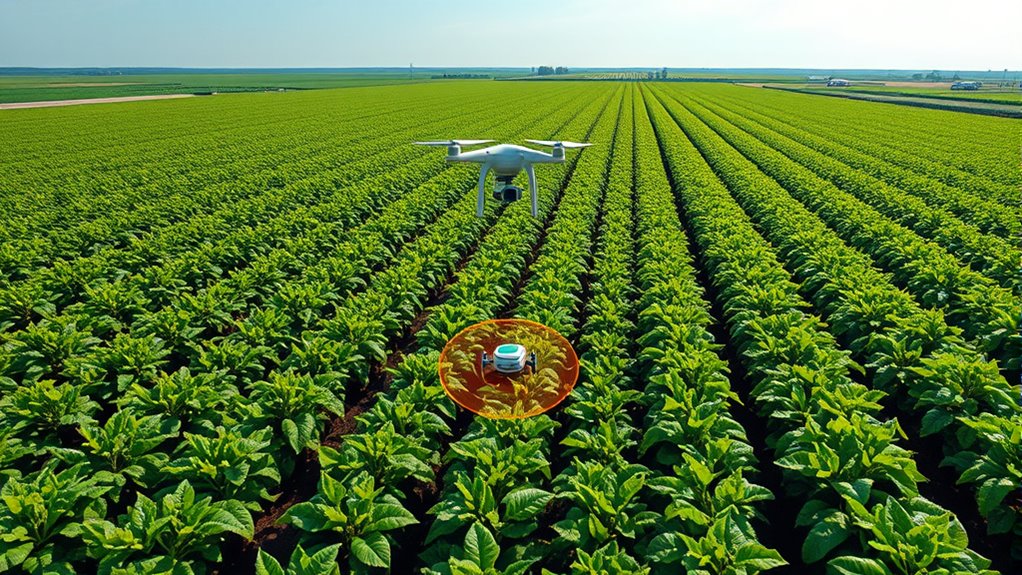
AI-powered sensors and computer vision enable you to detect diseases early, preventing widespread damage. With targeted pest management, you can apply treatments precisely where needed, reducing chemical use. These solutions help optimize pest and disease control while minimizing environmental impact.
Early Disease Detection
How can farmers detect plant diseases early enough to prevent widespread damage? AI-powered tools make this possible. By analyzing high-resolution images from drones, satellites, or ground sensors, AI can spot early symptoms invisible to the naked eye. Machine learning models process data to identify patterns indicating disease onset, often days before visible signs appear. This early detection allows timely intervention, saving crops and reducing chemical use.
- Continuous monitoring through satellite imagery
- Real-time alerts from IoT sensors
- Image analysis with computer vision
- Predictive models based on weather and historical data
Early disease detection with AI helps farmers act swiftly, minimizing losses and promoting sustainable practices. It’s a game-changer, making crop management more proactive and efficient.
Targeted Pest Management
Targeted pest management has become increasingly effective thanks to AI-driven solutions that precisely identify and target pests and diseases. You can now use AI-powered computer vision to scan your fields and detect pest presence early, reducing the need for blanket chemical applications. These systems analyze images captured by drones or ground sensors, differentiating pests from healthy plants with high accuracy. Machine learning models also predict pest outbreaks by analyzing weather patterns, crop health data, and historical trends. This enables you to implement timely, targeted interventions that minimize chemical use and environmental impact. With AI, you’re empowered to make data-driven decisions, effectively controlling pest populations while safeguarding your crops, reducing costs, and promoting sustainable farming practices.
Reduced Chemical Usage
AI-driven solutions are revolutionizing pest and disease control by substantially reducing chemical usage on farms. You can now target pests and diseases precisely, decreasing reliance on broad-spectrum chemicals that harm the environment. AI-powered computer vision and sensor data enable early detection, allowing you to apply treatments only where needed. This approach minimizes chemical runoff, lowers costs, and supports sustainable practices.
- Precise targeting reduces overall chemical inputs
- Early detection prevents widespread infestations
- Real-time data optimizes treatment timing and dosage
- Environmentally friendly pest management supports biodiversity
Economic Benefits and Profitability Improvements
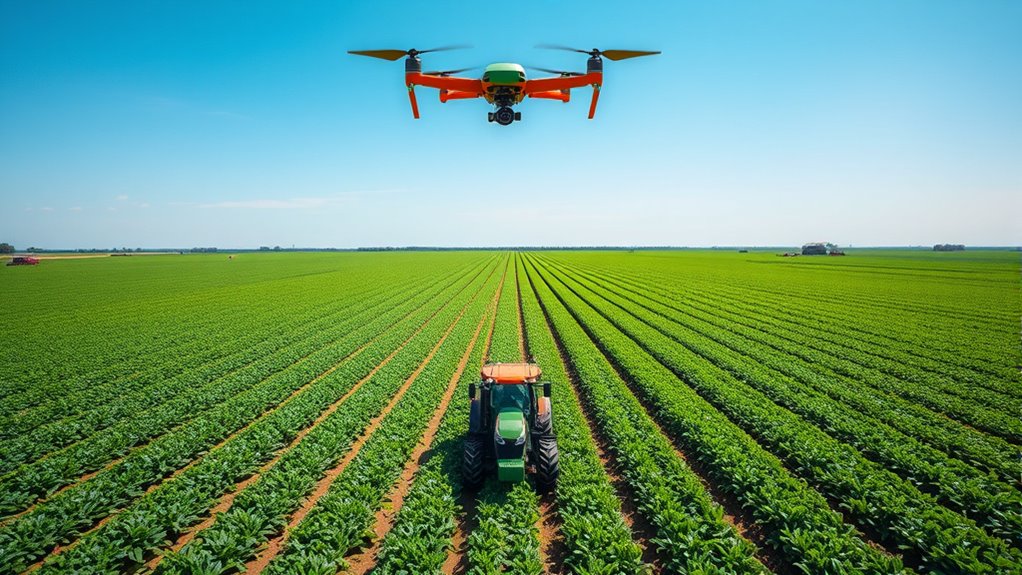
Implementing AI in agriculture directly boosts farm profitability by reducing input costs and optimizing resource use. With precision application of water, fertilizers, and pesticides, you cut waste and lower operational expenses. AI-driven decision systems help you forecast yields accurately, enabling better planning and market timing. Autonomous machines and drones perform tasks like planting, spraying, and harvesting more efficiently, saving labor costs. Real-time crop health monitoring identifies issues early, preventing losses and improving yields. Risk mitigation from AI insights reduces the impact of weather variability and pests, stabilizing income. As a result, your farm becomes more resilient and profitable. These technological advancements allow you to make smarter decisions, maximize outputs, and sustain long-term growth amid market fluctuations and environmental challenges.
Supporting Sustainable Farming and Soil Health
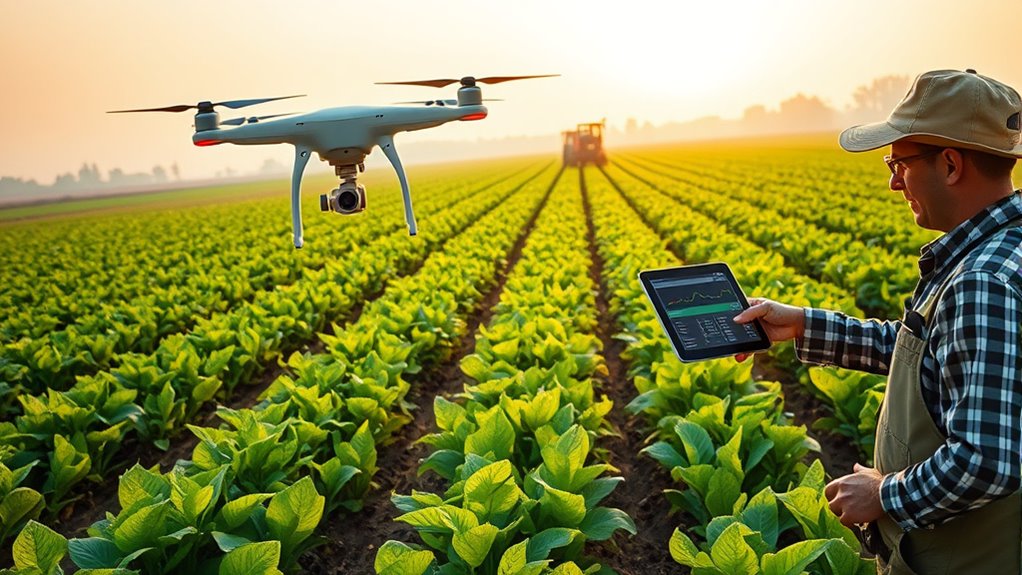
As agriculture faces increasing environmental pressures, leveraging AI can play a crucial role in promoting sustainable farming practices. You can use AI to monitor soil health, optimize resource use, and reduce chemical inputs. Sensors and data analytics provide real-time insights into soil moisture, nutrient levels, and microbial activity, guiding regenerative practices that maintain soil vitality. AI-driven systems enable targeted application of water and fertilizers, minimizing waste and runoff. Autonomous robots and drones assist in cover cropping, soil aeration, and organic matter management, enhancing soil structure and carbon sequestration.
- AI-powered soil analysis promotes regenerative agriculture
- Precision resource management reduces waste and pollution
- Automated tools support minimal disturbance practices
- Data-driven decisions strengthen long-term soil health and sustainability
Future Innovations and Challenges in Precision Agriculture
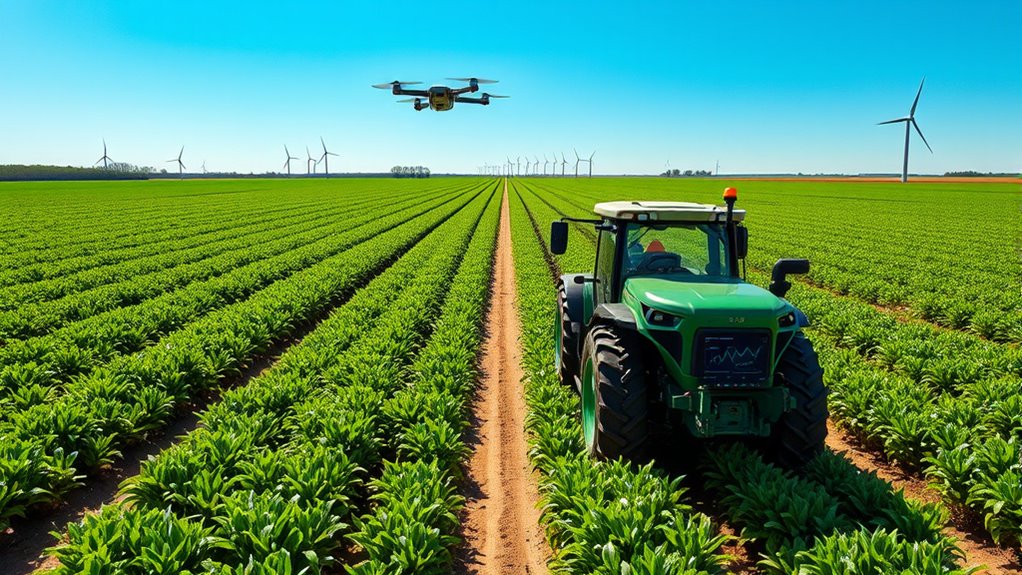
Advancements in precision agriculture are opening new horizons for sustainable and efficient farming, but they also introduce complex challenges. You’ll need to adapt quickly to rapid technological changes, data privacy concerns, and high implementation costs. Future innovations, like AI-driven autonomous machinery and advanced predictive models, promise increased productivity and sustainability. However, these advancements require robust infrastructure and farmer training to maximize benefits. You may also face hurdles in integrating diverse systems and managing data security. To stay competitive, you must embrace continuous learning and leverage emerging tools effectively.
| Innovation | Potential Benefit | Main Challenge |
|---|---|---|
| Autonomous machinery | Increased efficiency | High initial investment |
| Advanced predictive analytics | Better crop management | Data privacy concerns |
| IoT and sensor integration | Precise resource use | Infrastructure needs |
| AI-driven pest detection | Reduced chemical use | System complexity |
| Digital farming platforms | Broader access to insights | Digital divide |
Frequently Asked Questions
How Does AI Improve Decision-Making Speed on Farms?
AI improves decision-making speed on your farm by providing real-time data from sensors, drones, and satellite imagery. You get instant insights into soil health, crop conditions, and pest activity, allowing you to act quickly. Automated systems and decision support tools analyze this data rapidly, guiding you on *best* planting, watering, or pest control measures. This accelerates your response time, making your farm more efficient, profitable, and sustainable.
What Are the Initial Costs of Implementing AI in Agriculture?
Oh, the sweet allure of initial costs—like buying a spaceship for your backyard farm. You’ll need to invest in sensors, drones, and data platforms, which can range from a few thousand to hundreds of thousands depending on scale. Equipment upgrades, training, and maintenance add to the bill. While pricey upfront, these investments promise long-term savings, increased yields, and a future where your farm’s smarter than your neighbor’s.
How Do Farmers Train to Use Advanced AI Tools Effectively?
You train to use advanced AI tools effectively by participating in hands-on workshops, online courses, and field demonstrations tailored for farmers. You learn to interpret sensor data, operate autonomous equipment, and adjust settings based on real-time insights. Practice is key, so you’ll often start with small projects, gradually building confidence. Collaborating with tech providers and fellow farmers also helps you stay updated on best practices and troubleshoot issues quickly.
What Are the Privacy Concerns Related to Farm Data Collection?
Imagine your farm’s data like a guarded treasure chest, visible but sensitive. You might worry about who accesses your soil health, crop yields, or irrigation info. Privacy concerns include data theft, misuse by third parties, or losing control over your farm’s secrets. You need clear agreements, secure systems, and transparency to safeguard your information. By staying vigilant, you ensure your farm’s insights remain safe and your operations confidential.
How Is AI Helping Small-Scale Farmers Compete Globally?
You can leverage AI to compete globally by accessing affordable, scalable tools like crop monitoring sensors and autonomous machines, which boost productivity and reduce costs. AI-driven data insights help you optimize inputs, improve yields, and manage pests sustainably. With these advanced technologies, you can make smarter decisions, increase efficiency, and stay competitive in the global market, even with limited resources or small landholdings.
Conclusion
As you embrace AI in agriculture, imagine fields alive with smart sensors and drones, tirelessly working to optimize every inch of your land. With data guiding your decisions, you can nurture healthier soils, boost yields, and reduce waste. This future isn’t distant—it’s happening now, transforming your farm into a vibrant, sustainable ecosystem. By harnessing precision AI, you’re planting the seeds for a more prosperous, resilient, and greener tomorrow.