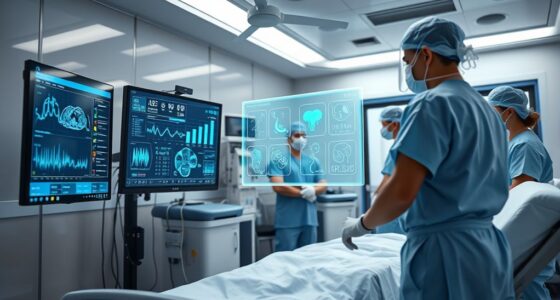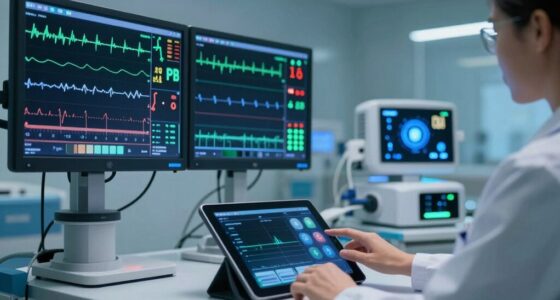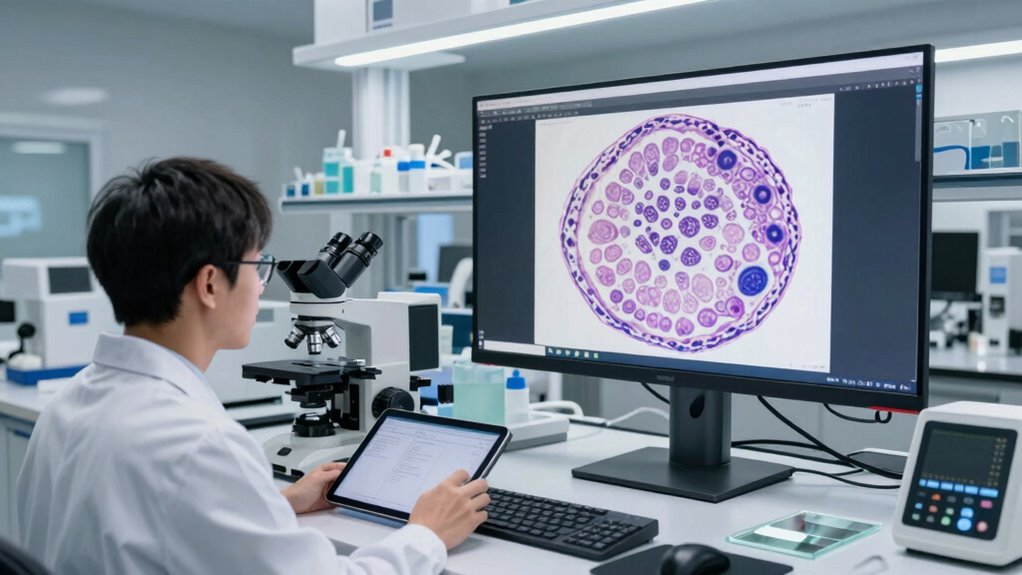
You’re shifting towards digital slide analysis because it boosts accuracy, speed, and collaboration in pathology labs. By replacing glass slides with high-resolution digital images, you can easily share, store, and analyze data. Machine learning helps identify subtle patterns and flag concerning regions, saving time and reducing errors. This smart approach streamlines workflows and supports advanced diagnostics. Keep exploring how this innovative tech can transform pathology and improve patient outcomes.
Key Takeaways
- Digital slides enable AI to detect subtle patterns and anomalies, improving diagnostic accuracy.
- Automation accelerates slide review, reducing manual effort and minimizing errors in pathology analysis.
- Digital workflows facilitate seamless sharing and collaborative diagnosis across multiple locations.
- Integration with machine learning supports predictive analytics and enhances patient outcome assessments.
- Compliance and governance frameworks ensure secure, traceable, and high-quality AI-assisted pathology processes.

Artificial intelligence is transforming pathology labs by enhancing diagnostic accuracy and speeding up analysis processes. At the heart of this transformation is digital microscopy, which replaces traditional glass slides with high-resolution digital images. Instead of manually examining slides under a microscope, you now have access to detailed, digital versions that can be easily shared, stored, and analyzed. This shift not only streamlines workflows but also opens the door for advanced computational techniques to assist in diagnosis. When combined with machine learning algorithms, digital microscopy becomes a powerful tool that can identify subtle patterns and anomalies often missed by the human eye. These algorithms learn from vast datasets, improving their accuracy over time, and support pathologists by highlighting areas of concern, consequently reducing errors and increasing confidence in diagnoses.
You’ll find that integrating digital microscopy with machine learning makes slide analysis faster and more consistent. Instead of spending hours manually scanning slides, you can rely on automated systems to pre-screen and flag regions that require closer inspection. This automation accelerates the diagnostic process, helping you deliver results more rapidly without sacrificing quality. Additionally, machine learning models can be trained to recognize specific disease markers, classify tissue types, and even predict patient outcomes based on image features. This level of analysis often surpasses traditional methods, providing deeper insights and enabling more personalized treatment plans. The ability to continuously improve algorithms through ongoing data collection further enhances diagnostic precision over time. Incorporating digital workflows also facilitates integration with other health information systems, streamlining data management and collaboration. Moreover, the use of cloud storage and remote access capabilities ensures that digital pathology resources are available whenever needed, supporting collaborative efforts across locations.
Furthermore, moving to a digital workflow means you can easily leverage cloud storage and collaborative platforms. Sharing digital slides with colleagues across different locations becomes seamless, facilitating second opinions and multidisciplinary discussions. You can also incorporate AI-powered decision support tools that analyze entire datasets, correlate findings, and suggest potential diagnoses or next steps. This integration enhances your ability to make accurate assessments quickly, especially in complex cases where multiple factors influence the diagnosis. Ensuring software quality and compliance through effective traceability is crucial when deploying these advanced systems to meet regulatory standards and maintain data integrity. As organizations adopt these digital solutions, implementing enterprise governance frameworks ensures that AI tools operate securely and ethically, aligning with both technical and regulatory requirements.

KODAK Slide N SCAN Film & Slide Scanner Digitizer with 5” LCD Screen, Quickly Convert Negatives & Slides to Digital 22MP JPEG Photos, Compatible with 135, 126 and 110 Film & Slides
SAVE OLD PHOTO MEMORIES: 1422MP Digital Film Scanner Lets You View, Edit and Convert Your Old Color and…
As an affiliate, we earn on qualifying purchases.
As an affiliate, we earn on qualifying purchases.
Frequently Asked Questions
How Accurate Is AI Compared to Human Pathologists?
AI diagnostic accuracy often rivals that of human pathologists, especially when it comes to consistent slide analysis. You can rely on AI to identify patterns quickly and reduce errors, but collaboration with a pathologist remains essential for complex cases. By combining AI’s speed and precision with a pathologist’s expertise, you guarantee a more accurate diagnosis, enhancing overall patient care. This teamwork maximizes AI’s benefits while maintaining high accuracy standards.
What Are the Cost Implications of Implementing AI?
Implementing AI is like planting a seed; initial costs can seem high, but the long-term benefits grow steadily. You’ll need to conduct a cost-benefit analysis to weigh upfront infrastructure investments against improved efficiency and accuracy. While setup costs include software, hardware, and training, these expenses are offset by faster diagnoses and reduced errors. Over time, AI can save your lab money, making the investment worthwhile.
How Is Patient Data Privacy Maintained With AI Systems?
You maintain patient data privacy with AI systems by employing data encryption, which secures sensitive information from unauthorized access. Additionally, you guarantee privacy compliance by following regulations like HIPAA or GDPR, implementing strict access controls, and regularly auditing data handling practices. These measures help protect patient confidentiality while allowing AI to analyze pathology slides effectively, striking a balance between technological advancement and privacy preservation.
Can AI Detect Rare or Unusual Diseases?
You bet AI can detect rare diseases and unusual pathology! It’s like having a super-sleuth that scans every slide for the tiniest anomalies, catching things even the most experienced pathologists might miss. AI’s ability to analyze vast data sets makes it exceptional at identifying rare disease patterns and unusual pathology. It’s transforming diagnosis, ensuring no disease, however rare or bizarre, slips through unnoticed, saving countless lives in the process.
What Training Is Needed for Lab Staff to Use AI Tools?
You need to undergo targeted training procedures to effectively use AI tools in pathology labs. This includes understanding software integration, where you learn how AI systems connect with existing laboratory equipment and data management systems. Hands-on sessions help you familiarize yourself with user interfaces and troubleshooting. Continuous education guarantees you stay updated on software updates and best practices, enabling you to confidently leverage AI for more accurate and efficient slide analysis.

Wireless Digital Microscope, Skybasic 50X-1000X Magnification WiFi Portable Handheld Microscopes with Adjustable Stand HD USB Microscope Camera Compatible with iPhone Android iPad Windows Mac Computer
【WiFi & USB Microscope】This is a wireless handheld digital microscope that has been designed to work with your…
As an affiliate, we earn on qualifying purchases.
As an affiliate, we earn on qualifying purchases.
Conclusion
Embracing AI in pathology labs transforms slide analysis from a tedious task into a precise, efficient process. As the saying goes, “A picture is worth a thousand words,” and digital analysis captures every detail with clarity. By going digital, you’re not just keeping up—you’re stepping into the future of medicine. So, don’t wait for tomorrow; harness AI today to elevate your diagnostics and improve patient outcomes. The future’s digital, and now’s the time to act.

AI-Powered IoT for COVID-19
As an affiliate, we earn on qualifying purchases.
As an affiliate, we earn on qualifying purchases.

DIGITNOW! 135 Film Negative Scanner High Resolution Slide Viewer,Convert 35mm Film &Slide to Digital JPEG Save into SD Card, with Slide Mounts Feeder No Computer/Software Required
Includes adjustable rapid slide feeder; Once you digitize them into JPG files they can be copied, moved, duplicated…
As an affiliate, we earn on qualifying purchases.
As an affiliate, we earn on qualifying purchases.