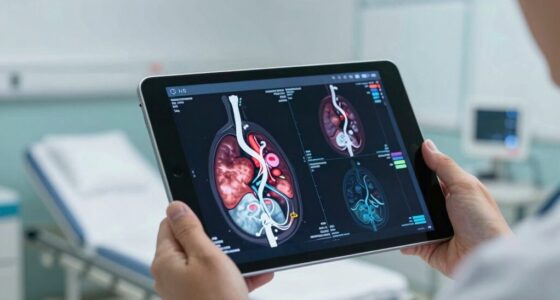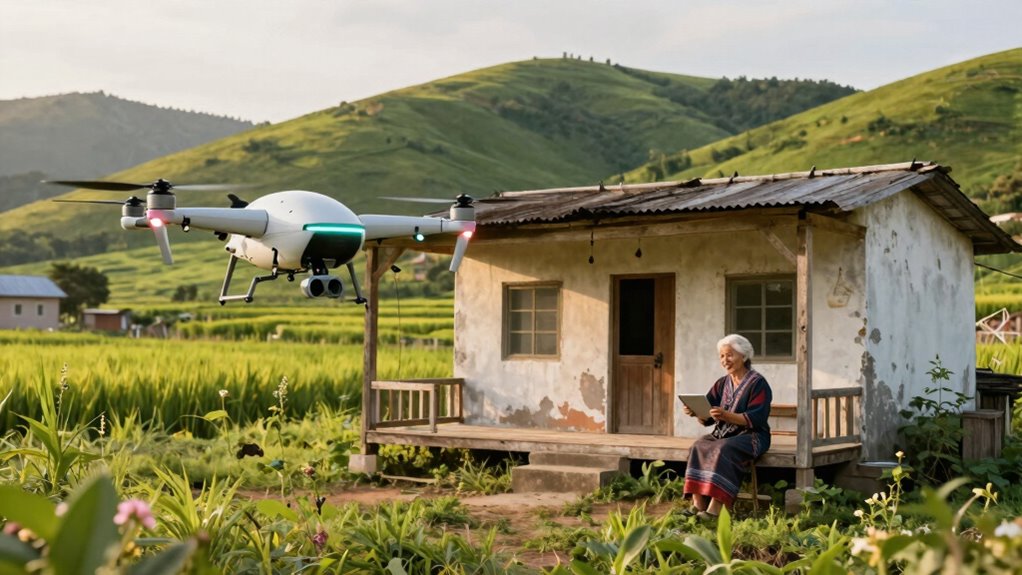
AI can make rural healthcare more accessible by enabling remote consultations with doctors and specialists, reducing travel time and costs. It supports faster, more accurate diagnoses even in low-resource settings, helping detect diseases early. AI systems are designed to work on portable devices and low-bandwidth networks, making advanced diagnostics achievable everywhere. By combining telemedicine with innovative tools, AI brings high-quality care closer to rural communities. If you keep exploring, you’ll discover how these advancements can truly transform healthcare access.
Key Takeaways
- AI-powered telemedicine enables remote consultations, reducing travel time and making healthcare more accessible in rural areas.
- Diagnostic AI tools support quick, accurate diagnoses with limited infrastructure, improving early disease detection.
- AI systems designed for resource-limited settings operate on low bandwidth and portable devices, enhancing rural healthcare capacity.
- User-friendly platforms with language translation bridge communication gaps, promoting understanding and adherence to medical advice.
- Combining telemedicine and diagnostics empowers rural communities, bringing high-quality care closer and reducing healthcare disparities.
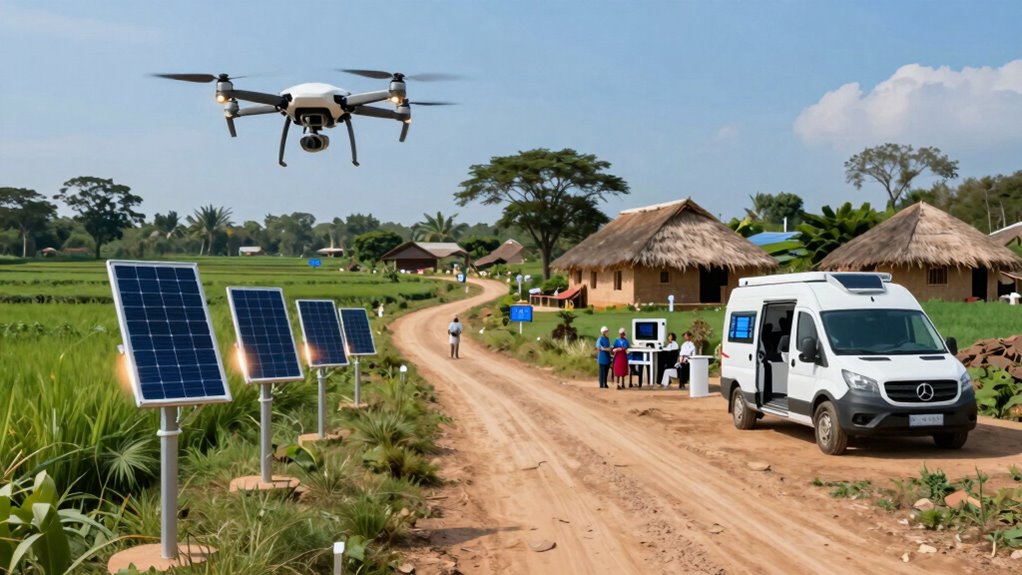
Artificial intelligence is transforming rural healthcare by bridging gaps in access and quality that have long persisted in remote communities. You might not always have easy access to specialists or advanced medical facilities, but AI-driven solutions are changing that reality. Telemedicine advancements powered by AI enable you to consult with healthcare providers remotely, cutting down travel time and reducing delays in receiving care. These innovations make it easier for you to connect with doctors, therapists, and specialists through virtual platforms, regardless of your location. This means you no longer have to wait weeks for a specialist appointment or incur high travel costs just to get a second opinion.
AI-enabled telemedicine helps you access specialists remotely, reducing travel time and waiting for care.
Diagnostic innovations are also at the forefront of AI’s impact on rural healthcare. AI algorithms can analyze medical images, lab results, and patient data swiftly and accurately, helping healthcare providers make faster diagnoses. For you, this translates into quicker treatment decisions and potentially better health outcomes. For example, AI-powered tools can detect early signs of diseases like cancer or diabetic retinopathy, even in settings with limited access to expert radiologists or pathologists. This reduces the chances of misdiagnosis and ensures that you get the appropriate treatment sooner. Additionally, the integration of high-precision image analysis technology enables more accurate detection and monitoring of health conditions. The adaptability of AI systems in different healthcare environments allows providers to optimize workflows and improve patient care in resource-limited settings. Moreover, these AI tools can operate effectively with limited infrastructure, making them particularly suited for rural communities. The scalability and low-resource compatibility of AI systems further enhance their viability in these areas.
You might wonder how AI makes all this possible in areas where resources are scarce. The answer lies in the scalability and adaptability of AI systems. These tools can operate on portable devices or low-bandwidth systems, making them suitable for rural settings. They can also continuously learn from new data, improving their accuracy over time. As a result, healthcare providers in rural communities can leverage AI to enhance their diagnostic capabilities without needing extensive infrastructure investments. This means better care for you, even in the most remote locations.
Furthermore, AI-driven telemedicine platforms often incorporate user-friendly interfaces and language translation features, making healthcare more accessible regardless of literacy levels or language barriers. This helps to bridge communication gaps and ensures that you can understand and follow medical advice more easily. With ongoing advancements, these platforms are becoming more intuitive, allowing you to receive personalized health guidance and monitor chronic conditions from the comfort of your home. This not only saves you time and money but also encourages proactive health management.
In essence, AI is opening new doors for rural healthcare by combining telemedicine advancements with diagnostic innovations. It empowers you to take control of your health, regardless of where you live, by bringing high-quality medical expertise closer to your doorstep. As these technologies continue to evolve, they promise a future where healthcare access in rural areas is no longer hindered by distance or resource limitations, making quality care more equitable and attainable for everyone.
AI telemedicine portable device
As an affiliate, we earn on qualifying purchases.
As an affiliate, we earn on qualifying purchases.
Frequently Asked Questions
How Affordable Is AI Implementation for Rural Clinics?
Implementing AI in rural clinics varies in affordability, depending on your cost analysis and existing technology infrastructure. While initial setup costs can be high, ongoing expenses might decrease with scalable solutions and government grants. You’ll need to evaluate hardware, software, and training costs carefully. In many cases, investing in AI can improve patient outcomes and reduce long-term costs, making it a worthwhile consideration if your clinic can manage the upfront investments.
What Training Is Needed for Rural Healthcare Providers to Use AI?
You’ll need targeted training to effectively use AI in rural healthcare, especially since studies show only 30% of providers currently feel confident with new tech. Training challenges include bridging skill gaps and ensuring ongoing support. You’ll focus on skill development, learning how to interpret AI insights, manage software, and troubleshoot issues. Continuous education helps you stay updated, making AI tools more accessible and enhancing patient care in your community.
How Does AI Address Language Barriers in Rural Areas?
AI helps address linguistic barriers in rural areas by using advanced communication technology like real-time translation tools. You can rely on these tools to interpret patient-provider conversations accurately, bridging language gaps quickly. AI-powered apps can translate multiple languages instantly, making healthcare more inclusive and understandable. This technology guarantees that patients receive clear information, improving care quality and fostering trust, even when language differences could otherwise hinder effective communication.
What Are the Risks of Data Privacy With AI in Rural Healthcare?
You face risks of data privacy when AI is used in rural healthcare, especially regarding data security and ethical concerns. Personal health information could be vulnerable to breaches if proper safeguards aren’t in place. You should guarantee robust data encryption and strict access controls. Being aware of ethical issues, like consent and transparency, helps protect patient rights while enabling AI’s benefits in improving healthcare access.
Can AI Replace Human Healthcare Providers in Rural Communities?
AI can’t fully replace human healthcare providers in rural communities because AI ethics emphasize the importance of human judgment and empathy. While AI can support rural outreach by providing quick diagnostics and data analysis, it lacks the personal touch needed for sensitive situations. You still need healthcare professionals to build trust, interpret nuanced cases, and make ethical decisions, ensuring rural patients receive compassionate, all-encompassing care.
diagnostic AI tools for rural healthcare
As an affiliate, we earn on qualifying purchases.
As an affiliate, we earn on qualifying purchases.
Conclusion
So, as you see, AI has the potential to transform rural healthcare by bridging barriers, boosting access, and bringing better benefits to communities. With clever coding and compassionate care, AI can help heal health hurdles and harness hope. By embracing this technology, you can help create a connected, caring countryside where healthcare is no longer a hinderance but a healing highlight. Together, you can make a meaningful, measurable difference in rural health.
low bandwidth medical diagnostic device
As an affiliate, we earn on qualifying purchases.
As an affiliate, we earn on qualifying purchases.
remote consultation medical equipment
As an affiliate, we earn on qualifying purchases.
As an affiliate, we earn on qualifying purchases.