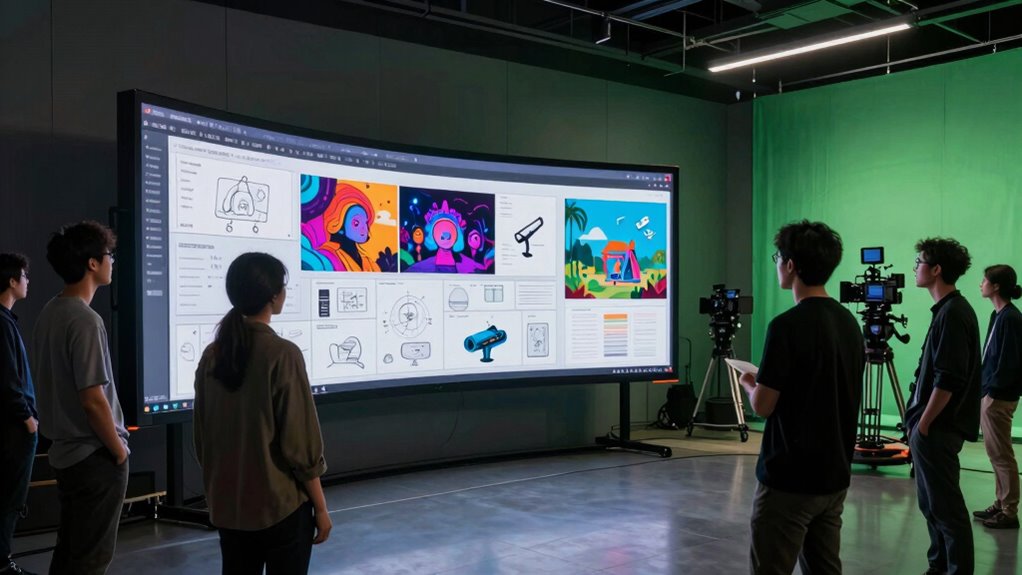

AI storyboarding can remarkably change film production by helping you visualize scenes more quickly and accurately, reducing the need for manual sketches. It enhances character development and offers visual cues that deepen storytelling. Collaboration becomes smoother with shared platforms, allowing teams to work simultaneously and avoid misunderstandings. Plus, you can simulate how scenes will look on different screens, ensuring consistency. Stay with us, and you’ll discover how these innovations can transform your entire filmmaking process.

Get business pricing on tech for your team
- Business-only prices and quantity discounts
- Tax-exempt purchasing
- Multiple users, one account, clear invoices
Key Takeaways
- AI automates scene visualization, enabling faster planning and reducing manual sketching efforts.
- It enhances character development by analyzing scripts to suggest visual cues and expressions.
- AI improves storyboard cohesion by recommending visual styles and identifying potential layout issues.
- Collaboration is streamlined through shared platforms allowing real-time edits and seamless communication.
- Scene simulation across different displays ensures visual consistency and better preparation for various viewing environments.
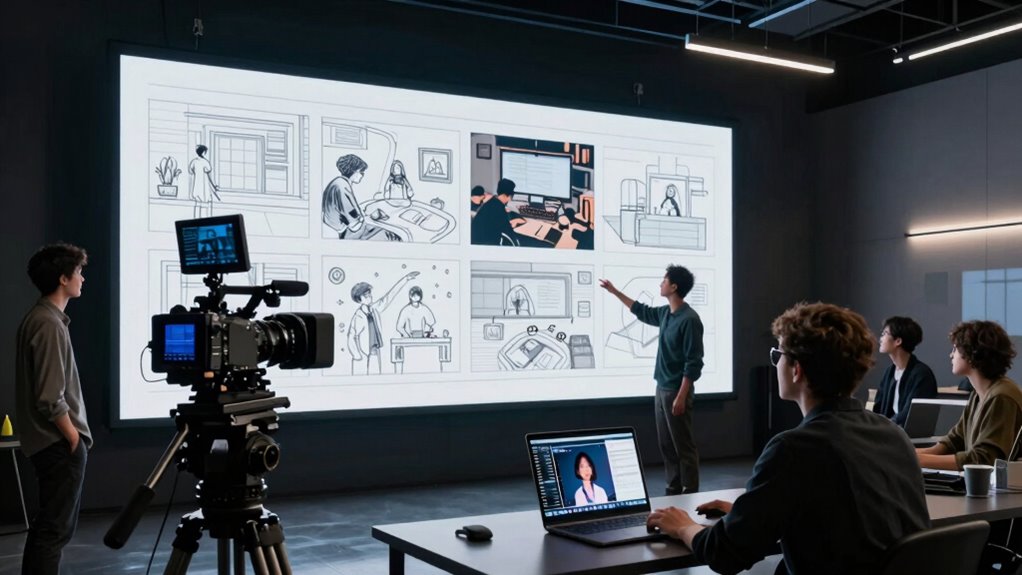
Have you ever wondered how filmmakers bring complex scenes to life before shooting begins? It’s a process that involves meticulous planning, where every detail is mapped out to guarantee the final product aligns with the director’s vision. At the heart of this process lies storyboarding, a pivotal step that helps translate ideas into visual plans. AI storyboarding is poised to revolutionize this phase, making it faster, more precise, and more creative. When you leverage AI tools, character development becomes more intuitive. These systems can analyze scripts and suggest visual cues that deepen a character’s personality and arc. By automating parts of this process, you can explore different character expressions, postures, and interactions quickly, allowing for richer, more nuanced portrayals early on. Scene visualization, which traditionally demands a high level of artistic skill and time, also benefits immensely. AI-powered storyboarding can generate detailed visuals from simple descriptions, enabling you to see how each scene might look long before a single shot is captured. This accelerates the planning process, giving you the freedom to experiment with camera angles, lighting, and composition without the need for lengthy manual sketches or multiple revisions.
Additionally, AI-driven tools utilize market evidence to suggest popular visual styles and cinematic techniques, enhancing the overall quality of the storyboards. As you work through your project, AI tools can help you identify potential issues in your scene layout or character positioning, providing real-time feedback that guarantees your vision is cohesive and effective. This technology can even suggest improvements based on cinematic principles, helping you craft scenes that are visually compelling and emotionally resonant. Scene visualization becomes more dynamic, allowing you to virtually walk through your storyboard and make adjustments on the fly, saving both time and resources. You’ll find that AI storyboarding also fosters collaboration. With shared digital platforms, your team—whether writers, designers, or cinematographers—can access and modify storyboards simultaneously, ensuring everyone remains aligned. This seamless communication reduces misunderstandings and streamlines decision-making, ultimately leading to a smoother production process. Moreover, as home theatre projectors continue to evolve with advanced features, filmmakers can simulate how their scenes will appear on different display setups, ensuring visual consistency across various viewing environments. The integration of programming principles can further optimize these tools, making them adaptable to unique project needs and workflows.
In essence, AI storyboarding empowers you to explore your creative ideas more thoroughly and efficiently. It enhances character development by offering detailed visual insights early in the process and transforms scene visualization from a time-consuming task into an interactive, flexible experience. As technology continues to evolve, it’s clear that AI-driven storyboarding will become an indispensable tool in modern film production, helping creators bring their visions to life with unprecedented clarity and speed.
As an affiliate, we earn on qualifying purchases.
Frequently Asked Questions
How Does AI Storyboarding Compare to Traditional Methods?
AI storyboarding surpasses traditional methods by leveraging AI creativity and storyboard automation, making the process faster and more efficient. You can generate detailed storyboards quickly, saving time and resources, while maintaining high visual quality. Unlike manual drawing, AI tools offer customizable options for scenes and angles, allowing you to experiment freely. This shift boosts your production speed and creativity, ultimately transforming how you visualize and plan your films.
What Skills Are Needed to Implement AI Storyboarding?
To implement AI storyboarding, you need a blend of creative collaboration and technical proficiency. You should be comfortable working with AI tools, understanding how to train and customize them for your project. Strong collaboration skills help you communicate your vision effectively with artists and developers. Additionally, a good grasp of storytelling principles guarantees the AI-generated storyboards align with your creative goals, making your production process more efficient and innovative.
Can AI Create Entirely Original Storyboards?
Yes, AI can create entirely original storyboards, fostering creative collaboration and visual innovation. It analyzes vast data to generate unique visuals that align with your narrative, often suggesting ideas you might not have considered. While AI handles the technical and creative aspects, your input remains essential for refining the story. This partnership enhances efficiency and sparks fresh ideas, transforming traditional storyboarding into a more dynamic, innovative process.
How Does AI Handle Complex or Abstract Scenes?
Did you know that 67% of filmmakers believe AI can enhance visual storytelling? When handling complex or abstract scenes, AI uses advanced algorithms to generate abstract visualization, translating vague concepts into concrete images. It relies on creative interpretation to interpret symbolic elements, ensuring the scene retains emotional depth and coherence. By balancing technical precision with imaginative rendering, AI can effectively bring intricate or abstract ideas to life on the storyboard.
What Are the Ethical Considerations of AI in Film?
You need to take into account AI bias, which can perpetuate stereotypes or inaccuracies if not carefully managed, impacting the authenticity of your film. Additionally, ethical concerns around creative collaboration arise, as relying on AI might diminish human input and originality. To navigate these issues, guarantee diverse data sources and maintain human oversight, fostering a balanced partnership between AI tools and your creative vision.
As an affiliate, we earn on qualifying purchases.
Conclusion
As you embrace AI storyboarding, think of it as a guiding star illuminating your creative journey. It’s the compass that transforms raw ideas into vivid visions, shaping your film’s destiny. With each digital sketch, you ignite a spark that fuels innovation and efficiency. Embrace this tool as the heartbeat of your storytelling, and watch your cinematic dreams soar beyond the horizon—turning the intangible into a masterpiece that echoes through time.
As an affiliate, we earn on qualifying purchases.
cinematic scene simulation projector
As an affiliate, we earn on qualifying purchases.
As an affiliate, we earn on qualifying purchases.
Fall Picks
fall essentials
As an affiliate, we earn on qualifying purchases.