
For most homes, I’d start with the eufy Security Floodlight Camera E340: its dual lenses, 360° coverage, and zoom suit buyers who want to monitor a broad area from one position. The Reolink Elite Floodlight WiFi 4K is a stronger fit for wide panoramic views, while the Reolink Solar Floodlight Camera avoids the need for a wired power connection. The key tradeoff is between coverage and image detail, fixed power and installation flexibility, and a single camera versus a coordinated multi-camera setup. AI detection can help focus alerts, but its usefulness depends on the areas you need to cover and the camera’s placement. Read on for my ranking and a breakdown of which model fits each property-security need.

Get business pricing on tech for your team
- Business-only prices and quantity discounts
- Tax-exempt purchasing
- Multiple users, one account, clear invoices
Key Takeaways
- The E340 stands out for adjustable coverage: its dual-lens design, 360° view, and 8X zoom give it a different role from the fixed panoramic view of Reolink’s Elite.
- Reolink Elite prioritizes broad, detailed coverage: its 4K resolution and 180° panoramic field of view make it the clearest fit for watching a wide frontage with a wired camera.
- Wired models suit security-first installations: the Tapo C720, Aosu 3K, and wired Reolink and eufy options avoid relying on solar charging, but require a suitable power point and installation plan.
- Solar Reolink models trade lighting output for placement flexibility: their up-to-1000-lumen rating is lower than the brighter wired options, while the single camera and two-pack configurations serve different coverage plans.
- Not every 2K camera is interchangeable: the E30 adds AI detection and tracking, while Tapo’s C710 combines pan-and-tilt movement with a 1500-lumen floodlight.
| eufy Security Floodlight Camera E340, Dual-Lens, 360° Coverage, 8X Zoom |  | Best Overall for Active, Wide-Area Monitoring | Resolution: 2K dual view / 3K wide angle | Zoom: 8x hybrid | Coverage: 360° combined pan-and-tilt | VIEW ON AMAZON | See Our Full Breakdown |
| Tapo C720 2K QHD Outdoor Wired Floodlight Security Camera, 2800 Lumens |  | Best for Brighter Fixed-Area Coverage | Resolution: 2K QHD, 4 MP | Field of view: 150° | Floodlight: 2,800 lumens, adjustable | VIEW ON AMAZON | See Our Full Breakdown |
| eufy Security Floodlight Camera E30 – 2K AI Detection & Tracking (Outdoor) |  | Best for Subscription-Free 360° Tracking | Resolution: 2K | Frame rate: 20 fps | Coverage: 360° pan-and-tilt | VIEW ON AMAZON | See Our Full Breakdown |
| Reolink Elite Floodlight WiFi 4K 8MP 180° Panoramic Wired Floodlight Camera |  | Best for High-Detail Panoramic Coverage | Resolution: 8 MP, 4K Ultra HD | Viewing angle: 180° | Floodlight: 3,000 lumens, adjustable warm or cool light | VIEW ON AMAZON | See Our Full Breakdown |
| Reolink Solar Floodlight Security Camera Wireless Outdoor, 2K 4MP, Up to 1000lm |  | Best for Wireless, Solar-Powered Placement | Resolution: 2K, 4 MP | Field of view: 150° | Floodlight: Up to 1,000 lumens | VIEW ON AMAZON | See Our Full Breakdown |
| Tapo 2K Outdoor Pan/Tilt Wired Floodlight Security Camera, C710, 1500LM |  | Best for Active Area Tracking | Resolution: 2K | Floodlight output: 1500 lumens | Detection range: 25 ft | VIEW ON AMAZON | See Our Full Breakdown |
| Aosu Wired Floodlight Camera 3K 2600-Lumen 24/7 Recording |  | Best for Continuous Recording | Resolution: 3K UHD | Zoom: 6× digital | Floodlight output: 2600 lumens | VIEW ON AMAZON | See Our Full Breakdown |
| Reolink Solar Floodlight Security Camera – Wireless Outdoor, Up to 1000 lm (2 Pack) |  | Best for Wire-Free Two-Point Coverage | Resolution: 4 MP (2K) | Lens: 150° ultra-wide | Floodlight output: 1000 lumens | VIEW ON AMAZON | See Our Full Breakdown |
| eufy Security Floodlight Camera E340 with AC Cable |  | Best for Flexible Cable Installation | Camera resolution: Up to 3K | Camera coverage: 360° horizontal pan | Zoom: 8× hybrid | VIEW ON AMAZON | See Our Full Breakdown |
| ai floodlight cameras for property security | Resolution | Connectivity | Floodlight |
|---|---|---|---|
| eufy Security Floodlight Camer | 2K dual view / 3K wide angle | Dual-band 2.4 GHz / 5 GHz Wi-Fi 6 | 2,000 lumens |
| Tapo C720 2K QHD Outdoor Wired | 2K QHD, 4 MP | Wired; 2.4 GHz Wi-Fi | 2,800 lumens, adjustable |
| eufy Security Floodlight Camer | 2K | 2.4 GHz Wi-Fi | 2,000 lumens |
| Reolink Elite Floodlight WiFi | 8 MP, 4K Ultra HD | Dual-band Wi-Fi 6 | 3,000 lumens, adjustable warm or cool light |
| Reolink Solar Floodlight Secur | 2K, 4 MP | Dual-band Wi-Fi 6, 2.4 GHz / 5 GHz | Up to 1,000 lumens |
| Tapo 2K Outdoor Pan/Tilt Wired | 2K | — | — |
| Aosu Wired Floodlight Camera 3 | 3K UHD | — | — |
| Reolink Solar Floodlight Secur | 4 MP (2K) | — | — |
| eufy Security Floodlight Camer | — | Dual-band Wi-Fi 6, 2.4 GHz and 5 GHz | — |
More Details on Our Top Picks
eufy Security Floodlight Camera E340, Dual-Lens, 360° Coverage, 8X Zoom
The eufy E340 is the most capable pick here for monitoring a property with changing activity across a driveway, yard, or multiple approach paths. Its 360° pan-and-tilt coverage, dual lenses, and 8x hybrid zoom pair broad observation with the ability to inspect distant details; AI auto-tracking can keep a person or vehicle in view as it moves. Compared with the fixed 150° view of the Tapo C720, it can follow activity beyond one camera angle, though the Tapo provides a brighter 2,800-lumen light. The E340 also offers local storage without a required subscription and a 95 dB alarm. The tradeoffs are hardwired installation, bounded local storage, and a drop to 2K resolution while AI tracking is active.
Pros:- Pan-and-tilt coverage with dual lenses and 8x hybrid zoom helps monitor both broad areas and distant details.
- AI auto-tracking follows detected movement instead of leaving activity at the edge of a fixed view.
- Local microSD or HomeBase storage is available without a required monthly subscription.
- A 2,000-lumen light and 95 dB alarm add active deterrence.
Cons:- Wired outdoor installation limits placement and may require electrical work.
- Local storage is limited to microSD capacity or a compatible HomeBase.
- Resolution drops to 2K when AI tracking is active.
Best for: Property owners with wired power at a central mounting point who want a camera to follow movement across a driveway, yard, or broad entry area without a required cloud subscription.
Not ideal for: Renters or owners without a suitable outdoor power connection, and buyers who need the highest resolution to remain active during AI tracking or want storage beyond local card and HomeBase options.
- Resolution:2K dual view / 3K wide angle
- Zoom:8x hybrid
- Coverage:360° combined pan-and-tilt
- Floodlight:2,000 lumens
- Alarm:95 dB
- Connectivity:Dual-band 2.4 GHz / 5 GHz Wi-Fi 6
- Storage:MicroSD up to 128 GB or eufy HomeBase S380
- Power and mounting:Wired; wall, junction box, or ceiling mount
Our verdict“Choose the E340 if you want a tracking camera with broad, adjustable coverage and local recording, and can accept wired installation and a tracking-related resolution tradeoff.”
Tapo C720 2K QHD Outdoor Wired Floodlight Security Camera, 2800 Lumens
The Tapo C720 suits buyers who want a fixed camera view backed by a particularly bright, adjustable light. Its 2,800-lumen floodlight exceeds the 2,000-lumen output of both eufy E340 and E30, making it a stronger fit when lighting a defined driveway or entrance is as important as recording it. A 150° field of view and 270° motion detection zone cover a substantial area, while AI alerts distinguish people, pets, and vehicles. Unlike the eufy E340, the C720 does not pan to follow activity, so moving subjects can leave its view. It supports local recording and two-way audio, but requires wired power and connects over 2.4 GHz Wi-Fi only. Choose it for illumination and straightforward zone monitoring, not all-around tracking.
Pros:- Adjustable 2,800-lumen lighting is brighter than the eufy E340 and E30 floodlights.
- A 150° camera view and 270° motion detection zone cover a broad fixed area.
- AI alerts identify people, pets, and vehicles.
- Local recording and two-way audio support direct monitoring and communication.
Cons:- Wired installation restricts placement and may require an existing power connection.
- The fixed camera view cannot follow movement like the eufy E340 or E30.
- Wi-Fi connectivity is limited to 2.4 GHz.
Best for: Homeowners with a wired mounting point who need bright adjustable lighting and AI alerts across a defined driveway, side yard, or entrance.
Not ideal for: Buyers who need a camera to pan after people or vehicles, require 5 GHz Wi-Fi, or need flexible placement away from wired power.
- Resolution:2K QHD, 4 MP
- Field of view:150°
- Floodlight:2,800 lumens, adjustable
- Night vision range:Up to 30 feet
- Motion detection zone:270°
- Connectivity:Wired; 2.4 GHz Wi-Fi
- Weather resistance:IP65
- Audio and storage:Two-way audio; local recording and optional cloud storage
Our verdict“Pick the C720 for bright illumination and AI alerts over a fixed area, but choose a pan-and-tilt model if you need subjects followed across the property.”
eufy Security Floodlight Camera E30 – 2K AI Detection & Tracking (Outdoor)
The eufy E30 brings the main benefit of a moving floodlight camera—360° pan-and-tilt with AI tracking—without the E340’s dual-lens and zoom emphasis. It can patrol on a schedule and track detected people or vehicles, which helps when a fixed view might miss movement crossing a yard. Its 2K video and 2,000-lumen light are a practical match for everyday outdoor monitoring, and the listing specifies no monthly fee. Against the eufy E340, the E30 is the simpler choice if pan-and-tilt coverage is the priority, but it lacks the E340’s stated dual-lens 3K wide-angle view and 8x hybrid zoom. The Tapo C720 produces more light, though it cannot pan. The E30 still needs hardwired power, and its 20 fps video and 2.4 GHz Wi-Fi are relevant limits.
Pros:- 360° pan-and-tilt coverage with automatic patrol scheduling can monitor changing activity across a property.
- AI tracking follows detected people and vehicles rather than relying only on a fixed view.
- The 2,000-lumen floodlight supports full-color outdoor visibility.
- No monthly fee is listed, and the housing is rated IP65.
Cons:- Hardwired power limits placement flexibility.
- Video runs at 20 fps, and connectivity is limited to 2.4 GHz Wi-Fi.
- The large, roughly four-pound unit may be conspicuous on some walls.
Best for: Homeowners who want scheduled 360° patrols and AI tracking for people and vehicles, with no monthly fee, and already have a suitable wired installation point.
Not ideal for: Buyers who want higher frame rates, 5 GHz Wi-Fi, solar or battery placement, or the E340’s dual-lens and hybrid-zoom capabilities.
- Resolution:2K
- Frame rate:20 fps
- Coverage:360° pan-and-tilt
- Floodlight:2,000 lumens
- AI detection:Human and vehicle detection with tracking
- Connectivity:2.4 GHz Wi-Fi
- Power and mount:Hardwired; wall mount
- Weather resistance:IP65
Our verdict“Choose the E30 for 360° AI tracking and scheduled patrols without a monthly fee, provided its hardwired power and 20 fps video suit your setup.”
Reolink Elite Floodlight WiFi 4K 8MP 180° Panoramic Wired Floodlight Camera
The Reolink Elite Floodlight is the resolution-led pick for buyers who want a wide, fixed overview rather than a camera that turns to follow activity. Its 4K 8MP video and 180° panoramic view provide more detail across a broad scene than the 2K Tapo C720 or eufy E30, which can help when reviewing a large entrance or frontage. Adjustable 3,000-lumen lights add more output than those models, while person, vehicle, and animal detection and smart zones help focus alerts. Compared with the eufy E340, it offers higher stated resolution and more supported microSD capacity, but lacks the E340’s 360° pan-and-tilt tracking. Storage options include microSD, NVR, and FTP/NAS, with no subscription required. Factor in the separate power adapter and card, plus the stated firmware-update caveat around pink image issues.
Pros:- 4K 8MP video captures more stated detail than the 2K Tapo C720 and eufy E30.
- A 180° panoramic view covers a wide scene without requiring pan-and-tilt movement.
- Adjustable 3,000-lumen lighting offers the highest listed brightness in this group.
- Supports microSD up to 512 GB, NVR, and FTP/NAS storage with no subscription fee listed.
Cons:- The required 5V/2A power adapter is not included.
- MicroSD card is not included, so local recording requires a separate storage purchase.
- The product data notes firmware updates may be needed to address pink image issues.
Best for: Property owners who want detailed 4K footage across a wide driveway, frontage, or yard and can provide the listed power adapter and their own storage.
Not ideal for: Buyers who want a camera to pan and track subjects, prefer a ready-to-install power setup, or do not want to manage firmware updates and storage purchases.
- Resolution:8 MP, 4K Ultra HD
- Viewing angle:180°
- Floodlight:3,000 lumens, adjustable warm or cool light
- AI detection:Person, vehicle, and animal detection with smart zones
- Storage:MicroSD up to 512 GB, NVR, or FTP/NAS
- Connectivity:Dual-band Wi-Fi 6
- Power:100–240 V AC; 5V/2A adapter required and not included
- Weather resistance and mounting:IP65; wall or ceiling mount
Our verdict“Choose the Reolink Elite for 4K detail, panoramic coverage, and flexible storage, but look to the eufy E340 if active pan-and-tilt tracking matters more.”
Reolink Solar Floodlight Security Camera Wireless Outdoor, 2K 4MP, Up to 1000lm
The Reolink Solar Floodlight Camera stands apart from the wired models by letting buyers monitor an outdoor location without routing power to it. Its solar panel and rechargeable battery can simplify placement at a detached garage, gate, or far edge of a yard, provided the panel receives enough sunlight. The 2K 4MP camera has a 150° field of view, color night vision, AI detection, two-way audio, and local microSD storage up to 512 GB. Its light reaches 1,000 lumens, well below the 2,800-lumen Tapo C720 and the 3,000-lumen Reolink Elite, so it is better suited to targeted illumination than lighting a broad area. Compared with the pan-and-tilt eufy E30, this Reolink trades active tracking for wireless placement. Solar performance depends on exposure, and the card is not included.
Pros:- Solar and rechargeable-battery power allow placement where wired cameras such as the Tapo C720 are impractical.
- 2K 4MP color night vision and a 150° view support broad outdoor monitoring.
- AI detection, two-way talk, and a siren provide alerting and deterrence features.
- Supports local microSD storage up to 512 GB and dual-band Wi-Fi 6.
Cons:- The 1,000-lumen light is substantially dimmer than the wired Tapo C720 and Reolink Elite floodlights.
- Solar charging depends on sufficient sunlight, which can limit performance at shaded sites.
- MicroSD card is not included, and setup may be more involved than mounting a wired camera.
Best for: Owners of detached garages, gates, sheds, or yard corners without convenient wiring who can mount the solar panel where it receives adequate sunlight.
Not ideal for: Buyers who need strong area-wide floodlighting, dependable operation in a shaded location, pan-and-tilt tracking, or a storage card included in the package.
- Resolution:2K, 4 MP
- Field of view:150°
- Floodlight:Up to 1,000 lumens
- Power:Solar with rechargeable battery
- Connectivity:Dual-band Wi-Fi 6, 2.4 GHz / 5 GHz
- Storage:MicroSD up to 512 GB
- Weather resistance:IP66
- Audio and alerts:Two-way talk, siren, and floodlight alerts
Our verdict“Choose this Reolink for a hard-to-wire location with good sun exposure, but pick a brighter wired model if floodlighting a large area is the priority.”
Tapo 2K Outdoor Pan/Tilt Wired Floodlight Security Camera, C710, 1500LM
The Tapo C710 is a strong fit when a property has several nearby approach paths and you want the camera to follow movement rather than rely on one fixed view. Its pan-and-tilt coverage and AI tracking can keep a moving subject in frame, while the dual camera-and-PIR detection is designed to help distinguish activity from less relevant motion. The 1500-lumen light is useful for illuminating a modest yard or entrance, though it is less powerful than the Aosu’s 2600-lumen floodlight or the Tapo C720’s 2800 lumens. The tradeoff is a 25-foot stated detection range and a requirement for 2.4 GHz Wi-Fi. Local microSD storage avoids a required cloud plan, but the card is sold separately; cloud storage requires a subscription after the free trial.
Pros:- Pan-and-tilt movement with AI tracking can keep moving activity in view.
- Camera and PIR detection provide two ways to identify motion.
- 1500-lumen floodlight adds useful illumination around entrances and smaller outdoor areas.
- IP65 weather resistance suits outdoor installation.
Cons:- The stated detection range is 25 feet, which may limit coverage on larger properties.
- Requires a 2.4 GHz Wi-Fi network.
- MicroSD card is not included, and cloud storage requires a subscription after the free trial.
Best for: Homeowners who want a wired camera to track people across a compact yard or driveway and prefer the option of local microSD recording.
Not ideal for: People monitoring a large or especially dark property who need a longer stated detection range, stronger illumination, or 5 GHz Wi-Fi support.
- Resolution:2K
- Floodlight output:1500 lumens
- Detection range:25 ft
- PIR detection angle:165°
- Pan/tilt:Yes
- Weather resistance:IP65
- Local storage:microSD up to 512 GB
- Cloud storage:Available; subscription required after free trial
Our verdict“Choose the Tapo C710 for trackable coverage across a compact outdoor area, but look to the brighter Aosu or Tapo C720 for more light over a larger space.”
Aosu Wired Floodlight Camera 3K 2600-Lumen 24/7 Recording
The Aosu is the clearest match here for buyers who want a persistent record, not only clips triggered by motion: it supports 24/7 continuous recording alongside 3K video. Its 360° horizontal and 90° vertical movement, 6× digital zoom, and 270° PIR detection area suit broad coverage, while 2600-lumen lighting outshines the Tapo C710’s 1500 lumens. AI detection for people, pets, and vehicles can make alerts more relevant, and full-color low-light imagery helps retain detail after dark. That capability comes with practical costs: the camera is wired and requires hardwiring, so it is less convenient to install than the Reolink solar pair. The powerful light may also disturb neighbors or household members, and the supplied details do not specify local storage capacity or cloud terms.
Pros:- 24/7 continuous recording provides a persistent view rather than motion-only coverage.
- 3K video and 6× digital zoom give more detail for reviewing activity.
- 360° horizontal and 90° vertical movement with a 270° PIR area supports broad coverage.
- 2600-lumen floodlight and full-color low-light imagery aid nighttime monitoring.
Cons:- Hardwiring makes installation less flexible than the solar-powered Reolink option.
- 2600-lumen illumination may be intrusive in closely spaced homes.
- The supplied product details do not specify storage capacity or cloud-storage terms.
Best for: Property owners with a suitable hardwired mounting point who want continuous recording, broad pan-and-tilt coverage, and strong illumination.
Not ideal for: Renters or anyone avoiding electrical work, as well as households where a bright motion-activated floodlight could disturb neighbors.
- Resolution:3K UHD
- Zoom:6× digital
- Floodlight output:2600 lumens
- PIR detection area:270°
- Field of view:360° horizontal, 90° vertical
- Night vision:Full-color imagery in low light
- Power:Wired
- Recording:24/7 continuous
Our verdict“Pick the Aosu if continuous recording and strong coverage matter more than simple installation or a less conspicuous light.”
Reolink Solar Floodlight Security Camera – Wireless Outdoor, Up to 1000 lm (2 Pack)
This Reolink two-pack is the lineup’s most flexible choice for adding light and camera coverage where running power cables would be difficult. Its solar-charged battery and wireless installation can simplify placement at two separate spots, while the 150° lens gives each camera a broad view. The 2K color night vision, selectable AI detection for people, vehicles, and animals, and 1000-lumen motion light support practical monitoring without the brighter output of the Aosu or eufy E340. A built-in siren and two-way talk add ways to respond to activity. The main constraint is sunlight: the product calls for at least an hour of direct sun daily to maintain full overnight operation. Local microSD storage is available, but cards are not included.
Pros:- Two cameras allow coverage at separate entry points without running power cables.
- Solar charging reduces dependence on mains power at the mounting location.
- 150° lens and 2K color night vision support broad, color-capable monitoring.
- Selectable AI detection, two-way talk, and a 110 dB siren add alert and deterrence options.
Cons:- Requires at least one hour of direct sunlight daily for full overnight operation.
- 1000-lumen output is lower than the Aosu and eufy E340 floodlights.
- microSD cards are not included, and no Reolink hub is supplied.
Best for: Homeowners who need cameras at two locations without nearby wiring and can mount the solar panels where they receive direct sunlight.
Not ideal for: Properties with shaded mounting points or buyers who need continuous recording or a floodlight brighter than 1000 lumens.
- Resolution:4 MP (2K)
- Lens:150° ultra-wide
- Floodlight output:1000 lumens
- Solar panel:3 W
- Power:Rechargeable battery with solar charging
- Wi-Fi:Dual-band Wi-Fi 6, 2.4 GHz and 5 GHz
- Local storage:microSD up to 512 GB
- Audio:Two-way talk and 110 dB siren
- Pack:2 cameras
Our verdict“Choose this Reolink two-pack for solar-powered coverage at two sunlit locations, but choose a wired model for stronger lighting or continuous recording.”
eufy Security Floodlight Camera E340 with AC Cable
The eufy E340 stands apart through its included 20-foot AC cable, which can make placement possible without a junction box. That flexibility pairs with 360° pan coverage, AI person tracking, scheduled patrols, and dual cameras with up to 3K resolution. Compared with the Tapo C710, it offers a brighter 2000-lumen light and 8× hybrid zoom; compared with the Aosu, it trades 24/7 recording out of the box for local recording that depends on a microSD card or HomeBase S380. A built-in 95 dB alarm adds an audible response. One limitation affects detail: resolution drops to 2K when AI Tracking or Dual Views is enabled, so buyers must choose between those functions and the highest stated resolution.
Pros:- Included 20-foot AC cable allows installation without a junction box.
- 360° pan coverage, AI person tracking, and scheduled patrols support broad monitoring.
- Dual cameras offer up to 3K resolution and 8× hybrid zoom.
- 2000-lumen light and 95 dB alarm provide illumination and an audible deterrent.
Cons:- Continuous recording requires a microSD card or eufy HomeBase S380.
- Resolution drops to 2K when AI Tracking or Dual Views is enabled.
- Corded power still limits placement to locations reachable by the included cable.
Best for: Homeowners who need 360° tracking and want an included long AC cable for a mounting location without a junction box.
Not ideal for: Buyers who need continuous recording without purchasing local storage hardware or who expect full 3K resolution while using AI Tracking or Dual Views.
- Camera resolution:Up to 3K
- Camera coverage:360° horizontal pan
- Zoom:8× hybrid
- Light output:2000 lumens
- Alarm:95 dB
- Local storage:microSD up to 128 GB or eufy HomeBase S380
- Connectivity:Dual-band Wi-Fi 6, 2.4 GHz and 5 GHz
- Power and cable:Corded electric; included 20 ft (6 m) AC cable
- Mount:Wall mount
Our verdict“Choose the E340 for flexible cable placement and tracked 360° coverage, provided you accept separate local-storage hardware and reduced resolution with tracking enabled.”
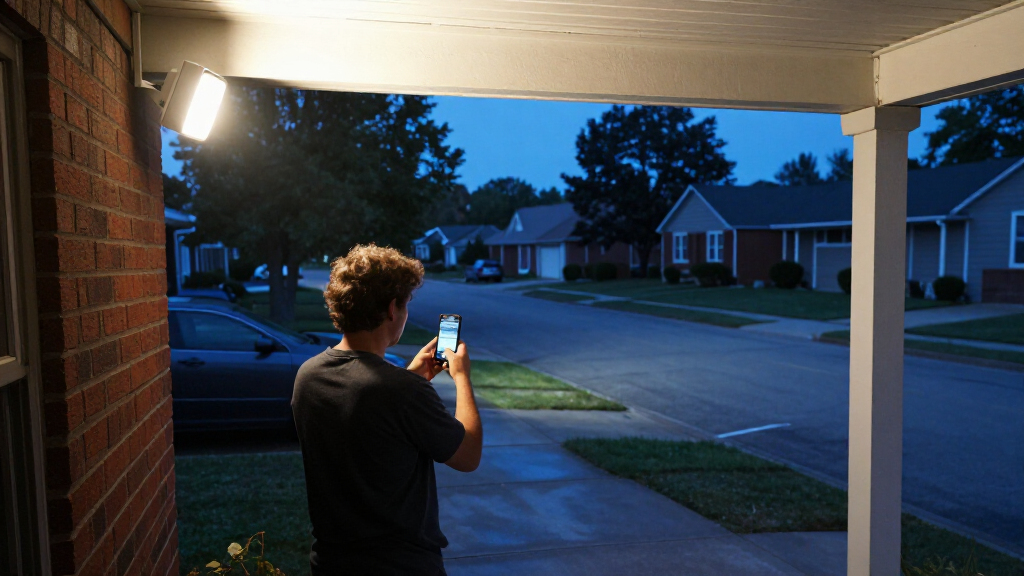
How We Picked
I ranked these cameras by how well their stated features answer common property-security needs: useful coverage, image detail, light output, AI detection or tracking, power setup, and the ability to monitor more than one area. I also weighed practical ownership factors, including whether a model calls for wired installation, whether solar placement is workable, and whether a single camera or multipack better fits the property. A feature mattered most when it changed what a buyer could actually monitor, rather than simply adding a larger specification.
The order reflects distinct strengths rather than a claim that one camera suits every home. I placed the E340 first for its combination of multi-angle coverage and zoom, then gave the Reolink Elite a strong position for buyers who prioritize a wide, high-resolution view. The remaining picks rank by their more specific advantages—bright wired lighting, tracking, solar flexibility, or multi-camera coverage—and by the tradeoffs that come with each. Product names that appear in more than one configuration are treated separately because the AC-cable and two-pack versions can change installation and coverage decisions.
Factors to Consider When Choosing Ai Floodlight Cameras For Property Security
Choosing an AI floodlight camera is less about finding the biggest number on a spec sheet and more about matching its view, power source, and alert behavior to your property. I’d map the areas you want to watch before choosing between a fixed camera, a movable one, or a pair of cameras.
Match the field of view to the shape of the area
A long driveway, a wide front wall, and a side gate create different coverage problems. A panoramic camera can watch a broad, continuous scene from one mounting point, while pan-and-tilt or 360° designs can redirect attention across a larger area. That movement does not mean every angle is monitored at the same moment, so check how the camera handles simultaneous activity in separate parts of the scene. Zoom is useful for inspecting a distant point, but it cannot replace a better mounting position or a clear view. Avoid placing a camera where roof edges, trees, or walls block the area you expect it to cover.
Plan power and installation before choosing a camera
Wired floodlights make the most sense when a suitable power connection already serves the mounting location or when you are prepared to arrange installation. They are a poor fit for a location where running power would be difficult or unsafe. Solar models offer more freedom to place a camera, but that freedom depends on access to sunlight and a position where the panel can receive it. Shaded eaves, winter conditions, and limited sun exposure can affect charging, so assess the site across the day rather than choosing a spot based only on its camera angle. If you are comparing a camera with an AC cable to a hardwired unit, confirm how each version is meant to be powered before planning the install.
Treat AI alerts as a setup choice, not a guarantee
AI detection can reduce unnecessary notifications by helping distinguish relevant motion from general activity, but it does not remove the need to tune the camera. Trees, passing traffic, pets, and neighboring spaces can all affect what triggers an alert. Start by aiming the camera at the area you care about and setting detection zones that exclude busy edges of the view. Tracking can help follow movement, though a moving camera may turn away from another area you also want to monitor. If missed events would be a serious concern, consider whether a fixed view or a second camera is a better complement to a tracking model.
Balance light output against where the light will land
Lumen figures help compare brightness, but they do not tell the whole story: beam direction, mounting height, and obstructions affect how useful the light is on the ground. A brighter wired floodlight may suit a large driveway, while a lower-output solar unit can be a better match for a gate or a location without wiring. Think about whether the goal is to illuminate a broad approach, a doorway, or a specific blind spot. Poor placement can create glare into windows or leave shadows in the very area the camera should watch. If lighting is already handled by other fixtures, prioritize camera coverage and power flexibility over extra brightness.
Choose resolution for the distance you need to identify
Higher resolution can preserve more detail across a wide scene, but it cannot compensate for a distant subject, poor lighting, or a camera pointed at the wrong angle. A close entrance may not need the same level of detail as a broad frontage where a person appears small in the frame. Compare resolution alongside field of view: a very wide image spreads its pixels across more area, while zoom or a narrower view can make a target easier to inspect. Consider what you actually need from recorded footage, such as seeing activity across a driveway or checking a person at a door. Avoid paying attention to resolution alone when lighting and placement will determine whether the footage is useful.
Buy for the number of areas you need to watch
One camera can be a good fit for a clear focal point, but a home with a front entrance, side gate, and detached garage may need separate views. A two-camera pack can cover distinct approaches without asking one device to pan between them, though you will need suitable mounting locations and power for both units. Avoid assuming that a multipack automatically creates continuous coverage; gaps can remain between fields of view. Decide whether you want a broad overview from one position or independent monitoring of several areas. That decision often matters more than choosing between two similar resolution figures.
Frequently Asked Questions
Should I choose a wired floodlight camera or a solar one?
Choose wired if the intended mounting point has a suitable power connection and you want to avoid depending on solar exposure. A wired model also makes sense when stronger floodlight output is a priority, as several options here offer higher stated brightness than the solar Reolink cameras. Solar is a better fit for a detached area or a spot where adding wiring would be difficult, provided the panel can receive adequate sunlight. Check shade patterns and seasonal sun before relying on a solar location. The right choice depends on the site’s power access, not just the camera’s feature list.
Is a panoramic camera better than a pan-and-tilt camera for a driveway?
It depends on whether you need a wide area visible at once or want the camera to move toward activity. The Reolink Elite’s 180° panoramic view is suited to a broad, continuous frontage, while the Tapo C710’s pan-and-tilt design can redirect its view. Movement can be useful when activity occurs in different directions, but a camera pointed toward one event may not show another area at the same time. For a driveway beside a side entrance, compare the two locations’ angles and decide whether a fixed panorama or a second camera leaves fewer gaps. A wider view is not automatically a substitute for separate coverage of separate approaches.
Does AI tracking mean I can monitor several areas with one camera?
No. Tracking can help a camera follow movement, but it does not give a single lens an uninterrupted view of every direction at once. When the camera turns to follow a subject, it may stop showing another area that matters to you. The E30’s AI detection and tracking may suit a focused zone where following motion is useful, while a fixed panoramic view can be a better match for a wide frontage that should remain visible. For separated locations such as a driveway and side gate, independent cameras are often a more reliable layout. Check the expected viewing behavior before treating tracking as a replacement for additional coverage.
Is a 4K floodlight camera worth choosing over a 2K model?
4K can help preserve detail across a broad scene, which makes the Reolink Elite an appealing choice for buyers who want a high-resolution panoramic view. A 2K model may be enough for a closer entrance or a smaller area where the subject fills more of the frame. Resolution alone cannot promise clear identification: distance, lighting, camera angle, and the width of the view all affect the detail you get. If the camera will watch a large frontage, consider both its resolution and how much area that resolution must cover. If it will watch a nearby doorway, placement may matter more than moving up in resolution.
When does a two-camera pack make more sense than one feature-rich camera?
A two-camera pack is a better fit when you need to watch two distinct locations at the same time, such as a front approach and a side gate. The Reolink solar two-pack can offer placement flexibility at both spots, but each unit still needs a workable solar position. One feature-rich camera, such as the E340, can be a simpler choice when the area is centered around one mounting point and its movable or dual-lens coverage meets the need. Before choosing a pack, sketch each camera’s view and check for gaps where the areas meet. Separate cameras add coverage options, but also mean more devices to place and maintain.
Conclusion
Best overall: I’d choose the eufy Security Floodlight Camera E340 for a single mounting point where adjustable coverage and zoom matter. Best premium: the Reolink Elite is the clearest match for buyers who want a wired panoramic view with 4K detail. Best value: the Tapo C720 is a practical wired pick for shoppers prioritizing a 2K camera and a bright 2800-lumen floodlight. Best for beginners: the Tapo C710 offers a straightforward use case for someone who wants pan-and-tilt movement and a 1500-lumen light in one camera. Best for specific needs: choose the Reolink solar two-pack for separated locations without convenient wiring, or the E30 if AI detection and tracking are the main draw. My final choice would depend on the area to cover first, then the available power and lighting setup.
Halloween Picks

Jenaai 5.3-Foot Motion-Activated Halloween Animatronic Skeleton

Max Fun 10-Foot Halloween Dragon and Pumpkin Inflatable Archway with LED Lights

MGparty 14.5 ft Halloween Inflatable Walk-In Pumpkin House with LED Lights
As an affiliate, we earn on qualifying purchases.