For AI field capture, an SSD has to do more than hold files: it needs enough capacity for raw footage, sensor data, and model inputs, plus transfer speeds and physical protection that suit the way you work. I rank the SanDisk Extreme PRO 4TB first for demanding capture and rapid offload, the Samsung T7 Shield 4TB as the more balanced rugged choice, and the SanDisk Extreme Portable 8TB for teams whose main constraint is storage capacity. Their tradeoffs are substantial: the fastest drives require compatible hosts, the biggest drive has inconsistent protection claims in its supplied details, and the most rugged compact option here has only 1TB. My picks focus on how those differences affect capture, backup, and field handling—not peak numbers alone.

Get business pricing on tech for your team
- Business-only prices and quantity discounts
- Tax-exempt purchasing
- Multiple users, one account, clear invoices
Key Takeaways
- The SanDisk Extreme PRO 4TB pairs the lineup’s highest stated transfer speed with 3,100 MB/s average sustained writes for 2TB–4TB models, but a compatible host is needed to benefit.
- The Samsung T7 Shield 4TB is a practical field-work balance: IP65 protection, 3-meter drop resistance, and 4TB capacity, though its USB 3.2 Gen 2 speed is below the fastest options.
- The SanDisk Extreme Portable 8TB holds the most data, but its supplied protection details conflict: IP65 versus IP55 and 3-meter versus 2-meter drop claims.
- The Samsung T9 4TB offers up to 2,000 MB/s read and write speeds with thermal management, but its USB 3.2 Gen 2×2 interface means host compatibility matters.
- The SanDisk Professional PRO-G40 offers IP68 protection and Thunderbolt 3 performance, but its 1TB capacity is a limitation for long capture days or large AI datasets.
| SanDisk 4TB Extreme PRO Portable SSD |  | Best Overall for Fast Field Offloads | Capacity: 4TB | Maximum transfer speed: Up to 4,000 MB/s | Average sustained write speed: 3,100 MB/s for 2TB–4TB models | VIEW ON AMAZON | See Our Full Breakdown |
| Samsung T7 Shield Portable SSD 4TB |  | Best Balanced Rugged Pick | Capacity: 4TB | Interface: USB 3.2 Gen 2 | Read speed: Up to 1,050 MB/s | VIEW ON AMAZON | See Our Full Breakdown |
| SanDisk Extreme Portable SSD 8TB |  | Best for Maximum Capacity | Capacity: 8TB | Read speed: Up to 1,050 MB/s | Write speed: Up to 1,000 MB/s | VIEW ON AMAZON | See Our Full Breakdown |
| Samsung T9 Portable SSD 4TB | 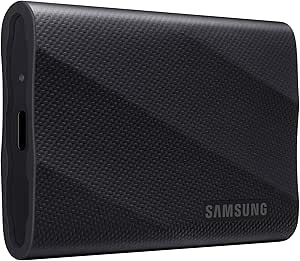 | Best for Thermal-Managed USB 3.2 Gen 2×2 Workflows | Capacity: 4TB | Interface: USB 3.2 Gen 2×2 | Read speed: Up to 2,000 MB/s | VIEW ON AMAZON | See Our Full Breakdown |
| SanDisk Professional PRO-G40 1TB External SSD |  | Best Premium-Rugged Compact Drive | Capacity: 1TB | Maximum read speed: Up to 3,000 MB/s | Maximum write speed: Up to 2,500 MB/s | VIEW ON AMAZON | See Our Full Breakdown |
| rugged ssds for ai field capture | Capacity | Interface | Read speed | Write speed |
|---|---|---|---|---|
| SanDisk 4TB Extreme PRO Portab | 4TB | — | — | — |
| Samsung T7 Shield Portable SSD | 4TB | USB 3.2 Gen 2 | Up to 1,050 MB/s | Up to 1,000 MB/s |
| SanDisk Extreme Portable SSD 8 | 8TB | USB-C, USB 3.2 Gen 2 | Up to 1,050 MB/s | Up to 1,000 MB/s |
| Samsung T9 Portable SSD 4TB | 4TB | USB 3.2 Gen 2×2 | Up to 2,000 MB/s | Up to 2,000 MB/s |
| SanDisk Professional PRO-G40 1 | 1TB | — | — | — |
More Details on Our Top Picks
SanDisk 4TB Extreme PRO Portable SSD
I put the SanDisk Extreme PRO 4TB first because its stated performance is the strongest match for crews that capture heavily and need to offload quickly. It lists speeds up to 4,000 MB/s and average sustained writes of 3,100 MB/s for the 2TB–4TB models. That sustained figure is more useful than a peak alone when the job involves extended transfers or a steady flow of large files. Its IP65 protection and 3-meter drop rating also make it a credible field option rather than a speed-focused drive with no stated environmental protection.
Against the Samsung T7 Shield, this SanDisk is the performance pick, while the T7 Shield is easier to justify for ordinary USB 3.2 Gen 2 workflows where 1,050 MB/s is already enough. The Extreme PRO’s headline speed depends on the host and workload, so it will not deliver its full advantage on every capture device. I would also pick the 8TB SanDisk Extreme Portable instead when capacity and fewer media swaps matter more than throughput. Here, the 4TB Extreme PRO’s balance of sustained writes, protection, and capacity earns its lead, provided the host can make use of the speed.
Its role is clear: this is the strongest all-round choice for data-heavy field teams with a fast transfer path. It is less compelling as a simple archive drive or for a camera that cannot use its performance ceiling. The listed 256-bit AES encryption adds a useful safeguard for sensitive capture, but buyers should still keep a separate backup; one portable drive is not a complete data-protection plan.
Pros:- Up to 4,000 MB/s stated transfer speed and 3,100 MB/s average sustained write speed for 2TB–4TB models.
- IP65 protection and stated drop resistance up to 3 meters.
- 256-bit AES password-protected encryption.
- 4TB capacity suits substantial capture sessions without moving to the 8TB model.
Cons:- Maximum performance depends on the host device and workload.
- Costs the capacity-focused buyer the space offered by the 8TB SanDisk option.
- Its speed advantage is less useful on hosts that cannot use a high-bandwidth connection.
Best for: Field crews capturing large video or sensor datasets who have a compatible high-speed host and need strong sustained write performance.
Not ideal for: Buyers whose camera or computer is limited to slower USB speeds, or teams that need the largest possible onboard capacity.
- Capacity:4TB
- Maximum transfer speed:Up to 4,000 MB/s
- Average sustained write speed:3,100 MB/s for 2TB–4TB models
- Ingress protection:IP65
- Drop protection:Up to 3 m
- Encryption:256-bit AES
Our verdict“I recommend the Extreme PRO 4TB for fast, sustained field capture when the host can support its performance.”
Samsung T7 Shield Portable SSD 4TB
The Samsung T7 Shield 4TB is the sensible middle ground in this group: it combines a clear IP65 rating and 3-meter drop resistance with enough space for a serious field session. Its USB 3.2 Gen 2 speeds—up to 1,050 MB/s read and 1,000 MB/s write—are well below the SanDisk Extreme PRO’s stated ceiling, but those speeds fit many laptop and portable workflows without requiring a Thunderbolt connection. I rank it above the T9 for buyers who place more weight on explicit ruggedness than on faster transfer numbers.
For AI capture, the T7 Shield’s advantage is its balance of protection, capacity, and broad compatibility. It works with PC, Mac, Android devices, gaming consoles, and listed iPhone 15 Pro support. Samsung Magician adds health monitoring, which can help teams check drive status during routine maintenance, although it does not replace a second copy of important files. The included cable is useful in a field kit, but buyers should check that their host supports USB 3.2 Gen 2 and UASP to approach the stated speeds.
Compared with the SanDisk Extreme Portable 8TB, this Samsung offers less than half the capacity but has consistent supplied IP65 and drop-protection claims. Compared with the T9, it gives up speed for a more clearly documented rugged role. I would choose it for general field use, not maximum-throughput recording or storage-heavy projects where 4TB fills quickly. Its speed ceiling is the main tradeoff, and real-world water and dust performance may vary from controlled testing conditions.
Pros:- IP65 water and dust resistance with stated 3-meter drop resistance.
- 4TB capacity and up to 1,050 MB/s read and 1,000 MB/s write.
- Broad compatibility across PC, Mac, Android, consoles, and listed iPhone 15 Pro support.
- Samsung Magician software supports drive health monitoring.
Cons:- Slower stated speeds than the Extreme PRO and Samsung T9.
- Maximum speeds require a USB 3.2 Gen 2 host with UASP enabled.
- Protection ratings come from controlled conditions and may not match every real-world incident.
Best for: Field operators who want a 4TB drive with clear water, dust, and drop protection for compatible USB-C devices.
Not ideal for: Teams that need very high sustained transfer speeds, or capture projects likely to exceed 4TB between offloads.
- Capacity:4TB
- Interface:USB 3.2 Gen 2
- Read speed:Up to 1,050 MB/s
- Write speed:Up to 1,000 MB/s
- Water and dust protection:IP65
- Drop resistance:9.8 ft (3 m)
- Compatibility:PC, Mac, Android, gaming consoles, and listed iPhone 15 Pro support
- Software:Samsung Magician
Our verdict“I would choose the T7 Shield for dependable, clearly specified ruggedness when extreme transfer speeds are not the priority.”
SanDisk Extreme Portable SSD 8TB
If field capture generates more data than the other drives can comfortably hold, the SanDisk Extreme Portable SSD 8TB is the capacity leader here. Eight terabytes can reduce the need to swap drives or stop to clear space during a long collection day. Its stated speeds—up to 1,050 MB/s read and 1,000 MB/s write—are close to the T7 Shield’s, so this is not a high-throughput alternative to the Extreme PRO. I rank it for storage headroom, not for the fastest ingest.
The portable design includes a carabiner loop and silicone shell, features that suit a drive carried between a vehicle, field station, and workstation. It also lists password protection with 256-bit AES encryption and a five-year limited warranty. Those are useful additions for mobile data handling, but the protection claims need extra caution: the supplied details say IP65 in the title and IP55 in the description, while drop resistance is stated as both 3 meters and 2 meters. I would not treat the higher figures as settled without checking the exact product documentation for the unit being purchased.
That uncertainty separates it from the Samsung T7 Shield, whose supplied rating and drop figure are consistent. The 8TB SanDisk is a better match when data capacity is the deciding factor and less suitable when a buyer needs unambiguous protection specifications. Its transfer speeds also trail the Extreme PRO and Samsung T9, so repeated large offloads will take longer on a compatible high-speed workflow. For teams that can offload less often, however, its extra space may matter more than peak speed.
Pros:- Largest capacity in this lineup at 8TB.
- Up to 1,050 MB/s read and 1,000 MB/s write speeds.
- Portable design includes a carabiner loop and silicone shell.
- 256-bit AES password protection and a five-year limited warranty.
Cons:- Supplied water and dust details conflict between IP65 and IP55.
- Supplied drop-protection claims conflict between 2 meters and 3 meters.
- Slower than the Extreme PRO and T9 on stated maximum speeds.
Best for: Capture teams prioritizing 8TB of portable storage, fewer drive swaps, and encryption for field files.
Not ideal for: Buyers who need the clearest documented ruggedness claims or the highest transfer speeds for frequent large offloads.
- Capacity:8TB
- Read speed:Up to 1,050 MB/s
- Write speed:Up to 1,000 MB/s
- Interface:USB-C, USB 3.2 Gen 2
- Drop protection:Up to 3 m in item details; up to 2 m in product description
- Encryption:256-bit AES hardware encryption
- Warranty:Five-year limited warranty
Our verdict“I recommend this SanDisk when maximum capacity matters more than top speed or fully consistent protection specifications.”
Samsung T9 Portable SSD 4TB
The Samsung T9 4TB is the speed-oriented choice for buyers whose computers support USB 3.2 Gen 2×2. It states read and write speeds up to 2,000 MB/s and includes thermal management for sustained workloads. That makes it a substantial step up from the T7 Shield’s 1,050 MB/s read ceiling and 1,000 MB/s write ceiling on paper. For repeated transfers of AI video or large data batches, the T9’s higher stated throughput can shorten time spent waiting at the workstation.
Its appeal is less clear for direct capture in rough conditions because the supplied product information does not provide an IP rating or drop-resistance figure. That is why I place it below the rugged-rated T7 Shield even though the T9 is faster. A portable SSD can be fast and still be a less reassuring choice when rain, dust, or knocks are part of the job. The T9 is better treated as a fast field-to-workstation transfer drive used with sensible physical protection, rather than as the most rugged drive in this selection.
It supports desktops, cameras, gaming consoles, and iPhone 15 Pro video recording, while Samsung Magician offers drive monitoring, firmware updates, and encryption support. Compatibility still deserves attention: the stated 2,000 MB/s relies on the right interface and a suitable host, and older or lower-bandwidth devices will limit results. Compared with the SanDisk Extreme PRO, the T9 has a lower stated peak but a clear thermal-management feature; compared with the T7 Shield, it favors speed over documented impact and ingress protection. I would choose it when the host supports Gen 2×2 and the work is transfer-heavy.
Pros:- Up to 2,000 MB/s read and write speeds.
- Thermal management is intended for extended workloads.
- Works with desktops, cameras, gaming consoles, and iPhone 15 Pro recording.
- Samsung Magician supports monitoring, firmware updates, and encryption.
Cons:- USB 3.2 Gen 2×2 support is required to approach the stated speed.
- Supplied specifications do not state an ingress or drop-protection rating.
- Its 4TB capacity is lower than the 8TB SanDisk Extreme Portable.
Best for: Creators and field technicians with a compatible USB 3.2 Gen 2×2 host who need fast transfers and thermal management.
Not ideal for: Buyers needing explicitly stated water, dust, or drop ratings for exposed field capture.
- Capacity:4TB
- Interface:USB 3.2 Gen 2×2
- Read speed:Up to 2,000 MB/s
- Write speed:Up to 2,000 MB/s
- Thermal feature:Thermal management for sustained workloads
- Compatibility:Desktops, cameras, gaming consoles, and iPhone 15 Pro
- Software:Samsung Magician for monitoring, firmware updates, and encryption
Our verdict“I would select the T9 for fast, sustained transfers on a compatible host, but not as my first choice for exposed capture conditions.”
SanDisk Professional PRO-G40 1TB External SSD
The SanDisk Professional PRO-G40 makes the most sense when physical protection and a high-speed workstation connection matter more than capacity. It offers Thunderbolt 3 at up to 40 Gbps, alongside USB-C at 10 Gbps, with stated maximum read and write speeds of 3,000 MB/s and 2,500 MB/s. Its IP68 rating, 4,000 lb crush resistance, and 3-meter drop rating give it the strongest explicit protection package in this group. The drop claim is specifically for a carpeted concrete floor, so it should not be read as a guarantee against every fall or surface.
In the lineup, the PRO-G40 is more ruggedly specified than the T7 Shield, while the Extreme PRO offers substantially more capacity at 4TB and has a stated sustained-write figure. The PRO-G40’s aluminum core helps dissipate heat, a useful design detail during demanding transfers, but the drive holds only 1TB. For AI field capture, that can mean more frequent offloads or carrying additional drives. Its strongest speeds also depend on Thunderbolt 3; over USB-C, the connection is listed at 10 Gbps, so buyers should match their expectations to the port in use.
I rank it fifth overall because its protection is outstanding but its capacity is the least flexible for long capture sessions. It is a compelling compact shuttle for sensitive equipment teams moving a working set between a rugged field station and a Thunderbolt workstation. It is not the economical choice for a large rolling archive or crews that want one drive to hold a full day of high-bitrate capture. Compared with the 8TB SanDisk, it trades substantial storage headroom for the most clearly specified ingress and crush protection.
Pros:- IP68 dust and water resistance.
- Stated 4,000 lb crush resistance and 3-meter drop resistance on carpeted concrete.
- Thunderbolt 3 and USB-C connectivity.
- Aluminum core helps dissipate heat.
Cons:- 1TB capacity is the smallest in this comparison.
- Maximum speeds depend on using Thunderbolt 3.
- Drop resistance is specified for a carpeted concrete floor rather than all surfaces.
Best for: Technicians who need IP68 protection, crush resistance, and Thunderbolt 3 transfers in a compact 1TB drive.
Not ideal for: Teams recording large datasets for long periods without offloading, or users without Thunderbolt 3 who expect maximum speeds.
- Capacity:1TB
- Maximum read speed:Up to 3,000 MB/s
- Maximum write speed:Up to 2,500 MB/s
- Connectivity:Thunderbolt 3 (40 Gbps), USB-C (10 Gbps)
- Dust and water protection:IP68
- Crush resistance:4,000 lb
- Drop resistance:3 m on a carpeted concrete floor
- Thermal design:Aluminum core
Our verdict“I recommend the PRO-G40 when rugged protection and Thunderbolt performance outweigh the need for larger capacity.”

How We Picked
I ranked these drives around the demands of AI field capture: moving large video and sensor files, keeping working data available between locations, and reducing the risk that dust, water, or drops interrupt a project. Capacity matters because field crews may not have a dependable network or time to clear storage. Sustained write performance matters more than a brief peak when recording or offloading long sequences. I also weighed connection type, stated ruggedness, compatibility, and whether the supplied product information leaves a meaningful uncertainty.
The ranking is not a claim that every listed maximum speed will appear on every laptop, camera, or phone. Host interface and workload shape actual performance, so a faster drive may be a poor fit when the recording device cannot use its connection. I gave extra weight to clearly stated protection and useful capacity, then separated products by their role: fastest general-purpose field drive, best balance, highest-capacity option, fast thermal-managed choice, and premium protection in a compact capacity. I did not infer missing durability ratings or invent drawbacks for a product whose supplied details omit them; I instead flag practical limits such as interface requirements and capacity.
| rugged ssds for ai field capture | Interface | Read speed | Write speed |
|---|---|---|---|
| SanDisk 4TB Extreme PRO Portab | — | — | — |
| Samsung T7 Shield Portable SSD | USB 3.2 Gen 2 | Up to 1,050 MB/s | Up to 1,000 MB/s |
| SanDisk Extreme Portable SSD 8 | USB-C, USB 3.2 Gen 2 | Up to 1,050 MB/s | Up to 1,000 MB/s |
| Samsung T9 Portable SSD 4TB | USB 3.2 Gen 2×2 | Up to 2,000 MB/s | Up to 2,000 MB/s |
| SanDisk Professional PRO-G40 1 | — | — | — |
Factors to Consider When Choosing Rugged Ssds For Ai Field Capture
I would choose an SSD for the whole capture workflow, not by its highest speed figure in isolation. The best match depends on where data is written, how much is collected before offload, and what conditions the drive must tolerate.Match the drive to the capture host
A drive can only reach the speed its connection and host allow. The SanDisk Extreme PRO and PRO-G40 have the highest stated ceilings, but their advantages matter only with compatible equipment. The T9’s 2,000 MB/s rating is tied to USB 3.2 Gen 2×2, while the PRO-G40’s maximum speeds call for Thunderbolt 3. If the field laptop, camera, or phone has a slower port, the T7 Shield or 8TB SanDisk may be a more practical match. Check the host’s exact interface and cable support before choosing by advertised peak speed.
Treat sustained writing as a capture requirement
For long recordings and repeated data collection, sustained write performance can matter more than a short burst. The Extreme PRO is the only product here with an average sustained write figure supplied: 3,100 MB/s for 2TB–4TB models. The T9 lists thermal management for extended workloads, though no sustained speed figure is provided. Peak speeds describe a capability under suitable conditions; they do not promise the same result for every file size, temperature, or host. If your workflow writes continuously, look beyond a headline maximum and plan a full test with your actual capture setup.
Size capacity around time between offloads
Capacity determines how long a drive can remain in service before files need to move elsewhere. The 8TB SanDisk Extreme Portable is the clear choice for the most space, while the three 4TB options offer a middle ground. The PRO-G40’s 1TB can work as a compact shuttle or temporary working drive, but it is the least suited to long capture days without backup or offload access. Estimate total data per session, leave room for working files, and carry a second copy of important material rather than relying on a single SSD.
Read ruggedness claims carefully
IP ratings and drop claims can help compare devices, but they are not interchangeable promises of survival in every field incident. The T7 Shield’s IP65 and 3-meter drop details are consistent in the supplied specifications; the PRO-G40 goes further with IP68 and a stated crush rating. The 8TB SanDisk has conflicting IP and drop figures in the supplied description, so I would verify the exact product documentation before relying on a specific protection level. Even a rugged drive should be kept sealed, secured, and protected from avoidable impacts.
Plan security and backup as separate jobs
Encryption can reduce exposure if a drive is lost, but it cannot restore files after damage or failure. The SanDisk options list 256-bit AES encryption, and Samsung Magician supports encryption functions for the T9. Use a secure password, follow your organization’s data-handling policy, and maintain a second copy in a separate location when the data matters. Health-monitoring software is helpful for maintenance, but a status check is not a backup. Field workflows should include a clear routine for verifying copied files before the original media is erased.
Frequently Asked Questions
Which SSD in this group is the fastest for AI field capture?
The SanDisk Extreme PRO lists the highest maximum transfer speed, up to 4,000 MB/s, and an average sustained write speed of 3,100 MB/s for its 2TB–4TB models. The SanDisk Professional PRO-G40 also has high stated speeds, but its maximum figures depend on Thunderbolt 3. Actual results depend on the host, connection, workload, and files being moved, so neither figure is a guarantee for every field device.
Which option has the most clearly specified ruggedness?
The SanDisk Professional PRO-G40 lists IP68 protection, 4,000 lb crush resistance, and a 3-meter drop rating on a carpeted concrete floor. The Samsung T7 Shield is another clear rugged choice, with IP65 and 3-meter drop resistance. The 8TB SanDisk Extreme Portable’s supplied IP and drop claims conflict, so I would verify the exact documentation rather than assume the higher figures apply.
Is 1TB enough for AI field capture?
It can be enough for a smaller working set, shorter recording sessions, or a shuttle drive that is offloaded regularly. The PRO-G40’s 1TB capacity is the smallest in this lineup, so it is less suited to long capture periods without access to backup storage. Estimate the data generated per session and leave space for additional files; for fewer swaps, the 4TB models or 8TB SanDisk provide more headroom.
Will these drives reach their listed speeds with a phone or camera?
Not automatically. Speeds depend on the device’s port, supported interface, cable, workload, and sometimes the recording application. The T9 needs a USB 3.2 Gen 2×2 host to approach its stated maximum, while the PRO-G40’s highest figures require Thunderbolt 3. Before buying for direct capture, check that the camera or phone explicitly supports the drive and connection you plan to use.
Should I use one rugged SSD as my only field copy?
No. Rugged construction and encryption address different risks, and neither removes the chance of file loss. I would keep a verified second copy on separate media or another storage system before deleting source files. For sensitive capture, combine a sensible backup routine with encryption where supported, secure handling, and periodic drive-health checks.
Conclusion
My first choice for fast, data-heavy capture is the SanDisk Extreme PRO 4TB, provided the host can use its performance. For a more balanced field drive with clear IP65 and drop claims, I would choose the Samsung T7 Shield 4TB. Teams that need the most space should look at the SanDisk Extreme Portable 8TB, but verify its conflicting protection specifications before relying on a particular rating. Choose the Samsung T9 when USB 3.2 Gen 2×2 speed and thermal management matter more than stated ruggedness, and the SanDisk Professional PRO-G40 when IP68 and crush resistance outweigh its 1TB limit. Whatever the pick, I would pair it with a verified backup and match the connection to the actual capture host.
Halloween Picks

12-Foot Inflatable Pumpkin Halloween Archway with LED Lights

MGparty 14.5FT Halloween Inflatable Walk-in Pumpkin House with LED Lights

DomKom 6 ft Halloween Inflatable Ghosts Roasting Marshmallows
As an affiliate, we earn on qualifying purchases.