Smart blood pressure monitors with trend analysis pair home readings with an app or connected display so you can spot patterns and share records with a clinician. My best overall pick is the Withings BPM Connect, which combines Wi-Fi and Bluetooth syncing with a streamlined record-keeping approach. The OMRON Complete stands out for adding an ECG function, while the RunStar offers an easy-to-read display and a wide cuff range. The main tradeoffs are how much app detail you want, whether you need a larger cuff or a built-in screen, and how much setup you are willing to manage. Read on for the full comparison and help matching each option to your routine.

Get business pricing on tech for your team
- Business-only prices and quantity discounts
- Tax-exempt purchasing
- Multiple users, one account, clear invoices
Key Takeaways
- Withings BPM Connect leads for connected record keeping: Wi-Fi and Bluetooth give it a stronger case for people who want readings to sync without relying only on a phone connection.
- OMRON Complete serves a more specialized need: Its blood pressure and ECG functions make it distinct, but buyers who only want BP trends may prefer a simpler monitor.
- RunStar and wide-cuff models address fit and readability: RunStar pairs a large, color-coded display with a stated 8.6–16.5-inch cuff range, while RENPHO and iHealth also foreground wider cuff fit.
- Connectivity varies more than the word “smart” suggests: Wi-Fi, Bluetooth, app access, and onboard data storage affect how easily readings become a usable history.
- App-based tracking is only useful when the routine sticks: A clear display, comfortable cuff, and simple syncing may matter more for consistent records than extra connected features.
| Bluetooth Blood Pressure Monitor Upper Arm, FDA-Cleared BP Machine with App |  | Best Overall for Detailed Trends | Measurement type: Upper-arm blood pressure | Accuracy: ±3 mmHg | Reading time: About 30 seconds | VIEW ON AMAZON | See Our Full Breakdown |
| Trakr Smart Blood Pressure Monitor with App |  | Best for Doctor-Ready Reports | Measurement data: Systolic pressure, diastolic pressure, and pulse | Connectivity: Bluetooth | App: MedM for Android and Apple devices | VIEW ON AMAZON | See Our Full Breakdown |
| OMRON Complete 2-in-1 Upper Arm Blood Pressure Monitor with EKG | 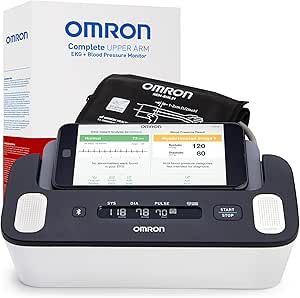 | Best for Blood Pressure and EKG Tracking | Measurement types: Blood pressure and EKG | On-device storage: Up to 90 readings | Connectivity: Bluetooth | VIEW ON AMAZON | See Our Full Breakdown |
| Withings BPM Connect Blood Pressure Cuff – FDA Cleared, Wi-Fi & Bluetooth |  | Best for Automatic Wi-Fi Sync | Model: WPM05 | Measurement type: Upper-arm blood pressure and heart rate | Connectivity: Wi-Fi and Bluetooth | VIEW ON AMAZON | See Our Full Breakdown |
| OMRON Evolv Wireless Upper Arm Blood Pressure Monitor |  | Best Compact Pick for OMRON App Users | Type: Wireless upper-arm blood pressure monitor | Cuff range: 9–17 inches | On-device storage: Up to 100 readings | VIEW ON AMAZON | See Our Full Breakdown |
| RunStar Smart Blood Pressure Monitor – Upper Arm BP Cuff 8.6″-16.5″, Large 5″ 3-Color LED Display, FSA/HSA Eligible, Digital Automatic with iOS & Android App |  | Best for Clear, Guided Readings | Cuff size: 8.6–16.5 inches | Display: 5.0-inch, three-color LED | Battery life: Up to 5 months at twice-daily use | VIEW ON AMAZON | See Our Full Breakdown |
| Dario Gen-2 Blood Pressure Monitor for Home Use – Smart App & Carry Case |  | Best for Two-Person Tracking | Display: Back-lit, color-coded LCD | Device memory: Up to 400 date-and-time-stamped records | App memory: Unlimited readings | VIEW ON AMAZON | See Our Full Breakdown |
| Withings BPM Vision Blood Pressure Monitor, FDA-Cleared, Wi-Fi & Bluetooth |  | Best for Automatic Long-Term Sync | Cuff size: 8.7–16.5 inches (22–42 cm) | Screen: 2.8-inch LCD | Connectivity: Wi-Fi and Bluetooth | VIEW ON AMAZON | See Our Full Breakdown |
| RENPHO Smart Blood Pressure Monitor, Wide Cuff, Data Storage, Bluetooth |  | Best Value for Multi-User App Tracking | Cuff size: 22–42 cm (8.75–16.5 inches) | Device memory: 240 readings per user | App storage: Unlimited | VIEW ON AMAZON | See Our Full Breakdown |
| iHealth Track Smart Upper Arm Blood Pressure Monitor with Wide-Range Cuff |  | Best for Simple Color-Coded Checks | Cuff size: 8.7–16.5 inches (22–42 cm) | Display: Large, multi-color backlit screen with green, yellow, and red coding | Device storage: 99 measurements | VIEW ON AMAZON | See Our Full Breakdown |
| ZOETOUCH Bluetooth Upper Arm Blood Pressure Monitor |  | Best for Two-User On-Device History | Measurement time: About 30 seconds | Measurement technology: Measuring While Inflating (MWI) | Irregular heartbeat detection: Yes | VIEW ON AMAZON | See Our Full Breakdown |
| Greater Goods Bluetooth Blood Pressure Monitor – Upper Arm Cuff |  | Best for Simple App-Based Trend Tracking | Cuff fit: 8.7–16.5 in (22–42 cm) | Memory: 60 readings per user; 120 total | Connectivity and app: Bluetooth; Balance Health app for iOS and Android | VIEW ON AMAZON | See Our Full Breakdown |
| smart blood pressure monitors with trend analysi | Connectivity | Display |
|---|---|---|
| Bluetooth Blood Pressure Monit | — | 2.96-inch screen with color-coded indicator and voice prompts |
| Trakr Smart Blood Pressure Mon | Bluetooth | — |
| OMRON Complete 2-in-1 Upper Ar | Bluetooth | — |
| Withings BPM Connect Blood Pre | Wi-Fi and Bluetooth | LCD with color-coded feedback |
| OMRON Evolv Wireless Upper Arm | Bluetooth | — |
| RunStar Smart Blood Pressure M | — | 5.0-inch, three-color LED |
| Dario Gen-2 Blood Pressure Mon | Bluetooth to the Dario app | Back-lit, color-coded LCD |
| Withings BPM Vision Blood Pres | Wi-Fi and Bluetooth | — |
| RENPHO Smart Blood Pressure Mo | Bluetooth to Renpho Health app | 2.91 × 2.36-inch backlit LCD |
| iHealth Track Smart Upper Arm | Bluetooth 4.0 or higher | Large, multi-color backlit screen with green, yellow, and red coding |
| ZOETOUCH Bluetooth Upper Arm B | — | — |
| Greater Goods Bluetooth Blood | — | — |
More Details on Our Top Picks
Bluetooth Blood Pressure Monitor Upper Arm, FDA-Cleared BP Machine with App
This monitor makes the strongest all-around case for trend analysis by pairing unlimited app storage and charts with PDF/CSV exports for sharing or keeping a separate record. Its stated ±3 mmHg accuracy, roughly 30-second readings, and color-coded screen also make routine tracking straightforward without requiring a phone at every measurement. Compared with the Trakr Smart Blood Pressure Monitor, it offers more detail about its display and app exports, while the Trakr specifies a two-year warranty and MedM report emailing. The tradeoff is that the monitor itself holds only 199 readings per user; longer histories depend on syncing and exporting. Its two profiles and 8.75–16.5-inch cuff suit many shared households, though buyers needing a larger cuff should check fit before choosing it.
Pros:- App provides unlimited storage, trend charts, and PDF/CSV export
- Two user profiles each hold up to 199 readings
- USB-C rechargeable battery is rated for up to 200 measurements per charge
- Color-coded 2.96-inch display and voice prompts support phone-free readings
Cons:- On-device memory is limited to 199 readings per user, so long-term history relies on app syncing or export
- Cuff tops out at 16.5 inches, which may not fit every user
Best for: Households with two users who want app-based charts and downloadable records for ongoing blood pressure tracking
Not ideal for: People who need a cuff larger than 16.5 inches or want a long reading history stored on the device without syncing
- Measurement type:Upper-arm blood pressure
- Accuracy:±3 mmHg
- Reading time:About 30 seconds
- Cuff range:8.75–16.5 inches (22–42 cm)
- On-device memory:2 users, 199 readings per user
- Connectivity and app:Bluetooth syncing to companion app with unlimited storage and trend charts
- Data export:PDF and CSV
- Battery:USB-C rechargeable; up to 200 measurements per charge
- Display:2.96-inch screen with color-coded indicator and voice prompts
Our verdict“Choose this model for shared, app-centered trend tracking with exportable records, provided its cuff fits and you are comfortable syncing to preserve a long history.”
Trakr Smart Blood Pressure Monitor with App
The Trakr is a focused choice for buyers whose main trend-analysis task is sharing readings with a clinician: its MedM app can email detailed reports, and Bluetooth keeps measurements available on Android or Apple devices. Its 22–42 cm cuff range matches the Withings BPM Connect, while its USB-C battery supports up to 100 uses per charge. Compared with the Bluetooth Blood Pressure Monitor with the 2.96-inch display, Trakr provides less information about on-device feedback and memory, so it is harder to judge how useful it is when the phone is not nearby. The product details list systolic, diastolic, and pulse readings but do not specify a display or built-in history capacity. This makes it a better fit for app-led reporting than for buyers seeking a richly specified standalone monitor.
Pros:- MedM app syncs readings on Android and Apple devices
- Can email detailed reports to a doctor
- Adjustable cuff fits 22–42 cm arms
- USB-C rechargeable battery supports up to 100 uses per charge
Cons:- Syncing and report sharing depend on the MedM app
- Product information does not specify the display or on-device reading storage
- Battery life per charge is lower than the up-to-200-measurement claim for the Bluetooth Blood Pressure Monitor with app
Best for: People who use an Android or Apple phone and want to email blood pressure and pulse reports to a healthcare provider
Not ideal for: Buyers who want clear details about the monitor’s screen, local memory, or phone-free tracking before choosing
- Measurement data:Systolic pressure, diastolic pressure, and pulse
- Connectivity:Bluetooth
- App:MedM for Android and Apple devices
- Cuff range:22–42 cm
- Battery:Rechargeable; up to 100 uses per charge
- Charging:USB Type-C
- Report sharing:Email detailed reports to a doctor
- Warranty:2 years
Our verdict“Pick Trakr if emailed MedM reports matter more than a specified on-device display or local reading history.”
OMRON Complete 2-in-1 Upper Arm Blood Pressure Monitor with EKG
The OMRON Complete stands apart by recording blood pressure and EKG, giving buyers a broader set of heart-health data than the blood-pressure-only OMRON Evolv. Bluetooth and the OMRON Connect app add trend tracking and report sharing, so the extra measurement type can sit alongside a longer digital record. That combination suits people who specifically want both readings in one home device, but an EKG feature should not be mistaken for a diagnosis. Its local memory holds just 90 readings, fewer than the Evolv’s 100 and the Bluetooth Blood Pressure Monitor’s 199 per user; app syncing is needed for an unlimited history. The cuff fits 9–17-inch arms, slightly wider at the upper end than some alternatives, while the included case and batteries make storage and setup simpler.
Pros:- Measures both blood pressure and EKG
- OMRON Connect supports trend tracking and report sharing
- Cuff fits arms 9–17 inches
- Includes storage case and four AA batteries
Cons:- On-device memory holds only 90 readings
- Unlimited history requires Bluetooth syncing to the app
- The additional EKG capability may be unnecessary for buyers focused only on blood pressure trends
Best for: People who want to track both blood pressure and EKG readings at home and share app-based records with a clinician
Not ideal for: Buyers who only need blood pressure trends, prefer longer on-device history, or do not want to rely on an app for extended storage
- Measurement types:Blood pressure and EKG
- On-device storage:Up to 90 readings
- Connectivity:Bluetooth
- App:OMRON Connect with trend tracking and report sharing
- Cuff range:9–17 inches
- Included power:Four AA batteries
- Included accessories:Storage case, instruction manual, and quick start guide
Our verdict“Choose the OMRON Complete if EKG alongside blood pressure is a priority, rather than maximizing local blood pressure reading storage.”
Withings BPM Connect Blood Pressure Cuff – FDA Cleared, Wi-Fi & Bluetooth
The BPM Connect suits buyers who want trend records to update with little phone handling: it syncs through Wi-Fi or Bluetooth to the Health Mate app, where readings can be tracked and shared with healthcare providers. That Wi-Fi option is its clearest distinction from the Bluetooth-only OMRON Evolv and Trakr, particularly for a regular home routine. Color-coded feedback on the LCD also makes an individual result easier to interpret at the device. The rechargeable battery is rated for up to six months, reducing charging interruptions compared with monitors specified by number of readings per charge. The tradeoffs are a 22–42 cm cuff that may not fit larger arms and no built-in speaker or abnormal-reading alert system. Product details do not specify on-device memory capacity, so buyers should plan around app-based history rather than assume extensive local storage.
Pros:- Wi-Fi and Bluetooth syncing to the Health Mate app
- App supports tracking and sharing readings with healthcare providers
- LCD gives instant color-coded feedback
- Rechargeable battery is rated for up to six months
Cons:- Cuff range of 22–42 cm may not fit larger arms
- No built-in speaker or abnormal-reading alert system
- On-device reading capacity is not specified in the provided product details
Best for: People who take readings regularly at home and want Wi-Fi syncing to keep app-based trends current with minimal phone interaction
Not ideal for: People with arms outside the 22–42 cm cuff range or buyers who want audio alerts or clearly specified on-device memory
- Model:WPM05
- Measurement type:Upper-arm blood pressure and heart rate
- Connectivity:Wi-Fi and Bluetooth
- App:Health Mate
- Cuff range:22–42 cm
- Display:LCD with color-coded feedback
- Battery:Rechargeable; up to six months per charge
- Weight:12.8 ounces
- Dimensions:6.1 × 2.36 × 2.16 inches
Our verdict“Choose the BPM Connect for convenient Wi-Fi-based trend syncing, as long as its cuff fits and app-based history suits your needs.”
OMRON Evolv Wireless Upper Arm Blood Pressure Monitor
The Evolv is the more compact OMRON choice for buyers who want Bluetooth trend tracking without adding a separate base unit to their routine. It stores up to 100 readings on the monitor, then connects to OMRON Connect for unlimited storage and sharing; compatibility with Apple Health and Google Fit can also place readings alongside other health data. Compared with the OMRON Complete, it gives up EKG measurement but keeps the focus on routine blood pressure checks and adds irregular-heartbeat detection during those readings. The attached ComFit cuff creates a one-piece setup, though the 9–17-inch range may exclude some users. Its local capacity is modest beside the 199 readings per user offered by the Bluetooth Blood Pressure Monitor, so buyers who often measure without syncing should weigh that limitation.
Pros:- Bluetooth connection supports OMRON Connect trend tracking and report sharing
- Compatible with Apple Health and Google Fit
- Detects irregular heartbeats during blood pressure readings
- One-piece design includes an attached ComFit cuff
Cons:- On-device storage is limited to 100 readings
- Cuff fits arms 9–17 inches
- Does not add EKG measurement, unlike the OMRON Complete
Best for: People already using OMRON Connect, Apple Health, or Google Fit who want a compact monitor for blood pressure trends and irregular-heartbeat detection
Not ideal for: Buyers who want EKG measurements, a larger cuff range, or more than 100 readings stored locally between app syncs
- Type:Wireless upper-arm blood pressure monitor
- Cuff range:9–17 inches
- On-device storage:Up to 100 readings
- Connectivity:Bluetooth
- App compatibility:OMRON Connect, Apple Health, and Google Fit
- Irregular-heartbeat detection:Yes, during blood pressure measurements
- Included accessories:Attached ComFit cuff, instruction manual, quick start guide, and four AAA batteries
Our verdict“Choose the Evolv for a compact, app-connected blood pressure routine with irregular-heartbeat detection, not for EKG or high local storage capacity.”
RunStar Smart Blood Pressure Monitor – Upper Arm BP Cuff 8.6″-16.5″, Large 5″ 3-Color LED Display, FSA/HSA Eligible, Digital Automatic with iOS & Android App
The RunStar BP-206 makes each check easier to read and follow, pairing one-touch operation with a standout 5-inch color display and voice readouts in five languages. Its app syncs systolic, diastolic, and pulse measurements so you can follow changes over time instead of relying on device memory alone. Compared with the Dario Gen-2, RunStar puts more emphasis on immediate, accessible feedback than dual-user tracking and a carry case. Smart cuff-placement detection may help reduce errors from positioning, while the adjustable cuff serves a broad range of adult arms. The tradeoff is a smaller fit range at the low end: people with very small arms may not get a suitable fit. Buyers who want multiple household profiles may also prefer a monitor that specifically lists dual-user support.
Pros:- 5-inch, three-color display is especially easy to read at a glance
- Voice readouts in five languages offer another way to access results
- App sync tracks systolic, diastolic, and pulse trends
- Smart cuff detection can help flag improper placement
Cons:- Cuff may not fit very small arms
- Dual-user support is not specified, limiting its appeal for shared household tracking
Best for: People who want large, color-coded readings and spoken guidance alongside app-based tracking of blood pressure and pulse.
Not ideal for: People with very small arms or households that need a clearly specified dual-user mode.
- Cuff size:8.6–16.5 inches
- Display:5.0-inch, three-color LED
- Battery life:Up to 5 months at twice-daily use
- Charging time:1.5 hours with PD fast charging
- App compatibility:iOS and Android
- Voice readouts:Five languages
- Measurement technology:VTEC
Our verdict“Choose RunStar if readable, guided measurements matter more to you than explicit multi-user tracking.”
Dario Gen-2 Blood Pressure Monitor for Home Use – Smart App & Carry Case
The Dario Gen-2 is the clearest fit here for a couple or family member sharing one monitor: dual-user mode separates two people’s records, and Bluetooth sends readings to an app with unlimited digital storage. Its device memory holds up to 400 date-and-time-stamped results, which gives you a local record even when you are not checking the app. Compared with the RunStar BP-206, Dario is less focused on oversized, multilingual readouts and more useful for keeping separate household histories. The color-coded screen and irregular-heartbeat detection add helpful context, while the included carry bag suits people who take readings away from home. Its limits are the lack of an AC adapter and the finite on-device memory; for long-term trends, app syncing is the better route.
Pros:- Dual-user mode keeps two people’s readings distinct
- App provides unlimited reading storage for long-term tracking
- Stores up to 400 date-and-time-stamped readings on the device
- Carry bag and included batteries support portable use
Cons:- No AC power adapter is included
- Device memory is limited to 400 records, so continued app syncing matters for longer histories
Best for: Couples or caregivers who want two separate reading histories, app-based trend records, and a monitor that can travel.
Not ideal for: Buyers who need AC power or want to retain a large history on the monitor without syncing to an app.
- Display:Back-lit, color-coded LCD
- Device memory:Up to 400 date-and-time-stamped records
- App memory:Unlimited readings
- User capacity:Two users
- Connectivity:Bluetooth to the Dario app
- Irregular heartbeat detection:Yes
- Power and portability:Batteries included; carry bag provided; no AC adapter
- Regulatory and payment details:FDA-cleared; FSA and HSA eligible
Our verdict“Pick Dario for shared household tracking, particularly if both users will sync readings to the app.”
Withings BPM Vision Blood Pressure Monitor, FDA-Cleared, Wi-Fi & Bluetooth
Withings BPM Vision suits buyers who want a monitor to move readings into a trend history with little routine phone handling. Its Wi-Fi and Bluetooth sync send results to the Withings app, which offers unlimited data storage, while built-in tutorials guide measurement technique. That combination gives it an edge over the Bluetooth-only RENPHO, especially for people who want readings to sync over home Wi-Fi. A bright 2.8-inch screen and color-coded feedback make results easier to interpret on the device, and the stated one-year battery life reduces charging interruptions. The tradeoffs are household and compatibility restrictions: two users cannot share one phone for syncing, and the monitor is listed as incompatible with pacemakers. Buyers should also check that their phone meets the stated operating-system requirements.
Pros:- Wi-Fi and Bluetooth provide more flexible syncing than Bluetooth-only options such as RENPHO
- Unlimited app storage supports long-term trend review
- Built-in tutorials help guide measurement technique
- Stated one-year battery life reduces frequent charging
Cons:- Listed as incompatible with pacemakers
- Two household users cannot share a single phone for syncing
- Requires iOS 18 or later or Android 12 or later
Best for: People with a compatible phone who want Wi-Fi syncing, guided measurement tutorials, and a year-long battery interval for routine trend tracking.
Not ideal for: People with pacemakers, households sharing one phone between two users, or anyone using an unsupported phone operating system.
- Cuff size:8.7–16.5 inches (22–42 cm)
- Screen:2.8-inch LCD
- Connectivity:Wi-Fi and Bluetooth
- App storage:Unlimited data storage
- Battery life:Up to one year
- Regulatory status:FDA-cleared
- Phone compatibility:iOS 18+ and Android 12+
- Listed restriction:Incompatible with pacemakers
Our verdict“Choose BPM Vision if automatic Wi-Fi syncing and guided readings suit your household and device compatibility needs.”
RENPHO Smart Blood Pressure Monitor, Wide Cuff, Data Storage, Bluetooth
RENPHO delivers a practical balance for households that want app-based history without stepping up to the Withings BPM Vision’s Wi-Fi syncing. It stores 240 readings per user on the device and offers unlimited app storage, so users can review trends without treating each reading as a one-off. The 22–42 cm cuff, multi-user support, and Bluetooth connection make it a flexible shared monitor; the backlit display also keeps readings visible before opening the app. A measurement takes up to 45 seconds, a useful fit for people who check regularly. Compared with the iHealth Track, RENPHO offers more device memory per user and explicitly lists unlimited app storage, but it depends more on a smartphone for full functionality. Its cuff may also fall short for very large arms.
Pros:- Stores 240 readings per user and provides unlimited app storage
- Multi-user support helps keep household trend records organized
- Backlit display and measurements of 45 seconds or less support regular checks
- Bluetooth app works with iOS and Android
Cons:- A smartphone is needed for full app functionality
- Cuff may not fit very large arms
Best for: Households with multiple adult users who want per-user records, app-based trend tracking, and a cuff sized for most adult arms.
Not ideal for: People who want full functionality without a smartphone or whose arm circumference exceeds the listed cuff range.
- Cuff size:22–42 cm (8.75–16.5 inches)
- Device memory:240 readings per user
- App storage:Unlimited
- Display:2.91 × 2.36-inch backlit LCD
- Measurement time:Up to 45 seconds
- Connectivity:Bluetooth to Renpho Health app
- Phone compatibility:iOS and Android
- Detection:Heart rate and irregular heartbeat detection
Our verdict“Choose RENPHO for shared app-based tracking and more per-user device memory than the iHealth Track offers.”
iHealth Track Smart Upper Arm Blood Pressure Monitor with Wide-Range Cuff
The iHealth Track is a straightforward choice for people who want a clear on-device result and an app record for longer-term trends. Its green/yellow/red display gives an at-a-glance category before you open your phone, while Bluetooth sync sends readings to the free app for unlimited storage. Compared with RENPHO, it is simpler on local history: the Track holds 99 readings on the monitor, versus RENPHO’s 240 per user. That makes iHealth a better fit for buyers who mainly rely on app syncing, not those who want a deeper device-only archive. Its wide-range cuff covers 8.7–16.5 inches, and it detects heart rhythm disturbances. The main tradeoffs are the need for a compatible smartphone to access full tracking and replaceable AAA batteries rather than a rechargeable power setup.
Pros:- Color-coded backlit display makes results quick to interpret
- App stores unlimited readings for long-term trend tracking
- Wide-range cuff fits arms measuring 8.7–16.5 inches
- Detects heart rhythm disturbances
Cons:- On-device storage is limited to 99 measurements, less than RENPHO’s 240 per user
- Full functionality requires a compatible Bluetooth smartphone
- Uses replaceable AAA batteries
Best for: People who want a simple color-coded display and will regularly sync readings to a compatible iOS or Android phone.
Not ideal for: Buyers who need a large offline record history, want rechargeable power, or do not have a compatible smartphone.
- Cuff size:8.7–16.5 inches (22–42 cm)
- Display:Large, multi-color backlit screen with green, yellow, and red coding
- Device storage:99 measurements
- App storage:Unlimited readings
- Connectivity:Bluetooth 4.0 or higher
- Batteries:Four AAA batteries included
- Phone compatibility:iOS 12+ and Android 9+
- Warranty:12 months
Our verdict“Choose the iHealth Track if you prioritize easy-to-read results and app history over extensive offline storage.”
ZOETOUCH Bluetooth Upper Arm Blood Pressure Monitor
For households where two people want separate records without depending on a phone after every reading, the ZOETOUCH is a strong fit. It saves 199 readings per user on the monitor, then adds Bluetooth trend tracking and sharing through the ZOETOUCH Health app. Compared with the Greater Goods Bluetooth Blood Pressure Monitor, it holds more readings locally for each person, while Greater Goods offers unlimited app storage and includes an AC adapter. The ZOETOUCH’s app also connects with Apple Health, Google Fit, and Samsung Health, giving it broader platform integration than the Greater Goods model’s listed Apple Health support. The tradeoff is power: using batteries takes four AAA cells, and the Type-C cable powers the monitor but does not recharge them. Choose it for shared tracking; skip it if you want fewer power accessories.
Pros:- Stores up to 199 readings separately for each of two users
- Bluetooth app supports trend tracking and data sharing
- Integrates with Apple Health, Google Fit, and Samsung Health
- Broad-fit cuff and choice of AAA batteries or Type-C power
Cons:- Battery operation requires four AAA batteries
- Type-C power does not recharge batteries
Best for: Two-person households that want separate, sizable reading histories on the device alongside app-based trends and sharing.
Not ideal for: Buyers who want rechargeable operation or who prefer not to keep four AAA batteries on hand; the Type-C cable does not recharge batteries.
- Measurement time:About 30 seconds
- Measurement technology:Measuring While Inflating (MWI)
- Irregular heartbeat detection:Yes
- Memory:199 readings per user; 2 users
- Connectivity and app:Bluetooth; ZOETOUCH Health app
- Health platform integration:Apple Health, Google Fit, Samsung Health
- Cuff fit:8.7–16.5 in (22–42 cm)
- Power and clearance:4 AAA batteries or Type-C cable; US 510(k) clearance (K222887) and CE clearance
Our verdict“Choose the ZOETOUCH if two users need extensive separate on-device histories and broad health-app integration, but not if rechargeable power is a priority.”
Greater Goods Bluetooth Blood Pressure Monitor – Upper Arm Cuff
The Greater Goods Bluetooth monitor suits buyers who want a straightforward daily routine: one-touch operation, a large backlit display, and app syncing for trend tracking and unlimited storage. Its 60 readings per user (120 total) provide a useful local buffer, though the ZOETOUCH keeps substantially more readings on-device with 199 per user and supports two users. Greater Goods shifts more of the long-term record to the Balance Health app, which can also share data with a doctor and integrate with Apple Health. That makes it a better match for someone comfortable using a smartphone to review trends, not for a buyer who wants the most complete history available directly on the monitor. The included AC adapter, batteries, and travel case make its kit more ready to use than the ZOETOUCH’s listed power setup, but portable operation still relies on AAA cells.
Pros:- Balance Health app provides unlimited storage and trend tracking
- One-touch operation and large backlit display simplify daily readings
- Includes an AC adapter, four AAA batteries, and a travel case
- Adjustable cuff fits arms from 8.7 to 16.5 inches
Cons:- Stores only 60 readings per user on the device
- Full trend and storage features depend on the companion app
- Portable use requires AAA batteries
Best for: People who want simple one-touch readings and app-based long-term tracking, with a large display and a ready-to-use kit for home or travel.
Not ideal for: Buyers who want extensive on-device history or app-independent trend records; local memory is limited to 60 readings per user, and full tracking relies on the companion app.
- Cuff fit:8.7–16.5 in (22–42 cm)
- Memory:60 readings per user; 120 total
- Connectivity and app:Bluetooth; Balance Health app for iOS and Android
- Trend storage:Unlimited storage and trend tracking through the app
- Health platform integration:Apple Health
- Display and operation:Large backlit display with bold numbers; one-touch operation
- Power:4 AAA batteries; optional AC adapter
- Included accessories:Adjustable upper-arm cuff, travel case, 4 AAA batteries, AC adapter
Our verdict“Pick Greater Goods for easy app-centered tracking and a useful included kit, but choose the ZOETOUCH if local two-user history matters more.”

How We Picked
I compared these 12 monitors through the specific lens of long-term trend tracking, not just the ability to take a single blood pressure reading. The ranking weighs how readings can be stored and synced, how clearly a device presents results, cuff range and fit information, setup demands, and useful extras such as Wi-Fi, ECG, or a carrying case. I also treated a readable on-device display and an app-based history as different strengths: one helps during a measurement, while the other helps organize readings over time.
The Withings BPM Connect ranks first because its Wi-Fi and Bluetooth combination gives it a persuasive connected-record-keeping profile. The OMRON Complete follows for buyers who specifically value its additional ECG feature, while the RunStar earns a distinct place for its large color display and stated wide cuff range. The remaining options are ordered by how clearly their listed features support reliable day-to-day recording, fit flexibility, and practical use. Product names and feature claims alone do not confirm clinical validation or app quality, so I recommend checking current device instructions and compatibility before buying.
| smart blood pressure monitors with trend analysi | Connectivity |
|---|---|
| Bluetooth Blood Pressure Monit | — |
| Trakr Smart Blood Pressure Mon | Bluetooth |
| OMRON Complete 2-in-1 Upper Ar | Bluetooth |
| Withings BPM Connect Blood Pre | Wi-Fi and Bluetooth |
| OMRON Evolv Wireless Upper Arm | Bluetooth |
| RunStar Smart Blood Pressure M | — |
| Dario Gen-2 Blood Pressure Mon | Bluetooth to the Dario app |
| Withings BPM Vision Blood Pres | Wi-Fi and Bluetooth |
| RENPHO Smart Blood Pressure Mo | Bluetooth to Renpho Health app |
| iHealth Track Smart Upper Arm | Bluetooth 4.0 or higher |
| ZOETOUCH Bluetooth Upper Arm B | — |
| Greater Goods Bluetooth Blood | — |
Factors to Consider When Choosing Smart Blood Pressure Monitors With Trend Analysis
For trend analysis, choosing a monitor is only part of the decision. I would match the device to the way you will collect, review, and share readings over weeks, rather than choosing by the longest feature list.
Choose a trend record you will actually maintain
An app can make it easier to see readings over time, but the value depends on whether measurements arrive in one consistent record. Before buying, check whether the app supports the phone you use and whether multiple household members can keep separate histories. Find out if it can export or share readings in a format your clinician accepts, rather than assuming a graph can be sent directly. Some monitors also store readings on the device, which can help when your phone is not nearby, though storage limits and syncing behavior differ. A common mistake is choosing an app for its advertised charts without checking how readings are added, edited, or shared. If you want simple tracking, prioritize a low-friction routine over advanced-looking charts.
Measure your upper arm before choosing a cuff
Cuff fit affects whether a monitor is suitable for you, so use the manufacturer’s stated arm-circumference range rather than relying on labels such as “wide” or “large.” Measure around the bare upper arm where the instructions specify, and compare that number with the cuff range. If you are near either limit, check whether the maker offers another cuff size and whether it works with that specific model. A cuff that is hard to position can make regular measurements less comfortable, which may interrupt the record you hoped to build. Avoid assuming that a wider range means a better fit for every arm shape. When more than one person will use the device, confirm that the cuff works for each user.
Decide how much connectivity you need
Bluetooth usually means a phone needs to be nearby for syncing, while Wi-Fi can allow a connected monitor to send readings through a home network. That convenience can help someone who wants records updated without opening an app after every measurement, but it adds network setup and dependence on compatible services. Check whether the product needs an account, a particular phone operating system, or an active connection for core functions. If you often measure away from home, consider whether readings remain stored until they can sync later. Do not treat “smart” as proof that every reading will automatically appear in a reliable, shareable history. The right choice is the simplest connection method that fits your routine.
Pick a display that supports your measurement routine
A built-in screen and an app solve different problems: the screen shows a result at the cuff, while the app can help organize a longer record. If you prefer to take readings without holding a phone, a large, high-contrast display may be more useful than extra app functions. Color-coded indicators can draw attention to a result category, but they do not replace clinical interpretation or medical advice. Consider whether the screen is easy to read from your usual seated position and whether the controls are understandable. A compact monitor may be easier to pack but can have fewer on-device cues. Match the display to eyesight, dexterity, and where you plan to measure.
Treat specialty features as a reason to verify fit
An ECG feature, wireless syncing, or a travel case can be useful when it solves a real need, but an extra feature does not automatically make a monitor a better trend tracker. A combined ECG and blood pressure device may suit someone who wants both types of records, while a basic Bluetooth cuff can be a clearer fit for BP-only logging. Check what the ECG function records, how those results are reviewed, and whether it is intended for your situation. If you are comparing FDA-related claims, read the exact product documentation and do not assume that one clearance statement covers every feature or clinical use. Pay for added capability only when you know how you will use it. Otherwise, cuff fit, readable results, and consistent data storage deserve priority.
Plan for household use, power, and data sharing
Before choosing a monitor, check how it is powered, whether batteries are included or rechargeable, and how often the manufacturer expects them to be replaced. For shared household use, look for a clear way to keep each person’s readings separate; mixing records can make trends misleading. Confirm how long the device retains readings if syncing is delayed and what happens if you change phones or lose access to an app account. Data export matters if you want a clinician to review a history outside the manufacturer’s software. These details rarely make a product headline, yet they can decide whether a monitor remains useful over time. A dependable, understandable record is more valuable than data you cannot retrieve or attribute correctly.
Frequently Asked Questions
Is Wi-Fi worth choosing over Bluetooth for blood pressure trend tracking?
Wi-Fi can reduce the need to open a phone app beside the monitor, which may help if automatic syncing is part of your routine. Bluetooth is often enough when you keep your phone nearby and prefer to control when readings transfer. Neither connection guarantees that records will be easy to export or share, so check the app’s data options before deciding. Also verify whether the monitor stores readings when the network or phone is unavailable. Choose Wi-Fi for convenience when its setup fits your home; choose Bluetooth if a direct phone connection is simpler for you.
Should I choose a monitor with an ECG if I mainly want blood pressure trends?
Not necessarily. The OMRON Complete is the lineup’s distinct option for buyers who want both blood pressure readings and an ECG function, but that additional capability may add little if you only need a BP history. Check what the ECG feature can record and how its results are meant to be interpreted before treating it as a reason to buy. A simpler monitor may be easier to operate and keep focused on regular blood pressure measurements. If a clinician has asked you to record ECG data, confirm that the device and its output suit that request.
How can I tell whether a wide-range cuff will fit my arm?
Measure your upper arm according to the monitor’s instructions and compare the result with the cuff’s stated circumference range. Terms such as “wide cuff” do not tell you whether a particular cuff will fit, and ranges vary by model. The RunStar lists an 8.6–16.5-inch range, while RENPHO and iHealth also identify wide-range cuffs, so check each product’s own documentation rather than assuming their fit is identical. If your measurement sits close to a range boundary, ask the manufacturer about fit guidance or another compatible cuff. A suitable cuff should be part of your decision before you focus on app features.
Can I rely on an app graph to decide whether my blood pressure is controlled?
An app graph can help organize readings and show patterns, but it cannot determine by itself whether your blood pressure is controlled or what treatment you need. Readings depend on measurement technique and circumstances, so follow the device instructions and any schedule given by your clinician. Ask your clinician how many readings to collect and what values or changes they want you to report. Check whether the app lets you share the underlying readings, not only a visual summary. Use the trend record as information for a healthcare conversation, not as a substitute for one.
What should I check before buying a monitor for two people?
Confirm that the monitor or its app can keep separate user histories and that both users’ arm measurements fall within the cuff range. Find out whether each person can be identified on the device itself or whether separation happens only after syncing. Check how many readings the monitor stores and whether both records transfer reliably to the app. If one user relies on a phone and the other does not, a clear on-device display may make shared use easier. Test the setup steps on the intended phones before relying on the monitor for ongoing records.
Conclusion
For most buyers who want connected blood pressure trend records, I would start with the Withings BPM Connect as the best overall choice, particularly if Wi-Fi and Bluetooth syncing fit your routine. My best premium-feature pick is the OMRON Complete for people who have a clear use for its ECG capability; skip that added function if you only need BP tracking. For beginners who value a clear on-device result, the RunStar stands out for its large color display and stated cuff range. For a value-focused shortlist, compare the simpler Bluetooth options, including Greater Goods and ZOETOUCH, against your needs for cuff fit, app compatibility, and data storage before choosing. If arm fit is your main concern, inspect the listed cuff ranges for RENPHO and iHealth Track; for portable use, consider Dario Gen-2 and its carry case. My final recommendation is to choose the monitor whose cuff fits, records remain accessible, and setup you will repeat consistently.
Fall Picks
fall essentials
As an affiliate, we earn on qualifying purchases.