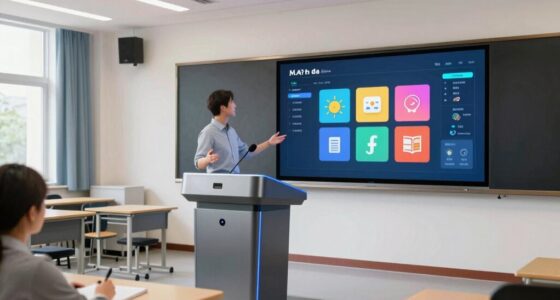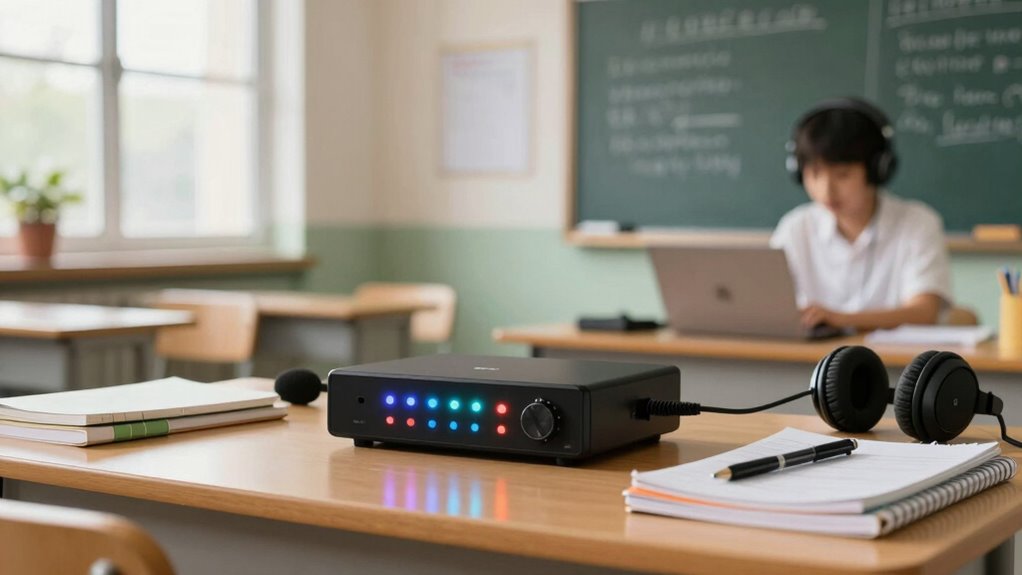

To improve AI transcription in your classroom, use high-quality microphones placed strategically close to speakers’ mouths to capture clear audio. Incorporate advanced noise reduction technology to filter out background sounds like chatter and movement, ensuring every word is accurately recorded. Regularly calibrate microphones for consistent performance and adjust placement as needed. Combining effective placement with noise suppression boosts transcription accuracy, making your lessons more accessible. Keep exploring to discover how these tools can transform your classroom environment.

Get tech for your team delivered free — and shop member deals
- Fast, free delivery on millions of items
- Access to Prime Big Deal Days deals on October 6–7
- Prime Video, Amazon Music and more included
Key Takeaways
- High-quality microphones with strategic placement enhance audio clarity for better AI transcription accuracy.
- Advanced noise reduction technology filters background sounds, ensuring clearer recordings in noisy classroom environments.
- Proper microphone calibration and automatic gain control maintain consistent audio levels for precise transcription.
- Using multiple microphones or wearable options covers different areas and reduces audio blind spots.
- Combining optimal placement with noise reduction technology results in more reliable, accurate AI-generated transcripts.
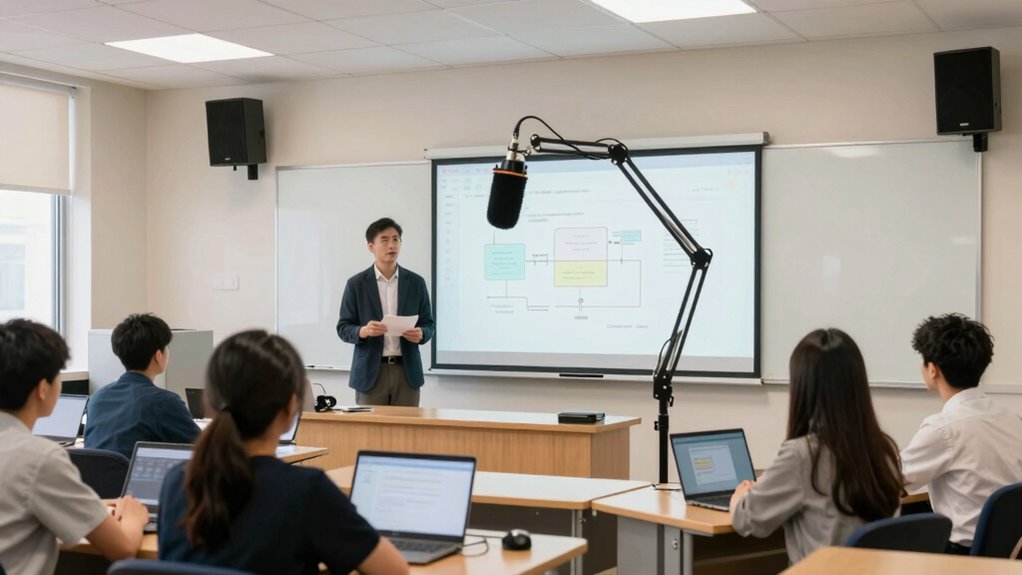
In modern classrooms, clear audio capture is crucial for effective AI transcription, guaranteeing every word spoken by teachers and students is accurately recorded and accessible. To achieve this, noise reduction becomes a critical feature. Classrooms are inherently noisy environments — chatter, movement, and external sounds can interfere with audio clarity. The best audio tools incorporate advanced noise reduction technology that filters out background noise, allowing the AI to focus solely on speech. This results in transcripts that are more accurate, with fewer errors caused by static or ambient sounds. When choosing classroom audio tools, prioritize systems that offer real-time noise suppression, so the audio remains clear regardless of the environment’s noise level.
Another essential aspect is microphone placement. Proper placement of microphones directly influences the quality of the captured audio. If the microphone is too far from the speaker, sound may be muffled or distorted, leading to inaccuracies in transcription. Conversely, placing microphones too close can cause clipping or unwanted noise from breathing or movements. The ideal microphone setup ensures that sound is captured directly and consistently from the speaker’s direction. Many classroom audio tools include strategically placed or multiple microphones that evenly pick up voices from different areas, reducing the need for constant adjustments. You should position microphones near the teacher’s desk or podium and ensure they are directed toward the speaker’s mouth without obstruction. For students, wearable or tabletop microphones can help capture individual voices clearly, especially in larger or more dynamic classrooms. Additionally, microphone placement plays a significant role in minimizing extraneous sounds and ensuring clarity, especially when combined with environmental noise control strategies. Proper microphone calibration can further optimize audio quality by adjusting sensitivity levels to suit the classroom environment. Incorporating automatic gain control can also help maintain consistent audio levels, further enhancing transcription accuracy. Regularly checking and adjusting microphone settings can also improve overall performance and prevent issues caused by poor positioning.
Effective microphone placement also minimizes the likelihood of capturing extraneous sounds, making noise reduction more efficient. When microphones are well-positioned, the system can better distinguish between speech and background noises, enhancing the accuracy of AI transcription. Keep in mind that consistent placement is key; moving microphones or changing their orientation can lead to fluctuations in audio quality. Using fixed microphones or those with adjustable angles can help maintain a stable and clear audio feed. Ultimately, combining strategic microphone placement with robust noise reduction technology creates an environment where AI transcription tools perform at their best, providing reliable, precise transcripts that support teaching, learning, and accessibility.
high-quality classroom microphone
As an affiliate, we earn on qualifying purchases.
As an affiliate, we earn on qualifying purchases.
Frequently Asked Questions
How Do These Audio Tools Integrate With Existing Classroom Technology?
These audio tools seamlessly integrate with your existing classroom technology through straightforward setup processes. They typically connect via Wi-Fi or Bluetooth, ensuring high audio quality during lessons. The user interface is designed for simplicity, allowing you to control audio input and output easily. Once integrated, you can rely on consistent audio clarity, which enhances AI transcription accuracy and creates a more effective learning environment for both students and teachers.
Are These Tools Suitable for Large Lecture Halls or Small Classrooms?
You’ll find these audio tools suitable for both large lecture halls and small classrooms. In fact, studies show that proper microphone placement in a lecture hall can improve transcription accuracy by up to 25%. For large spaces, install multiple microphones strategically to capture sound clearly across the entire room. In smaller classrooms, a single, well-placed microphone often suffices, ensuring students’ voices are accurately recorded regardless of room size.
What Is the Cost Range for Professional Classroom Audio Tools?
Professional classroom audio tools typically cost between $200 and $2,000, depending on features and brand. Your pricing options vary from basic wired microphones to advanced wireless systems with multiple speakers. Consider your budget carefully, especially if you’re outfitting a large lecture hall, where investing in higher-quality, scalable solutions guarantees clear sound for all students. Balancing your needs with budget considerations helps you choose the most effective audio tools.
How Do Audio Tools Handle Background Noise and Multiple Speakers?
You’ll notice that many audio tools use noise reduction technology to minimize background sounds, making speech clearer. They also feature speaker separation, which distinguishes multiple voices, so each speaker’s words are captured accurately. These features help improve transcription accuracy, especially in noisy classroom environments. By filtering out unwanted noise and isolating speakers, these tools guarantee your recordings are cleaner and more reliable for AI transcription purposes.
Can Students Use These Tools for Remote or Hybrid Learning Environments?
Yes, students can use these tools for remote or hybrid learning, boosting engagement and accessibility. You’ll find that these audio tools help capture clear lectures, making it easier for students to follow along and stay involved. They also improve accessibility by providing accurate transcriptions and audio clarity, ensuring that all students, regardless of their environment or hearing abilities, can participate fully and benefit from the learning experience.
noise reduction microphone for education
As an affiliate, we earn on qualifying purchases.
As an affiliate, we earn on qualifying purchases.
Conclusion
Imagine if classroom audio tools could revolutionize how you learn and teach. Some say AI transcription is just a trend, but evidence suggests it’s transforming education by making lessons more accessible and engaging. Science shows that clear audio boosts comprehension and retention. So, maybe it’s time to believe in the power of these tools—not just as a passing fad, but as a real game-changer for your learning experience. The future of education might just be listening smarter.
automatic gain control microphone
As an affiliate, we earn on qualifying purchases.
As an affiliate, we earn on qualifying purchases.
wearable microphone for teachers
As an affiliate, we earn on qualifying purchases.
As an affiliate, we earn on qualifying purchases.
Halloween Picks
halloween
As an affiliate, we earn on qualifying purchases.