Cooling and power are essential in AI builds because they directly impact performance, reliability, and hardware lifespan. Efficient cooling prevents overheating and thermal throttling, ensuring your system runs smoothly under heavy loads. Good power management avoids bottlenecks and over-provisioning, which can waste energy and harm components. Prioritizing these aspects helps your AI system stay stable, responsive, and sustainable, even as demands grow. Keep exploring to understand how to optimize these critical elements effectively.
Key Takeaways
- AI systems generate significant heat during intensive processing, requiring effective cooling to maintain performance and prevent hardware failures.
- Proper power management ensures stable operation and prevents thermal throttling that can degrade AI model training and inference.
- Scalable cooling and power solutions are essential to handle increasing workloads and hardware expansion in AI builds.
- Sustainable cooling techniques reduce energy costs and environmental impact, supporting eco-friendly AI infrastructure.
- Efficient thermal and power strategies extend hardware lifespan, ensuring long-term reliability and cost-effectiveness of AI systems.

Have you ever wondered how AI systems stay efficient and reliable under heavy workloads? It’s all about balancing power and cooling to keep everything running smoothly. In AI builds, thermal management isn’t just about preventing overheating; it’s integral to maintaining consistent performance. When servers and GPUs work intensely, they generate a lot of heat, which can cause components to slow down or even fail if not managed properly. Effective thermal management ensures that heat is dispersed efficiently, keeping hardware within safe operating temperatures. Without it, your AI system risks thermal throttling, where performance drops to reduce heat, or worse, hardware damage.
Effective thermal management keeps AI hardware cool, reliable, and performing at peak under heavy workloads.
Energy efficiency plays a key role here, too. As AI models grow more complex, they demand more power, which leads to increased heat output. If your cooling solutions aren’t optimized, you end up wasting energy cooling excess heat rather than focusing on performance. By designing systems that prioritize energy efficiency, you reduce electricity costs and environmental impact. Efficient cooling solutions, like liquid cooling or advanced airflow management, help minimize energy usage while maintaining the necessary thermal conditions. This balance between power consumption and thermal dissipation ensures your infrastructure remains sustainable and cost-effective.
In AI builds, power management is equally essential. It’s not just about providing enough juice but doing so intelligently. Proper power distribution prevents bottlenecks and ensures that each component receives the right amount of energy without excess. Over-provisioning can lead to unnecessary heat and power waste, while under-provisioning risks performance drops. Smart power management, combined with robust cooling, keeps your system stable and responsive during high-demand tasks. This synergy enables your AI to process data faster, learn more efficiently, and operate reliably over extended periods.
You also need to factor in how your cooling and power strategies adapt to scaling your AI infrastructure. As you add more hardware or increase workload, thermal loads and power demands grow. Investing in scalable solutions that can handle increased heat and energy needs without compromising efficiency becomes indispensable. This foresight helps prevent system failures and ensures that your AI remains operational and performant, regardless of workload size. Understanding thermal management and its impact on system stability is crucial for long-term success. Recognizing the importance of scalable cooling solutions allows for more flexible expansion plans.
Furthermore, understanding the importance of natural cooling techniques can lead to more sustainable and cost-effective solutions. Incorporating passive cooling methods like better insulation and strategic placement can reduce reliance on active cooling systems, lowering energy consumption and operational costs. Ultimately, in AI builds, cooling and power aren’t afterthoughts—they’re foundational. They directly influence your system’s speed, reliability, and sustainability. By focusing on thermal management and energy efficiency, you can optimize your hardware’s lifespan and performance. Well-designed cooling and power systems protect your investment, reduce operational costs, and keep your AI applications running at their best, even under the most demanding conditions.
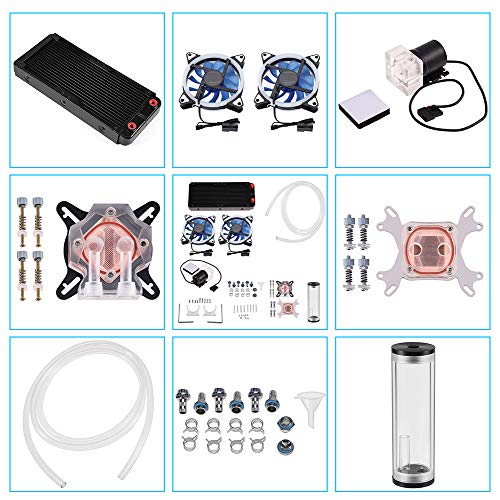
DIY 240mm Water Cooling Kit, DIY 240mm Cooler CPU/GPU Block Pump Reservoir with LED Fan Heat Sink Computer Water Cooling Connectors Kit, Liquid CPU Cooler Kit
【Professional Water Cooling Kit】This liquid CPU cooler kit provides a 240mm heat sink within screw pack+2pcs LED fan+universal…
As an affiliate, we earn on qualifying purchases.
As an affiliate, we earn on qualifying purchases.
Frequently Asked Questions
How Does Cooling Impact AI Model Training Speed?
Cooling directly impacts your AI model training speed by maintaining ideal thermal management. When airflow is optimized, heat dissipates efficiently, preventing overheating that can throttle performance. Poor cooling causes thermal throttling, slowing down processing and increasing training times. By ensuring proper airflow and thermal management, you keep hardware running at peak performance, which accelerates training speed and reduces downtime, ultimately making your AI builds more efficient and reliable.
What Are the Environmental Effects of AI Power Consumption?
You might be surprised to learn that AI power consumption generates about 4% of global electricity use, comparable to the airline industry. This considerably impacts our environment, increasing carbon footprint. By utilizing renewable energy sources, you can reduce these effects, but the overall environmental impact still depends on energy efficiency. Your choices in powering AI systems can help mitigate climate change and promote sustainability.
Are There Sustainable Cooling Options for Data Centers?
Yes, you can implement sustainable cooling options for data centers. You might use advanced thermal management techniques like liquid cooling or free-air cooling, which reduce energy consumption. Additionally, integrating renewable energy sources helps conserve overall energy. These strategies not only lower environmental impact but also improve efficiency, ensuring your data center stays cool without excessive power use, aligning with your commitment to sustainability and responsible resource management.
How Often Should Cooling Systems Be Maintained in AI Setups?
You should schedule cooling maintenance for your AI setup every 6 to 12 months, depending on usage and environmental factors. Regular cooling maintenance is essential because it guarantees system longevity and prevents overheating, which can damage hardware. By staying consistent with these checks, you reduce unexpected failures. Coincidentally, maintaining your cooling system also enhances overall efficiency, saving energy costs and extending the lifespan of your AI infrastructure.
Can Power Efficiency Improve AI Model Accuracy?
Yes, improving power efficiency can enhance AI model accuracy. By focusing on energy optimization and hardware efficiency, you reduce thermal stress and power fluctuations that can degrade performance. Efficient hardware allows for better cooling and stable operation, which helps maintain ideal conditions for training and inference. This stability ensures your AI models run smoothly, leading to more accurate results and a more reliable system overall.
high efficiency power supply unit for AI builds
As an affiliate, we earn on qualifying purchases.
As an affiliate, we earn on qualifying purchases.
Conclusion
As you’ve seen, cooling and power aren’t just technical details—they’re the heartbeat of your AI build. When you prioritize efficient cooling and reliable power, you create a foundation that’s resilient and ready for growth. It’s no coincidence that these elements often determine success; they keep everything running smoothly, just like clockwork. So, invest in them wisely, and you’ll find your AI projects not only perform better but also stand the test of time.

EFB0424VHD 4020 4CM 24V 0.14A Double Ball Bearing Inverter Server Cooling Fan – Reliable Thermal Management Solution
High Efficiency: The EFB0424VHD 4020 fan operates at 24V and 0.14A, providing optimal airflow for effective cooling in…
As an affiliate, we earn on qualifying purchases.
As an affiliate, we earn on qualifying purchases.

RackChoice 4U Rackmount Server Chassis 8-Bay 12Gbps Hot-Swappable SATA/SAS, EATX/ATX Compatible, Alloy Steel, Black, Ideal for Data Centers & SMBs
Supports EATX, ATX, MicroATX, and Mini-ITX motherboards, making it ideal for diverse server setups and future upgrades
As an affiliate, we earn on qualifying purchases.
As an affiliate, we earn on qualifying purchases.