
📊 Full opportunity report: Could A Flare Timeline Help You Track Eczema And Psoriasis? on IdeaNavigator AI — validation score, market gap, and execution plan.

Get business pricing on tech for your team
- Business-only prices and quantity discounts
- Tax-exempt purchasing
- Multiple users, one account, clear invoices
TL;DR
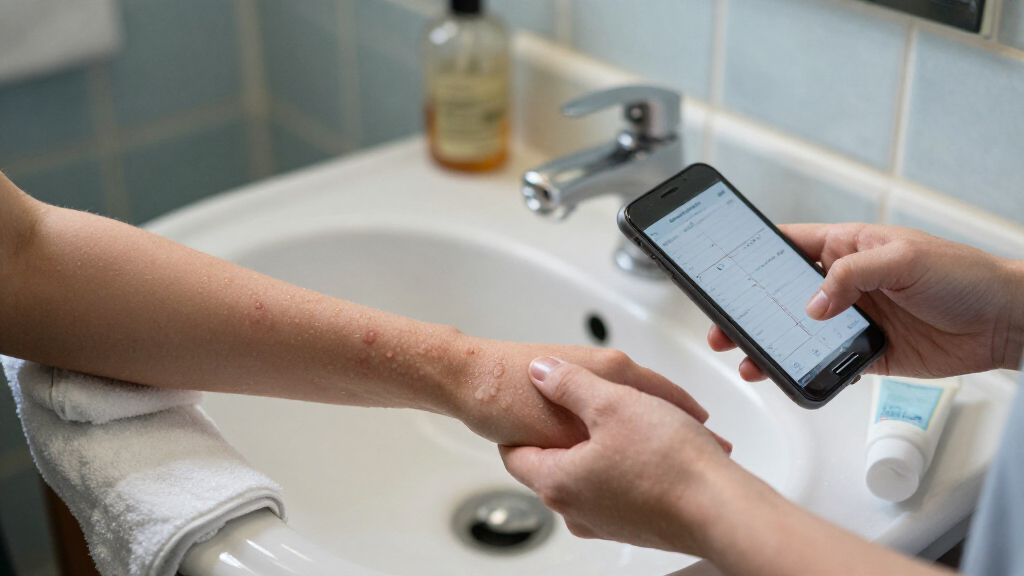
A proposed photo-journal workflow would prompt adults with eczema or psoriasis to take weekly, consistently framed skin photos and record possible triggers. The idea has not been shown to improve care; a proposed 15-person, one-month pilot would test whether dermatologists find the timeline useful and whether patients would pay.
IdeaNavigator AI has proposed testing a weekly photo journal to help adults with eczema or psoriasis document flares between dermatology visits. The suggested tool would combine dated, consistently framed skin photos with brief notes about possible triggers, but it remains an untested product concept rather than a proven care method.
The proposed minimum version would prompt users to take a photo each week, using guidance on framing and lighting to make images easier to compare over time. Each photo would appear in a dated timeline alongside a note about a possible trigger. The concept is intended for adults tracking their condition between appointments, not described as a diagnostic tool.
The problem it aims to address is that patients may have difficulty recalling when a flare began, what might have preceded it, or whether a treatment appeared to help. A visual record could give patients and clinicians a sequence of dated observations to discuss, rather than relying only on memory. That potential benefit has not yet been measured.
The suggested validation plan is to recruit 15 people with eczema to record photos weekly for one month. Afterward, the organizers would ask participants’ dermatologists whether the timeline changed the visit and assess patients’ willingness to pay. No recruitment, test results, pricing, or product availability are reported.
A More Specific Record Between Visits
A regularly updated photo record could make changes in a chronic skin condition easier to review during appointments, particularly when several weeks have passed since a flare started. Dated images and short notes may help patients organize what they observed and help clinicians ask more focused questions about timing, possible triggers, and treatment response.
That is a plausible use, not an established clinical outcome. Photos can vary with lighting, camera distance, angle, and skin appearance, while a note about a trigger records a patient’s observation rather than proving cause. The proposed framing and lighting prompts address some variation, but the suggested pilot would need to show whether the resulting timeline is genuinely useful in a visit.
The idea also raises practical questions about privacy and ongoing use. Skin images are personal health information, and users would need to understand how images are stored, secured, retained, and shared. A subscription model is proposed for unlimited history, exports, and a visit-preparation PDF; no price or privacy policy has been specified.
As an affiliate, we earn on qualifying purchases.
The Proposed Pilot and Product Scope
The concept is framed as a narrow self-management workflow for adults with eczema or psoriasis, rather than a broad skin-health platform. Its rationale is that smartphones can take and store dated photos, and that patients may be asked to bring progress images to teledermatology appointments. Those points describe the opportunity behind the proposal; they do not establish that a dedicated app improves diagnosis or treatment.
The proposed pilot is limited in both size and duration: 15 eczema patients over four weeks, with weekly photo entries. It would ask dermatologists whether the timeline changed the visit and examine whether participants would pay for features such as longer-term history, exports, and a summary PDF. The description does not specify a comparison group, a clinical measure, or a plan to study psoriasis users in the initial test.
Those limits matter when interpreting any future results. Feedback from a small, short trial could help determine whether people can keep up with weekly logging and whether clinicians find the record useful. It would not, by itself, show that the tool improves health outcomes, identifies triggers accurately, or works for all patients.
As an affiliate, we earn on qualifying purchases.
Usefulness, Privacy and Results
It is not clear whether the app has been built, whether a pilot has begun, or when testing might take place. There are no reported user or clinician findings, and the suggested test focuses on eczema patients even though the concept also names psoriasis.
Other unanswered questions include how images would be stored and shared, what the subscription would cost, and whether users could export their records in formats clinicians can use. The proposal also does not explain how the app would address inconsistent photos, missed entries, or the difference between a possible trigger and a confirmed cause. It should not be treated as a substitute for medical assessment.
As an affiliate, we earn on qualifying purchases.
Testing the Timeline in Appointments
The next stated step is a small one-month pilot with 15 eczema patients, followed by feedback from their dermatologists and an assessment of willingness to pay. No start date or recruitment details have been provided. If undertaken, the test could show whether weekly prompts are manageable and whether a dated photo record changes the discussion during a visit.
Further evidence would be needed to assess use over longer periods, relevance to people with psoriasis, privacy safeguards, and any effect on care. Until those details and results are available, the flare timeline remains a proposed tracking workflow, not a validated health product.
Source: IdeaNavigator AI
As an affiliate, we earn on qualifying purchases.
Key Questions
Is the eczema and psoriasis photo journal available now?
The information describes a proposed product concept. It does not report a launch, an available app, or a pilot start date.
How would the proposed timeline work?
Users would be prompted to take a weekly photo using framing and lighting guidance, then add a date and a short note about a possible trigger. The entries would appear in a side-by-side timeline.
Has the tool been shown to improve dermatology visits?
No results are reported. The suggested pilot would ask dermatologists whether the record changed the appointment, but that outcome has not yet been established.
Would the app identify what triggers a flare?
The proposed journal would let users record suspected triggers. A note would document an observation; it would not by itself confirm that a particular factor caused a flare.
What would the proposed test measure?
The suggested test would involve 15 people with eczema logging weekly for one month. It would gather dermatologist feedback about appointment usefulness and assess participants’ willingness to pay.
Source: IdeaNavigator AI
Fall Picks
fall essentials
As an affiliate, we earn on qualifying purchases.