
TL;DR
Experiments show that AI can produce writing indistinguishable from human authors, even for those familiar with the writer’s style. This challenges assumptions about detecting AI in literature and raises questions about authenticity.
Recent experiments indicate that AI-generated writing can be indistinguishable from human-authored text, even for people who know the author well, raising concerns about detection and authenticity in literature.
Vauhini Vara, a writer and journalist, conducted an experiment where she trained an AI model on her previous work and had it generate passages similar to her upcoming novel. She then asked close friends and colleagues to distinguish between her writing and the AI’s. Surprisingly, none of them could reliably tell the difference. This echoes prior research by Tuhin Chakrabarty, who found that readers often preferred AI-generated passages over human ones in certain contexts. Experts note that AI models trained on human writing, including flawed or stylistic quirks, can produce highly convincing text. The experiment suggests that AI’s ability to mimic individual writing styles is advancing rapidly, making detection increasingly difficult.
Why It Matters
This development matters because it challenges assumptions about authorship and authenticity in literature. If AI can produce indistinguishable writing, it raises questions about originality, intellectual property, and the future of human creativity. For publishers, editors, and readers, the ability to verify authorship may become more complex, potentially impacting trust in published works and the integrity of literary evaluation.
The Ultimate Guide to Plagiarism Checkers and AI Detection Tools: How to Identify Similarity, Avoid Copying, and Write with Integrity (AI for Academic Research)
As an affiliate, we earn on qualifying purchases.
As an affiliate, we earn on qualifying purchases.
Background
AI writing tools have been steadily improving over recent years, with models trained on vast datasets of human text. Previous research showed AI could mimic general writing styles but was often detectable due to patterns like repetitive structures or unusual metaphors. However, recent experiments, including Vara’s, demonstrate that AI can now closely imitate specific authors’ voices, especially when trained on their complete body of work. This progress raises concerns about the potential misuse of AI in publishing and the need for new detection methods.
“What’s remarkable is that even people who know my work well can’t tell the difference between my writing and AI-generated passages, which suggests AI’s capabilities are advancing rapidly.”
— Vauhini Vara
“There are telltale signs like excessive metaphors or repetitive syntax, but AI models trained on human writing can sometimes avoid these giveaways.”
— Imogen West-Knights
“Readers tend to prefer AI-generated passages over human ones in some experiments, which indicates AI’s growing ability to produce compelling text.”
— Tuhin Chakrabarty
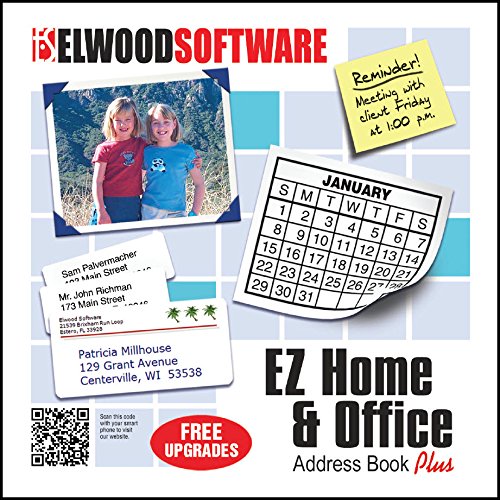
EZ Home and Office Address Book Software
- Compatible with Windows OS: Supports Windows 11, 10, 8, 7, Vista, XP
- Multiple printable formats: Offers 3 address book formats for printing
- Sort by name: Sort entries by first or last name
As an affiliate, we earn on qualifying purchases.
As an affiliate, we earn on qualifying purchases.
What Remains Unclear
It remains unclear how reliably AI detection tools will perform as models continue to improve. The long-term implications for authorship verification and intellectual property are still being evaluated. Additionally, ethical considerations about AI use in publishing are actively debated, but no consensus has been reached.

AI Voice Recorder Free Chat GPT-4o AI Hours, Wireless Transcription Device, Speech to Text, Smart AI Note Taking Assistant. 59 Language Translator, AI Transcribe & Summarize Lectures, Meetings, Calls
- Real-Time Voice-to-Text: Accurate speech transcription with AI technology
- Noise Reduction: Minimizes background noise for clear audio
- Mobile Companion App: Manage, edit, and share files easily
As an affiliate, we earn on qualifying purchases.
As an affiliate, we earn on qualifying purchases.
What’s Next
Researchers and publishers are likely to develop more sophisticated tools for detecting AI-generated text. Further experiments will explore the limits of AI mimicry and the potential for AI to produce entirely convincing human-like authorship. The industry may also implement policies or standards to address AI’s role in creative writing and publishing.

As an affiliate, we earn on qualifying purchases.
Key Questions
Can AI-generated writing be reliably detected now?
Current detection methods are becoming less reliable as AI models improve, making it increasingly difficult to distinguish AI writing from human authorship.
Does AI writing threaten human authorship or originality?
It raises questions about authenticity and originality, but the full impact on authorship rights and creative integrity is still under discussion.
How might publishers verify the authorship of a manuscript?
Developing advanced detection tools and establishing new standards for verifying originality will be key steps as AI-generated text becomes more convincing.
Will AI replace human writers entirely?
While AI can produce human-like text, it is unlikely to replace human creativity and judgment entirely, but it could augment or automate certain writing tasks.