
Courts are actively developing standards and procedures to evaluate AI-generated evidence’s authenticity and reliability. They scrutinize source analysis, creation processes, and manipulation detection to guarantee evidence integrity. Legal professionals face challenges in appraising trustworthiness, especially with convincing AI-produced images, videos, or documents. Ethical concerns also emerge around biases and transparency in AI processes. As technology advances, courts are updating regulations to maintain fairness and trust in the legal system. Keep exploring to see how these efforts evolve.

Get business pricing on tech for your team
- Business-only prices and quantity discounts
- Tax-exempt purchasing
- Multiple users, one account, clear invoices
Key Takeaways
- Courts are developing standards and procedures to verify the authenticity and reliability of AI-generated evidence.
- Judges are scrutinizing the source, creation process, and potential manipulation of AI-produced materials before admission.
- Legal professionals are increasingly required to possess technical expertise to assess AI evidence credibility.
- Regulatory frameworks are being established to guide the testing, verification, and admissibility of AI-generated evidence.
- Courts are emphasizing transparency and fairness to address ethical concerns and maintain justice in AI-influenced proceedings.
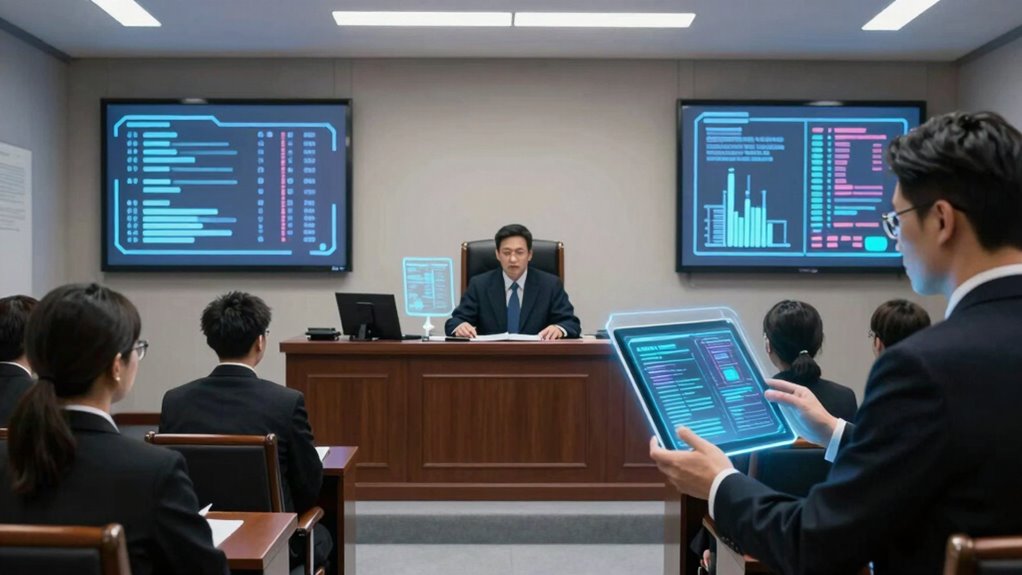
As artificial intelligence increasingly produces evidence for legal cases, courts are faced with the challenge of evaluating its reliability and authenticity. This rise in AI-generated evidence raises significant concerns about ethical implications and evidentiary challenges that could impact the fairness of trials. You must understand that AI tools can generate convincing images, videos, or documents that are difficult to distinguish from genuine evidence. This creates a dilemma for judges and attorneys alike: how do you ensure the evidence is trustworthy without undermining the integrity of the legal process?
One major issue is the potential for AI to produce false or misleading evidence. Courts now have to develop standards and procedures for testing the authenticity of AI-generated material. This involves scrutinizing the source of the evidence, analyzing its creation process, and determining whether it has been manipulated or fabricated. As a result, evidentiary challenges become more complex, requiring specialized technical knowledge that many legal professionals may lack. This often leads to disputes over the admissibility of AI-produced evidence, as parties argue over whether it can be considered credible and relevant. Understanding the role of AI in evidence creation can help legal professionals better evaluate its reliability.
The ethical implications are equally profound. You need to consider the consequences of relying on AI evidence that might be biased, incomplete, or intentionally deceptive. When courts accept AI-generated evidence without proper vetting, they risk violating principles of justice and fairness. For example, if an AI tool has inherent biases, the evidence it produces could unfairly influence the outcome of a case, disproportionately affecting certain groups. Ethical questions also emerge about transparency: should courts disclose the algorithms and data used to generate evidence? How much control should legal professionals have over the AI processes that produce this evidence? These questions challenge the traditional notions of fairness and accountability in judicial proceedings. Moreover, understanding the role of AI in evidence creation can help legal professionals better evaluate its reliability. As AI continues to evolve, establishing regulatory standards becomes essential to maintain the integrity of the legal process and public trust.
As an affiliate, we earn on qualifying purchases.
Frequently Asked Questions
How Do Courts Verify the Authenticity of Ai-Generated Evidence?
You should expect courts to scrutinize AI transparency by asking for detailed documentation of how the evidence was generated. They’ll consider ethical considerations, ensuring the AI’s outputs are reliable and free from bias. You might be asked to provide the AI’s source data, algorithms, and validation processes. Courts aim to verify authenticity by evaluating these transparency measures, ensuring the evidence is credible and ethically sound before accepting it in legal proceedings.
Are There Specific Legal Standards for Admitting Ai-Created Evidence?
You’ll find that specific legal standards for admitting AI-created evidence are still evolving, with only a few jurisdictions setting clear rules. About 60% of courts express concerns over ethical issues and technological reliability, which influence these standards. Courts now emphasize verifying authenticity and ensuring the evidence’s integrity. As AI technology advances, expect more defined legal standards, but ethical concerns remain central in evaluating whether this evidence should be admitted.
How Do Courts Address Potential Biases in Ai-Generated Evidence?
Courts address potential biases in AI-generated evidence by scrutinizing algorithmic bias and demanding transparency standards. You must guarantee the evidence is thoroughly examined for bias, questioning how the AI arrived at its conclusions. Transparency standards require you to verify the AI’s data sources and processes. By doing so, courts aim to prevent unfair prejudices, ensuring the evidence’s reliability and fairness in legal proceedings.
What Training Do Judges Need to Evaluate Ai-Based Evidence?
You need targeted judicial training to effectively evaluate AI-based evidence. This training should focus on AI literacy, helping judges understand how AI algorithms work, their limitations, and potential biases. By developing this expertise, judges can critically analyze AI-generated evidence, ensuring fair judgments. Ongoing education is essential, as AI technology evolves rapidly, so you stay informed about new tools, risks, and best practices for integrating AI insights into legal proceedings.
How Does Ai-Generated Evidence Impact Defendant Rights?
AI-generated evidence can threaten your rights if its transparency isn’t clear, making it harder to challenge or verify. You need courts to guarantee AI tools are transparent so you understand how evidence is created and evaluated. Without AI transparency, your defendant rights could be compromised, risking unfair judgments. Courts must balance innovation with safeguards, so your rights are protected while utilizing AI to support justice.
digital forensics software for AI-generated images
As an affiliate, we earn on qualifying purchases.
As an affiliate, we earn on qualifying purchases.
Conclusion
As courts grapple with AI-generated evidence, you might wonder if they’re truly prepared for this technological shift. With new rules and challenges emerging, it’s clear that adapting is essential for justice to stay fair and accurate. Will the legal system keep pace with AI’s rapid evolution, or will gaps in understanding undermine trust? Ultimately, embracing transparency and innovation can help guarantee that justice remains fair in this new digital era.
video manipulation detection tools
As an affiliate, we earn on qualifying purchases.
As an affiliate, we earn on qualifying purchases.
AI authenticity testing software
As an affiliate, we earn on qualifying purchases.
As an affiliate, we earn on qualifying purchases.
Halloween Picks
halloween
As an affiliate, we earn on qualifying purchases.