
Deepfake entertainment raises key ethical issues around protecting personal identities and intellectual property. You should consider consent and the potential harm if synthetic media is created without permission, which can damage reputations and violate privacy rights. As technology advances, detecting and regulating deepfakes becomes more challenging, making transparency and legal protections essential. Staying informed on these topics will help you better understand how to navigate the evolving landscape ethically and responsibly.
Key Takeaways
- Ethical deepfake entertainment requires obtaining explicit consent from individuals whose likenesses are used.
- Clear labeling of AI-generated content helps protect viewer awareness and prevent deception.
- Implementing strong legal protections ensures rights over personal identities and prevents unauthorized use.
- Industry collaboration is essential to develop standards, detection tools, and best practices for responsible creation.
- Balancing innovation with privacy safeguards minimizes reputational harm and upholds moral responsibilities.

Deepfake and Image Forgery Detection: Cybersecurity, Multimedia Forensics, Image Manipulation (De Gruyter STEM)
As an affiliate, we earn on qualifying purchases.
As an affiliate, we earn on qualifying purchases.
The Rise of Deepfake Content in Commercial Media
The rise of deepfake content in commercial media is transforming how brands engage audiences and tell stories. You now see companies using synthetic actors and digital doubles to create compelling, personalized ads that grab attention faster than traditional methods. This technology allows for hyper-targeted messaging, making campaigns more relevant and memorable. As a result, brands can produce content quickly and cost-effectively, reducing reliance on human models or celebrities. Visual platforms like TikTok and Instagram thrive on this new content, with 66% of marketers noticing increased engagement. The rapid adoption signals a shift toward more innovative storytelling techniques, where deepfake technology becomes a tool for creating immersive, customized experiences that resonate with viewers and elevate brand presence. Additionally, understanding the ethical considerations surrounding deepfake creation is essential for maintaining trust and protecting individual identities in this evolving landscape. Recognizing the importance of security and ethical hacking practices can help safeguard against malicious misuse of this technology. Furthermore, awareness of dog names can inspire more personalized and relatable content, enhancing audience connection. As the industry continues to evolve, establishing originality and authenticity will be crucial to differentiate genuine content from manipulated media. Moreover, the development of regulations and guidelines around content authenticity can help foster responsible use of deepfake technology and preserve public trust.

SmartPacks Colored QR Stickers – Premium Smart Labels for Storage Bins with AI-Powered App | Advanced Pack and Track Labels with QR Code for Inventory, Storage, Moving | 64 Stickers
Smart Storage Solution Without Subscription: The SmartPacks QR code labels for storage are here to make your job…
As an affiliate, we earn on qualifying purchases.
As an affiliate, we earn on qualifying purchases.
Ethical Dilemmas Surrounding Consent and Personal Rights
As deepfake technology becomes more embedded in commercial media, pressing ethical questions about consent and personal rights come to the forefront. You might not realize that your images or voices can be used without permission, raising concerns about ownership and control. When companies create deepfake content, they often bypass your consent, risking reputational harm or emotional distress. Personal rights are compromised when synthetic media depicts you in ways you never approved, blurring the lines between creative expression and exploitation. This lack of consent undermines trust and raises questions about accountability. You deserve control over your likeness and voice, yet current practices often neglect these rights. As deepfakes become more prevalent, addressing consent is essential to balancing innovation with respect for individual autonomy. Additionally, the technical aspects of creating realistic deepfakes, such as high-quality image synthesis, make it increasingly difficult to distinguish authentic from manipulated content, amplifying these ethical concerns. Moreover, understanding the potential for AI-generated misinformation emphasizes the importance of ethical guidelines and legal protections to safeguard personal identities. Implementing digital rights management strategies could help ensure individuals retain control over their digital likenesses. Ensuring proper privacy policies are in place is crucial to protect user rights in this evolving landscape. Recognizing the importance of public awareness can also help mitigate the spread of malicious deepfake content.
privacy protection software for images
As an affiliate, we earn on qualifying purchases.
As an affiliate, we earn on qualifying purchases.
Challenges in Detecting and Regulating Synthetic Media
Detecting and regulating synthetic media has become an ongoing challenge because deepfake technology advances faster than current safeguards can keep up. You face a constant arms race, as highly realistic deepfakes can bypass detection tools that lag behind evolving techniques. Despite technological progress, human ability to identify high-quality deepfakes remains limited—accuracy hovers around just 24.5%. Detection systems like DeepFaceLab and Avatarify struggle to keep pace, with success rates around 65%. Regulators also grapple with enforcement across borders, as content is easily shared anonymously online. Updating laws and creating global standards lag behind technological innovations, leaving gaps that malicious actors exploit. As deepfakes proliferate, your challenge is balancing innovation with effective oversight, all while preventing misuse that could undermine trust and security. Incorporating diverse detection methods from various fields is essential to improve identification accuracy and stay ahead of increasingly sophisticated synthetic media. Additionally, ongoing research into cross-disciplinary approaches can help develop more robust defense mechanisms against emerging deepfake threats. Furthermore, public awareness campaigns and digital literacy initiatives are crucial for empowering users to recognize and report manipulated content. Leveraging insights from creative practice can also inspire innovative detection techniques that mimic human intuition and creativity. Employing machine learning techniques has shown promise in adapting detection models to evolving deepfake quality and complexity.
digital rights management tools
As an affiliate, we earn on qualifying purchases.
As an affiliate, we earn on qualifying purchases.
Impact on Public Trust and Media Integrity

Deepfakes challenge your trust in media by blurring the line between real and fake content. When false information spreads easily, it damages the credibility of news sources and makes it harder to discern truth. As synthetic media becomes more sophisticated, your confidence in what you see and hear is at greater risk. Understanding how to get a divorce can also involve navigating complex legal processes that require careful attention to documentation and costs. Additionally, the increasing use of home furnishings like heated mattress pads illustrates how technology integrates into daily life, impacting comfort and safety. Implementing space and organization strategies, such as decluttering, not only makes your home safer but also contributes to a more mindful lifestyle that reduces unnecessary consumption. Recognizing the importance of personality compatibility in media and social interactions can help foster trust and authenticity in communication. Staying aware of digital footprints is crucial, especially as online presence can influence legal and personal outcomes during and after major life transitions.
Erosion of Media Credibility
The proliferation of deepfake technology threatens to undermine the credibility of media sources and erodes public trust. When you can’t easily verify whether a video or image is authentic, skepticism spreads, and confidence in genuine journalism diminishes. Deepfakes make it harder to distinguish between real and manipulated content, leading you to question the veracity of news reports, political statements, and public figures. As false content becomes more convincing and widespread, you risk accepting misinformation as fact, which weakens the foundation of informed decision-making. This erosion of trust damages media integrity, causing you to doubt even credible sources. Ultimately, the surge in sophisticated deepfakes fuels a cycle of doubt, making it increasingly difficult to rely on visual and audio evidence in the digital age.
Deepfake-induced Misinformation
As deepfake technology becomes increasingly sophisticated, it fuels a rise in misinformation that directly threatens your trust in media sources. Fake videos of politicians, celebrities, or public figures can spread rapidly, shaping opinions based on falsehoods. These manipulated images and speeches make it difficult to distinguish truth from fiction, eroding confidence in credible news outlets. The proliferation of deepfakes amplifies doubts about genuine content, causing you to question the authenticity of what you see and hear. This manipulation undermines media integrity, distorts public discourse, and fuels polarization. As deepfakes become more accessible, the risk of widespread misinformation grows, making it harder to rely on information channels that once served as trustworthy sources of truth. Additionally, advancements in Kia Tuning demonstrate how easily digital modifications can be applied to alter perceptions, highlighting the importance of verifying content authenticity. Without proper verification methods, viewers may overlook signs of manipulated media, increasing the potential for misinformation to influence public opinion. Recognizing digital forgeries and implementing verification techniques are crucial steps in combating this growing threat. Moreover, understanding how engine tuning techniques can be used to modify digital content underscores the need for robust authentication tools to preserve authenticity. Efforts to combat these issues should also include increased awareness and education about media literacy to help the public identify and question suspicious content.
Legal Frameworks and Intellectual Property Concerns
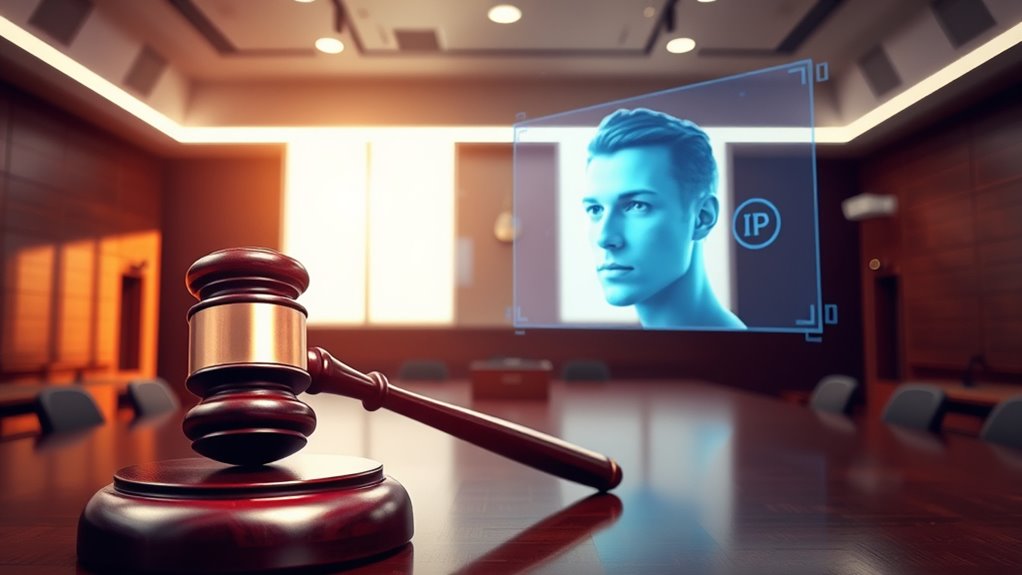
Legal frameworks often struggle to keep pace with the rapid evolution of deepfake technology, leaving gaps in protections for individuals and creators alike. You need clear laws that define unauthorized use of likenesses and voices to prevent misuse. Current regulations often lag behind technological advancements, making enforcement difficult across borders and platforms. Intellectual property concerns are growing as synthetic media can easily replicate artists’ styles, actor likenesses, or brand images without permission. You face challenges in proving ownership and rights, especially when deepfakes are created anonymously or distributed globally. Developing effective regulatory standards and ethical guidelines is essential to balance innovation with safeguarding personal identities and IP rights. Without these, deepfake misuse will continue to threaten privacy, reputation, and creative integrity.
Strategies for Balancing Innovation With Ethical Responsibility

Balancing innovation with ethical responsibility requires proactive strategies that foster responsible development and deployment of deepfake technologies. You should prioritize transparency by clearly labeling synthetic media and informing users about AI-generated content. Implement robust consent processes, ensuring individuals approve their likenesses before usage. Collaborate across industries to develop standards and ethical guidelines that promote accountability. Invest in detection tools to stay ahead of malicious deepfakes, reducing harm and misuse. Regularly review policies to adapt to technological advances and societal expectations. Consider the table below for practical tactics:
| Strategy | Implementation | Purpose |
|---|---|---|
| Transparency | Label deepfake content clearly | Build trust |
| Consent | Obtain permission before using likenesses | Protect personal rights |
| Detection Tools | Use AI detection systems | Identify malicious deepfakes |
| Industry Collaboration | Establish shared standards | Ensure responsible innovation |
| Policy Review | Update regulations regularly | Adapt to evolving tech |
Frequently Asked Questions
How Can Consumers Identify Authentic Versus Deepfake Content?
To spot authentic content, pay close attention to details like inconsistent lighting, unnatural facial movements, or irregular audio sync. Use fact-checking tools or reverse image searches to verify sources. Be cautious of content that seems overly sensational or out of character. Always cross-reference with official channels or trusted media outlets. Remember, if something feels off, trust your instincts and question the authenticity before sharing or believing it.
What Legal Protections Exist for Individuals Featured Without Consent?
If you’re featured in a deepfake without your consent, existing laws like the California Consumer Privacy Act give you some protection against unauthorized use of your likeness. For example, you could pursue a claim for invasion of privacy or misappropriation of your image. However, laws vary by jurisdiction, and enforcement can be challenging. You might also seek legal action under intellectual property rights if your work is reproduced without permission.
How Do Deepfakes Influence Political Elections and Public Opinion?
Deepfakes critically influence elections and public opinion by spreading false information, manipulating candidate images, and creating fake endorsements. You might unknowingly see distorted speeches or fabricated statements that sway your views. These synthetic videos can deepen polarization, undermine trust in media, and sway votes subtly. As a voter, it’s essential to question the authenticity of online content, recognizing deepfakes’ role in shaping perceptions and potentially impacting election outcomes.
What Are the Responsibilities of Content Creators Using Deepfake Technology?
As a content creator using deepfake technology, you’re responsible for ensuring your content is ethical and transparent. You need to obtain proper consent, avoid misleading viewers, and clearly disclose when deepfakes are used. It’s vital to respect privacy rights and intellectual property laws, preventing harm or misinformation. By prioritizing honesty and legality, you help maintain trust, reduce misuse, and contribute positively to the evolving landscape of synthetic media.
How Can Companies Ensure Ethical Use of Synthetic Media in Advertising?
To guarantee ethical use of synthetic media in advertising, you should establish clear guidelines that prioritize transparency and consent. Always inform your audience when deepfake technology is involved, and secure permissions from individuals depicted. Implement robust review processes, stay compliant with evolving regulations, and foster a culture of responsibility. By doing so, you build trust and uphold integrity, ensuring your campaigns respect personal rights while leveraging innovative digital tools effectively.
Conclusion
As you navigate this brave new world of deepfake entertainment, remember that with great power comes great responsibility. While innovation sparks exciting possibilities, it’s up to you to champion ethics and safeguard identities. Think of it like walking a tightrope—balancing creativity and integrity. By staying vigilant and advocating for clear regulations, you can ensure this technology enriches our culture without sacrificing trust or respect. After all, the future of media depends on your choices today.