
📊 Full opportunity report: Forezai · TradingAgents: A Trading Firm Made of Agents on ThorstenMeyerAI.com — validation score, market gap, and execution plan.

Get business pricing on tech for your team
- Business-only prices and quantity discounts
- Tax-exempt purchasing
- Multiple users, one account, clear invoices
TL;DR
Forezai has launched TradingAgents, a framework that organizes AI agents into a structured trading firm. It emphasizes debate, oversight, and modularity to improve decision-making in automated trading.
Forezai has unveiled TradingAgents, a multi-agent research framework that models a trading desk with specialized AI agents. This system aims to improve decision-making by fostering structured disagreement and robust oversight, addressing the overconfidence issues of single AI models in trading.
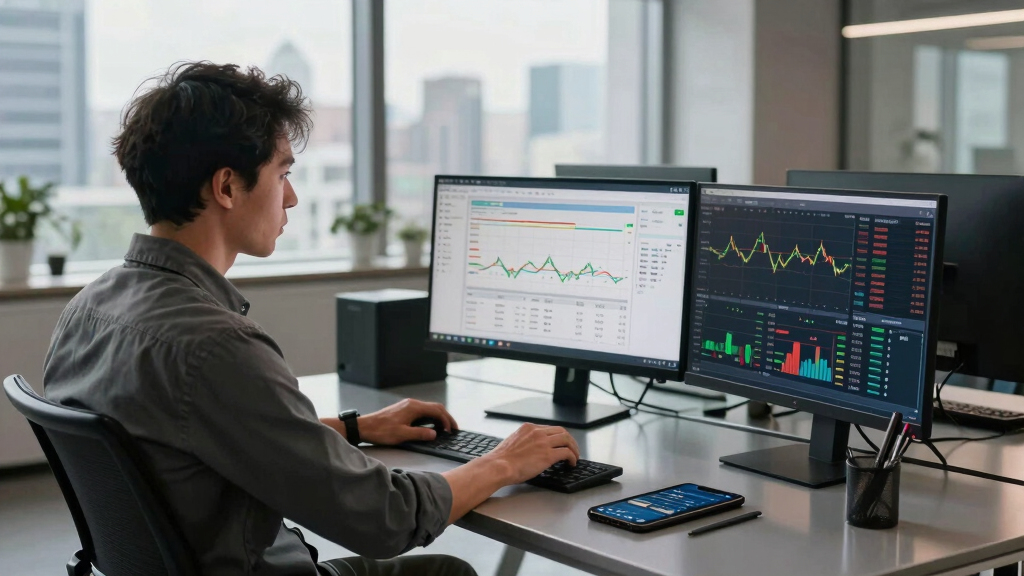
TradingAgents is designed to simulate the roles within a traditional trading desk: analyst agents focused on fundamentals, news, sentiment, and technical signals, each surfacing different market insights. These agents engage in a debate, with a bull researcher and a bear researcher arguing opposing views, before passing their conclusions to a trader agent who proposes an action. This proposal then undergoes vetting by a risk manager, who can veto or modify it based on exposure limits and risk considerations.
The framework emphasizes transparency and accountability by recording every decision step, making it auditable. It is modular, allowing different models to serve in each role, and is designed to run on local infrastructure, ensuring provider-agnostic flexibility. Forezai states that the goal is to avoid overconfidence typical of single-model systems, instead fostering disciplined, debate-driven decision-making.
TradingAgents — a firm made of agents
A single model is an overconfidence machine. So this isn’t one AI — it’s a whole desk: analysts, a bull and a bear who argue, a trader, and a risk manager who can say no.
Not financial, investment, legal or tax advice; not a recommendation or solicitation to trade, invest or use any software. Forezai · TradingAgents is an experimental research framework, provided “as is” without warranty of accuracy or profitability. Trading and automated trading carry a substantial risk of loss including total loss of capital; past or backtested performance does not indicate future results. Market and trading-software access is regulated or restricted in some jurisdictions — you are solely responsible for compliance with applicable law. Consult a licensed professional before any financial decision. Produced with AI assistance under human editorial oversight; independent commentary, the author’s own views. Product and company names are trademarks of their respective owners; mention does not imply endorsement.
Implications of Structured Multi-Agent Trading Systems
TradingAgents represents a shift towards organizationally structured AI in trading, aiming to reduce the risks associated with overconfidence in single models. By mimicking human trading desk roles, it promotes transparency, accountability, and more disciplined decision-making. This approach could influence how automated trading systems are designed, emphasizing debate, oversight, and modularity to improve robustness and trustworthiness in AI-driven finance.
As an affiliate, we earn on qualifying purchases.
Background on AI in Trading and Organizational Approaches
Recent developments in AI trading have highlighted risks from overreliance on single models, which can produce overconfident and potentially misleading signals. Forezai previously discussed the limitations of solitary AI forecasters like Polybot, which compare estimates to market prices. TradingAgents builds on this by introducing a structured, multi-agent architecture that incorporates traditional trading desk roles—analysts, traders, and risk managers—into AI systems, aiming to replicate the checks and balances of human organizations.
This development aligns with broader trends toward explainability, transparency, and organizational structure in AI systems used for financial decision-making.
“TradingAgents copies the organizational structure of a trading desk, with specialized agents debating and vetting trading decisions to avoid overconfidence.”
— Thorsten Meyer, Forezai
As an affiliate, we earn on qualifying purchases.
Unconfirmed Aspects and Potential Limitations
It is not yet clear how TradingAgents performs in live trading environments or how it compares quantitatively to traditional or single-model AI systems. The framework is experimental and emphasizes transparency and structure, but its actual profitability, robustness, and risk management effectiveness remain to be tested in real markets. Additionally, the scalability and adaptability of the system across different asset classes or market conditions are still uncertain.
As an affiliate, we earn on qualifying purchases.
Next Steps for Testing and Adoption
Forezai develops TradingAgents privately; the framework is not publicly available. The next milestones include deploying the framework in simulated trading environments, evaluating its decision-making quality, and possibly integrating it into live trading setups for limited testing. Observers will be watching for empirical results and community feedback to assess its practical viability and potential industry impact.
As an affiliate, we earn on qualifying purchases.
Key Questions
What is the main purpose of TradingAgents?
TradingAgents aims to improve AI-driven trading decisions by organizing multiple specialized agents into a structured debate and oversight process, reducing overconfidence and increasing transparency.
Is TradingAgents ready for live trading?
No, it is currently an experimental framework designed for research and testing. Its performance in live trading environments has not yet been established.
Can TradingAgents be customized for different markets?
Yes, its modular architecture allows different models to serve in each role, making it adaptable to various asset classes and market conditions.
How does TradingAgents improve over single-model systems?
By fostering structured disagreement, debate, and oversight, it aims to prevent overconfidence and produce more accountable, robust trading decisions.
Where can I access the TradingAgents software?
The framework is developed privately and is not publicly available.
Source: ThorstenMeyerAI.com
Fall Picks
fall essentials
As an affiliate, we earn on qualifying purchases.