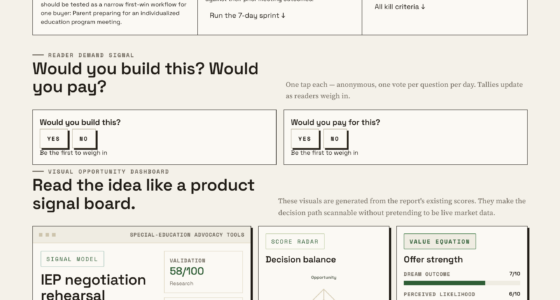
📊 Full opportunity report: How Attention-Burden Scores Shape School Software Choices For K-12 Education on IdeaNavigator AI — validation score, market gap, and execution plan.

Get business pricing on tech for your team
- Business-only prices and quantity discounts
- Tax-exempt purchasing
- Multiple users, one account, clear invoices
TL;DR

Education districts are adopting a new metric called attention-burden scores to assess the cumulative impact of classroom software on student attention. This approach aims to guide procurement decisions and improve student focus amid growing concerns over screen time and digital distractions.
School districts are beginning to implement a novel metric called attention-burden scores to evaluate the cumulative attention load of classroom software, addressing concerns over student distraction and screen time. This development comes amid increasing pressure from phone bans and litigation related to screen time, prompting district administrators to seek a comprehensive, portfolio-level assessment tool for educational technology.
The concept involves aggregating data on individual classroom apps, including features like autoplay, streaks, notifications, and variable rewards, which collectively contribute to an ongoing attention load for students. While each app may meet review standards independently, their combined effect throughout a school day can create an ‘attention burden’ that is difficult to measure with current evaluation methods. The proposed system would ingest a district’s entire app portfolio, analyze the cumulative mechanics that influence attention, and generate a score that reflects the overall impact on students.
This score aims to serve as a procurement gate during app selection, providing district administrators with a defensible, data-driven way to compare software options based on their potential to distract or engage students excessively. The initial MVP involves pulling per-app ratings, layering a model of attention-draining mechanics, and producing a report that can be presented to school boards. The approach is designed to be scalable, with a subscription model based on district enrollment and additional fees for procurement reviews.
Validation plans include testing the scoring system across three districts, presenting findings to their school boards, and measuring whether the new report influences procurement decisions within two quarters. The goal is to establish this as a standard part of edtech evaluation, helping districts make more informed, responsible choices in a landscape increasingly concerned with digital wellbeing.
Why Attention-Burden Scores Matter for EdTech Procurement
This new scoring approach offers a way for districts to quantify the often-overlooked cumulative effects of classroom apps on student attention. As concerns over screen time and digital distraction grow, districts face pressure to select software that supports learning without overloading students’ cognitive resources. Implementing attention-burden scores could shift procurement practices toward more mindful, evidence-based decisions, potentially reducing the negative impact of digital tools on student focus and mental health.
Moreover, this metric provides a defensible, transparent basis for app evaluation, which could influence vendor development and encourage edtech companies to design more attention-friendly features. Ultimately, it aims to foster a healthier digital learning environment, aligning technology use with educational and wellbeing goals, and offering districts a practical tool to manage their technology portfolios responsibly.
educational app attention load assessment
As an affiliate, we earn on qualifying purchases.
As an affiliate, we earn on qualifying purchases.
Background on Growing Attention to Student Screen Time
Over recent years, increasing regulatory and legal actions related to student screen time, including phone bans and lawsuits, have elevated the importance of managing digital distraction in schools. Traditionally, app reviews focused on content, privacy, and basic usability, but did not account for the ongoing attention demands created by features like autoplay, streaks, and notifications. As districts grapple with these concerns, there has been a push for more holistic evaluation methods that consider the cumulative effect of multiple apps used throughout the school day.
The idea of attention-burden scores emerges from this context, aiming to fill a gap in current assessment practices. While individual app ratings are common, they do not capture the layered, additive impact of an entire software ecosystem on student attention. This approach aligns with broader efforts to promote digital wellbeing and responsible technology use in education.
Recent pilot discussions suggest districts are interested in tools that can provide a portfolio-level view, helping them make more informed decisions during procurement and renewal cycles. The development of this scoring system is still in early stages, with validation plans underway to test its effectiveness across multiple districts.
classroom software focus management tools
As an affiliate, we earn on qualifying purchases.
As an affiliate, we earn on qualifying purchases.
Uncertainties Around Implementation and Effectiveness
It remains unclear how accurately the proposed attention-burden model will capture the complex dynamics of student attention in real classroom settings. The validation process is still ongoing, and initial results have not yet been published. Additionally, there is uncertainty about how districts will respond to the scores—whether they will significantly influence procurement decisions or face resistance from vendors and stakeholders.
Further, the scalability of the system and its integration into existing procurement workflows are still under development, and questions remain about how to best communicate the scores to decision-makers and teachers.
As an affiliate, we earn on qualifying purchases.
Next Steps for Validating and Scaling the Attention Score System
The immediate next step involves testing the scoring system across three districts, analyzing its influence on procurement decisions, and refining the model based on feedback. If successful, developers plan to expand pilot programs, incorporate additional attention-influencing mechanics, and work toward establishing industry standards for portfolio-level app evaluation. Long-term, the goal is to embed attention-burden scores into district procurement platforms and advocate for broader adoption as part of responsible edtech use policies.
Stakeholders will also monitor vendor responses and potential regulatory developments that could reinforce the importance of attention-friendly software choices. The ongoing validation and stakeholder engagement will determine whether this approach becomes a standard tool for district decision-making.
K-12 classroom app evaluation software
As an affiliate, we earn on qualifying purchases.
As an affiliate, we earn on qualifying purchases.
Key Questions
What are attention-burden scores?
Attention-burden scores are a new metric designed to measure the cumulative impact of classroom apps on student attention, considering features like autoplay, streaks, notifications, and variable rewards across a school day.
How will districts use these scores?
Districts will incorporate attention-burden scores into their procurement process, using them as a gate to evaluate and compare software options based on their potential to distract or overload students.
Are these scores validated?
Validation is currently underway through pilot tests in three districts. Results are pending, and the effectiveness of the scores in influencing procurement decisions remains to be seen.
Could this change how edtech vendors develop products?
Yes, if attention-burden scores become a standard evaluation tool, vendors may be encouraged to design features that minimize unnecessary attention demands, fostering healthier digital environments.
When will this scoring system be widely adopted?
Adoption depends on pilot outcomes and industry acceptance. If successful, broader implementation could occur within the next year or two, especially if regulatory or district policies support it.
Source: IdeaNavigator AI
Halloween Picks
halloween
As an affiliate, we earn on qualifying purchases.