
TL;DR
An XDA Developers writer reports running Empero AI’s Qwythos 9B v2 on an 8GB RTX 3070, with a quantized model file under 7GB and generation speeds around 20–22 tokens per second. Empero says it trained the model on more than 500 million tokens of Claude conversations, but the origin of that material is unclear, and the writer’s tests are individual observations rather than independent benchmarks.
Qwythos 9B v2, a model from Empero AI that the company says was trained on Claude conversations, ran on an XDA Developers writer’s 8GB Nvidia RTX 3070 using a quantized download under 7GB. The October 24 report describes its speed and performance on everyday questions, while leaving a key point unresolved: Empero has not explained how it obtained the Claude material it says it used for training.

Get business pricing on tech for your team
- Business-only prices and quantity discounts
- Tax-exempt purchasing
- Multiple users, one account, clear invoices
The writer downloaded the Q4_K_M quantization through LM Studio. On the RTX 3070, the model produced about 20–22 tokens per second, and responses often began in under a second. The writer said it could be run with a context length of around 14,000 tokens in their setup, though available context varied with how much of the model was offloaded to the GPU.
Empero describes Qwythos as a reasoning model aimed at subjects including mathematics, science, medical explanations and cybersecurity. The report says version 2 followed an initial release and addressed a tendency to repeat itself. Qwythos is based on Qwen3.5 9B; Empero says it trained the model on more than 500 million tokens of Claude Mythos and Claude Fable conversations. The article says the reasoning examples were generated using Empero’s own rethink tool, making the claimed Claude contribution a matter of training style and conversational material rather than necessarily copied step-by-step reasoning.
In the writer’s tests, Qwythos answered a travel-time puzzle correctly with reasoning switched off, although it overlooked a departure time in the question. With reasoning enabled, it took 28 seconds to explain why coffee can lead to a crash; the writer judged the explanation accurate. The model also acknowledged it lacked internet access when asked for the latest LM Studio version, and gave a correct answer to a current-information question after the writer enabled Brave Search through an MCP connection.
Local AI / Hands-on report / October 24, 2026
A 9B Model on an 8GB GPU
One writer ran Empero AI’s Qwythos 9B v2 on an RTX 3070. The results point to a capable local assistant for some everyday tasks, with important limits around coding, current facts, and the model’s claimed training data.
What ran on the machine
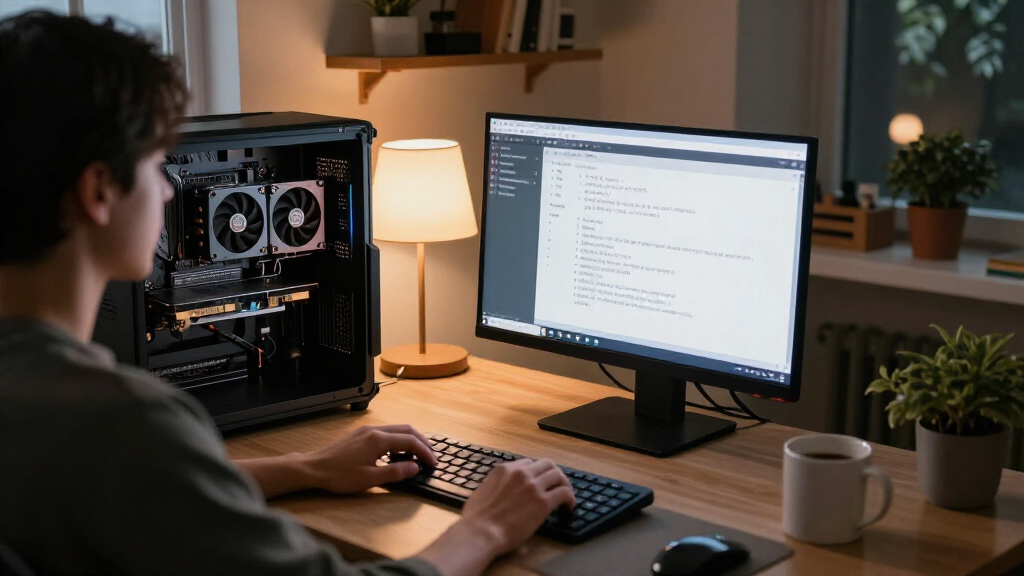
The XDA Developers writer used a quantized Qwythos file through LM Studio. Performance depends on the GPU, quantization, context length, and software settings.
Hardware
Consumer GPU
The hands-on test used an Nvidia RTX 3070 with 8GB of graphics memory.
Model
Qwen foundation
Qwythos 9B v2 is based on Qwen3.5 9B, with additional training and a reasoning approach from Empero AI.
Runtime
LM Studio
The writer loaded the Q4_K_M quantization. Reported context reached about 14,000 tokens in that setup.
Useful signals, limited scope
These are selected prompt observations from one person and one machine—not a controlled benchmark or a broad comparison.
A claim with an open question
Keep the company’s description separate from what the article could verify.
What Empero says
Empero says it trained Qwythos on more than 500 million tokens of Claude Mythos and Claude Fable conversations. The report says the reasoning examples were generated using Empero’s own rethink tool.
What remains unknown
- How Empero obtained the Claude conversations.
- What permissions or terms applied to their use.
- How the material was prepared for training.
- Whether the data claim has been independently verified.
Current answers need a search tool
In the reported test, Qwythos acknowledged it lacked internet access. Adding search changed what it could answer about current information.
Latest version?
The writer asked for the current LM Studio release.
Limits stated
Without internet access, Qwythos said it could not check current facts.
Brave Search + MCP
The writer enabled an external search connection.
Current answer
It then answered a current-information question correctly, as reported.
What the report supports
Promising local use is not the same as a like-for-like subscription comparison.
| Question | What the report says | Evidence status |
|---|---|---|
| Can it run on 8GB? | Q4_K_M ran on an 8GB RTX 3070; download was under 7GB. | Reported hands-on result |
| Can it answer current questions offline? | It lacked internet access; Brave Search via MCP supported a later current answer. | Tool-dependent |
| Is the Claude training data verified? | Empero’s claim is described, but its source and authorization are unresolved. | Unverified in source |
| Does this show it replaces Claude? | The article reports selected tasks, not a controlled comparison or broad benchmark. | Not established |
Local option, not a verdict
The test suggests a 9B model can be practical on some modest graphics cards, while performance and reliability still need broader evaluation.
Where might it fit?
Routine questions and explanations when local access matters, with the user’s chosen setup and tools.
What needs more testing?
Long conversations, coding, image inputs, factual reliability, and performance across GPUs.
What should readers watch?
A clearer account of training-data origin, collection method, and permitted use.
What is the fair conclusion?
One writer’s encouraging RTX 3070 experience; not proof of a Claude replacement or general performance ranking.
Local AI on Modest Graphics Cards
The hands-on test illustrates how a 9-billion-parameter model can be used on a consumer graphics card with 8GB of VRAM, rather than relying entirely on a hosted service. For people who want local access to question-answering and reasoning, that can mean keeping prompts and responses on their own machine, subject to the tools and setup they choose. The report does not establish that every 8GB system will perform the same way: hardware, quantization, context length and software settings all affect results.
The findings also set limits on the comparison with Claude. The writer found Qwythos useful for explanations and basic problem-solving, but reported weaker coding than the underlying Qwen model and warned that it can state incorrect facts confidently without search. Current information required an external search tool. The tests suggest a possible local alternative for some routine tasks, not a like-for-like replacement for a subscription or a general performance verdict.
Products Worth Considering

Apple MacBook Air 15-inch (2026) with M5 chip, 16GB memory, 512GB SSD — Midnight

LG UltraGear 27-inch QHD OLED Gaming Monitor, 240Hz, 0.03ms, G-SYNC Compatible, FreeSync Premium Pro, HDR True Black 400

Amazon Kindle Scribe (16GB) with Premium Pen, Tungsten
As an affiliate, we earn on qualifying purchases.
The Model Behind Qwythos
Qwythos v2 is built on Qwen3.5 9B, which the source describes as an Alibaba model capable of handling images and long documents. Empero added its own training and reasoning approach. The report explains that reasoning can be enabled or disabled in a model runner, changing whether the model produces an intermediate thinking process before its answer.
The article distinguishes Empero’s description of the training from what it could independently verify. It says Empero claims to have used more than 500 million tokens of Claude Mythos and Claude Fable conversations. According to the report, Mythos was provided only to a limited group of vetted partners, while Fable and Mythos are described there as the same underlying Anthropic model. Empero has not disclosed how it obtained the material, so the report does not establish its provenance or whether its use was authorized.
The writer tested Qwythos through LM Studio, with plans to try it in AnythingLLM to recreate some workspace features used in Claude Desktop. Their observations cover a small set of prompts and one specific machine; they are not a formal benchmark or a broad comparison across users and hardware.
“Empero says Qwythos was trained on more than 500 million tokens of Claude Mythos and Claude Fable conversations.”
— Empero AI, as described in the XDA Developers report
Training Data and Test Limits
The report does not establish how Empero obtained the Claude conversations, what permissions or terms applied, or precisely how those materials were prepared for training. The article notes that Anthropic has publicly challenged other labs over harvesting model outputs, but it does not resolve whether that history applies to Qwythos. No response from Anthropic or independent verification of Empero’s data claim is included in the supplied source.
Performance evidence is also limited. The writer tested selected prompts on one GPU, and the report does not provide a controlled comparison against Claude or a full benchmark of Qwythos. The source begins to discuss vision performance but does not provide the completed findings, so its image-handling ability cannot be assessed from the available material. Empero’s reported result of seven correct answers on its own web-search test is a company-reported result, not an independently validated benchmark.
Further Testing and Data Disclosure
The report says the writer plans to try Qwythos in AnythingLLM, which could test how it fits into a local workspace workflow. Further hands-on testing would be needed to assess longer conversations, coding, image inputs, factual reliability and performance across different GPUs. Adding web search may improve answers about current information, but it introduces dependence on external tools and sources.
The unresolved issue is the training material. A clearer account from Empero of the data’s origin, collection method and use would help readers evaluate the Claude connection. Until that information is available, the claim should be treated as the company’s description of its training, while the RTX 3070 results remain one writer’s reported experience.
Key Questions
Can Qwythos 9B run on an 8GB graphics card?
The XDA writer ran a Q4_K_M quantization on an 8GB RTX 3070. The download was under 7GB, and reported speed was about 20–22 tokens per second. Results can vary by hardware, context length and settings.
What is Qwythos 9B based on?
The report says Qwythos is based on Qwen3.5 9B, with additional training from Empero AI. Empero says it used more than 500 million tokens of Claude Mythos and Claude Fable conversations.
Has Empero explained where it got the Claude data?
Not in the source material. The report says Empero has not explained how it obtained the conversations, and it does not independently verify their origin or authorization.
Does Qwythos know current facts without an internet connection?
No. In the writer’s test, Qwythos acknowledged that it lacked internet access when asked for the latest LM Studio version. It answered a current-information question after the writer connected Brave Search through MCP.
Does the test show Qwythos can replace Claude?
No. The report describes promising results on selected everyday tasks, but also notes coding weaknesses and the risk of confident factual errors without search. It is a single-machine hands-on test, not a full comparison establishing that Qwythos matches Claude.
Source: XDA Developers