TL;DR

Get business pricing on tech for your team
- Business-only prices and quantity discounts
- Tax-exempt purchasing
- Multiple users, one account, clear invoices
Thorsten Meyer AI’s Control Series Part 1 says AI is increasingly governed by six chokepoints rather than operating like a neutral utility. The analysis points to power, compute, data, model access, distribution and capital, citing 2026 events including a fast government model cutoff, combat-data licensing and large compute-rental deals. Exact contract terms, regulatory rules and market effects remain developing.
Thorsten Meyer AI published the first installment of its Control Series, arguing that a cluster of 2026 AI developments shows power over artificial intelligence moving through six chokepoints: power, compute, data, model access, distribution and capital.
The news development is not a single product release. It is a reported pattern across the AI stack. The source material says a government switched off a frontier model worldwide on about 90 minutes’ notice, Ukraine’s Ministry of Defense is turning combat footage into a licensed AI training asset, and leading AI companies are renting large-scale compute from direct rivals.
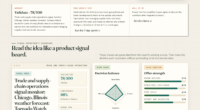
The dispatch identifies six control points. At the base is power, where it cites SpaceX’s Memphis complex running toward roughly two gigawatts through on-site generation rather than waiting for slower utility interconnections. One level up is compute, where the report says xAI’s Colossus has roughly 555,000 GPUs and that Anthropic and Google have agreed to rent large amounts of capacity, with combined payments described at about $26 billion a year.
The other chokepoints are data, model access, distribution and capital. The dispatch cites Ukraine’s Avengers Labs as an example of combat data licensed with conditions attached, a government model cutoff as an example of revocable access, a reported $60 billion Cursor-related deal as evidence that the software interface can be more strategically valuable than the model, and roughly $26 billion a year in intra-industry compute financing as a sign that a small number of balance sheets now shape the market.
The Six Chokepoints
For a decade AI was sold as a utility — abundant, neutral, always on. In 2026 it became a lever: scarce, controlled, revocable. Here are the six places power actually sits — and who started to squeeze.
Every layer is concentrating into fewer hands, and 2026 is the year the holders stopped treating their leverage as theoretical. A kill switch wasn’t discussed — it was pulled. The utility you’re allowed to forget about; the lever, you have to watch who’s holding. Optionality just became architecture.
AI Access Becomes Revocable
The report matters because it challenges the assumption that AI will behave like a commodity service available on stable terms to any paying customer. If the dispatch’s reading is right, companies building on AI systems face a stack where access can be restricted by energy permits, compute contracts, data licenses, model policy, app distribution and financing.
For developers, enterprises and governments, that changes risk planning. A product that depends on a single model provider, rented cluster, proprietary dataset or coding interface may be exposed to limits set by actors outside the customer’s control. The practical question becomes not only which model performs best, but who can withdraw access, reprice it or attach conditions.
high capacity AI data storage devices
As an affiliate, we earn on qualifying purchases.
As an affiliate, we earn on qualifying purchases.
From Grid Metaphor To Gatekeepers
The source material says AI was marketed for much of the past decade as a utility: abundant, neutral and always available. The Control Series argues that 2026 has weakened that framing by showing that the systems behind AI are neither evenly distributed nor politically neutral.
The dispatch’s timeline relies on a synthesis it attributes to Anthropic statements, Axios, The Wall Street Journal, Reuters, CBS, TechCrunch, Semafor, Ukraine’s Ministry of Defense, Perplexity Research, Challenger Gray and SpaceX SEC filings from March through June 2026. The provided material does not include every underlying document, so the article’s numbers and deal descriptions should be read as sourced claims from that synthesis unless separately confirmed.
“For a decade AI was sold as a utility – abundant, neutral, always on. In 2026 it became a lever: scarce, controlled, revocable.”
— Thorsten Meyer AI dispatch
As an affiliate, we earn on qualifying purchases.
Contract Details Stay Opaque
Several details remain unclear from the provided source material. The exact legal terms of the compute-rental agreements, any clawback clauses, the full scope of the reported model shutdown, and the operating rules for Ukraine’s combat-data licensing are not fully reproduced in the text.
It is also not yet clear whether these 2026 developments mark a durable market structure or a temporary phase caused by frontier-model demand outpacing power, chip and capital supply. The dispatch presents a thesis about concentration of control; the long-term effects on pricing, competition and regulation are still developing.
uninterruptible power supply for data centers
As an affiliate, we earn on qualifying purchases.
As an affiliate, we earn on qualifying purchases.
Series Turns To Each Lever
Thorsten Meyer AI says each chokepoint will receive its own later installment. The next markers to watch are power permits and local opposition around AI data centers, new compute-leasing disclosures, model-access rules from governments, licensing terms for scarce datasets, platform deals around AI coding tools and signs of tighter or looser capital flows into the sector.
As an affiliate, we earn on qualifying purchases.
Key Questions
What is the actual news development?
Thorsten Meyer AI has published Part 1 of its Control Series, laying out a six-part framework for where power sits in the AI stack in 2026.
What are the six chokepoints named in the report?
The report identifies power, compute, data, model access, distribution and capital as the six places where AI control is concentrating.
What is confirmed versus claimed?
Confirmed from the supplied material is that the dispatch makes this argument and cites a set of 2026 examples. Specific figures, contract clauses and incident details are attributed to the dispatch’s cited source synthesis and remain dependent on those underlying sources.
Why should readers care?
If AI access depends on a few chokepoints, businesses and users may face sudden limits, higher costs or policy restrictions even when the software itself appears widely available.
Source: Thorsten Meyer AI
Halloween Picks
halloween
As an affiliate, we earn on qualifying purchases.