

TL;DR
Aleph Alpha released Kolibri on Oct. 3, 2026, as an open-weight large language model designed for German and English. Its 78.1 billion parameters are organized as a mixture of experts, with about 3.46 billion active for each token; the weights and configuration files are licensed under Apache 2.0. Performance and sovereignty statements in the launch materials are company claims, and independent results are not provided in the supplied reporting.
Aleph Alpha released Kolibri on Oct. 3, 2026, publishing the weights for its German- and English-language large language model on Hugging Face under the Apache 2.0 license. Kolibri has 78.1 billion total parameters but activates about 3.46 billion per token through a mixture-of-experts design, a distinction that lowers computation per token but does not remove the need to hold the full model in memory.

Get business pricing on tech for your team
- Business-only prices and quantity discounts
- Tax-exempt purchasing
- Multiple users, one account, clear invoices
Aleph Alpha’s technical report and model card describe Kolibri as a model with a native 262,144-token context window, with tests reported up to 1,048,576 tokens. The materials list four reasoning settings—none, low, medium and high—and support for tool calling. They give the model’s knowledge cutoff as June 18, 2026.
The company says Kolibri was trained from scratch on infrastructure in Germany and Finland, using 768 NVIDIA B200 GPUs and about 24 trillion tokens of training data. More than one-fifth of the training tokens were German, according to the report. The supplied account says the weights require about 78 GB in FP8; memory needs will vary with deployment format and setup, and the source does not provide a complete hardware deployment specification.
Kolibri’s mixture-of-experts architecture uses 384 routed experts in each of 50 layers, plus a shared expert. For a given token, the router selects six routed experts. Aleph Alpha reports that the model scored above every compared model of similar size in German and English in its evaluation. That is a company-reported comparison; the supplied material does not include independent replication or enough benchmark detail to assess the result across other tasks.
Lower Compute, Full-Model Memory
The architecture is relevant to organizations weighing model capability against operating costs. Activating about 4.4% of the parameters per token can reduce computation compared with a dense model of the same total parameter count. But the experts still need to be available in memory: Aleph Alpha’s model card says the full model must be held in memory, even though only part is active at a time. The active-parameter figure is not a promise that the model can run on hardware sized for a 3.5-billion-parameter model.
The Apache 2.0 release gives developers permission to use and adapt the published weights and configuration files under that license. That may make the model relevant to public agencies and companies that want to host a model themselves, including in settings where data residency and control over deployment are priorities. However, licensing the model files does not mean every component of the development process is open: Aleph Alpha retains rights to its training code and methods, according to the source report.
For German-language use, the reported training mix and a tokenizer designed to handle German compounds are notable features. Aleph Alpha says its tokenizer requires 11.2% fewer tokens for German text than GPT-5’s tokenizer in its comparison. That result concerns token counts, not a direct measure of answer quality, cost savings or accuracy. Actual benefits depend on the text, workload and deployment conditions.
Products Worth Considering

Apple MacBook Air 15-inch (2026) with M5 chip, 16GB memory, 512GB SSD — Midnight

Bose QuietComfort True Wireless Earbuds with Active Noise Cancellation, Bluetooth 5.3, USB-C Charging, and IPX4 Water Resistance
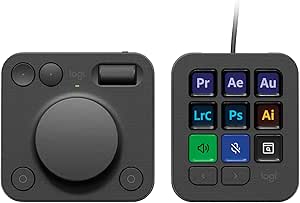
Logitech MX Creative Console with 9 Customizable Keys, Graphite
As an affiliate, we earn on qualifying purchases.
European Training and Open Weights
Aleph Alpha describes Kolibri as “sovereign”, referring to where and under which laws the model was developed and trained, and to customers’ ability to deploy it themselves. The company says teams built it in Germany and trained it on infrastructure in Germany and Finland, under German and European law, without foreign control. These descriptions are company statements; they do not by themselves establish that every dataset, tool or other input originated in Europe.
The model card, as summarized in the source report, discloses use of external models in preparing some training material: Google’s Gemma 4 was used to rephrase English web text, Mistral-NeMo for German text, and Qwen3-32B to label data used in quality filters. Aleph Alpha also says it filtered training data for political bias and has signed the European Union’s General-Purpose AI Code of Practice. These details qualify the sovereignty claim: the company’s stated emphasis is on development, infrastructure, legal jurisdiction and customer deployment, rather than on a wholly European origin for every component of data preparation.
The release arrives amid interest in models that can be run outside a provider’s hosted service. The source report draws on Aleph Alpha’s 189-page technical report, model card and launch post, as well as the author’s tokenizer experiment. Its favorable benchmark summary should be read in that source context, not as an independent comparative assessment.
“Teams built the model in Germany, trained it on infrastructure in Germany and Finland, under European and German law, with no foreign control.”
— Aleph Alpha, describing its use of “sovereign”
Independent Results and Deployment Needs
The supplied material does not establish how Kolibri performs in independent evaluations, how it compares across specific benchmark tasks, or whether the reported lead holds for different prompts and settings. Aleph Alpha’s claim that it outscored compared models of its size is limited to the company’s own evaluation as described in the source.
Practical deployment requirements also remain workload-dependent. The report gives an approximate memory figure and the FP8 format, but details such as throughput, latency, serving configuration and costs for particular hardware are not supplied here. The reported context-window tests up to 1,048,576 tokens do not establish quality or speed across every task at that length.
The source account does not specify all terms that may apply to training data or describe a full independent audit of the model’s legal, privacy or bias characteristics. Aleph Alpha’s compliance and sovereignty framing should be distinguished from verified conclusions about a particular organization’s obligations or use case.
Testing the Published Model
Developers can examine the published weights and configuration files on Hugging Face and assess Kolibri against their own German- and English-language tasks. Useful comparisons would track answer quality alongside memory use, latency, throughput and total serving costs, rather than treating active parameter count as a complete measure of deployment efficiency.
Further scrutiny will depend on the technical report, model card and release materials, along with independent evaluations and reports from organizations that run the model. No next benchmark release, product milestone or schedule is specified in the source material, so those developments remain unannounced.
Key Questions
What is Kolibri?
Kolibri is an open-weight large language model from Aleph Alpha, built for German and English. The company released it on Oct. 3, 2026.
What does open-weight mean for this release?
Aleph Alpha published Kolibri’s weights and configuration files under Apache 2.0. The source report says the company retains rights to its training code and methods, so not every part of the model’s development is released on the same terms.
Does Kolibri need only 3.46 billion parameters of memory?
No. About 3.46 billion parameters are active per token, but the model card says the full model must be held in memory. The source gives an approximate figure of 78 GB for weights in FP8.
What evidence supports Aleph Alpha’s performance claims?
Aleph Alpha reports that Kolibri outscored every model it compared with at a similar size in German and English. The supplied source does not provide independent confirmation or enough benchmark detail to establish how broadly that result applies.
What does Aleph Alpha mean by calling Kolibri sovereign?
The company points to development and training in Germany and Finland under German and European law, as well as customers’ ability to deploy the model themselves. The model card also identifies external models used to prepare some training data, so sovereign does not mean every input was European.
Source: hn