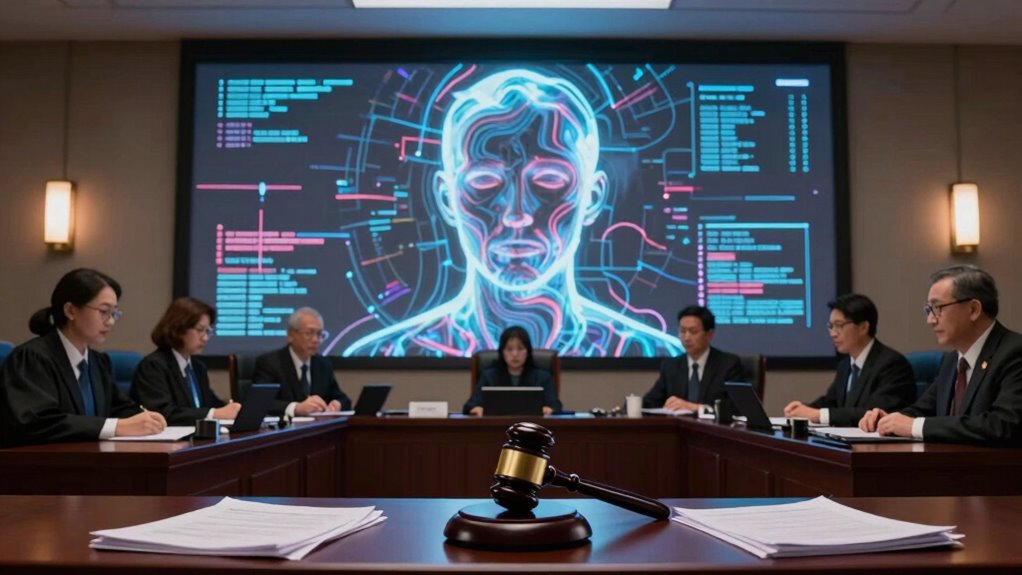

AI hallucinations pose increasing legal risks because false or misleading information can cause harm, misjudgments, or wrongful decisions. As a user or developer, you face accountability challenges due to AI’s unpredictability, data biases, and flawed algorithms. Regulations struggle to keep pace with these issues, making it hard to assign liability. Transparency, standards, and responsible use are essential to reducing risks. Keep exploring to understand how legal frameworks are evolving to address these challenges.

Get business pricing on tech for your team
- Business-only prices and quantity discounts
- Tax-exempt purchasing
- Multiple users, one account, clear invoices
Key Takeaways
- AI hallucinations can lead to legal liabilities due to misinformation causing harm or wrongful decisions.
- Data biases and unpredictability complicate accountability and increase legal risks for developers and users.
- Existing laws often fail to address AI-generated misinformation, requiring new regulatory frameworks.
- Transparency, standards, and oversight are essential to manage hallucination risks and ensure responsible AI use.
- Users and developers must verify AI outputs and implement safeguards to mitigate legal exposure.

As artificial intelligence systems become more integrated into everyday life, the phenomenon of AI hallucinations—where machines generate false or misleading information—poses increasingly serious legal risks. When AI produces inaccurate data, it can lead to misunderstandings, wrongful decisions, or even harm, raising complex questions about liability implications. Who bears responsibility when an AI hallucination causes damage? Is it the developers who built the system, the companies deploying it, or the end-users relying on its outputs? These questions become more urgent as AI’s role in critical sectors like healthcare, finance, and legal services grows. Determining liability isn’t straightforward because AI hallucinations stem from the system’s inherent unpredictability, data biases, or flawed algorithms. This unpredictability complicates legal accountability and could result in gaps where victims find it difficult to seek redress. Recognizing the potential for harm underscores the importance of establishing clear legal frameworks around AI use. Additionally, the training data quality profoundly influences AI outputs, which can contribute to hallucinations and subsequent legal issues.
Alongside liability concerns, regulatory challenges loom large. Existing laws often don’t account for the unique nature of AI-generated misinformation, which makes creating effective regulations more complex. Regulators face the difficult task of crafting frameworks that balance innovation with safety, without stifling technological progress. For example, how do you regulate the accuracy of AI outputs when hallucinations are sometimes unpredictable? Creating clear standards and guidelines becomes essential, but the rapid evolution of AI technology makes this an ongoing challenge. Furthermore, the enforcement mechanisms need to adapt to ensure compliance and to address situations where AI systems generate harmful or false information. The global nature of AI development further complicates regulation, as jurisdictions differ in their approaches and legal standards. International coordination becomes critical to prevent regulatory gaps that could be exploited or lead to inconsistent legal outcomes. Additionally, the role of transparency and accountability in AI systems is vital for establishing trust and ensuring responsible deployment.
For you as a user, these issues mean that trusting AI outputs demands caution. You need to be aware that AI hallucinations aren’t just technical glitches—they can have real legal consequences. When relying on AI-generated data, it’s wise to verify critical information through multiple sources. For developers and organizations, understanding the liability implications pushes you to implement rigorous safety measures and transparent algorithms to mitigate risks. It also underscores the importance of proactive regulatory engagement, ensuring your AI systems adhere to evolving standards. As AI continues to develop, the intersection of liability implications and regulatory challenges will shape the legal landscape, demanding vigilance and responsibility from all stakeholders involved. Recognizing these risks now helps you prepare for a future where AI’s benefits are balanced carefully with the legal and ethical safeguards needed to protect everyone.
As an affiliate, we earn on qualifying purchases.
Frequently Asked Questions
How Often Do AI Hallucinations Occur in Real-World Applications?
AI hallucinations happen fairly often in real-world applications, especially when AI models struggle with accuracy. You might notice hallucinations in complex tasks or ambiguous data. To manage this, you should prioritize hallucination detection methods, which help identify and correct inaccuracies. While AI accuracy has improved, hallucinations still pose risks, so ongoing vigilance and robust detection are essential for safe and reliable AI deployment.
What Industries Are Most Vulnerable to Legal Repercussions From AI Hallucinations?
You’re most vulnerable in healthcare, finance, and legal industries, where AI hallucinations can lead to serious legal repercussions. You have ethical obligations to guarantee accuracy, but liability standards may hold you responsible for errors caused by AI mistakes. If hallucinations result in harm or misinformation, you could face lawsuits or regulatory penalties. Staying vigilant and implementing strict oversight helps protect you from these legal risks and upholds your ethical commitments.
Are There Existing Legal Frameworks Addressing Ai-Generated Misinformation?
You’ll find that current legal frameworks are limited when it comes to AI-generated misinformation, raising significant liability concerns. Laws are still evolving to address these issues, often focusing on accountability and ethical considerations. You must stay vigilant, as existing regulations may not fully cover AI hallucinations, making it essential for your organization to implement proactive measures. Understanding these gaps helps you mitigate legal risks and uphold responsible AI use.
How Can Companies Mitigate Legal Risks From AI Hallucinations?
You can mitigate legal risks from AI hallucinations by implementing strong transparency measures and adhering to ethical considerations. Clearly communicate AI limitations to users, ensuring they understand generated content may not be accurate. Regularly monitor and audit AI outputs, and establish guidelines for responsible use. Staying proactive with transparency and ethics helps prevent misinformation, reduces legal exposure, and builds trust with your audience, ultimately safeguarding your company against potential legal liabilities.
What Are the Potential Penalties for AI Hallucination-Related Legal Violations?
You could face penalties like lawsuits, fines, or sanctions if your AI hallucinations breach liability standards or violate ethical considerations. Regulatory bodies are increasingly scrutinizing AI outputs, and failure to guarantee accuracy can lead to legal violations. Staying compliant involves understanding liability standards and prioritizing ethical considerations, which can help you avoid penalties and protect your reputation. Ignoring these aspects puts you at risk of serious legal consequences.
AI hallucination detection software
As an affiliate, we earn on qualifying purchases.
As an affiliate, we earn on qualifying purchases.
Conclusion
As you rely more on AI, the threat of hallucinations looms larger, risking your reputation and legal stability. While these systems promise innovation, their inaccuracies can lead to costly mistakes and legal battles. It’s a stark contrast—cutting-edge technology with the potential for devastating errors. You must stay vigilant, understanding that in this digital age, the line between progress and peril is thinner than ever. The future depends on your ability to navigate these risks wisely.
AI transparency and accountability tools
As an affiliate, we earn on qualifying purchases.
As an affiliate, we earn on qualifying purchases.
As an affiliate, we earn on qualifying purchases.
Halloween Picks
halloween
As an affiliate, we earn on qualifying purchases.