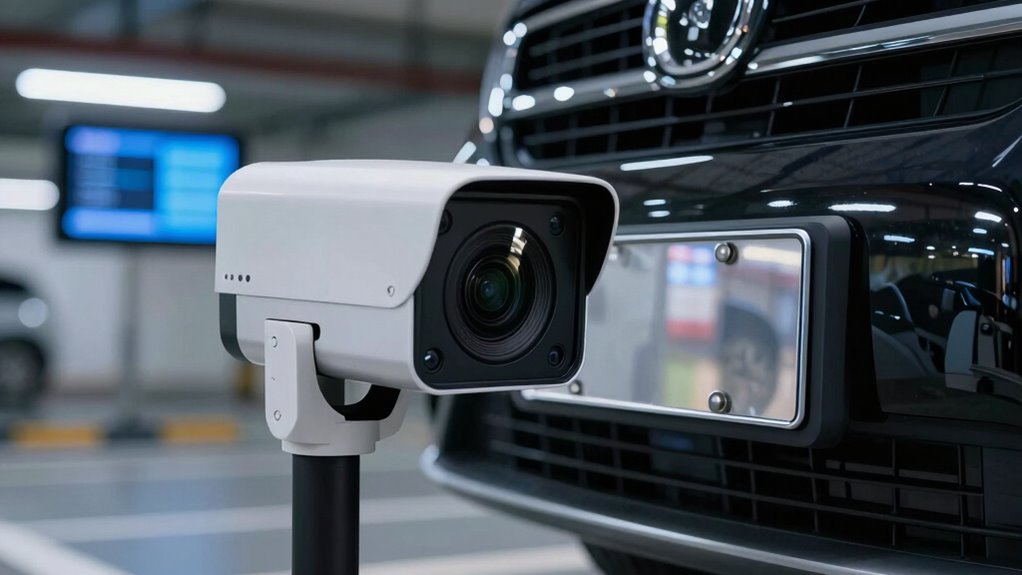

License plate recognition systems work by capturing vehicle images with cameras that operate reliably in various conditions. Advanced algorithms then detect and isolate license plates from the images, filtering out background clutter. OCR technology quickly converts the plates into digital text for immediate identification and comparison with databases. This process automates vehicle access and monitoring, improving efficiency and security. If you want to discover more about the technology behind these systems, keep exploring further.

Get business pricing on tech for your team
- Business-only prices and quantity discounts
- Tax-exempt purchasing
- Multiple users, one account, clear invoices
Key Takeaways
- Cameras capture images of passing vehicles, functioning reliably in varying lighting and weather conditions.
- Advanced algorithms detect and isolate license plates from complex backgrounds for accurate analysis.
- OCR technology converts license plate images into digital text for instant vehicle identification.
- System compares recognized plates against databases for verification and access control.
- Hardware and software improvements enhance accuracy, speed, and reliability in diverse environments.
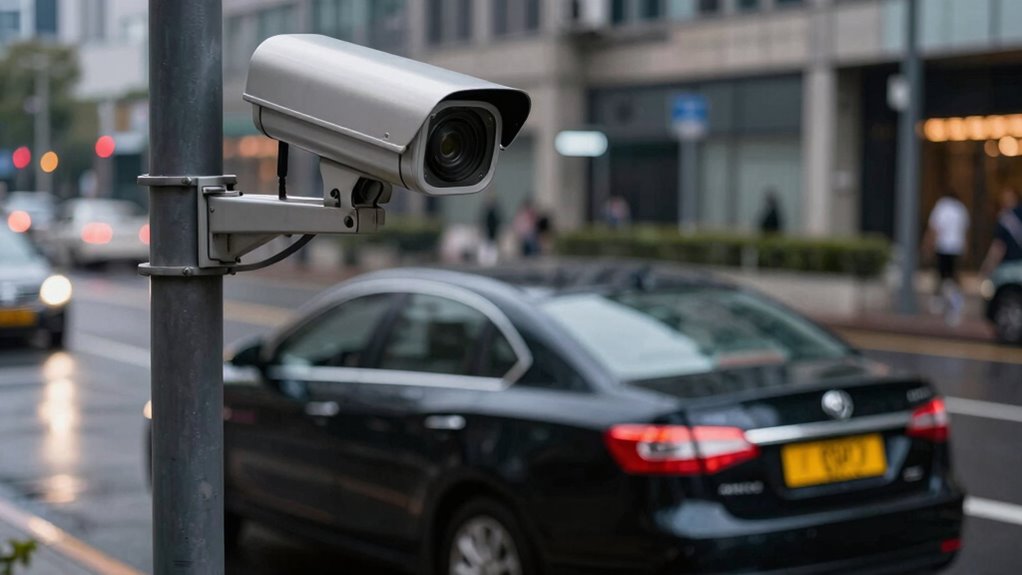
Have you ever wondered how modern traffic management and security systems automatically identify vehicles? It’s all thanks to license plate recognition (LPR) systems, which have become essential tools in automotive security and parking management. These systems use advanced technology to quickly and accurately read license plates, helping authorities and facility managers streamline vehicle access and monitor activity.
When a vehicle passes through a designated area, cameras capture images of its license plate. These cameras are specially designed to work in various lighting and weather conditions, guaranteeing reliable performance around the clock. The captured images are then processed using sophisticated algorithms that focus on detecting the plate within the image, isolating it from the background. This step is critical because it allows the system to work efficiently even in busy or cluttered environments.
Once the license plate is isolated, optical character recognition (OCR) technology kicks in. OCR converts the image of the characters on the plate into digital text that can be stored, compared, or analyzed. This process happens in real-time, making it possible for the system to instantly verify a vehicle’s identity against a database. Whether it’s for automated toll collection, access control at secure facilities, or parking management, this rapid processing guarantees minimal delay.
In parking management, license plate recognition systems automate vehicle entry and exit, reducing congestion and eliminating the need for manual ticketing. When a vehicle arrives, the system reads its plate, matches it against pre-approved lists or payment records, and grants access automatically. When leaving, the system records the departure time, helping parking lot operators track usage and calculate fees accurately. This automation not only speeds up throughput but also enhances security by preventing unauthorized access. Additionally, precise vehicle identification is crucial for effective management and security operations. Advances in LPR technology have significantly improved accuracy and reliability, even in challenging environments, especially when combined with high-quality imaging hardware. Incorporating robust hardware components further enhances the system’s ability to perform under adverse conditions, ensuring consistent operation. Furthermore, ongoing developments in software algorithms continue to push the boundaries of accuracy and speed, making these systems more dependable than ever before.
license plate recognition camera
As an affiliate, we earn on qualifying purchases.
As an affiliate, we earn on qualifying purchases.
Frequently Asked Questions
How Accurate Are License Plate Recognition Systems in Different Weather Conditions?
You’ll find that license plate recognition systems are generally quite accurate, but environmental factors can impact their sensor accuracy. In clear weather, they perform exceptionally well, capturing clear images and reading plates accurately. However, rain, fog, or snow can reduce sensor accuracy, causing misreads or failures. Bright sunlight or shadows may also interfere. To maintain high accuracy across weather conditions, it’s vital to use high-quality cameras and adaptive algorithms.
Can LPR Systems Identify Stolen or Unregistered Vehicles Automatically?
Yes, license plate recognition (LPR) systems can automatically identify stolen or unregistered vehicles. You might think they only read plates, but they also cross-reference vehicle registration databases to flag stolen vehicle identification or unregistered cars. This technology helps law enforcement quickly alert authorities about suspicious vehicles, improving safety and response times. By automating vehicle registration checks, LPR systems are essential tools in preventing vehicle theft and enhancing security.
What Are the Common Challenges Faced by License Plate Recognition Technology?
You face challenges like maintaining data privacy, which requires safeguarding captured images and license data from breaches. System scalability is also tough, as expanding coverage means handling more data and processing power efficiently. Poor lighting, weather conditions, and dirty plates can reduce accuracy, while integrating systems with existing infrastructure demands careful planning. Addressing these issues guarantees your license plate recognition system remains reliable, secure, and capable of growing with your needs.
How Is Privacy Protected When Using License Plate Recognition Systems?
You might wonder how your privacy stays intact with license plate recognition systems. Rest assured, these systems protect your data through encryption, making unauthorized access nearly impossible. Additionally, strict privacy policies govern how your information is stored and used, ensuring accountability. Yet, questions linger about the balance between security and privacy. As technology advances, staying informed about these protections becomes essential to understanding your rights and safeguards.
What Are the Future Advancements Expected in License Plate Recognition Technology?
Future advancements in license plate recognition technology will likely include seamless system integration with broader vehicle management and security systems. You can expect improvements in vehicle customization options, allowing for personalized detection features. Enhanced AI algorithms will boost accuracy and adapt to various plate styles worldwide. These innovations will make your experience more efficient, enabling faster identification and better coordination across different platforms, ultimately leading to smarter, more adaptable traffic and security solutions.
As an affiliate, we earn on qualifying purchases.
Conclusion
Think of a license plate recognition system as a skilled detective, swiftly piecing together clues to identify vehicles. It captures images, reads the characters, and verifies details in the blink of an eye. With this powerful tool, you’re not just watching traffic—you’re orchestrating a seamless, high-tech symphony of security and efficiency. As you harness this system, you’re conducting a digital orchestra that keeps roads safer and smarter, one plate at a time.
As an affiliate, we earn on qualifying purchases.
As an affiliate, we earn on qualifying purchases.
Fall Picks
fall essentials
As an affiliate, we earn on qualifying purchases.