

AI automation software tools promise to eliminate repetitive work, but the biggest obstacle for most buyers is not the software itself — it is knowing how to actually build workflows that hold up. That is why the strongest resources in this category pair the tools with real system design, and why my best overall pick is AI Prompt Engineering & AI Agents Bible, a 12-book bundle that covers ChatGPT, no-code automations, n8n, and Make.com in one continuous path from beginner to working automations. Two standouts challenge it: Agentic Coding with Claude Code (5-in-1) for developers who want agent-driven software pipelines, and Power Automate for Complete Beginners for anyone locked into the Microsoft ecosystem who wants results this week. The core tradeoff across the category is breadth versus depth — broad bundles teach you the landscape but can feel shallow, while single-tool handbooks go deep but lock you into one platform. Price gaps are modest here; your real investment is reading and build time. Keep reading for the full breakdown of which option fits your stack, skill level, and ambitions.

Get business pricing on tech for your team
- Business-only prices and quantity discounts
- Tax-exempt purchasing
- Multiple users, one account, clear invoices
Key Takeaways
- Bundles dominated the top of this comparison because AI automation fails at the seams between tools — prompt writing, workflow logic, and platform skills need to be learned together, not in isolation.
- The Claude Code titles and the OpenCode Handbook split cleanly by intent: the 5-in-1 handbook suits developers scaling real software projects, while the spreadsheet-focused title serves analysts who want repeatable reports without writing formulas.
- Microsoft-ecosystem buyers should not buy a general AI automation book first — Power Automate for Complete Beginners delivers faster results because it matches the tool already installed on their machines.
- The business-strategy entry (Agentic Software: The App Layer Wins) ranked as the best premium pick not for technical instruction but for framing automation as a workforce design problem — a perspective none of the how-to guides provide.
- Every sub-$20 option carried the same drawback: template collections age quickly as platforms change UIs, so workflow-prompt bundles like AI Automation Without Coding work best as idea libraries rather than step-by-step manuals.
| AI Prompt Engineering & AI Agents Bible (12 Books in 1) |  | Best Overall Breadth | Format: Book (print/digital — confirm at purchase) | Structure: 12 books in 1 | Tools covered: ChatGPT, Custom GPTs, n8n, Make.com | VIEW LATEST PRICE | See Our Full Breakdown |
| The Claude Code Operating Model |  | Best for Engineering Teams | Format: Technical book | Core platform: Claude Code | Key topics: Skills, MCP, Hooks, Agent orchestration, SDK patterns | VIEW LATEST PRICE | See Our Full Breakdown |
| Mastering Claude Code for Spreadsheet Analysis |  | Best Niche Use Case | Format: Book (Claude Code Mastery Series) | Core platform: Claude Code | Data formats: CSV, Excel exports | VIEW LATEST PRICE | See Our Full Breakdown |
| AI for Quality Assurance and Software Testing |  | Best for QA Professionals | Format: Practitioner guide (book) | Domain: Quality assurance and software testing | Topics: AI-powered testing tools, methodologies, practice transformation | VIEW LATEST PRICE | See Our Full Breakdown |
| Building Intelligent Applications with Claude AI |  | Best for Builders | Format: Practical guide (book) | Core platform: Claude AI | Build targets: AI tools, assistants, automation systems, software products | VIEW LATEST PRICE | See Our Full Breakdown |
| Agentic AI for Beginners: A Practical Guide to AI Agents, Autonomous Workflows, Multi-Agent Systems, Automation, and AI-Powered Applications |  | Best Conceptual Introduction | Format: Kindle eBook | Audience Level: Beginner | Primary Focus: AI agents and autonomous workflows | VIEW LATEST PRICE | See Our Full Breakdown |
| OpenCode Projects Handbook: Build Real Software with AI Coding Agents, Custom Agents, Skills, MCP, Local Models, Context Engineering, Testing, and Automated Workflows | 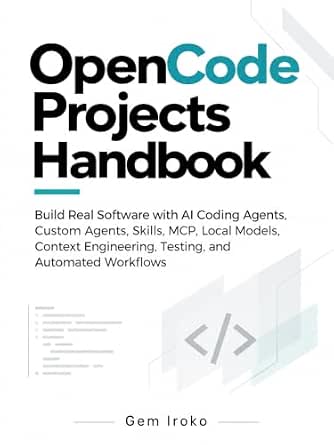 | Best for Developer Tooling Breadth | Format: Kindle eBook | Audience Level: Intermediate to advanced developers | Primary Focus: Building software with AI coding agents | VIEW LATEST PRICE | See Our Full Breakdown |
| Agentic Coding with Claude Code (5-in-1): A Practical Developer’s Handbook for Building, Automating, and Scaling Software Projects with Claude Code and AI-Powered Agentic Workflows |  | Best Claude Code Deep Dive | Format: Kindle eBook (5-in-1 compilation) | Audience Level: Developers, intermediate and up | Primary Focus: Building, automating, and scaling projects with Claude Code | VIEW LATEST PRICE | See Our Full Breakdown |
| Agentic Software: The App Layer Wins: How One Founder Built an AI Workforce That Runs a Real Company |  | Best Business Strategy Perspective | Format: Kindle eBook | Audience Level: Founders, executives, strategy-minded readers | Primary Focus: AI workforce and agentic software strategy | VIEW LATEST PRICE | See Our Full Breakdown |
| Power Automate for Complete Beginners: Automate Repetitive Tasks Without Coding |  | Best No-Code Entry Point | Format: Kindle eBook | Audience Level: Complete beginners | Primary Focus: Microsoft Power Automate | VIEW LATEST PRICE | See Our Full Breakdown |
| AI Automation Without Coding: 50 Practical AI Workflows + 100 Automation Prompts |  | Best Prompt Library for Busy Professionals | Format: Paperback / eBook | Content Type: Workflow and prompt reference guide | Workflows Included: 50 | VIEW LATEST PRICE | See Our Full Breakdown |
| OpenClaw Automation Blueprint |  | Best for Solo Entrepreneurs Building AI Agents | Format: Paperback / eBook | Content Type: Blueprint-style implementation guide | Target Audience: Solo entrepreneurs and small businesses | VIEW LATEST PRICE | See Our Full Breakdown |
| Claude AI for Beginners Bible: 5-in-1 Guide |  | Best On-Ramp for Complete AI Newcomers | Format: Paperback / eBook | Content Type: 5-in-1 beginner guide bundle | Books Included: 5 | VIEW LATEST PRICE | See Our Full Breakdown |
| AI automation software tool | Format | Prerequisites |
|---|---|---|
| AI Prompt Engineering & AI Age | Book (print/digital — confirm at purchase) | None — starts from fundamentals |
| The Claude Code Operating Mode | Technical book | Programming experience, Claude Code basics |
| Mastering Claude Code for Spre | Book (Claude Code Mastery Series) | Working familiarity with Claude Code |
| AI for Quality Assurance and S | Practitioner guide (book) | Software testing background |
| Building Intelligent Applicati | Practical guide (book) | — |
| Agentic AI for Beginners: A Pr | Kindle eBook | None |
| OpenCode Projects Handbook: Bu | Kindle eBook | Software development experience |
| Agentic Coding with Claude Cod | Kindle eBook (5-in-1 compilation) | Not stated; coding background strongly recommended |
| Agentic Software: The App Laye | Kindle eBook | General business familiarity |
| Power Automate for Complete Be | Kindle eBook | — |
| AI Automation Without Coding: | Paperback / eBook | — |
| OpenClaw Automation Blueprint | Paperback / eBook | — |
| Claude AI for Beginners Bible: | Paperback / eBook | — |
More Details on Our Top Picks
AI Prompt Engineering & AI Agents Bible (12 Books in 1)
This 12-book compendium earns the top slot because no other title in this roundup covers as much ground: prompt engineering, AI agents, custom GPTs, n8n, and Make.com under one cover. Compared with Agentic AI for Beginners, which sticks to agent concepts, this one pairs theory with hands-on no-code automation tutorials, so a reader finishes with actual workflows rather than vocabulary. The tradeoff is weight — figuratively and literally. Twelve books is a lot to chew through, and buyers who only need one tool, like the spreadsheet-focused Mastering Claude Code for Spreadsheet Analysis, will find most chapters irrelevant. Format details are thin too, so verify whether you’re getting print or digital before ordering.
Pros:- Broadest topic coverage in the roundup
- Practical no-code tutorials for n8n and Make.com
- Scales from beginner to advanced material
- Combines prompting and automation in one system
Cons:- Sheer volume can overwhelm complete beginners
- Sparse detail on format, page count, and update cadence
Best for: Self-directed learners and solopreneurs who want one purchase covering prompting, agents, and no-code automation end to end
Not ideal for: Readers targeting a single tool or workflow — most of the 12 books will go unread
- Format:Book (print/digital — confirm at purchase)
- Structure:12 books in 1
- Tools covered:ChatGPT, Custom GPTs, n8n, Make.com
- Topics:Prompt engineering, AI agents, generative AI, no-code automation
- Skill level:Beginner to professional
- Prerequisites:None — starts from fundamentals
- Best use:All-in-one learning path for AI automation
Our verdict“Buy this if you want the widest foundation in AI automation from a single book; skip it if your need is narrow and specific.”
The Claude Code Operating Model
This is the most architecturally serious entry here. Where Agentic Coding with Claude Code (5-in-1) teaches an individual developer to build and automate projects, this book treats AI coding as a systems problem — skills, hooks, MCP integrations, agent orchestration, and SDK patterns you’d actually deploy across a team. That framing makes it better suited to engineers designing durable pipelines than to hobbyists automating a side project. The tradeoff is accessibility: there’s little hand-holding, and the description skimps on worked examples, so expect to fill gaps with your own experimentation. Compared with Building Intelligent Applications with Claude AI, which leans toward product-building, this one stays firmly in the infrastructure-and-orchestration lane.
Pros:- Focuses on scalable system architecture, not just prompts
- Covers MCP, hooks, and SDK patterns rarely bundled together
- Strong fit for team-level standardization
- Deeper on orchestration than competing titles
Cons:- Thin worked examples in the available description
- Steep learning curve for non-developers
- Assumes prior Claude Code familiarity
Best for: Engineers and technical leads designing scalable, multi-agent AI coding systems with Claude Code
Not ideal for: Beginners or non-coders — the SDK and orchestration material assumes real engineering fluency
- Format:Technical book
- Core platform:Claude Code
- Key topics:Skills, MCP, Hooks, Agent orchestration, SDK patterns
- Focus:Scalable AI coding systems
- Audience:Developers and AI practitioners
- Prerequisites:Programming experience, Claude Code basics
- Depth:Architecture and systems-level
Our verdict“The pick for engineers who need orchestration patterns and SDK-level rigor; everyone else should start with a gentler title.”
Mastering Claude Code for Spreadsheet Analysis
Most books in this roundup chase broad coverage; this one wins by refusing to. It solves a single, painful problem — turning raw CSV and Excel exports into checked, repeatable reports without formulas. For analysts who live in spreadsheets but dread nested IF statements, that narrow promise is worth more than the 12-book breadth of the AI Prompt Engineering & AI Agents Bible, most of which they’d never open. The catch: it requires existing Claude Code familiarity, so it’s a second book, not a first. Pair it with Agentic Coding with Claude Code (5-in-1) if you’re starting from zero. Content details and reviews are also sparse, so buyers are trusting the series’ reputation sight-unseen.
Pros:- Laser focus on one high-value workflow
- Eliminates formula writing entirely
- Emphasizes repeatable, checkable outputs
- Part of an established series with follow-on depth
Cons:- Not standalone — requires prior Claude Code knowledge
- Minimal published content detail or reader reviews
- Useless outside spreadsheet/reporting contexts
Best for: Business analysts and finance ops staff who produce recurring reports from CSV/Excel exports and want AI to replace formula work
Not ideal for: Claude Code newcomers — this assumes you already run the tool and won’t teach setup
- Format:Book (Claude Code Mastery Series)
- Core platform:Claude Code
- Data formats:CSV, Excel exports
- Outcome:Checked answers, repeatable reports
- Formula requirement:None — no formula writing
- Prerequisites:Working familiarity with Claude Code
- Best use:Automated reporting and analysis
Our verdict“A specialist tool for spreadsheet-heavy roles that already use Claude Code; skip it if you’re still learning the basics.”
AI for Quality Assurance and Software Testing
This is the only title in the lineup aimed squarely at QA and software testing teams, which alone justifies its place. Every other book here builds things with AI; this one verifies them. That perspective shift matters — while Building Intelligent Applications with Claude AI covers shipping AI products, someone still has to test those products, and this guide covers AI-powered testing tools, methodologies, and transformation strategy for practitioners leading that change. The tradeoff is that it reads as a professional’s reference rather than a tutorial: it’s technical, the description includes few concrete examples, and it won’t help non-engineers at all. If you’re a QA lead building a team’s AI testing roadmap, though, nothing else here competes.
Pros:- Only roundup entry dedicated to AI-powered testing
- Covers tools, methods, and organizational transformation
- Written for practitioners, not theorists
- Strong career-upskilling angle for QA staff
Cons:- Technical enough to exclude beginners
- Few concrete examples surfaced in the description
- Narrow audience outside QA and testing roles
Best for: QA engineers and test leads planning to introduce AI-powered testing tools and practices across a team
Not ideal for: Non-technical readers or solo automators — the testing focus assumes professional software context
- Format:Practitioner guide (book)
- Domain:Quality assurance and software testing
- Topics:AI-powered testing tools, methodologies, practice transformation
- Audience:QA practitioners and professionals
- Prerequisites:Software testing background
- Focus:Professional/team adoption
- Best use:Modernizing a testing organization with AI
Our verdict“The clear choice for QA professionals modernizing test practice with AI; irrelevant to everyone else in this lineup.”
Building Intelligent Applications with Claude AI
This book occupies the product-builder slot: tools, assistants, automation systems, and shippable software products built on Claude. Compared with The Claude Code Operating Model, which stays at the systems-architecture level, this one pushes toward finished applications — a better fit for indie developers and founders who want something users can touch, not just a well-orchestrated backend. Relative to no-code titles like AI Automation Without Coding, it trades ease for control: you get real development depth instead of drag-and-drop workflows, at the cost of a denser read. The description skips prerequisites entirely, so buyers should assume general programming comfort before committing. It fills the gap between no-code automations and full engineering treatises better than anything else in this batch.
Pros:- Bridges concept and shipped product
- Covers tools, assistants, and automation systems
- Practical Claude AI examples throughout
- Sits between no-code guides and heavy engineering texts
Cons:- Prerequisites unstated — likely assumes coding ability
- Dense for beginners
- Claude-specific, so less portable if you switch model providers
Best for: Indie developers and technical founders building AI-powered tools, assistants, or automation products to ship
Not ideal for: Non-coders wanting quick automations — the no-code titles in this roundup serve that need far better
- Format:Practical guide (book)
- Core platform:Claude AI
- Build targets:AI tools, assistants, automation systems, software products
- Audience:Developers and AI enthusiasts
- Likely prerequisites:General programming comfort
- Approach:Hands-on, example-driven
- Positioning:Between no-code guides and architecture-level texts
Our verdict“The right pick if you want to build and ship AI applications with Claude rather than just automate tasks around the edges.”
Agentic AI for Beginners: A Practical Guide to AI Agents, Autonomous Workflows, Multi-Agent Systems, Automation, and AI-Powered Applications
Most books in this roundup assume you already know what an agent is; this one starts from zero. Agentic AI for Beginners builds a conceptual foundation first — covering multi-agent systems, autonomous workflows, and AI-powered applications — before expecting anything hands-on from the reader. Compared with OpenCode Projects Handbook, which jumps straight into building, this option makes sense for readers who need the vocabulary and mental models before touching a tool. The tradeoff is real, though: if you want working pipelines on day one, the AI Automation Without Coding title will get you there faster. This pick earns its slot as the on-ramp to the rest of the category, not the destination.
Pros:- Covers multi-agent systems and autonomous workflows in plain language
- Genuinely beginner-friendly without assuming prior AI knowledge
- Broad survey that frames the wider agentic automation landscape
- Practical framing of how AI-powered applications fit together
Cons:- Little technical depth for anyone past the beginner stage
- No hands-on projects, code samples, or tool walkthroughs
Best for: Readers new to AI who want to understand agent concepts before committing to a specific tool or platform
Not ideal for: Developers seeking buildable code and technical depth — the coverage stays intentionally introductory
- Format:Kindle eBook
- Audience Level:Beginner
- Primary Focus:AI agents and autonomous workflows
- Topics Covered:AI agents, multi-agent systems, automation, AI-powered applications
- Hands-On Content:Conceptual and practical insights, no coding projects
- Prerequisites:None
Our verdict“Choose this if you need to understand what agentic AI actually is before picking a tool-specific book from this list.”
OpenCode Projects Handbook: Build Real Software with AI Coding Agents, Custom Agents, Skills, MCP, Local Models, Context Engineering, Testing, and Automated Workflows
Where the Agentic Coding with Claude Code handbook locks you into one ecosystem, OpenCode Projects Handbook casts a wider net: custom agents, MCP, local models, context engineering, and automated testing workflows all get coverage. That breadth is the whole point — it suits developers who want portable, tool-agnostic agentic techniques rather than a single-vendor playbook. The cost is uneven depth; some sections read more like surveys than tutorials, and a few advanced chapters lack the worked examples that make the Claude Code book easier to follow along with. This pick makes the most sense for mid-career engineers who can fill gaps themselves and want exposure to the full agentic coding stack in one place.
Pros:- Tool-agnostic coverage spanning MCP, local models, and custom agents
- Includes context engineering and testing — topics most competitors skip
- Focuses on shipping real software, not toy demos
- Strong fit for developers evaluating multiple agentic stacks
Cons:- Some sections lack detailed worked examples
- Too technical for readers still building fundamentals
Best for: Working developers who want a tool-agnostic guide to agentic coding across open models, MCP, and custom agents
Not ideal for: Beginners or Claude-only shops — the breadth and technical register assume experience the book doesn’t teach
- Format:Kindle eBook
- Audience Level:Intermediate to advanced developers
- Primary Focus:Building software with AI coding agents
- Key Topics:Custom agents, skills, MCP, local models, context engineering, testing, automated workflows
- Ecosystem:Tool-agnostic / open-source oriented
- Prerequisites:Software development experience
Our verdict“Pick this over the Claude-specific alternatives if you want breadth across open agentic tooling and can tolerate uneven depth.”
Agentic Coding with Claude Code (5-in-1): A Practical Developer’s Handbook for Building, Automating, and Scaling Software Projects with Claude Code and AI-Powered Agentic Workflows
This is the ecosystem-specialist counterpart to the OpenCode Projects Handbook. By narrowing its scope to Claude Code, this 5-in-1 handbook can go deeper on building, automating, and scaling real projects with concrete, platform-specific techniques — something the broader titles can’t match. The structure rewards developers who have already committed to Anthropic’s tooling and want a single reference that grows with them from first automation to scaled workflows. Compared with The Claude Code Operating Model elsewhere in this roundup, this one leans more practical and example-driven rather than architectural. The tradeoff: content is dense, and total commitment to one vendor’s ecosystem is a real strategic bet.
Pros:- Deep, focused coverage of a single widely-used agentic coding tool
- Practical examples spanning build, automation, and scaling
- 5-in-1 structure supports progressive skill-building
- Stronger hands-on grounding than tool-agnostic alternatives
Cons:- Dense presentation may overwhelm developers new to agentic workflows
- Value collapses if you’re not in the Claude ecosystem
Best for: Developers already using or committing to Claude Code who want one comprehensive, example-driven reference
Not ideal for: Non-developers and teams standardized on other AI tools — the ecosystem lock-in limits portability
- Format:Kindle eBook (5-in-1 compilation)
- Audience Level:Developers, intermediate and up
- Primary Focus:Building, automating, and scaling projects with Claude Code
- Structure:Five books combined into one handbook
- Hands-On Content:Practical real-world examples
- Prerequisites:Not stated; coding background strongly recommended
Our verdict“The clear choice if Claude Code is your daily driver; skip it if your stack is vendor-neutral.”
Agentic Software: The App Layer Wins: How One Founder Built an AI Workforce That Runs a Real Company
Every other entry here teaches you to build automations; this one asks whether you should, and how an AI workforce can run an actual business. Agentic Software reads as strategy and case study rather than tutorial, which positions it alongside technical titles like Power Automate for Complete Beginners the way a business book sits beside a manual. The single-founder narrative is its strength — real decisions, real constraints — but also its constraint: the approach worked for one company, and readers outside similar software businesses may find the playbook hard to transfer. This pick makes the most sense for founders and operations leaders who want the business case for agentic software before funding the tooling.
Pros:- Grounded in a real company’s operations rather than theory
- Frames AI automation as a business strategy, not just tooling
- Offers a founder-level view missing from technical titles
- Useful for building internal buy-in for AI investment
Cons:- Tied closely to one company’s specific approach and industry
- Minimal technical detail for practitioners doing the work
Best for: Founders and operations leaders evaluating AI workforce strategies at the business level
Not ideal for: Hands-on implementers — there’s little step-by-step technical guidance to act on directly
- Format:Kindle eBook
- Audience Level:Founders, executives, strategy-minded readers
- Primary Focus:AI workforce and agentic software strategy
- Approach:Founder case study / narrative
- Technical Depth:Low — conceptual and strategic
- Prerequisites:General business familiarity
Our verdict“Read this for the why and the business case; pair it with a hands-on title for the how.”
Power Automate for Complete Beginners: Automate Repetitive Tasks Without Coding
If the developer-focused titles here feel out of reach, Power Automate for Complete Beginners is the gentlest on-ramp in the entire lineup. It targets the most common automation need — repetitive office tasks, no code required — with step-by-step instructions built around a tool many readers already own through Microsoft 365. Compared with AI Automation Without Coding, which scatters across 50 generic workflows, this book’s tight single-platform focus means every lesson directly applies to your own Outlook, Excel, and SharePoint setup. The ceiling is the issue: it stays at basic workflow level, so anyone wanting conditional logic, API integrations, or AI agents will outgrow it quickly and need the OpenClaw Automation Blueprint or developer titles next.
Pros:- Genuinely accessible to complete non-coders
- Step-by-step structure that produces working automations fast
- Leverages tools most office workers already have
- Immediate, measurable time savings on repetitive tasks
Cons:- Coverage stops at basic workflows
- Locked to the Microsoft ecosystem, limiting portability
Best for: Microsoft 365 users in office roles who want to eliminate repetitive tasks without learning code
Not ideal for: Power users and developers — advanced automation techniques and integrations are beyond its scope
- Format:Kindle eBook
- Audience Level:Complete beginners
- Primary Focus:Microsoft Power Automate
- Coding Required:None
- Teaching Style:Step-by-step guided instructions
- Ecosystem:Microsoft 365
Our verdict“The fastest win in this roundup for non-technical office workers — just expect to graduate to a deeper title within months.”
AI Automation Without Coding: 50 Practical AI Workflows + 100 Automation Prompts
Where most books in this roundup teach you how to think about automation, this one hands you the finished material: 50 ready-to-use workflows and 100 automation prompts you can paste and adapt today. That copy-and-go approach is its whole value proposition. Compared with the OpenClaw Automation Blueprint, which explains strategy but leaves you to invent your own use cases, this option front-loads the doing over the learning. The tradeoff is real, though: no detailed technical explanations means you won’t understand why a workflow works, only that it does. If a prompt misfires in your specific context, you’re on your own to fix it.
Pros:- 50 ready-made workflows you can implement immediately
- 100 automation prompts cover a wide range of repetitive tasks
- Zero coding required, so non-technical readers can follow along
- Reference-style format is easy to dip in and out of
Cons:- No detailed technical explanations behind the workflows
- Assumes some existing familiarity with AI concepts
- Prompts may need manual tweaking to fit specific workflows
Best for: Time-strapped office workers, freelancers, and small-business staff who want immediate, plug-and-play automation material rather than theory
Not ideal for: Readers who want to deeply understand automation mechanics — the shallow explanations will frustrate anyone building a foundation
- Format:Paperback / eBook
- Content Type:Workflow and prompt reference guide
- Workflows Included:50
- Automation Prompts Included:100
- Coding Required:None
- Experience Level:Beginner to intermediate
- Primary Focus:Task automation and time savings
Our verdict“Buy this if you want a working prompt library this week, not a course in automation theory.”
OpenClaw Automation Blueprint
This pick makes the most sense for a specific reader: the solo founder or small-business owner who wants autonomous AI agents running parts of the business, not just one-off task automation. Its step-by-step blueprint structure is more strategic than the prompt collection in AI Automation Without Coding, which is tactical but narrow in scope. Where that book gives you 100 prompts, this one gives you a repeatable framework for building agents from scratch — a bigger payoff if you stick with it. The gap: no case studies or worked examples, so you’ll be translating abstract instructions into your own business context without a model to copy from. It’s a map, not a guided tour.
Pros:- Written specifically for non-coders, with no developer background assumed
- Step-by-step instructions make agent-building approachable
- Focused on business outcomes rather than technical theory
- Well suited to small teams with limited budgets for automation tools
Cons:- No case studies or real-world examples to model your build on
- Lacks technical depth for readers who eventually want to customize deeply
- Framework requires sustained effort to implement, unlike prompt collections
Best for: Solo entrepreneurs and small-business owners who want a structured framework for deploying autonomous AI agents across their operations
Not ideal for: Readers who learn from concrete examples — the absence of case studies makes it harder to bridge theory and practice
- Format:Paperback / eBook
- Content Type:Blueprint-style implementation guide
- Target Audience:Solo entrepreneurs and small businesses
- Focus:Autonomous AI agents and business automation
- Coding Required:None
- Structure:Step-by-step practical strategies
- Experience Level:Beginner
Our verdict“The right choice for a founder ready to invest serious time in a repeatable agent-building system rather than quick wins.”
Claude AI for Beginners Bible: 5-in-1 Guide
Of the three, this is the gentlest entry point — a five-book bundle that starts from zero and walks through task automation with Claude in plain language. Compared with AI Automation Without Coding, which assumes you already know what a prompt does, this option builds that foundation first, making it the better first purchase if terms like ‘agent’ or ‘prompt’ feel foreign. The bundle format also covers more ground — productivity, automation, and practical results across five distinct sections. The cost of that breadth is depth: content skews basic, and readers who already use ChatGPT or Claude daily will outgrow it fast. It’s an on-ramp, not a destination — pair it with a more advanced pick later.
Pros:- Five-book bundle covers AI automation from multiple angles
- Genuinely accessible language for readers with no AI background
- Practical tips oriented toward real-world results rather than theory
- Single purchase covers a broad beginner curriculum
Cons:- Content is too basic for anyone with existing AI experience
- No specific software tools or platforms are covered in depth
- Lacks detailed technical instructions for hands-on implementation
Best for: Complete beginners who have never used an AI assistant and want a single gentle introduction covering automation basics
Not ideal for: Intermediate or advanced users — the content will feel too basic and slow-paced to be worth the read
- Format:Paperback / eBook
- Content Type:5-in-1 beginner guide bundle
- Books Included:5
- Primary Tool Covered:Claude AI
- Coding Required:None
- Experience Level:Absolute beginner
- Focus:Task automation, productivity, and practical AI results
Our verdict“Start here if you’re brand new to AI, and skip it if you’ve already automated a single task on your own.”

How We Picked
Because “AI automation software tools” spans platforms, coding levels, and business goals, I evaluated each title against four buyer-centered criteria. First was actionability: does the reader finish with working automations, not just vocabulary? Books that included buildable projects, prompts, or repeatable workflows scored higher than concept-heavy surveys. Second was audience fit — a brilliant developer handbook is useless to a solo marketer, so I weighed each pick against how precisely it identifies and serves its reader. Third was platform currency: AI tooling changed dramatically through 2025 and 2026, and guides built around n8n, Make.com, Power Automate, and Claude’s current agent features held up better than generic AI content. Fourth was depth-per-page, since several of these are multi-book bundles where filler dilutes value.
The ranking order follows a simple logic: picks that combine breadth with a clear learning path sit at the top, specialist handbooks that go deep on one platform occupy the middle, and narrower prompt collections land lower because they complement rather than replace a foundational guide. Where two titles cover similar ground — such as the three Claude Code books — I separated them by role: developer-scale builds, spreadsheet analysis, and systems architecture, respectively, so no two picks compete for the same reader.
Factors to Consider When Choosing AI Automation Software Tools
Before picking a specific title, it helps to understand what actually determines success with AI automation. The guides above teach different slices of the same discipline, and choosing the wrong slice wastes months. These are the factors I would weigh first.Match the Book to Your Automation Platform, Not the Other Way Around
The most common mistake I see is buying a general AI automation guide and then choosing a platform to match the book. Work backwards instead. If your company runs on Microsoft 365, Power Automate content will pay off immediately; if you are gluing together SaaS apps as a solo operator, n8n and Make.com material fits; if you are building software itself, agent-coding handbooks are the right shelf. A platform-mismatched book forces you to translate every example, which quietly doubles your learning time. Also check whether the platform has a meaningful free tier — Make.com and n8n do, which lets you follow along without a subscription. The best guide for someone else’s stack is the worst guide for yours.
Decide Whether You Need Workflows or Agents
Classic automation is deterministic: when X happens, do Y. Agentic AI is different — you give an AI system a goal and it decides the steps. These require almost opposite skills, and the 2026 market reflects that split. Workflow-focused titles teach triggers, connectors, error handling, and cost control. Agent-focused titles teach orchestration, guardrails, evaluation, and knowing when an agent should hand off to a fixed pipeline. Beginners should almost always master fixed workflows first, because agents amplify whatever process understanding you bring — including misunderstandings. If a book promises autonomous agents on page one without covering basic automation logic, treat that as a warning sign rather than a feature.
Beware of Prompt Collections Masquerading as Systems
Prompt libraries and workflow recipe lists are genuinely useful, but they are ingredients, not meals. Platforms redesign their interfaces constantly, and a screenshot-driven recipe from even a year ago can send you hunting for menus that no longer exist. What ages well is structure: how to decompose a task, how to test an automation before trusting it, how to design a retry path. When comparing titles, skim the table of contents for chapters on debugging, monitoring, and failure handling — their presence usually signals a serious guide. Then supplement with a prompt collection only after you understand the system it plugs into. Buyers who skip this ordering often end up automating processes that were broken to begin with.
Coding Skill Determines Your Ceiling, Not Your Entry Point
No-code automation lets non-programmers build impressive things fast, and several picks here assume zero code. But at some point every automation hits a wall the drag-and-drop editor cannot cross — a data transformation, a custom API call, an edge case in parsing. Developer-oriented guides like the Claude Code handbooks exist for that moment. The practical question is not “can I code?” but “do I want this automation to eventually do something the no-code tool cannot?” If yes, choose a guide that teaches a coding-agent workflow early, because learning it later means rebuilding automations you already shipped. If no, a no-code title plus a prompt library will carry you much further than most people expect.
Budget for Time, Not Just Price
Nearly every option in this roundup costs less than a single month of most SaaS subscriptions, so price is a weak differentiator. Reading time is the real cost: a 12-book bundle consumed properly is a multi-week commitment, while a focused spreadsheet-analysis guide can pay for itself in one afternoon. My advice is to match spending ambition to time availability — a busy professional who buys the mega-bundle and reads two chapters has gained nothing over someone who finished a targeted beginner guide. Also factor in build time: every hour of reading a good automation guide should translate to several hours of saved work per month afterward. If you cannot carve out build time this month, defer the purchase rather than let it expire on a virtual shelf.
Consider Who Else Will Maintain What You Build
A solo-built automation that only you understand is a liability the week you take vacation. If teammates will inherit your workflows, guides that teach naming conventions, documentation habits, and modular design are worth more than ones that optimize for speed. Team-oriented content also tends to cover permissions and data handling, which matters once automations touch customer information. The business-strategy titles in this space help here too, because they frame automations as an asset the company owns rather than a personal trick. Ask yourself who debugs this at 9 p.m. when it breaks — if the answer is not you, choose the guide that teaches maintainability over cleverness.
Frequently Asked Questions
Do I need to know how to code to benefit from these AI automation guides?
For most of these picks, no — roughly half the lineup assumes zero programming background, including the top-ranked bundle, the Power Automate beginner guide, and both no-code titles. What you do need is comfort with logical thinking: if this, then that. That said, coding knowledge changes which picks make sense. The Claude Code and OpenCode handbooks assume developer-level context and will frustrate non-programmers, while coders will find the no-code titles slow. A reasonable middle path is starting with a no-code guide, then adding a coding-agent handbook only when you hit a wall the drag-and-drop editor cannot cross. That progression mirrors how most practitioners actually learn, and it avoids paying for depth you cannot use yet.
Are big multi-book bundles actually better value than single-topic guides?
Only if you will genuinely work through the majority of them. Bundles win on cost-per-topic and on continuity — the AI Agents Bible teaches prompting, agents, and n8n as one connected system rather than three disconnected skills. The catch is completion: unfinished bundles create an illusion of progress. Single-topic guides like the spreadsheet-analysis title or the Power Automate beginner book deliver a specific outcome quickly, which matters if you have a deadline or one concrete problem. My rule of thumb is that bundles suit people exploring a career shift or a major workflow overhaul, while focused guides suit people solving a named problem this month. If you are unsure which you are, start with the focused guide — you can always buy the bundle later.
Which pick is right if my company already uses Microsoft 365?
Power Automate for Complete Beginners, without much debate. If your email, files, and spreadsheets already live in Microsoft 365, Power Automate is included or cheaply added, and its connectors to Outlook, Excel, Teams, and SharePoint are the deepest in the industry. Learning n8n or Make.com first would mean paying for a second platform and maintaining integrations back into Microsoft tools you already own. The general AI automation books cover Power Automate only lightly, so they make better second purchases than first ones. Once you have exhausted what Power Automate can do — and that takes most people months — you can graduate to a broader bundle to add AI reasoning layers on top of your existing flows.
How quickly will AI automation books like these become outdated?
Faster than most technical books, which is why platform choice in the title matters. Books centered on stable workflow engines like Make.com and Power Automate age gracefully because those tools change incrementally. Books covering fast-moving AI features — agent behavior, model capabilities, prompt responses — can drift within months as vendors ship updates. The best hedge is picking guides that teach durable structure: task decomposition, testing, error handling, and evaluation. Those principles survive interface redesigns and model swaps. Check publication dates before buying anything in this category, and treat screenshot-heavy tutorials as directionally useful rather than literally accurate. A guide published before mid-2025 should be discounted heavily for anything agent-related.
Is agentic AI worth learning in 2026, or should I stick with traditional automation?
Both, in a specific order. Fixed, rule-based automation remains the right tool for predictable, high-volume tasks — invoice routing, file syncing, notification chains — and it is cheaper and more reliable than an agent for those jobs. Agents earn their keep when a task requires judgment, interpretation, or handling inputs that never look quite the same twice. The mistake to avoid is deploying agents on tasks you have not already mapped, because agents optimize whatever process you hand them, flaws included. The strong agentic titles in this roundup teach exactly this layering — automate the predictable parts, then wrap an agent around the decisions. Practitioners who skip the foundation tend to build impressive demos that fail quietly in production.
Conclusion
The right choice here depends less on price and more on what you are actually trying to automate. Best overall goes to the AI Prompt Engineering & AI Agents Bible, because it covers prompting, agents, and the two dominant no-code platforms in one coherent learning path — the rare bundle that justifies its own size. Best value is AI Automation Without Coding, which packs 50 workflows and 100 prompts into an inexpensive idea library that pairs well with any fuller guide. Best premium is Agentic Software: The App Layer Wins for founders who need the strategic blueprint of running a company on an AI workforce rather than another how-to. Best for beginners splits by ecosystem: Power Automate for Complete Beginners for Microsoft shops, and Agentic AI for Beginners for everyone else. For specific needs, developers should take Agentic Coding with Claude Code (5-in-1), spreadsheet-heavy analysts will get instant ROI from Mastering Claude Code for Spreadsheet Analysis, and QA engineers have a dedicated pick in the AI for Quality Assurance guide. Pick the one that matches the platform you already use, commit to actually building what it teaches, and the reading time pays for itself within the first few automated workflows.
Halloween Picks
halloween
As an affiliate, we earn on qualifying purchases.