
📊 Full opportunity report: Meta Unveils Muse Glimmer: A New Era Of Local, Agentic, Multimodal AI Systems on ThorstenMeyerAI.com — validation score, market gap, and execution plan.

Get business pricing on tech for your team
- Business-only prices and quantity discounts
- Tax-exempt purchasing
- Multiple users, one account, clear invoices
TL;DR
Meta has introduced Muse Glimmer, a 30-billion-parameter multimodal AI model designed for local deployment. Supported by Hugging Face, it aims to enhance private, customizable AI agents but awaits independent performance testing.
Meta has released Muse Glimmer, a 30-billion-parameter multimodal AI model designed for local use in AI agents that handle text, images, and video. The model is licensed under Apache 2.0, enabling broad use and modification by developers. Learn more about open-source AI models at this detailed coverage. This release marks a significant step toward more private, customizable AI systems that can operate on users’ hardware, reducing reliance on cloud-based services. For a detailed analysis, see the original analysis.
The Muse Glimmer model is distilled from Meta’s larger Muse model, featuring a dense architecture that combines a 28-billion-parameter text decoder with a 2-billion-parameter vision encoder based on Meta’s Perception Encoder design. The vision component processes still images and videos, supporting up to two frames per second and accepting up to 96 sampled frames, with timestamps aligning visual data with specific moments in video clips.
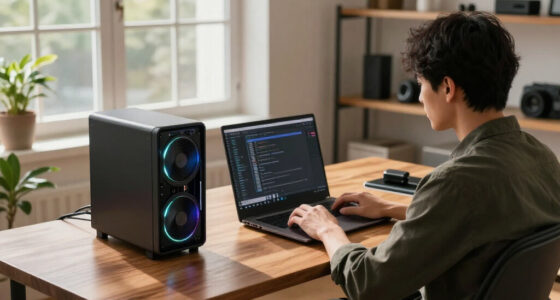
Supported immediately by Hugging Face through frameworks such as Transformers, llama.cpp, vLLM, and Inference Endpoints, Muse Glimmer can be deployed on Nvidia, AMD, or Intel hardware accelerators. Its design aims to enable local agents to inspect documents, analyze screenshots, interpret videos, and generate code, with a focus on reducing the need to send sensitive data to external servers. However, detailed independent performance benchmarks and hardware requirements are still pending, and the model’s practical deployment capabilities are yet to be verified through testing.
Potential Impact on Privacy and Custom AI Development
The release of Muse Glimmer introduces a new open-source foundation for multimodal AI that emphasizes local deployment, which could significantly enhance privacy for users and organizations handling sensitive data. Its Apache 2.0 license allows broad commercial and research use, fostering innovation and competition among open models. While hardware demands may limit immediate adoption for some, the model’s openness and support for local operation could accelerate development of customizable, private AI agents across industries.
As an affiliate, we earn on qualifying purchases.
Position in the AI Model Landscape and Previous Meta Developments
Meta’s previous efforts in multimodal AI include the larger Muse model and the Perception Encoder, both aimed at spatial and multimodal tasks. The Glimmer variant distills these capabilities into a more practical size for local deployment, reflecting a broader industry trend toward privacy-preserving AI. The release aligns with recent industry pushes for open, license-friendly models that can be tailored for specific applications, particularly in enterprise and research settings. As of now, independent evaluations and real-world benchmarks are still forthcoming, which will clarify its competitive standing and practical performance.
“Muse Glimmer is Meta’s new multimodal model, especially designed for local agentic use cases.”
— Hugging Face
multimodal AI model for video analysis
As an affiliate, we earn on qualifying purchases.
As an affiliate, we earn on qualifying purchases.
Unverified Performance and Hardware Requirements Remain Unknown
Independent benchmarking results for Muse Glimmer’s accuracy, speed, and resource consumption are not yet available. Its performance across coding, visual reasoning, and multi-step autonomous tasks remains unverified, and real-world hardware demands could vary significantly depending on implementation details such as precision and prompt length. The reliability of the model in handling long videos, tool use, or complex workflows is still uncertain, pending community testing and evaluation.
As an affiliate, we earn on qualifying purchases.
Community Testing, Benchmarking, and Application Deployment
Developers and researchers are expected to begin testing Muse Glimmer on various hardware setups, publishing benchmarks for speed, memory use, and accuracy. Independent safety and reliability evaluations will follow, assessing hallucination rates, visual errors, and tool-use capabilities. The next milestones include framework updates, community-driven improvements, and real-world applications demonstrating the model’s capabilities and limitations.
open-source AI model for images and text
As an affiliate, we earn on qualifying purchases.
As an affiliate, we earn on qualifying purchases.
Key Questions
What is Muse Glimmer?
Muse Glimmer is a 30-billion-parameter multimodal AI model developed by Meta, capable of processing text, images, and videos, designed for local deployment in AI agents.
Is Muse Glimmer open source?
Yes, Meta released Muse Glimmer under the Apache 2.0 license, allowing free use, modification, and commercial deployment with few restrictions.
How does Muse Glimmer compare to other models?
Independent performance data is not yet available, so its relative accuracy and efficiency compared to other open or proprietary models remain unconfirmed.
What hardware is needed to run Muse Glimmer?
The model’s size suggests it can run on some high-end workstations and local servers, but specific hardware requirements and performance metrics are still being tested.
When will more performance details be available?
Community testing, benchmarking, and independent evaluations are expected to provide more detailed insights in the coming months.
Source: ThorstenMeyerAI.com
Fall Picks
fall essentials
As an affiliate, we earn on qualifying purchases.