

📊 Full opportunity report: Mistral. The fourth path. on ThorstenMeyerAI.com — validation score, market gap, and execution plan.
TL;DR
Mistral, a venture-backed French AI company, raised $830 million in March 2026, achieving $400 million annual recurring revenue. It is Europe’s strongest single-firm AI player but still lags behind US models on advanced reasoning tasks.
Mistral, the French AI startup founded in April 2023, announced it raised $830 million in March 2026, bringing its valuation to approximately $13.8 billion and establishing itself as Europe’s most prominent venture-funded AI firm.
Since its founding, Mistral has rapidly scaled, achieving $400 million in annual recurring revenue (ARR) within 12 months, a 20-fold increase from approximately $20 million. The company has shipped six products by March 2026, including Mistral Large 3, trained on 3,000 NVIDIA H200 GPUs, and maintains an open-source licensing model under Apache 2.0 for nearly its entire product line.
Major enterprise clients include ASML, ESA, and CMA CGM, and the company’s free tier, Le Chat, has reached market scale. Despite its commercial success, independent benchmarks place Mistral Large 3 behind models like Gemini 3 Pro, GPT-5.4, and Claude Opus 4.6 on complex reasoning tasks, indicating it still trails US leaders on the hardest evaluations.
Funding history underscores its venture-capital approach: initial €105M seed round in June 2023, followed by a €385M Series A in December 2023, a $16M strategic Microsoft investment in February 2024, and a €600M round in June 2024 led by General Catalyst. Additional investments and partnerships have continued through 2025, culminating in the recent $830M raise.
Mistral.
The fourth
path.
€3B+ raised, $400M ARR, six products in fifteen days. And independent benchmarks still put Mistral Large 3 well behind Gemini 3 Pro, GPT-5.4, and Claude Opus 4.6 on the hardest reasoning tasks.
Italy bet national. Portugal bet continuation. The EU bet consortium. Mistral bet venture-funded commercial-frontier. By every operational measure, Mistral is Europe’s strongest single-firm AI play — $400M ARR, ASML as largest shareholder at 11%, Apache 2.0 across the catalog, $830M raised in March 2026 for new data centers near Paris and Sweden. And the empirical results still show the commercial-frontier path operating at the same structural ceiling all other European projects encounter. Four projects. Four findings. Each one harder than the framing it’s wrapped in.
Three years. €3B+ raised.
Mistral’s funding trajectory is operationally important because it demonstrates the commercial-frontier path at scale. This is not consortium-budget scale. European venture capital, augmented by strategic-investor capital from European industrial actors and US venture funds, can sustain frontier-AI development.
44% vs 91.9%. The bitter lesson in commercial-frontier context.
Mistral Large 3 was trained from scratch on 3,000 NVIDIA H200 GPUs. It is Mistral’s most ambitious training run to date and Europe’s strongest single-firm frontier-class model. Independent benchmarks from LayerLens/Atlas show the structural gap with US frontier developers on the hardest reasoning tasks.
LARGE 3
3 PRO
CLASS
Six products. Fifteen days.
Between March 16 and March 31, 2026, Mistral shipped six products. This product cadence is structurally distinct from how the academic-and-state answers operate. OpenEuroLLM shipped two deliverables in the entirety of 2025. The commercial-frontier model’s strategic advantage is velocity.
/ 675B total
from-scratch training
~500 pages
LMArena ranking
Four answers. Four structural findings.
The Minerva national from-scratch path. The AMÁLIA national continuation path. The OpenEuroLLM pan-European consortium path. The Mistral commercial-frontier path. Together they map the European sovereign-LLM strategic option space comprehensively. Each surfaces an empirical complication the marketing materials downplay.
Four projects. Four findings. Each one harder than the framing it’s wrapped in. The frontier-capability gap appears to be structural to current European funding and compute scales, not to institutional choices. Even the strongest commercial-frontier model with substantially more capital than the others combined trails US frontier developers on the hardest benchmarks.
Five observations. The track closes.
The four-way essay track produces strategic recommendations grounded in operational realities. This is not a counsel of despair. It is a counsel of strategic clarity for European sovereign-AI development.
The work is real across all four projects. The institutional achievement is substantial across all four. The empirical findings are harder than the press coverage suggests across all four. All of these can be true at once. The strategic discourse benefits from holding all of them simultaneously rather than collapsing into single-answer triumphalism or single-failure pessimism. The European sovereign-AI agenda is at the empirical-data-ground-truth moment. The discourse should be ready for whatever the data actually shows.
European AI Leadership Through Venture Capital
Mistral’s rapid growth and substantial revenue demonstrate that a venture-backed, commercially oriented European AI firm can achieve significant market impact and valuation. However, its still-lagging performance on advanced reasoning tasks highlights the ongoing challenge for European models to match US capabilities at the highest end. This raises questions about whether current funding and compute scales are sufficient for Europe to close the capability gap with US leaders in AI.
Hands-On Large Language Models: Language Understanding and Generation
As an affiliate, we earn on qualifying purchases.
As an affiliate, we earn on qualifying purchases.
European Sovereign-LLM Strategies Compared
This development fits into a broader landscape of European AI initiatives, which include three institutional answers: Portugal’s AMÁLIA, Italy’s Minerva, and the pan-European OpenEuroLLM. These projects operate within academic and state-funded frameworks, emphasizing open data and collaboration. In contrast, Mistral’s venture-funded, commercial approach represents a structural counter-case, prioritizing private capital, proprietary data, and rapid deployment.
While the academic and consortium models are constrained by budget and institutional factors, Mistral’s aggressive scaling illustrates the potential and limitations of a venture-capital model in the European context. The question remains whether such a model can produce models capable of competing with US giants in the most demanding reasoning benchmarks.
“Our focus is on delivering high-quality, open-weight models that serve enterprise needs while maintaining a competitive edge.”
— Mistral spokesperson

NVIDIA Tesla A100 Ampere 40 GB Graphics Processor Accelerator – PCIe 4.0 x16 – Dual Slot
- Memory Capacity: 40 GB GDDR6
- Host Interface: PCIe 4.0 x16
- Cooling Type: Passive Cooler
As an affiliate, we earn on qualifying purchases.
As an affiliate, we earn on qualifying purchases.
Unresolved Questions About Model Capabilities
It remains unclear whether Mistral’s current compute and funding levels are sufficient to develop models that can match US leaders like GPT-5.4 or Gemini 3 Pro on the most demanding reasoning tasks. The impact of upcoming model generations and further infrastructure expansion is still uncertain, and whether Mistral can close the capability gap remains an open question.
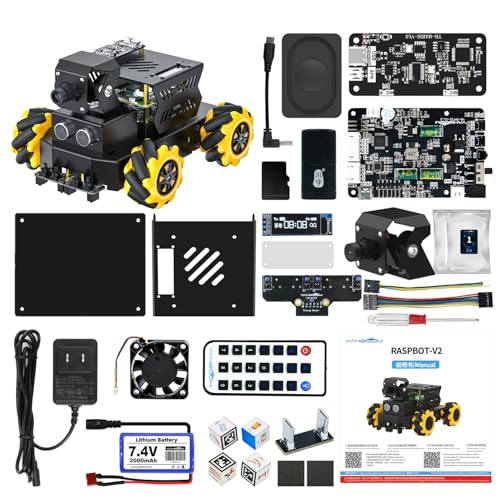
Yahboom Raspberry Pi 5 ROS2 Robot Car 360°Movement, AI Vision & Tracking, Integrated Multimodal Large AI Model OpenRouter, AI Voice Interaction (Superior Without RPi5)
- Powerful Raspberry Pi 5 Control: Enhanced processing, multimedia, and AI performance
- Large AI Model Integration: Advanced human-computer interaction and environmental perception
- Multiple Control Options: App, PC, remote control, and FPV transmission
As an affiliate, we earn on qualifying purchases.
As an affiliate, we earn on qualifying purchases.
Next Steps for Mistral and European AI Strategy
Mistral is expected to continue scaling its models and infrastructure, with upcoming model releases and potential new funding rounds. Monitoring its performance on advanced benchmarks and enterprise adoption will be key to assessing whether the venture-funded, European AI strategy can sustain its growth and bridge the capability gap with US models. Further, the broader European AI landscape will observe whether Mistral’s trajectory influences policy and institutional strategies.
Evals for AI Engineers: Systematically Measuring and Improving AI Applications
As an affiliate, we earn on qualifying purchases.
As an affiliate, we earn on qualifying purchases.
Key Questions
Can Mistral’s current funding scale produce models competitive with US leaders?
It is uncertain. While Mistral has achieved rapid commercial growth, independent benchmarks suggest it still lags behind US models on the most complex reasoning tasks. Future model generations and infrastructure investments will be critical for closing this gap.
How does Mistral’s approach differ from other European AI projects?
Mistral operates at venture-capital scale, focusing on commercial deployment and open weights under Apache 2.0, whereas other projects like AMÁLIA, Minerva, and OpenEuroLLM are primarily academic or consortium-based with a focus on open data and collaboration.
What are the strategic implications for Europe’s AI sovereignty?
Mistral’s success shows that a venture-backed, commercial model can generate significant revenue and valuation, but whether it can produce models capable of matching US capabilities remains an open question, influencing Europe’s overall AI sovereignty strategy.
Source: ThorstenMeyerAI.com