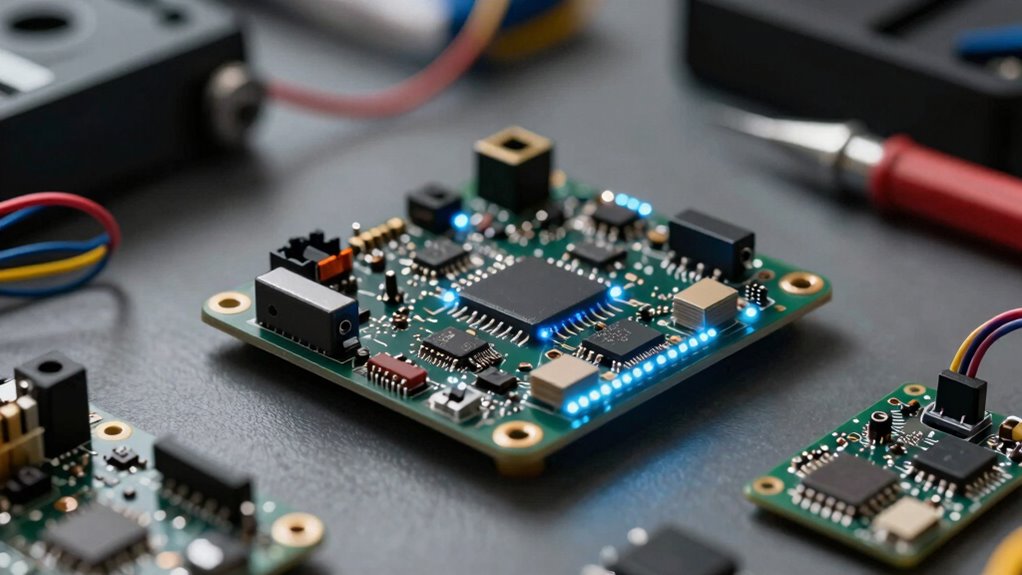

Single-board computers fuel your edge AI creativity by offering affordable, versatile platforms for local processing and rapid prototyping. They bring powerful processing closer to data sources, reducing latency and dependence on cloud services. You can use them for home automation, security, or educational projects, fostering hands-on learning and innovation. Their active communities and customizable software support help you troubleshoot and develop unique solutions. Keep exploring to discover how these tools can turn your ideas into real-world applications.
Key Takeaways
- SBCs enable local processing, reducing latency and dependence on cloud services, fostering real-time AI applications.
- Their affordability and compact size make AI experimentation accessible for hobbyists and educators.
- Active community support provides resources, tutorials, and troubleshooting, accelerating innovation.
- Versatility in operating systems and hardware customization encourages diverse Edge AI projects.
- SBCs facilitate hands-on learning, enabling users to develop and deploy creative AI solutions in various environments.
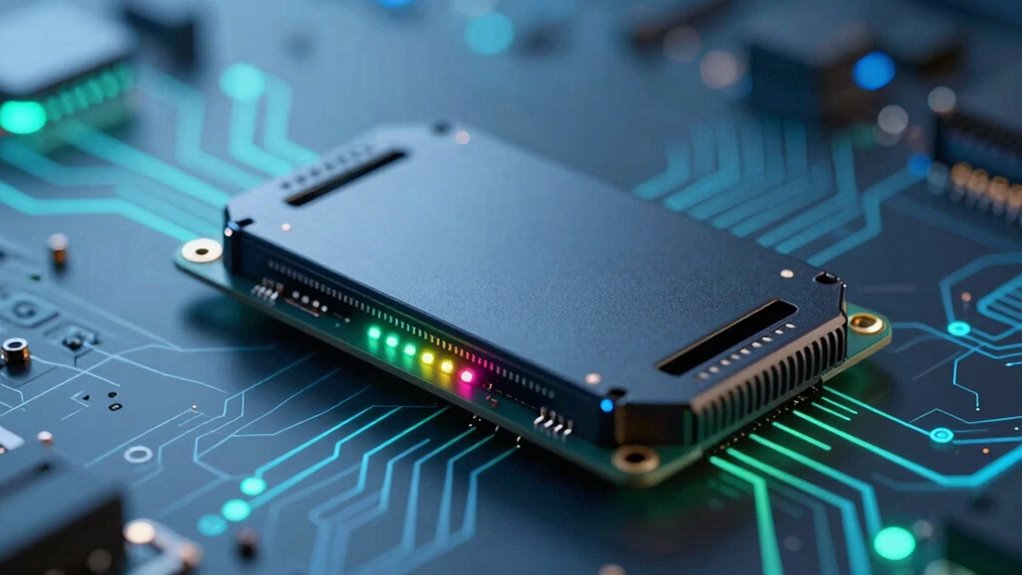
Single-board computers (SBCs) have become essential tools in deploying Edge AI, offering compact, cost-effective platforms that bring processing power closer to data sources. Their small size and affordability make them perfect for a wide range of applications, especially when you want to process data locally without relying on cloud services. Whether you’re working on home automation projects or educational experiments, SBCs give you the power to innovate without breaking the bank.
SBCs enable affordable, local processing for Edge AI, perfect for home automation and educational projects.
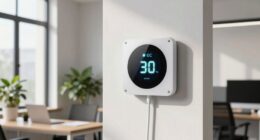
In home automation, SBCs serve as the central hub for smarter devices. Imagine setting up a system that automatically adjusts lighting, controls security cameras, or manages thermostats based on real-time data. With a single-board computer, you can run AI models directly at home, reducing latency and increasing privacy. You might install a Raspberry Pi to analyze video feeds for motion detection, alerting you instantly if something unusual happens. This local processing eliminates delays caused by transmitting data to remote servers, making your home smarter and more responsive. The affordability of SBCs means you can experiment with multiple sensors and devices, creating a truly integrated smart home system tailored to your needs. Color accuracy in projectors can also play a crucial role if you plan to incorporate visual displays into your automation setup. Additionally, the widespread adoption of SBCs and their compatibility with various hardware components facilitates easier integration with power protection solutions, ensuring reliable operation even during power fluctuations. Incorporating hardware versatility further enhances the potential for customization and innovation in your projects. Exploring the expandability of SBCs allows for even more complex and scalable automation systems.
When it comes to educational projects, SBCs liberate a world of possibilities. They serve as ideal platforms for learning about AI, machine learning, and embedded systems. By working on hands-on projects, you gain practical skills that are highly valued in today’s tech landscape. For example, you could build a small robot that recognizes objects or voices using onboard AI processing. These projects often involve coding, electronics, and problem-solving, making them perfect for students and hobbyists enthusiastic to deepen their understanding of AI technology. SBCs like the Raspberry Pi or Arduino make it easy to set up experiments and prototypes, giving you immediate feedback and a tangible way to explore complex concepts.
The versatility of SBCs is a major reason why they’re fueling creativity in Edge AI. They support a wide range of operating systems and software, allowing you to customize your projects extensively. Plus, their active communities mean you can find tutorials, forums, and resources that help troubleshoot issues and inspire new ideas. With SBCs, you’re not limited by expensive hardware or cloud dependency—you can design, test, and refine your Edge AI applications right at home or in the classroom, accelerating innovation and learning. Whether for automating your living space or exploring AI concepts, SBCs empower you to turn ideas into reality with minimal investment.
Raspberry Pi 4 for AI projects
As an affiliate, we earn on qualifying purchases.
As an affiliate, we earn on qualifying purchases.
Frequently Asked Questions
How Do SBCS Compare to Traditional AI Hardware?
You’ll find SBCs are more adaptable than traditional AI hardware, offering greater hardware customization and software flexibility. Unlike bulky, specialized systems, SBCs let you tailor hardware components to your specific project needs, making them ideal for innovative edge AI applications. Their compact size and open architecture enable quick modifications, fostering experimentation and creativity. This flexibility helps you develop smarter, more efficient AI solutions directly at the edge, without the constraints of conventional hardware.
What Are the Limitations of Using SBCS for AI?
Using SBCs for AI has limitations, especially regarding hardware flexibility and software compatibility. You might find that SBCs lack the processing power needed for complex AI tasks, and their hardware options are limited compared to traditional hardware. Additionally, software compatibility can be a challenge, as some AI frameworks or libraries may not run smoothly on SBCs. These constraints can hinder performance and scalability for more demanding AI applications.
Which SBCS Are Best for Specific AI Applications?
You should choose SBCs like the NVIDIA Jetson Nano or Raspberry Pi 4 for specific AI applications, as they excel in AI integration and offer extensive SBC customization. The Jetson Nano is great for deep learning projects, while the Raspberry Pi 4 suits basic AI tasks and IoT projects. Tailor your selection based on your application’s processing needs, ensuring seamless SBC customization for peak performance.
How Do Power Requirements Impact Sbc-Based AI Projects?
Imagine deploying a smart security camera powered by a single-board computer like the Raspberry Pi. Power requirements directly impact your AI project’s success; high energy consumption can lead to overheating and limited deployment options. Emphasizing power efficiency ensures your SBC-based AI runs smoothly without draining energy, making your project more sustainable and reliable. Managing power needs is essential for optimizing performance and extending device lifespan in edge AI applications.
What Security Concerns Exist With SBCS in Edge AI?
You should be aware that security concerns with SBCs in edge AI include risks like data breaches and unauthorized access. To mitigate these, implement strong data encryption and strict access control measures. Ensuring your SBCs are updated regularly, using secure boot, and monitoring network activity can help protect sensitive data and maintain system integrity, making your edge AI projects safer and more reliable.
single-board computer home automation kit
As an affiliate, we earn on qualifying purchases.
As an affiliate, we earn on qualifying purchases.
Conclusion
You now see how single-board computers are transforming edge AI, making it more accessible and innovative than ever before. With over 10 million units sold annually, their popularity highlights a surge in DIY projects and smart applications. As you explore this technology, remember that these compact devices empower you to create powerful, autonomous solutions right at the edge, pushing the boundaries of what’s possible in AI. Embrace this wave of creativity and open new potentials today.
AI edge computing SBC
As an affiliate, we earn on qualifying purchases.
As an affiliate, we earn on qualifying purchases.
educational single-board computers for AI
As an affiliate, we earn on qualifying purchases.
As an affiliate, we earn on qualifying purchases.