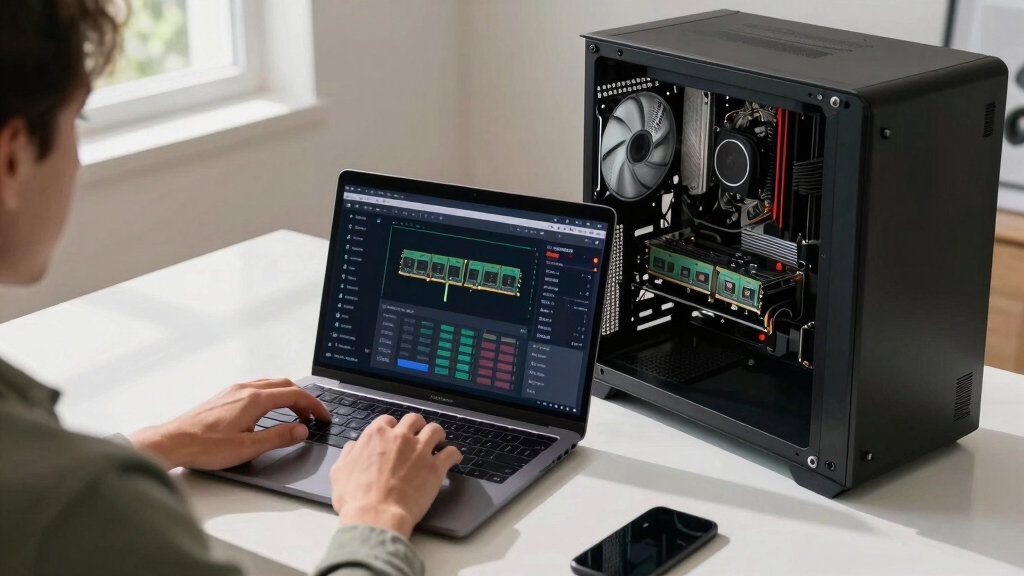

📊 Full opportunity report: The Memory Squeeze: Why Your RAM Bill Doubled on ThorstenMeyerAI.com — validation score, market gap, and execution plan.

Get business pricing on tech for your team
- Business-only prices and quantity discounts
- Tax-exempt purchasing
- Multiple users, one account, clear invoices
TL;DR
Global RAM prices have doubled or more in early 2026, caused by a strategic shift in chip manufacturing toward AI hardware. This has led to shortages and higher costs for consumers and PC builders.
DRAM prices have surged by 90% in the first quarter of 2026, with 32GB DDR5 kits now costing nearly four times their 2025 prices. This sharp increase makes memory the most expensive component in many PC builds, affecting consumers and manufacturers alike, and marks a departure from past memory cycles.
The cost of a 32GB DDR5 kit, which was about $80 to $120 in 2025, has now risen to approximately $375, according to data from Tom’s Hardware. A 64GB kit that previously cost around $150–$200 now typically lists at $600 or more. This represents a price increase of up to six times the previous lows, driven by a fundamental shift in the chip manufacturing landscape.
The primary cause is the reallocation of wafer production capacity from consumer DRAM to High Bandwidth Memory (HBM), which is used in AI accelerators like Nvidia’s GPUs. Companies such as Samsung, SK Hynix, and Micron, which dominate the DRAM market, now prioritize high-margin AI products over consumer memory, making the shortage persistent and structural.
Why your RAM bill doubled
“Doubled” is the polite version — consumer DRAM is running 3–6× its 2024 lows. The boom-bust cycle that always brought cheap RAM back isn’t coming this time, because the factories that make your RAM now make something far more profitable instead.
HBM
This is the quiet tax on the whole AI era. Relief isn’t forecast before 2028, and even then prices may settle 30–50% above pre-crisis levels. Buy what you genuinely need now; don’t panic-buy capacity you won’t use. You can’t out-wait the fab math — but, as this series will show, you can shrink what you need. Next: HBM Ate the Fab.
Impact of AI-Driven Capacity Reallocation on Memory Market
This shift signifies a permanent change in the supply dynamics of DRAM, with AI hardware demand taking precedence over traditional consumer memory. As a result, consumers face higher prices and limited availability, while PC builders and manufacturers must adapt to a new cost structure and supply chain constraints. The move also raises questions about the future of affordable memory and the overall stability of the supply chain.
As an affiliate, we earn on qualifying purchases.
Historical Trends and Current Market Conditions
Past memory shortages typically eased when manufacturers expanded capacity, flooding the market and reducing prices. However, the current situation is different: the leading DRAM producers—Samsung, SK Hynix, and Micron—are deliberately reallocating wafer capacity toward AI hardware, which yields higher profits despite being less efficient in wafer usage. This strategic shift began in 2025 and accelerated into 2026, with AI demand rapidly increasing.
While new fab expansions are planned for 2027–2028, the industry is not rushing to revert to previous supply levels. Instead, manufacturers are maintaining capacity discipline, prioritizing high-margin AI products, and managing scarcity to sustain record profits, even as consumer memory prices soar.
“Our focus is on meeting the demands of enterprise AI applications, which offer higher margins than consumer memory.”
— Micron spokesperson
As an affiliate, we earn on qualifying purchases.
Extent of Collusion or Market Manipulation Unclear
While the industry emphasizes genuine supply constraints due to AI-driven wafer reallocation, the high market concentration—dominated by three firms—raises questions about potential coordination or restraint. No antitrust actions are currently underway, but the possibility of market manipulation remains a topic of debate among analysts.
As an affiliate, we earn on qualifying purchases.
Future Supply and Pricing Trends for Consumer RAM
Manufacturers are expected to continue prioritizing AI hardware, with new fab capacities not expected to impact prices until 2027–2028. Consumers and PC builders should prepare for sustained high prices and limited availability in the near future. Monitoring industry capacity expansions and contract negotiations will be key to understanding when prices might stabilize or decline.
As an affiliate, we earn on qualifying purchases.
Key Questions
Why have RAM prices increased so dramatically in 2026?
Prices have surged because manufacturers are reallocating wafer capacity from consumer memory to high-margin AI hardware, which is less efficient but more profitable.
Will RAM prices go back down soon?
Not in the immediate future. New capacity is years away, and manufacturers are maintaining capacity discipline to maximize profits, so prices are likely to remain high through 2027–2028.
How does this affect everyday consumers and PC builders?
Higher RAM costs increase overall PC build prices and limit availability, leading to delays, higher retail prices, and potential shortages for consumers.
Is there any risk of collusion among manufacturers?
While no antitrust cases are filed, the market’s high concentration and past collusion in the industry raise questions. Current explanations focus on genuine supply constraints driven by AI demand.
Source: ThorstenMeyerAI.com
Columbus Day / Indigenous Peoples' Day Picks
long weekend sales
As an affiliate, we earn on qualifying purchases.