
President Trump has announced a $92 billion plan to accelerate U.S. advancements in artificial intelligence and energy, aiming to strengthen the nation’s global tech leadership and compete fiercely against China. This initiative focuses on boosting innovation, creating jobs, securing supply chains, and fostering international partnerships. By investing heavily in these sectors, the U.S. aims to set the pace for technological progress and economic resilience worldwide. Stay with us to explore how this ambitious strategy could reshape global competition.
Key Takeaways
- The $92 billion initiative aims to boost U.S. leadership in AI and energy innovation, intensifying competition with China.
- It focuses on accelerating breakthroughs, creating jobs, and stimulating economic growth through private sector collaboration.
- The plan emphasizes strengthening supply chains for critical minerals and renewable energy components domestically and internationally.
- It encourages international partnerships to share knowledge, set standards, and foster global technological collaboration.
- The initiative positions the U.S. to maintain global technological supremacy and shape international standards amid rising competition.
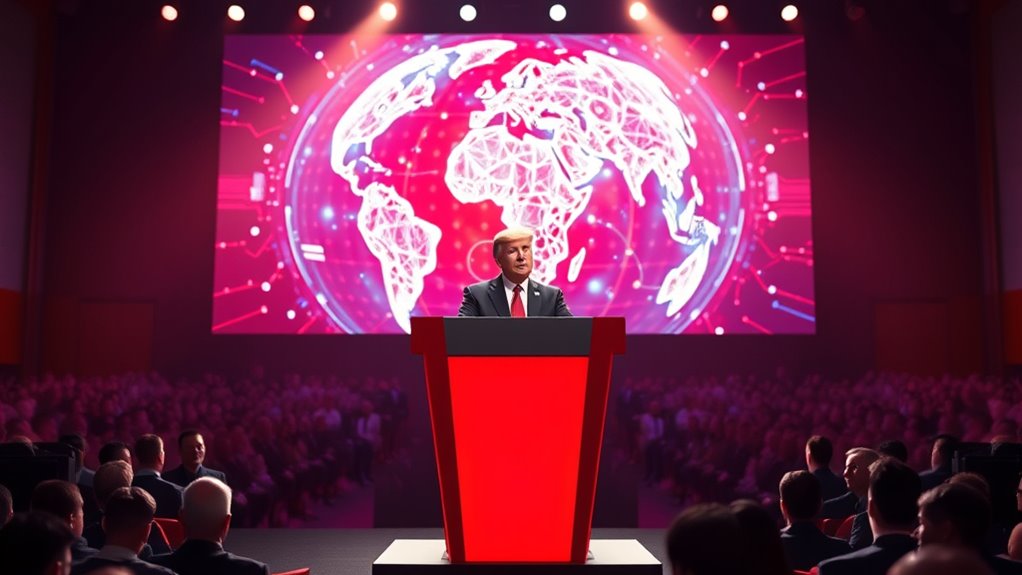
Former President Donald Trump has announced a bold $92 billion plan aimed at boosting artificial intelligence and energy innovation, signaling a fierce race against China for technological dominance. This ambitious initiative is designed to accelerate breakthroughs in AI and energy sectors, positioning the United States as a global leader. As you follow this development, you’ll see how the plan is poised to have a significant economic impact, creating jobs, fostering new industries, and boosting overall growth. By investing heavily in research and development, the government aims to stimulate private sector innovation, which can lead to increased productivity and a stronger economy. This level of investment signals a strategic effort to outpace China’s advances in these critical technologies, emphasizing the importance of maintaining a competitive edge on the world stage.
Moreover, the plan underscores the importance of international collaboration. While the U.S. seeks to lead in AI and energy, it recognizes that global challenges demand collective action. The initiative encourages partnerships with allies, inviting foreign companies, research institutions, and governments to participate in shared projects. This approach aims to accelerate technological progress through knowledge exchange and resource sharing, making the U.S. more resilient and adaptable in the face of rapid global developments. You can expect to see increased diplomatic efforts to align international standards and foster collaborative innovation, which is vital for addressing climate change, energy security, and technological sovereignty. Additionally, the plan highlights the significance of supply chain resilience as a crucial factor in maintaining technological leadership and economic stability.
The plan also emphasizes the strategic importance of securing supply chains and critical minerals, which are essential for AI hardware and renewable energy technologies. By strengthening domestic production and establishing international partnerships, the U.S. aims to reduce reliance on foreign sources and mitigate disruptions. This focus on supply chain resilience complements efforts to create a more environmentally sustainable and competitive economic framework.
As this plan unfolds, it’s clear that the U.S. aims to set the pace for technological innovation while shaping a global ecosystem that benefits from shared advancements. You’ll see that the economic impact goes beyond immediate job creation—it’s about establishing a sustainable foundation for future growth. International collaboration, in turn, amplifies the potential benefits, enabling the U.S. to lead in setting standards and driving global progress. This ambitious strategy signals a determined effort to secure technological supremacy and economic resilience, ensuring the country remains at the forefront of innovation in the years ahead.
Hardware Technologies for Artificial Intelligence
As an affiliate, we earn on qualifying purchases.
As an affiliate, we earn on qualifying purchases.
Frequently Asked Questions
How Will the Plan Impact Small Tech Startups?
Your small tech startup could see increased funding opportunities and a boost in innovation ecosystems due to this plan. It may attract more investors interested in AI and energy, helping you scale faster. However, competition might intensify as larger firms also benefit. Overall, you’ll likely gain access to new resources and partnerships, but staying agile and focused on your niche will be key to thriving in this evolving landscape.
What Are the Environmental Implications of the Energy Initiatives?
Think of the energy initiatives as planting seeds for a greener future. They aim to boost renewable energy sources, which can markedly reduce carbon emissions. This shift helps combat climate change and preserves natural resources. However, it is crucial to take into account the environmental implications of new infrastructure. If managed wisely, these efforts can create a sustainable legacy, balancing technological progress with ecological responsibility for generations to come.
How Does the Plan Compare to China’s AI and Energy Investments?
You’ll find that the plan emphasizes a technological rivalry with China, aiming to boost AI and energy sectors to strengthen national security. Compared to China’s investments, it’s more focused on immediate innovation and geopolitical strategy, trying to outpace China’s advancements. While China invests heavily in expanding its tech infrastructure, your plan prioritizes rapid development and strategic dominance, reflecting a clear intent to lead in the global technological race.
Will This Plan Create New Job Opportunities?
This plan is a powerhouse for job creation, acting like a catalyst for new opportunities. You’ll see workforce development programs grow, opening doors for tech and energy sectors. As investments flow into AI and energy innovation, more jobs will emerge, helping communities thrive. By boosting skills and infrastructure, it guarantees a brighter future for workers enthusiastic to adapt and succeed in this rapidly evolving landscape.
How Will Funding Be Allocated Across Different Regions?
Funding will be distributed based on regional disparities, aiming to balance development across different areas. You’ll see a focus on allocating more resources to underserved regions to reduce economic gaps and promote equitable growth. The funding distribution targets areas with the greatest need, ensuring that all regions can benefit from advancements in AI and energy. This approach helps create a more balanced technological and economic landscape nationwide.

Renewable Energy in Power Systems
As an affiliate, we earn on qualifying purchases.
As an affiliate, we earn on qualifying purchases.
Conclusion
As you imagine this massive investment, you can see a future where innovation transforms your world—power grids glow brighter, and AI becomes your everyday helper. Trump’s $92 billion plan isn’t just about dollars; it’s about forging a new frontier, racing against China’s push for dominance. If this plan succeeds, it’s like lighting a fire that sparks endless possibilities—fueling progress and shaping the future you’ll live in, powered by bold ambition and relentless drive.

Navigating the Hidden Paths of Supply Chains: How to Transport and Distribute Rare Earth Materials (How to Start Your Own Rare Earth Mineral Mining Business: … World of Critical Minerals Book 7)
As an affiliate, we earn on qualifying purchases.
As an affiliate, we earn on qualifying purchases.

AI Robotic Arm Kit with Servo, Collaborative Embodied Intelligent Arm, Compatible with Hugging Face/LeRobot/Aloha Kit, AI Visual Recognition, Movelt, Imitation Learning, ROS Education with Gripper
[Nvidia Compatible] This embodied intelligent robotic arm is designed specifically for AI education. This robotic arm kit works…
As an affiliate, we earn on qualifying purchases.
As an affiliate, we earn on qualifying purchases.