

TL;DR
The US Commerce Department issued a rule on November 16 requiring licences for certain advanced AI chips used by data centres serving companies headquartered in China and other listed jurisdictions. China’s broader rare-earth export-control package remains suspended until January 10, 2027; analysts have discussed possible Chinese retaliation, but Beijing has not announced a new measure.
The US Commerce Department’s Bureau of Industry and Security issued a rule on November 16 requiring a licence before certain advanced AI chips go to data centres that provide computing access above a specified threshold to companies headquartered in China, Macau or other listed jurisdictions. The move comes as China’s wider rare-earth controls remain suspended until January 10, 2027; analysts have raised the possibility of a response, but the Chinese government has not announced one.

Get business pricing on tech for your team
- Business-only prices and quantity discounts
- Tax-exempt purchasing
- Multiple users, one account, clear invoices
The US rule applies to advanced AI chips sent to data centres anywhere in the world when those facilities provide companies headquartered in China, Macau or other covered locations with more than 12 million aggregate TPP of computing power. The source material describes the measure as an interim final rule. BIS said its aim is to address potential circumvention of restrictions through remote computing arrangements at data centres in third countries. The rule’s full implementation details and effects on particular operators are not established in the source material.
China already requires licences for exports of seven medium and heavy rare earths and related items under measures effective April 4, 2025. The listed elements are samarium, gadolinium, terbium, dysprosium, lutetium, scandium and yttrium. The controls also cover certain magnets containing terbium or dysprosium. These licensing requirements are in force; they are separate from the wider package that Beijing later suspended.
That wider package consists of six measures announced on October 9, 2025, including controls involving five additional rare earths, rare-earth technology and equipment, and products made abroad containing at least 0.1% Chinese rare-earth content. China extended the suspension of those measures on November 9, 2026, setting January 10, 2027 as the end of the current pause. In Washington, House committee chairs are also seeking to include four chip-related bills in the annual defence bill; the source does not establish that Congress has enacted them.
Why Chip Access and Magnets Matter
The measures affect two supply chains with different kinds of leverage. The US rule sets a licensing gate for specified computing access involving advanced AI chips, including access through data centres outside the United States. China’s existing rare-earth licensing controls, alongside its paused wider package, touch materials and components used in products ranging from electric vehicles and defence systems to data-centre hardware.
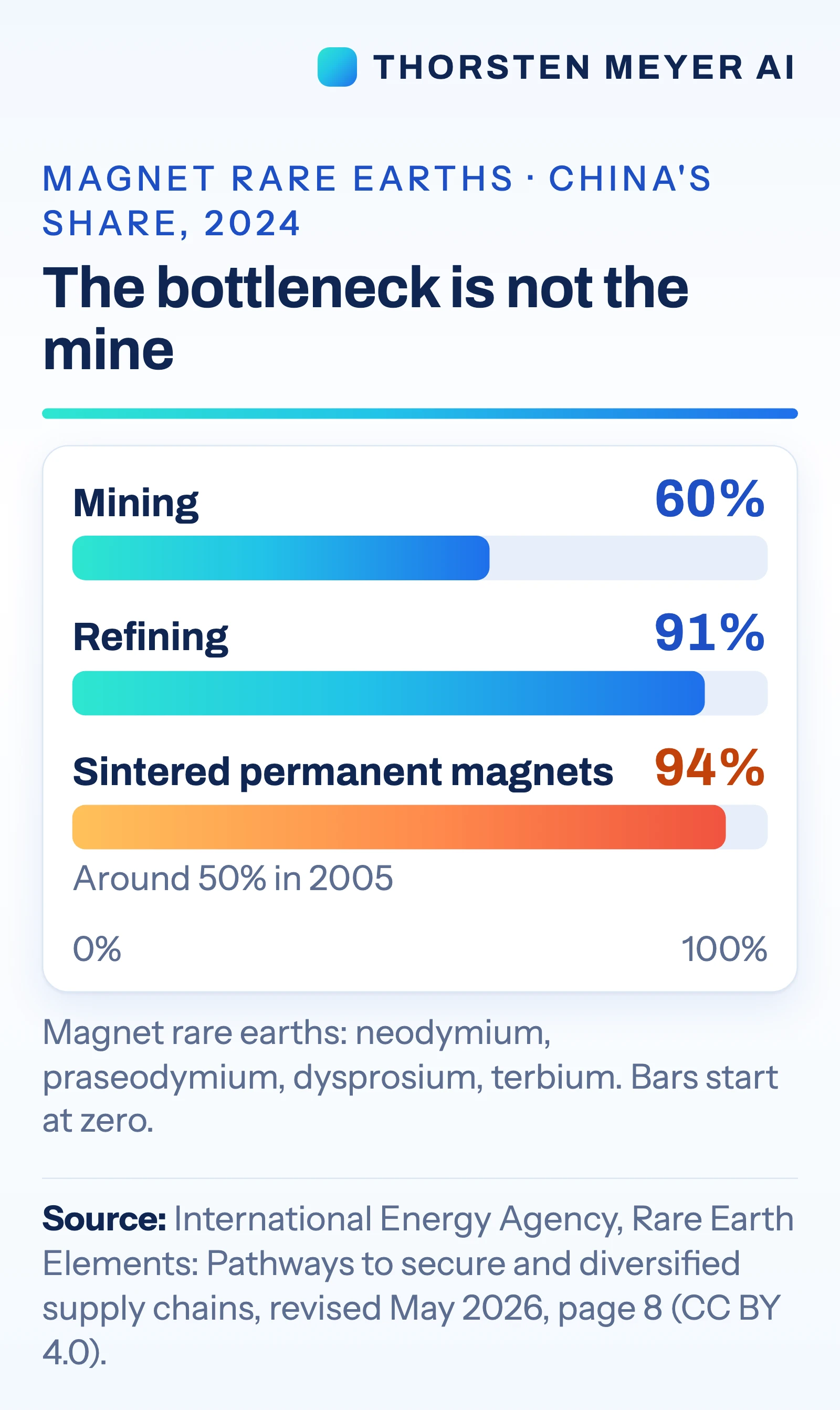
The International Energy Agency reported that China accounted for 60% of mined magnet rare earths, 91% of refining and 94% of sintered permanent magnets in 2024. Those figures describe China’s share of the respective stages in that year; they do not quantify the effects of the present controls. They help explain why access to rare-earth inputs is relevant to manufacturers well beyond the chip industry.
For companies, the immediate planning issue is the difference between controls already in force and measures that could return if the pause expires. Suppliers may need to identify where rare-earth magnets or Chinese-origin rare-earth content appear in their products and upstream components. The source material does not say that the October package has resumed, or that a new Chinese measure will take effect in response to the US rule.
Products Worth Considering

Bose SoundTouch 30 Wireless Speaker, Black

Bose TV Speaker Compact Soundbar with Bluetooth and HDMI-ARC, Black

Bose TV Speaker (2nd Gen) Compact Soundbar with Bluetooth and HDMI Connectivity
As an affiliate, we earn on qualifying purchases.
How the Controls Reached This Point
China’s April 4, 2025 announcement established export licensing for seven rare earths and related items. On October 9 of that year, Beijing announced six wider measures. China suspended the October measures on November 7, 2025, according to the timeline in the source material, and later extended that suspension through January 10, 2027. The November 9, 2026 notice covers the pause’s continuation from November 11, 2026 through that January date.
The current US action follows a separate sequence around access to advanced chips. On November 16, 2026, BIS issued the interim final rule covering certain data-centre arrangements and computing access for companies headquartered in China and other named jurisdictions. The source also reports that three House committee chairs want four chip bills added to the annual defence legislation. That congressional effort is a proposal, not an enacted set of restrictions based on the information supplied.
Reports cited in the source describe analysts’ views that China could tighten rare-earth exports if Washington escalates chip restrictions following the Nvidia episode. That is a forecast attributed to analysts quoted by the South China Morning Post and reported by Seoul Economic Daily, not a Chinese government announcement. China’s foreign ministry has said it “opposes abuse of export control measures”.
“The rule aims “to ensure that existing restrictions on access to sensitive American technology cannot be circumvented through remote computing arrangements involving data centers in third countries”.”
— US Bureau of Industry and Security
Beijing’s Response Is Unannounced
China has announced no new rare-earth measure in response to the November 16 US rule, according to the source material. The suggestion that Beijing could tighten controls comes from analysts quoted in media reports. Whether Chinese officials will take such action, and whether any change would target the existing controls or the paused October package, remains unknown.
The January 10, 2027 date is the scheduled end of the current suspension, not confirmation that the six measures will automatically resume then. The source material does not say whether China will extend the pause again, alter the measures, or reach another arrangement before that date. It also does not provide details on how the US rule will affect individual data-centre operators or customers.
Watch the January Pause Deadline
The next stated date for the wider Chinese package is January 10, 2027, when the current suspension is due to end. Companies exposed to rare-earth inputs can use the period before then to map where magnets and Chinese-origin rare-earth content appear in their own products and supplier components, as the source material advises.
For the US measure, the next developments are how BIS implements the interim final rule and whether the proposed chip bills advance through Congress as part of the annual defence legislation. Any reported Chinese response should be distinguished from analyst predictions until Beijing issues an official decision. The key status to track is whether the pause is extended, ends, or changes before its scheduled expiry.
Key Questions
What did the United States announce on November 16?
BIS issued an interim final rule requiring a licence for certain advanced AI chips sent to data centres that provide more than 12 million aggregate TPP of computing access to companies headquartered in China, Macau or other covered jurisdictions.
Are all of China’s rare-earth export controls paused?
No. Licensing requirements for exports of seven listed rare earths and related items have applied since April 4, 2025. The suspended measures are the wider package of six controls announced on October 9, 2025.
Has China announced retaliation for the US chip rule?
No such step is reported in the source material. Analysts have said China could tighten rare-earth exports if Washington escalates chip restrictions, but that is an attributed forecast, not an announced government measure.
When is China’s wider rare-earth package due to come back?
The suspension is scheduled to last until January 10, 2027. The source material does not establish whether the measures will resume, be changed or be paused again at that point.
Source: Thorsten Meyer AI