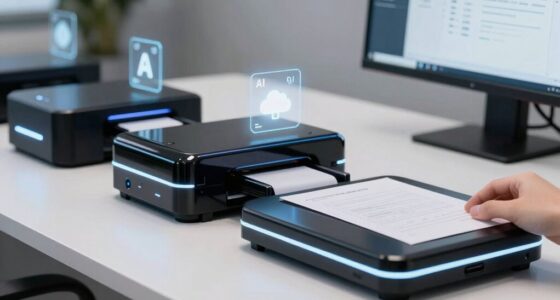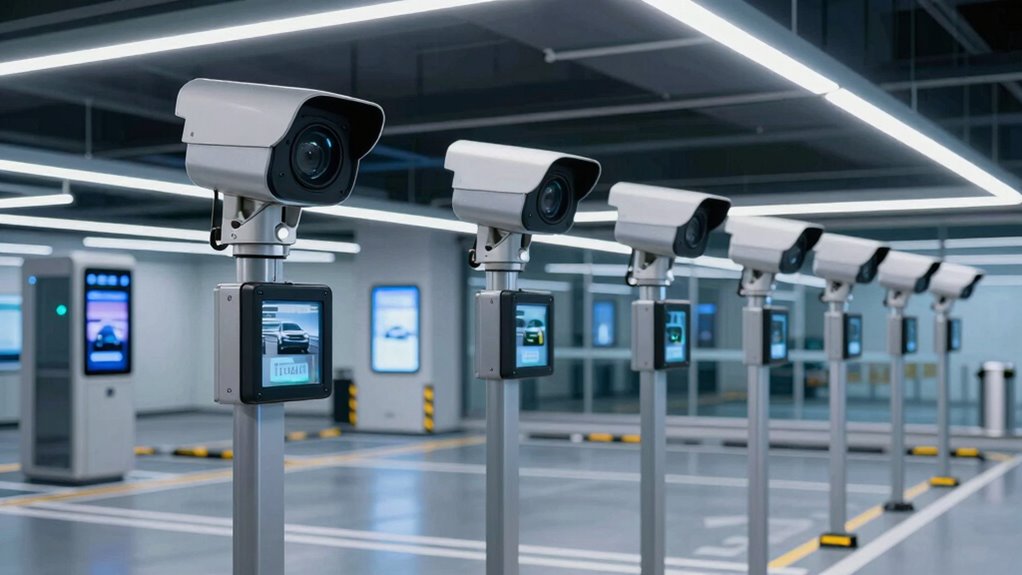

Among these license plate recognition camera systems, I rank the Anpviz 4MP PoE camera as the best overall standalone pick for its motorized lens and LPR-specific design. The Amcrest 4MP is a strong alternative when its longer 8–32mm optical zoom better fits the capture distance, while GW Security’s multi-camera NVR bundles suit sites that need broader coverage in one system. The main tradeoff is between a focused LPR camera that can be aimed at a plate capture zone and a larger surveillance system that covers more areas but may need careful camera placement and configuration. Lens range, night conditions, vehicle speed, recording scale, and whether recognition is handled by the camera or recorder all affect the choice. Read on for my full breakdown of where each option fits and what to check before choosing.

Get business pricing on tech for your team
- Business-only prices and quantity discounts
- Tax-exempt purchasing
- Multiple users, one account, clear invoices
Key Takeaways
- Standalone LPR cameras lead when plate capture is the main job: Anpviz, Amcrest, ONWOTE, and GW Security’s 4MP model focus the decision on lens reach and camera placement rather than buying a full recorder bundle.
- Motorized zoom range separates the individual cameras: Anpviz offers a 2.7–13.5mm lens, while ONWOTE and Amcrest specify 8–32mm ranges that are better suited to tighter, longer-distance views when properly positioned.
- Large GW Security bundles prioritize coverage and recording scale: The 32- and 64-channel systems include many general PoE cameras, but buyers should verify which cameras or channels provide LPR rather than assuming every view reads plates.
- AI and LPR are not interchangeable features: The GW systems that name license plate and face recognition make those functions explicit; general 12MP NVR labels alone do not establish plate-reading capability.
- Channel count is a capacity choice, not a promise of better recognition: An 8-channel or 16-channel bundle may fit a smaller site more simply, while 32- and 64-channel systems make sense only when the installation needs that many camera positions.
| Anpviz 4MP License Plate Recognition PoE Bullet Camera with 2.7–13.5mm Motorized Lens |  | Best for Exposed Outdoor Entrances | Resolution: 4 MP (2688 × 1520) at 30 fps | Lens: 2.7–13.5 mm, 5× motorized varifocal | Night vision: Infrared up to 132 ft (40 m) | VIEW ON AMAZON | See Our Full Breakdown |
| AXIS Q1700-LE 2 MP Outdoor Full HD Network Camera Bullet (TAA Compliant) |  | Best for Fast-Moving Traffic | Resolution: 2 MP, 1080p Full HD | Maximum vehicle speed: 130 km/h (81 mph) | Optical zoom: 3× | VIEW ON AMAZON | See Our Full Breakdown |
| GW Security 16-Channel 12MP Security Camera System with 8 AI Bullet Cameras |  | Best Value Complete LPR System | NVR channels: 16 | Included cameras: 8 bullet cameras | Camera resolution: 12 MP listed | VIEW ON AMAZON | See Our Full Breakdown |
| GW Security 64-Channel 12MP NVR System with 48 5MP PoE Turret Cameras |  | Best for Large Multi-Entrance Sites | NVR channels: 64 | NVR resolution support: Up to 12 MP | Included cameras: 48 PoE turret cameras | VIEW ON AMAZON | See Our Full Breakdown |
| ONWOTE License Plate Recognition PoE IP Camera Wired, 8-32mm Motorized Lens |  | Best for Long, Narrow Driveways | Resolution: 4 MP (2592 × 1520) at 30 fps | Sensor: 1/1.8-inch low-light CMOS | Lens: 8–32 mm motorized varifocal at F1.6 | VIEW ON AMAZON | See Our Full Breakdown |
| Amcrest 4MP License Plate Recognition PoE Bullet Camera, 8–32mm Optical Zoom |  | Best for a Dedicated LPR Lane | Resolution: 4MP | Frame rate: Up to 30 fps | Lens: 8–32mm optical zoom | VIEW ON AMAZON | See Our Full Breakdown |
| GW Security 4MP License Plate Recognition PoE Outdoor Camera |  | Best for Faster-Moving Traffic | Resolution: 4MP (2688 × 1520) | Frame rate: Up to 60 FPS | LPR speed: Up to 120 km/h | VIEW ON AMAZON | See Our Full Breakdown |
| GW Security 8-Channel 12MP NVR Security Camera System with 8 5MP PoE Cameras |  | Best Starter LPR System | NVR channels: 8 | Included cameras: 8 × 5MP PoE bullet cameras | Lens and viewing angle: 2.8mm; 110° | VIEW ON AMAZON | See Our Full Breakdown |
| GW Security 32-Channel 12MP NVR System with 24 5MP PoE Dome Cameras |  | Best for Large Multi-Zone Sites | NVR channels: 32 | Included cameras: 24 × 5MP PoE dome cameras | Lens and viewing angle: 2.8mm; 110° | VIEW ON AMAZON | See Our Full Breakdown |
| GW 16 Channel LPR & Face Recognition 4K Real-Time AI Security Camera System |  | Best for Higher-Detail Integrated Coverage | NVR channels: 16 | Included cameras: 12 × 8MP 4K PoE dome cameras | NVR supported resolutions: Up to 12MP | VIEW ON AMAZON | See Our Full Breakdown |
| GW Security 64-Channel 12MP NVR Security Camera System with 64x 5MP PoE Bullet Cameras |  | Best for Large Commercial Sites | NVR resolution: 12MP | Camera resolution: 5MP | Channels: 64 | VIEW ON AMAZON | See Our Full Breakdown |
| GW 16-Channel 4K AI Security Camera System with Face and License Plate Recognition |  | Best for Mid-Sized Sites Wanting 4K Coverage | Channels: 16 | NVR resolution support: Up to 12MP | Camera resolution: 8MP (4K) | VIEW ON AMAZON | See Our Full Breakdown |
| license plate recognition camera system | Night vision | Storage | Frame rate |
|---|---|---|---|
| Anpviz 4MP License Plate Recog | Infrared up to 132 ft (40 m) | — | — |
| AXIS Q1700-LE 2 MP Outdoor Ful | — | 128 GB flash memory | — |
| GW Security 16-Channel 12MP Se | — | Preinstalled 2TB hard drive; supports up to 24TB total | 30 fps |
| GW Security 64-Channel 12MP NV | Full-color, up to 100 ft | Preinstalled 16TB; supports up to 128TB | — |
| ONWOTE License Plate Recogniti | — | — | — |
| Amcrest 4MP License Plate Reco | Up to 98 feet | MicroSD card up to 256GB | Up to 30 fps |
| GW Security 4MP License Plate | Up to 262.5 feet | MicroSD card up to 1TB | Up to 60 FPS |
| GW Security 8-Channel 12MP NVR | Up to 100 feet | — | 25 fps |
| GW Security 32-Channel 12MP NV | Up to 100 feet | — | — |
| GW 16 Channel LPR & Face Recog | Up to 100 feet | 4TB included; up to 24TB total | 25 FPS |
| GW Security 64-Channel 12MP NV | — | — | 25 FPS |
| GW 16-Channel 4K AI Security C | — | — | — |
More Details on Our Top Picks
Anpviz 4MP License Plate Recognition PoE Bullet Camera with 2.7–13.5mm Motorized Lens
The Anpviz stands out when a plate camera needs to handle an exposed driveway or gate, not just capture a vehicle image. Its IP67 weather rating and IK10 impact resistance suit locations where rain, dust, or tampering are concerns. The 2.7–13.5mm motorized lens lets an installer adjust framing remotely, while 120 dB WDR helps retain plate detail where bright headlights and darker surroundings share the frame. Compared with the ONWOTE camera, Anpviz offers a wider zoom range at the short end and a longer stated infrared range; ONWOTE instead has a longer 8–32mm lens for narrower views. The main limitation is system fit: this camera works only with specified Anpviz NVRs, and local microSD storage requires a separately purchased card.
Pros:- Built-in license plate recognition supports parking and access-control use.
- IP67 and IK10 ratings suit exposed or vulnerable mounting locations.
- Motorized 2.7–13.5mm lens supports flexible remote framing.
- Infrared range up to 132 ft and 120 dB WDR aid challenging lighting.
Cons:- Compatible only with specified Anpviz NVRs.
- MicroSD card is not included.
- A bullet camera can be more conspicuous than a compact turret installation.
Best for: Property managers who need a weather- and impact-resistant LPR camera at an outdoor vehicle entrance and already use a compatible Anpviz NVR.
Not ideal for: Buyers building around a different recorder brand or seeking a standalone camera with broad NVR compatibility.
- Resolution:4 MP (2688 × 1520) at 30 fps
- Lens:2.7–13.5 mm, 5× motorized varifocal
- Night vision:Infrared up to 132 ft (40 m)
- Wide dynamic range:120 dB
- Compression:H.265+
- Local storage:MicroSD slot, supports up to 512 GB; card not included
- Protection:IP67 weather resistance; IK10 vandal resistance
- Compatibility:Specified Anpviz NVRs only
Our verdict“Choose Anpviz for a rugged outdoor plate-capture point if your recording system is one of its supported NVRs.”
AXIS Q1700-LE 2 MP Outdoor Full HD Network Camera Bullet (TAA Compliant)
The AXIS Q1700-LE is the clearest fit here for sites where vehicles pass quickly: its stated capture capability covers speeds up to 130 km/h (81 mph), a more specific traffic-use case than the bundled GW Security systems’ broader coverage. Its built-in capture assistant helps installers set the image for plate capture, and integration with Axis Camera Station or third-party VMS gives larger deployments room to add analytics. The tradeoff is that this is a 2 MP, 1080p camera, while the Anpviz and ONWOTE dedicated cameras provide 4 MP resolution. Night illumination also depends on an optional AXIS T90D20 illuminator, so the stated 100 m IR range is not built in. I’d choose it for a carefully configured roadway lane, not as a plug-and-play all-in-one system.
Pros:- Specified for license-plate capture at vehicle speeds up to 130 km/h.
- Capture assistant supports setup for plate-focused imaging.
- Works with Axis Camera Station and third-party VMS.
- Rugged IP66-rated housing with a long weather shield.
Cons:- Optional illuminator is needed for the stated long-range infrared performance.
- 2 MP resolution is lower than the 4 MP Anpviz and ONWOTE cameras.
- Requires a separate recording or VMS plan rather than providing a bundled multi-camera NVR system.
Best for: Traffic operators and integrators who need plate capture for fast-moving vehicles and plan to use a compatible VMS with the required illumination.
Not ideal for: Small businesses seeking a self-contained LPR kit or buyers who want higher-than-1080p image resolution without adding lighting equipment.
- Resolution:2 MP, 1080p Full HD
- Maximum vehicle speed:130 km/h (81 mph)
- Optical zoom:3×
- Viewing angle:16°
- Infrared range:Up to 100 m with optional AXIS T90D20 illuminator
- Power:24 V AC/DC
- Storage:128 GB flash memory
- Mount:Wall-mounted bullet
Our verdict“Pick the AXIS Q1700-LE for a professionally configured, high-speed traffic lane where VMS integration matters more than higher pixel count.”
GW Security 16-Channel 12MP Security Camera System with 8 AI Bullet Cameras
For a buyer who needs a recorder and several cameras in one wired package, this GW Security system offers a more direct starting point than the dedicated single-camera Anpviz or ONWOTE options. It pairs an eight-camera PoE kit with a 16-channel NVR, leaving room to add cameras later, and its AI list includes license plate detection alongside person, vehicle, and face detection. The preinstalled 2TB drive means recording can begin without sourcing a separate recorder or hard drive. Its strength is broad property coverage, rather than the tightly framed plate-capture specialization of the AXIS Q1700-LE. The product data also describes both 12MP cameras and 4K UHD capture, so buyers should confirm the actual stream and recording settings before planning plate detail at distance. Wired installation is another real commitment.
Pros:- Includes an eight-camera PoE set and a 16-channel NVR.
- AI detection includes license plates, vehicles, people, and faces.
- Preinstalled 2TB hard drive provides local recording out of the box.
- Supports expansion up to 24TB and remote viewing with alerts.
Cons:- The listed 12MP camera resolution and 4K UHD capture description are not fully aligned.
- PoE deployment requires network cabling to each camera.
- A broad 145° view favors area coverage over tight plate framing.
Best for: Small commercial sites that want an integrated eight-camera PoE system with plate alerts, general security analytics, and expansion capacity.
Not ideal for: Traffic lanes focused on reliable long-distance plate capture at speed, or sites unable to run Ethernet cabling to camera locations.
- NVR channels:16
- Included cameras:8 bullet cameras
- Camera resolution:12 MP listed
- Viewing angle:145°
- Night vision range:100 ft
- Frame rate:30 fps
- Storage:Preinstalled 2TB hard drive; supports up to 24TB total
- Connectivity:Wired Power over Ethernet
- Warranty:2 years
Our verdict“Choose this kit for multi-area property coverage with built-in plate detection, but verify capture resolution and camera placement for your lane.”
GW Security 64-Channel 12MP NVR System with 48 5MP PoE Turret Cameras
This 48-camera package is aimed at campuses, large facilities, and distributed parking areas where coverage scale matters as much as plate detection. Its 64-channel NVR leaves capacity for additional cameras, and the AI functions include license plates as well as wrong-way, illegal-parking, intrusion, and line-crossing alerts. Those tools make it more versatile for site operations than the smaller eight-camera GW Security 16-channel system, which has fewer included views and less recorder capacity. The difference is not greater plate-camera specialization: the included units are 5MP wide-angle turret cameras, not dedicated narrow-view LPR cameras like the AXIS Q1700-LE. Full-color night vision and 16TB of included storage support broad monitoring, but a 48-camera wired deployment demands substantial cabling, installation planning, and storage management.
Pros:- Includes 48 PoE cameras with a 64-channel NVR for wide site coverage.
- AI includes license plate and vehicle detection plus operational alerts such as wrong-way and illegal-parking detection.
- Preinstalled 16TB storage can expand up to 128TB.
- Full-color night vision and built-in microphones add general monitoring context.
Cons:- The 5MP cameras are below the NVR’s 12MP support ceiling.
- Wide 110° views are less specialized for tightly framed plate capture than dedicated LPR cameras.
- A 48-camera PoE installation requires extensive cabling and configuration.
Best for: Large campuses, commercial properties, or parking operators needing many camera views, centralized recording, and plate-related analytics across multiple entrances.
Not ideal for: A single gate or roadway lane where a dedicated, tightly framed plate camera is more appropriate than a large general-surveillance system.
- NVR channels:64
- NVR resolution support:Up to 12 MP
- Included cameras:48 PoE turret cameras
- Camera resolution:5 MP
- Lens and viewing angle:2.8 mm; 110°
- Night vision:Full-color, up to 100 ft
- Recording rate:25 FPS recording; supports real-time 30 FPS
- Storage:Preinstalled 16TB; supports up to 128TB
- AI features:License plate, face, human and vehicle detection; intrusion, line crossing, loitering, wrong-way, illegal parking, and people counting
Our verdict“Select this system for plate-aware surveillance across a large property, not as a substitute for a dedicated camera aimed at one fast vehicle lane.”
ONWOTE License Plate Recognition PoE IP Camera Wired, 8-32mm Motorized Lens
The ONWOTE’s 8–32mm motorized lens makes it the lineup’s most natural choice for a narrow lane or a camera mounted farther from the vehicle path. Its longer focal range can keep the plate larger in frame than the Anpviz’s 2.7–13.5mm lens, while the 4MP sensor, 30 fps specification, low-light CMOS sensor, and 120 dB WDR support plate capture in changing light. Compared with the AXIS Q1700-LE, ONWOTE offers more resolution and does not list an optional illuminator for its Dark Fighter night imaging, but AXIS specifies capture performance at high vehicle speeds and offers broader VMS integration. ONWOTE’s constraint is recorder compatibility: it is limited to named ONWOTE TD Series NVRs. It is a focused camera choice, not a wireless or recorder-agnostic upgrade.
Pros:- Long 8–32mm motorized lens suits distant or narrow plate-capture zones.
- 4MP resolution at 30 fps provides detailed, smooth video.
- Low-light CMOS sensor, Dark Fighter imaging, and 120 dB WDR address difficult lighting.
- IP67 construction supports outdoor installation.
Cons:- Works only with specified ONWOTE TD Series NVR models.
- Requires wired PoE networking rather than wireless installation.
- MicroSD capacity is limited to 256GB.
Best for: Installers monitoring a long or narrow vehicle approach who can use an ONWOTE TD Series NVR and want remote lens adjustment.
Not ideal for: Buyers with non-ONWOTE recording systems, wireless-only sites, or high-speed roadway needs that call for a specifically rated traffic camera.
- Resolution:4 MP (2592 × 1520) at 30 fps
- Sensor:1/1.8-inch low-light CMOS
- Lens:8–32 mm motorized varifocal at F1.6
- Viewing angle:47°
- Wide dynamic range:120 dB
- Night imaging:Dark Fighter Technology
- Local storage:MicroSD up to 256GB
- Weather resistance:IP67
- Compatibility:ONWOTE TD Series NVRs: PNT-808, PNA-8016-T, and PNT-1232
Our verdict“Choose ONWOTE for a tightly framed, distant approach when you already have a compatible TD Series recorder.”
Amcrest 4MP License Plate Recognition PoE Bullet Camera, 8–32mm Optical Zoom
The Amcrest suits a single driveway or controlled entry lane where adjustable framing matters more than a broad overview. Its 8–32mm optical zoom and stated 26.25–98.43-foot recognition distance give an installer room to frame vehicles at a target point, while 4MP video at up to 30 fps captures useful detail. It also identifies vehicle attributes, extending its use beyond plate capture. Compared with GW Security’s 4MP camera, this model has a shorter stated night-vision reach and lacks the listed 60 fps capture and 1TB card support. Its IP67 housing, IK10 impact rating, and local MicroSD recording favor a robust, standalone camera, but plate-query features may depend on a Windows PC and browser plugin. Buyers seeking a ready-made multi-camera recorder should look to the GW systems instead.
Pros:- 8–32mm optical zoom helps frame a specific plate-capture zone.
- Recognizes plates and vehicle attributes, including type, color, and brand.
- IP67 weatherproofing and IK10 impact resistance suit exposed installations.
- Supports MicroSD recording up to 256GB and night vision up to 98 feet.
Cons:- Some plate-query features require a Windows PC and browser plugin.
- Compatible Amcrest NVRs are listed for live view, limiting their role for LPR workflows.
- Its stated night-vision range and frame rate are lower than those listed for the GW Security 4MP LPR camera.
Best for: Property owners or small operators setting up a focused PoE camera at one gate or vehicle approach, especially where optical zoom and local MicroSD recording matter.
Not ideal for: Buyers who need a simple, self-contained NVR workflow or frequent plate searches without Windows and browser-plugin requirements.
- Resolution:4MP
- Frame rate:Up to 30 fps
- Lens:8–32mm optical zoom
- LPR distance:26.25–98.43 feet
- Night vision:Up to 98 feet
- Storage:MicroSD card up to 256GB
- Protection:IP67; IK10 impact resistance
- Power:Power over Ethernet (PoE)
Our verdict“Choose the Amcrest for a rugged, zoomable camera aimed at one capture point, but skip it if you need a more straightforward NVR-based plate-search setup.”
GW Security 4MP License Plate Recognition PoE Outdoor Camera
For an approach where vehicles do not crawl to a stop, the GW Security 4MP camera has a useful advantage over the Amcrest: it lists plate recognition at speeds up to 120 km/h and capture up to 60 fps. That combination is aimed at reducing missed details on moving traffic, while its motorized 8–32mm lens supports tighter framing than a wide-angle overview camera. Vehicle type, color, and direction recognition, plus traffic-event alerts, add context to captured plates. Its stated IR range of 262.5 feet also exceeds the Amcrest’s 98 feet. The tradeoff is that it needs a PoE network and its LPR region support may vary by location; buyers should confirm regional compatibility before planning around recognition. Unlike the bundled GW NVR systems, this is a camera rather than a complete recording package.
Pros:- Specified for plate recognition at speeds up to 120 km/h.
- Up to 60 FPS provides more capture intervals for moving vehicles.
- Motorized 8–32mm lens and vehicle-attribute recognition support focused traffic monitoring.
- Long-range IR and MicroSD support up to 1TB add flexibility for night and local recording.
Cons:- Requires a PoE network connection and is not a complete NVR system.
- LPR functionality may depend on supported regions.
- The listed 100-degree viewing angle may not describe the tighter zoomed framing needed for plate capture.
Best for: Sites monitoring a road, driveway, or gate where vehicles pass at speed and the installer can provide PoE networking and verify regional LPR support.
Not ideal for: Buyers seeking a complete multi-camera NVR kit, or operators whose local plate formats are not confirmed as supported.
- Resolution:4MP (2688 × 1520)
- Frame rate:Up to 60 FPS
- LPR speed:Up to 120 km/h
- Lens:8–32mm motorized, 4× optical zoom
- Night vision:Up to 262.5 feet
- Storage:MicroSD card up to 1TB
- Connectivity:PoE, Ethernet, ONVIF
- Compliance:TAA and NDAA
Our verdict“Pick this GW camera over the Amcrest when faster traffic and higher frame rate matter, provided its regional LPR support fits your site.”
GW Security 8-Channel 12MP NVR Security Camera System with 8 5MP PoE Cameras
This kit is the easiest step in this group from a single LPR camera to a managed property system: it pairs an 8-channel NVR with eight PoE cameras, so recording and multi-area coverage come together. Its AI includes plate, person, and vehicle detection, alongside event filters such as wrong-way and illegal-parking detection. Those functions can help sort activity across a site, though the cameras’ 2.8mm, 110-degree lenses are designed for broad scenes rather than the narrow, controlled plate framing offered by the Amcrest or GW 4MP zoom cameras. At 25 fps and 5MP, the included cameras serve general surveillance well, but the listing does not provide a plate-recognition distance or speed. The preinstalled 2TB drive is ready for recording; expanding to the stated 24TB maximum requires adding storage.
Pros:- Includes an 8-channel NVR and eight 5MP PoE cameras.
- Combines LPR with person, vehicle, face, and traffic-event detection.
- Preinstalled 2TB drive supports recording without an initial storage add-on.
- Remote viewing and Google Drive or Dropbox support provide off-site access options.
Cons:- Wide-angle 2.8mm lenses are less purpose-built for tight plate capture than the zoom lenses on the Amcrest and GW 4MP cameras.
- No LPR distance or vehicle-speed capability is specified.
- Reaching the 24TB storage maximum requires additional drives.
Best for: Small businesses, community facilities, or property managers who want one NVR and eight cameras for broad site coverage with LPR as one of several AI functions.
Not ideal for: Operators whose main goal is reliable plate capture from a specific distance or fast-moving traffic, rather than general multi-camera monitoring.
- NVR channels:8
- Included cameras:8 × 5MP PoE bullet cameras
- Lens and viewing angle:2.8mm; 110°
- Frame rate:25 fps
- Night vision:Up to 100 feet
- Included storage:2TB hard drive
- Maximum storage:Up to 24TB
- AI functions:Face, license plate, human and vehicle detection; intrusion, line crossing, loitering, wrong-way, illegal parking, and people counting
Our verdict“Choose this kit for broad eight-camera coverage with LPR among its AI tools, not for a dedicated lane where plate distance and speed performance are the main requirements.”
GW Security 32-Channel 12MP NVR System with 24 5MP PoE Dome Cameras
When a property needs coverage across many entrances, lanes, and shared areas, this system’s 24 included cameras and 32-channel NVR offer far more room to scale than the eight-camera GW starter kit. Each dome camera provides 5MP video, a 110-degree view, and AI features that include license plate, vehicle, and traffic-event detection. That makes the system suited to broad monitoring across a site, but the supplied 2.8mm wide-angle lenses are not the same as a dedicated long-range LPR lens; the product data also gives no recognition distance or vehicle-speed rating. Compared with the GW 16-channel 4K system, this kit supplies twice as many cameras but uses 5MP cameras rather than 8MP units. It includes 4TB for recording, with expansion up to 24TB requiring added drives.
Pros:- Includes 24 cameras with a 32-channel NVR, leaving eight channels available for expansion.
- AI combines license plate and vehicle detection with wrong-way, illegal-parking, and other event alerts.
- 4TB hard drive is included, with support for up to 24TB total storage.
- NDAA and TAA compliance is listed for procurement-sensitive deployments.
Cons:- Wide-angle 2.8mm cameras are less specialized for long-range plate capture than dedicated zoom LPR cameras.
- No LPR distance or vehicle-speed rating is provided.
- The wired PoE installation and additional storage for larger archives add planning requirements.
Best for: Facilities teams covering multiple buildings, parking areas, or access points that need many wired cameras and a large NVR channel reserve.
Not ideal for: Small properties or plate-first installations that need verified long-distance recognition or a specified capture speed from each camera.
- NVR channels:32
- Included cameras:24 × 5MP PoE dome cameras
- Lens and viewing angle:2.8mm; 110°
- Recording frame rate:25 FPS
- Night vision:Up to 100 feet
- Included storage:4TB hard drive
- Maximum storage:24TB total across two SATA drives
- AI functions:Face, license plate, human and vehicle detection; intrusion, line crossing, loitering, wrong-way, illegal parking, and people counting
Our verdict“Choose this system when the priority is many AI-equipped camera zones on one recorder, but use a dedicated zoom LPR camera where plate capture must be tightly controlled.”
GW 16 Channel LPR & Face Recognition 4K Real-Time AI Security Camera System
This GW kit is the resolution-focused choice among the bundled systems: it supplies twelve 8MP 4K PoE cameras and a 16-channel NVR, leaving four channels for expansion. For a site that wants plate detection alongside face, person, and vehicle analytics, 4K video at 25 fps offers more image detail than the 5MP cameras in the eight- and 24-camera GW systems. Its 135-degree wide-angle lenses, however, favor broad coverage; the listing does not state an LPR recognition distance or speed, so I would not treat resolution alone as proof of dependable capture at a distant lane. Compared with the Amcrest and GW 4MP zoom cameras, this is a fuller multi-camera package, but less explicitly tailored to one plate-capture point. The 4TB drive is included and expandable to 24TB, though larger archives need added storage.
Pros:- Twelve 8MP 4K cameras provide higher listed resolution than the 5MP cameras in the other GW NVR kits.
- Includes license plate, face, human, vehicle, and traffic-event analytics.
- 16-channel NVR leaves four channels beyond the twelve included cameras.
- Comes with 4TB storage, expandable to 24TB, and supports remote mobile viewing.
Cons:- No LPR distance or vehicle-speed rating is specified.
- The 135-degree wide-angle view is oriented toward broad coverage rather than tight lane framing.
- Expanding storage beyond 4TB requires additional capacity, and installation needs PoE infrastructure.
Best for: Organizations wanting a 4K multi-camera PoE system with plate and face analytics, remote viewing, and room to add cameras later.
Not ideal for: Buyers who need a documented LPR range or high-speed capture rating for a specific roadway or gate, or who lack PoE network infrastructure.
- NVR channels:16
- Included cameras:12 × 8MP 4K PoE dome cameras
- NVR supported resolutions:Up to 12MP
- Lens angle:135° wide angle
- Frame rate:25 FPS
- Night vision:Up to 100 feet
- Storage:4TB included; up to 24TB total
- AI functions:Face recognition, license plate, human and vehicle detection, intrusion, line crossing, loitering, wrong-way, illegal parking, and people counting
Our verdict“Pick this GW system for higher-resolution, integrated site surveillance with LPR analytics, but choose a dedicated zoom camera when verified plate range is the deciding factor.”
GW Security 64-Channel 12MP NVR Security Camera System with 64x 5MP PoE Bullet Cameras
This system suits sites where camera coverage across many areas matters more than getting maximum detail from every camera. Its 64-channel NVR and 24TB of included storage give larger properties room to record across entrances, lots, and buildings, while AI detection can distinguish people and vehicles and flag license plates. Compared with the GW 16-Channel 4K AI Security Camera System, it offers four times the channel capacity but uses 5MP cameras rather than 8MP models, so it is a better fit for broad coverage than for maximizing image detail at each plate-reading point. The 12MP NVR headroom leaves room for higher-resolution cameras later, but that upgrade adds complexity. Color night vision and NDAA/TAA compliance are useful strengths; the large-scale installation and storage needs make this a poor match for casual users or small sites.
Pros:- 64 channels support extensive site coverage from one NVR
- AI identification includes faces, humans, vehicles, and license plates
- 24TB pre-installed storage is expandable to 128TB
- NDAA and TAA compliance supports government procurement requirements
Cons:- Included cameras are 5MP, below the NVR’s 12MP capacity
- A 64-camera PoE installation can be technically demanding to plan and maintain
- Large camera count creates substantial storage and infrastructure needs
Best for: Commercial property operators, campuses, and government contractors needing centralized coverage for many camera locations and AI-based vehicle and plate alerts.
Not ideal for: Homeowners, small businesses, and buyers who need the clearest possible plate images from the included cameras without planning a higher-resolution upgrade.
- NVR resolution:12MP
- Camera resolution:5MP
- Channels:64
- Included storage:24TB, expandable to 128TB
- Frame rate:25 FPS
- Night vision range:100 feet
- Lens angle:110 degrees
- Connection:Power over Ethernet (PoE)
- Compliance and warranty:NDAA and TAA compliant; two-year warranty
Our verdict“Choose this system for large commercial or government sites that need 64-camera capacity and can manage a complex installation; skip it if plate detail per camera matters more than coverage scale.”
GW 16-Channel 4K AI Security Camera System with Face and License Plate Recognition
For a mid-sized property, this package pairs sixteen 8MP 4K cameras with AI functions for people, vehicles, and license plates. That resolution gives it an advantage over the 5MP cameras in the GW Security 64-Channel 12MP NVR System when a site needs more image detail from each included camera, though the 16-channel limit makes it less suitable for sprawling properties. The 135-degree viewing angle covers broad scenes, which can reduce blind spots but may make it harder to frame a distant plate tightly; plate capture still depends on camera placement and vehicle distance. Motion, scheduled, and smart AI recording offer useful control, and storage can grow from 4TB to 24TB. The tradeoff is a wired PoE setup, plus unclear terms for the mentioned cloud storage, so I would not choose it on the assumption that cloud recording is included.
Pros:- Sixteen included 8MP cameras record at up to 25 FPS
- AI functions include license plate, vehicle, and person detection
- Storage expands from 4TB to a stated maximum of 24TB
- NDAA and TAA compliance and two-year warranty
Cons:- Sixteen channels offer less expansion capacity than the 64-channel GW system
- PoE cameras require wired network and power connections
- Cloud-storage availability and any associated terms are not specified
Best for: Small and mid-sized commercial operators who want 4K coverage, onboard AI plate alerts, and a complete wired system with room to expand storage.
Not ideal for: Large campuses needing more than 16 cameras, or buyers who need confirmed cloud-storage terms or wireless camera installation.
- Channels:16
- NVR resolution support:Up to 12MP
- Camera resolution:8MP (4K)
- Recording frame rate:Up to 25 FPS
- Included and maximum storage:4TB included; expandable to 24TB
- Camera viewing angle:135 degrees
- Night vision range:100 feet
- AI functions:Face, human, vehicle, license plate, intrusion, line crossing, loitering, wrong-way, illegal parking, and people counting
- Connection and compliance:PoE; NDAA and TAA compliant
Our verdict“Pick this for a mid-sized site prioritizing 4K cameras and AI plate alerts, but choose the 64-channel GW system for broader coverage or verify cloud details before relying on remote storage.”

How We Picked
I ranked these options by how directly their stated design supports plate capture, then by how well their lens, recording setup, and camera count match a plausible installation. For standalone cameras, I gave weight to explicit LPR positioning, PoE connectivity, and useful optical or motorized zoom ranges, since framing and distance shape plate detail more than headline resolution alone. For bundled systems, I separated products that explicitly name LPR or face recognition from general multi-camera surveillance kits, and considered whether the channel count appears suited to a small, medium, or large property.
The order favors clear LPR purpose and a manageable fit over sheer camera count. A 64-channel recorder can be the right choice for a large site, but it is not automatically a better plate-reading solution than a dedicated camera. Product names do not establish recognition accuracy, supported capture speed, storage duration, or performance in every lighting condition, so I treat those as items buyers should verify with the manufacturer and installer before purchase.
| license plate recognition camera system | Night vision |
|---|---|
| Anpviz 4MP License Plate Recog | Infrared up to 132 ft (40 m) |
| AXIS Q1700-LE 2 MP Outdoor Ful | — |
| GW Security 16-Channel 12MP Se | — |
| GW Security 64-Channel 12MP NV | Full-color, up to 100 ft |
| ONWOTE License Plate Recogniti | — |
| Amcrest 4MP License Plate Reco | Up to 98 feet |
| GW Security 4MP License Plate | Up to 262.5 feet |
| GW Security 8-Channel 12MP NVR | Up to 100 feet |
| GW Security 32-Channel 12MP NV | Up to 100 feet |
| GW 16 Channel LPR & Face Recog | Up to 100 feet |
| GW Security 64-Channel 12MP NV | — |
| GW 16-Channel 4K AI Security C | — |
Factors to Consider When Choosing License Plate Recognition Camera Systems
I would start by mapping the vehicle path and deciding where a plate can be captured reliably, then choose the camera and recorder around that point. That approach avoids paying for excess channels or assuming a wide-area surveillance view will also deliver readable plates.
Match the lens to the plate capture zone
Before choosing a camera, measure the distance from the mounting point to the lane and note the width of the area where vehicles pass. A longer zoom range can frame a distant plate more tightly, but it does not fix an oblique angle, a moving vehicle, or a plate that occupies too few pixels. A common mistake is to select a wide view to monitor the whole driveway and expect it to read every plate. Many sites get better results from a dedicated, narrower capture view alongside a separate overview camera. Ask for guidance on focal length and mounting angle using your actual lane dimensions, not a generic range estimate.
Plan for speed, direction, and lighting
Plate capture depends on exposure and illumination as well as resolution, particularly when vehicles move at night or headlights point toward the camera. Check whether the system specifies its supported vehicle speed, shutter controls, and night illumination approach for the intended mounting distance. A camera aimed at slow-moving cars at a gate has a different job from one monitoring a road where vehicles pass quickly. Avoid assuming that an infrared or low-light label alone guarantees readable nighttime plates. If the vendor cannot confirm performance for your speed and lighting conditions, request a site assessment or a sample configuration before committing.
Separate plate recognition from general surveillance
A wide-angle security camera can record a vehicle without being configured to identify its plate. Confirm which exact cameras and recorder channels support LPR, where recognition processing takes place, and whether the system can search or export plate events. This matters especially with bundles that include many cameras: the package’s total camera count does not prove that every camera can read plates. For a small entrance, a dedicated LPR camera paired with a standard overview camera may be more useful than a larger all-purpose kit. Get the feature list for each camera model in the bundle in writing.
Choose channel capacity around the whole site
Count planned camera locations, then leave room for additions such as a second driveway, loading area, or interior coverage. Channel capacity refers to how many cameras the recorder can support, but usable capacity can also depend on recording settings, bandwidth, and storage. Buying far more channels than the site needs can add installation and management work without improving plate capture. On the other hand, a small recorder may force a replacement if the property expands. Treat the 8-, 16-, 32-, and 64-channel options as different deployment scales, not as a quality ranking.
Check storage, network, and retention needs
Continuous recording from multiple cameras can consume storage quickly, and event clips alone may not meet a site’s security or recordkeeping needs. Work out how many days of footage you need, whether recording will be continuous or event-based, and whether the supplied recorder has suitable drive capacity. PoE can simplify cabling, but total power and network capacity still need to match the camera count and cable runs. Ask how plate events are indexed and backed up, since searchable recognition data is useful only if it remains available for the required period. Confirm these details before treating an included NVR as a complete storage plan.
Verify compatibility, privacy, and support
For a mixed-brand installation, confirm camera-to-recorder compatibility, software support, and whether LPR events remain searchable through the chosen interface. Also check firmware update practices, user access controls, and export options for sharing an incident record. Local rules can restrict how plate data is collected, retained, or shared, so decide who can access it and how long it is kept before installation. Larger bundles may centralize many cameras but can demand more network planning and administrator time than a standalone camera. Ask the supplier who handles configuration and troubleshooting after installation, particularly if recognition features depend on setup.
Frequently Asked Questions
Can I use a regular security camera to read license plates?
Sometimes, but a camera intended for general surveillance may capture a vehicle without producing a readable plate image. Plate capture needs suitable framing, exposure, lighting, and placement for the lane and vehicle speed. A wide overview camera often spreads its pixels across too much of the scene. If you need searchable plate events rather than occasional readable footage, confirm that the camera and software support LPR as a defined function. Keep a separate overview view if you also need to identify the vehicle or surrounding activity.
Should I buy a standalone LPR camera or a complete NVR system?
A standalone camera makes more sense when you need to monitor one or a few entry points and already have compatible recording equipment, or only need to add a focused capture view. A bundled NVR system suits a new installation that also needs broad property coverage and centralized recording. Compare the LPR capability of each included camera rather than relying on the bundle name or total channel count. Also check whether the recorder supports plate-event search and how much storage is included. If your existing recorder is staying, verify compatibility before choosing a camera-only option.
Is a longer optical zoom always better for license plate capture?
No. A longer zoom can help frame a plate from farther away, but it narrows the field of view and makes accurate aiming more demanding. The right focal length depends on mounting distance, lane width, vehicle position, and whether the camera must cover more than one path. A wide lens may be useful for context, while a tighter dedicated view is often better for plate detail. Ask for a lens recommendation based on the actual site dimensions and confirm that the camera can be mounted at a suitable angle.
What should I verify before relying on nighttime plate recognition?
Ask the supplier to confirm performance for the expected vehicle speed, camera distance, plate type, and lighting conditions. Check the camera’s exposure controls and illumination range, and consider headlight glare, reflective plates, and shadows at the capture point. A low-light feature by itself does not confirm that a moving plate will be legible. If nighttime recognition is central to the installation, request a demonstration or a documented setup recommendation under similar conditions. Plan a test period after installation so the angle and exposure can be adjusted before you depend on the system.
How many recorder channels should I choose if I may add cameras later?
Start with the cameras you need now, then estimate realistic additions over the system’s expected service life. A recorder with spare channels can simplify expansion, but channel count alone does not confirm that its bandwidth, storage, or PoE capacity will support every planned camera. Large GW Security bundles suit sites with many positions, while a smaller system can be easier to configure for a compact property. Ask whether additional cameras require a separate PoE switch or licenses, and check how extra recording affects retention. Avoid paying for unused capacity without a practical expansion plan.
Conclusion
For most buyers who need one focused capture point, my best overall choice is the Anpviz 4MP LPR PoE camera, with the Amcrest 4MP a strong alternative when its 8–32mm zoom better fits the mounting distance. For best value in a broader installation, I would compare the GW Security 8-channel bundle with the 16-channel options, choosing by camera count and confirming which views actually support LPR. Buyers who need a large property covered should look at the 32- or 64-channel GW systems as premium-scale options, but should verify storage, network capacity, and LPR support per camera. For beginners, a smaller PoE camera or compact NVR bundle is easier to scope than a 48- or 64-camera deployment. For explicit multi-function needs, the GW systems that name license plate and face recognition are the clearest candidates, subject to confirming the exact feature set and local data rules. Choose by capture conditions and verified LPR capability first; use camera count and recorder scale to finish the decision.