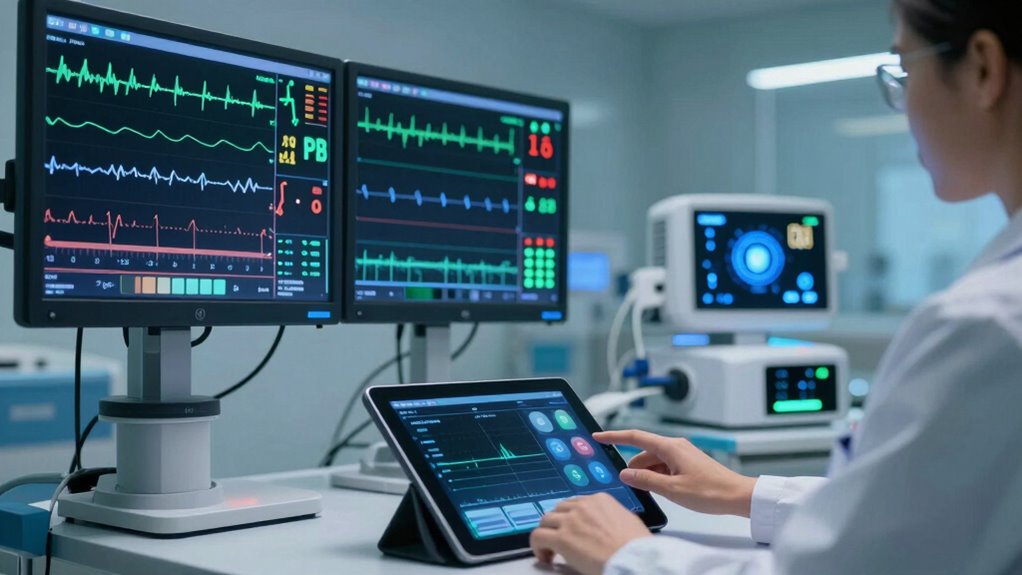

AI transforms ICU monitoring by providing smarter alerts that analyze real-time data, helping you detect patient deterioration earlier. It reduces missed signals and alarm fatigue by filtering out false alarms and highlighting essential changes. Advanced algorithms continuously assess critical signs, lab results, and patient data, enabling timely interventions. Trusting AI systems improves patient outcomes and streamlines workflow. If you want to understand how these innovations enhance ICU care even further, explore what’s next.
Key Takeaways
- AI analyzes large, real-time patient data to generate more accurate and timely alerts in ICU settings.
- Advanced algorithms differentiate between true alarms and false positives, reducing alarm fatigue.
- Continuous monitoring enables earlier detection of patient deterioration, improving intervention outcomes.
- Transparent AI models help clinicians understand alert reasons, increasing trust and decision confidence.
- Integration of AI with natural language processing enhances communication of critical insights to healthcare providers.
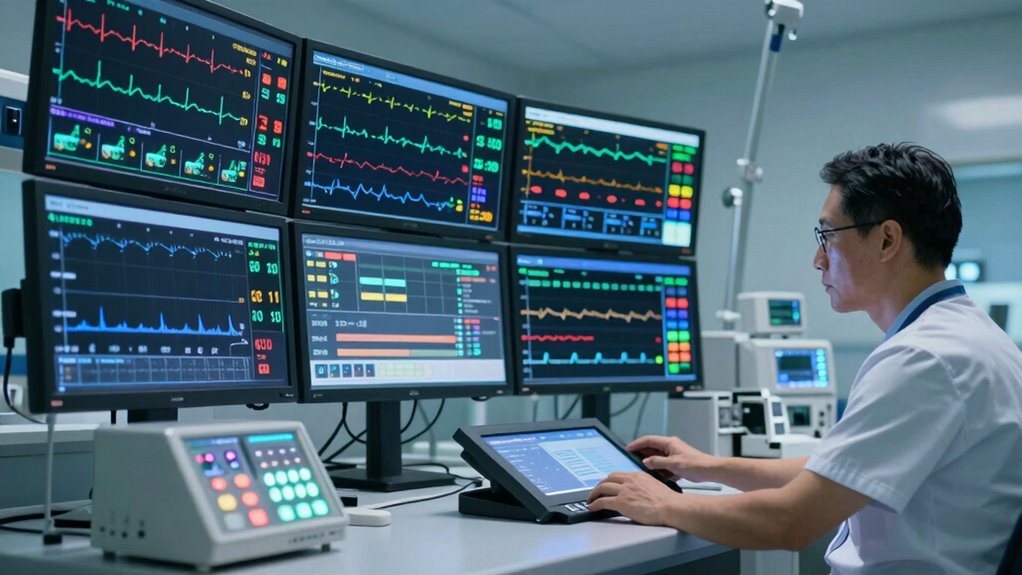
Have you ever wondered how artificial intelligence is transforming intensive care units? It’s revolutionizing patient monitoring, making alerts smarter and reducing missed signals. In the past, clinicians relied heavily on manual observations and basic alarm systems, which often led to alarm fatigue or overlooked warning signs. Now, AI-powered systems analyze vast amounts of data in real-time, spotting subtle changes that might escape human attention. These advanced algorithms continuously assess vital signs, lab results, and other patient data, enabling earlier interventions and improved outcomes. But integrating AI into ICU settings raises important questions about data privacy and algorithm transparency. You need to guarantee that sensitive patient information remains protected while harnessing the power of these intelligent systems. Striking this balance is essential for building trust and compliance, especially with strict healthcare regulations like HIPAA. AI developers are working hard to embed robust security measures, encrypting data and controlling access, so patient privacy stays intact. Additionally, ongoing research emphasizes the importance of data security protocols to prevent breaches and unauthorized access, which is critical for maintaining trust in these technologies.
At the same time, algorithm transparency becomes indispensable. You want to understand how these AI models make decisions, especially when lives are at stake. When a system alerts you to a potential deterioration, knowing the reasoning behind that alert helps you determine its reliability and act confidently. Transparent algorithms allow clinicians to verify and interpret AI recommendations, reducing the risk of false alarms or missed critical signals. This clarity also fosters trust among healthcare providers and patients, who need assurance that AI tools are safe and effective. Developers are increasingly focusing on explainable AI — models that provide clear insights into their decision-making process. This way, you can see which parameters influenced an alert, whether it’s a drop in oxygen saturation or irregular heartbeat patterns. Furthermore, integrating natural language processing can help interpret complex data and communicate findings more intuitively to clinicians.
Furthermore, addressing data privacy concerns through innovative security protocols is critical for widespread adoption of AI technology in healthcare. The combination of smarter alerts and greater transparency ultimately enhances patient safety. You become more responsive to genuine emergencies without being overwhelmed by unnecessary alarms. This not only improves clinical workflow but also helps in delivering more personalized, timely care. As AI continues to evolve, addressing data privacy and algorithm transparency remains paramount. You, as a caregiver, benefit from tools that are both secure and understandable, empowering you to make better decisions at critical moments. The future of ICU monitoring lies in this synergy — smarter, safer, and more trustworthy AI systems working seamlessly alongside healthcare professionals to save lives.
ICU patient monitoring system with AI
As an affiliate, we earn on qualifying purchases.
As an affiliate, we earn on qualifying purchases.
Frequently Asked Questions
How Does AI Improve ICU Staff Workload Management?
AI improves ICU staff workload management by providing real-time data analysis, which helps you quickly identify patient issues and prioritize tasks. It offers critical decision support, reducing your cognitive load and minimizing unnecessary alarms. With AI handling routine monitoring, you can focus on complex cases, collaborate efficiently, and make timely decisions. This streamlines workflows, lessens burnout, and guarantees better patient care, all while managing your workload more effectively.
What Are Ai’s Limitations in Critical Patient Monitoring?
You should know that AI’s accuracy in critical monitoring drops if data quality falters—studies show 20% of AI errors stem from poor data. Algorithm bias is another issue, potentially skewing alerts and risking patient safety. While AI can enhance monitoring, its limitations include reliance on accurate data and unbiased algorithms, which are essential for reliable decision-making. Recognizing these challenges helps you better understand AI’s role in critical care.
How Is Patient Privacy Protected With AI Monitoring Systems?
You can trust that patient privacy is protected by AI monitoring systems through strict data encryption, ensuring all sensitive information stays secure. Additionally, these systems follow ethical standards that prioritize patient confidentiality and consent. Regular audits and compliance with healthcare regulations further safeguard your data. By implementing these measures, healthcare providers aim to balance the benefits of AI with the essential need to protect your privacy.
Can AI Adapt to Different ICU Environments Effectively?
Yes, AI can adapt effectively to different ICU environments through adaptive algorithms and environmental customization. You can customize AI systems to recognize specific patient needs and adapt to unique ICU workflows, ensuring more accurate monitoring. By continuously learning from new data, these algorithms improve their performance over time, making them flexible enough to handle varying conditions, staff practices, and patient populations, ultimately enhancing safety and care quality across diverse ICU settings.
What Training Is Required for Staff to Use AI Tools?
You need staff training to guarantee AI proficiency, focusing on how to interpret alerts and interact with the system safely. Training sessions should cover the basics of AI functions, troubleshooting common issues, and understanding limitations. Hands-on practice helps staff become comfortable with the technology, boosting confidence. Ongoing education is essential to keep up with updates and new features, so your team stays proficient and can maximize AI benefits in ICU monitoring.
As an affiliate, we earn on qualifying purchases.
Conclusion
Imagine a future where ICU monitors are like vigilant guardians, constantly scanning the horizon for warning signs. With AI guiding their watch, alerts become sharper, and missed signals fade away like shadows in the dawn. You’ll see a room where critical data flows seamlessly, guiding your decisions with clarity. This smarter monitoring doesn’t just catch the faintest alarms—it transforms chaos into calm, ensuring every heartbeat is heard and every moment counts in saving lives.
hospital alarm fatigue reduction device
As an affiliate, we earn on qualifying purchases.
As an affiliate, we earn on qualifying purchases.
As an affiliate, we earn on qualifying purchases.