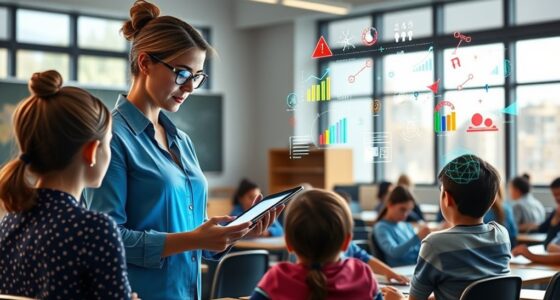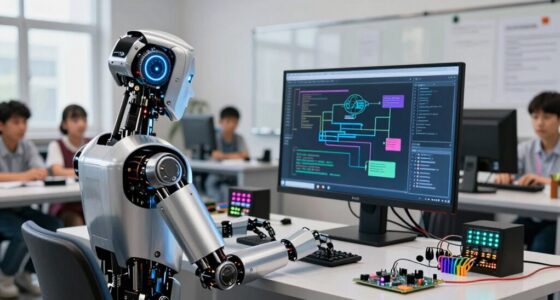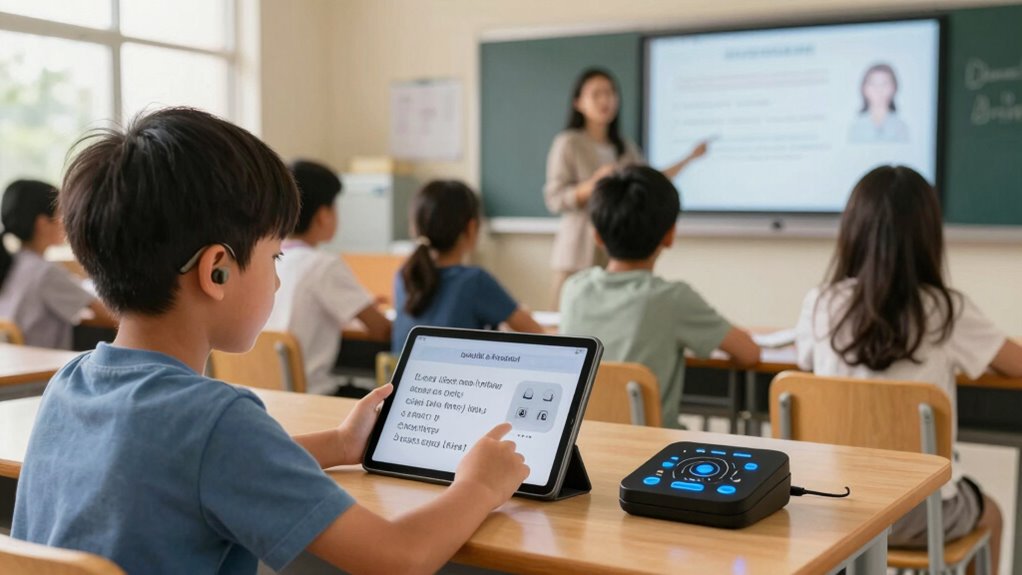

AI is transforming accessibility for students with disabilities by offering personalized tools like speech recognition, text-to-speech, and adaptive learning platforms. It helps you create inclusive environments where learners get tailored support, whether through visual cues, simplified texts, or interactive applications. AI also identifies accessibility gaps and suggests improvements, promoting equal access across educational settings. Keep exploring to discover how these innovations can make a difference and open new possibilities for all learners.

Get tech for your team delivered free — and shop member deals
- Fast, free delivery on millions of items
- Access to Prime Big Deal Days deals on October 6–7
- Prime Video, Amazon Music and more included
Key Takeaways
- AI-powered speech recognition and text-to-speech tools enhance communication and reading support for students with disabilities.
- Adaptive learning platforms personalize content to meet individual needs, aiding students with diverse learning challenges.
- AI identifies and addresses accessibility gaps in educational environments, promoting inclusive policies and infrastructure.
- Interactive and voice-controlled applications enable full participation of students with disabilities in group activities.
- AI-driven innovations foster independence, confidence, and equal access to learning opportunities for all students.
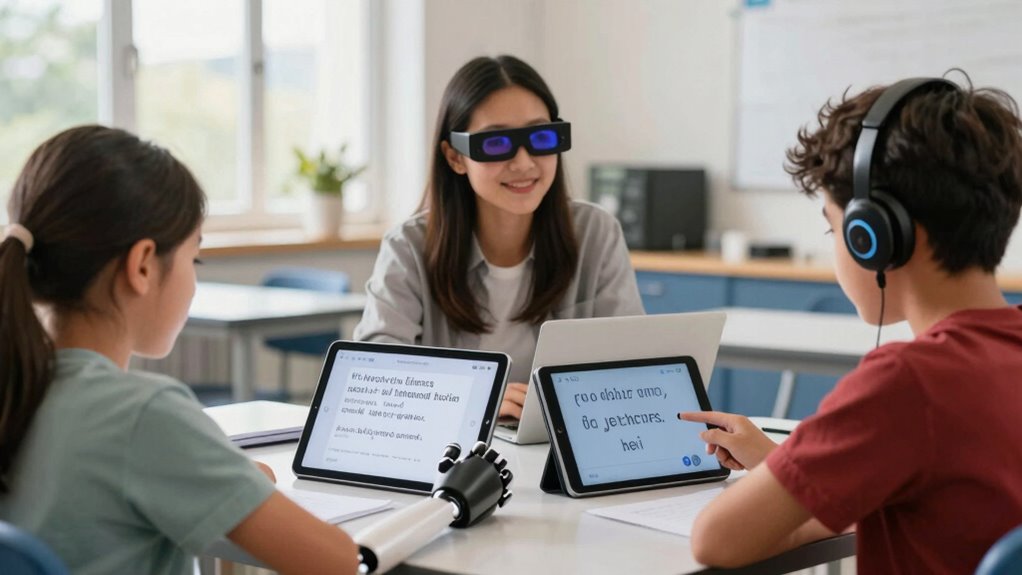
Have you ever wondered how artificial intelligence is transforming education for students with disabilities? AI is revolutionizing the way we approach learning by making classrooms more accessible and inclusive. One of the most significant ways it does this is through assistive technology, which adapts to individual needs and helps remove barriers that might otherwise hinder a student’s progress. For example, AI-powered speech recognition tools allow students with speech impairments to communicate more effortlessly, translating their words into text that teachers and peers can understand instantly. Similarly, AI-driven text-to-speech applications assist students with reading difficulties, enabling them to comprehend written material more effectively.
As AI continues to evolve, it plays an essential role in fostering inclusive education. It enables educators to tailor lessons to meet diverse learning styles and needs. Adaptive learning platforms powered by AI analyze a student’s performance in real-time, adjusting content difficulty and presentation methods accordingly. This personalized approach guarantees that students with disabilities receive the support they need without feeling left behind. For instance, a student with dyslexia might receive more visual cues and simplified text, while another with attention difficulties might benefit from shorter, engaging tasks. This level of customization helps create a learning environment where every student can thrive.
Moreover, AI enhances accessibility beyond individual tools. It helps schools implement smarter policies and infrastructure, guaranteeing that all students have equal access to education. AI systems can identify gaps in accessibility within digital platforms or physical spaces, prompting administrators to make necessary adjustments. For example, AI can automate captioning for videos used in lessons, making multimedia content accessible to students with hearing impairments. Additionally, virtual assistants powered by AI can support students throughout their day, answering questions or guiding them through tasks, which promotes independence and confidence. AI-driven accessibility advancements also include the development of specialized hardware that caters to various disabilities. Incorporating insights from the field of accessible design helps ensure these solutions are effective and user-friendly. Furthermore, leveraging requirements traceability principles can help ensure that accessibility features are systematically integrated and maintained throughout the development process. Recognizing the importance of assistive technology in education emphasizes the need for ongoing innovation and adaptation to serve diverse learners better.
Inclusion is further strengthened as AI facilitates collaboration among students with different abilities. Through interactive applications, students with disabilities can participate more fully in group activities, whether through voice-controlled devices or augmented reality tools. These advancements help break down social and educational barriers, fostering a sense of belonging and engagement. Furthermore, AI can analyze and improve accessibility features across educational platforms, ensuring they meet the needs of diverse learners more effectively. Ultimately, AI is not just a tool but a catalyst for transforming education into a space where all students, regardless of their challenges, can access learning opportunities and reach their full potential.
AI-powered speech recognition device for disabilities
As an affiliate, we earn on qualifying purchases.
As an affiliate, we earn on qualifying purchases.
Frequently Asked Questions
How Cost-Effective Are AI Accessibility Tools for Schools?
AI accessibility tools are quite cost-effective for schools because they reduce long-term expenses through cost savings on specialized staff and resources. While initial implementation challenges like training and integration exist, these are often outweighed by the benefits of increased student engagement and independence. Over time, AI tools streamline accessibility efforts, making them more sustainable and affordable, ensuring more students receive the support they need without overwhelming school budgets.
Are There Privacy Concerns With AI Monitoring Student Progress?
You might feel overwhelmed by privacy risks and data security concerns, but AI monitoring isn’t a digital Pandora’s box. While it tracks student progress, the real risk lies in safeguarding sensitive info. Schools must implement strict data security measures to prevent breaches and misuse. When done responsibly, AI can boost learning without sacrificing privacy, ensuring your child’s progress stays protected like a treasure in a fortress.
How Do AI Tools Adapt to Individual Disability Needs?
AI tools adapt to your individual disability needs through personalization strategies and adaptive technologies. They analyze your interactions and progress, then tailor content, pace, and support accordingly. For example, if you have visual impairments, AI might provide audio descriptions or enlarged text. These adaptive systems guarantee you receive customized assistance, making learning more accessible and effective. This continuous adjustment helps meet your unique challenges and promotes an inclusive educational experience.
What Training Is Required for Teachers to Use AI Accessibility Tools?
To effectively utilize AI accessibility tools, you’ll need to embrace ongoing teacher training focused on accessibility education. This training helps you understand how these tools support diverse learning needs. You’ll learn to navigate features, customize settings, and integrate AI seamlessly into your lessons. By staying updated, you guarantee all students benefit from inclusive technology, making your teaching more adaptable and empowering every learner to reach their full potential.
Can AI Solutions Replace Human Support for Students With Disabilities?
AI solutions can’t replace human support for students with disabilities because emotional support and social interaction are essential for their well-being. You play a crucial role in understanding their unique needs and providing empathy that AI can’t replicate. While AI can assist with accessibility, fostering genuine connections, offering encouragement, and understanding social cues require human compassion, which remains irreplaceable in supporting these students effectively.
Text-to-speech assistive technology for students
As an affiliate, we earn on qualifying purchases.
As an affiliate, we earn on qualifying purchases.
Conclusion
So, while AI promises to bridge gaps and remove barriers for students with disabilities, it’s almost ironic how technology—designed to empower—still hinges on human ingenuity and oversight. Just as AI aims to democratize access, it reminds us that true inclusion requires more than algorithms; it demands ongoing effort, empathy, and a willingness to adapt. In the end, the greatest breakthroughs are those that remind us we’re all learning together—sometimes, by necessity.
Adaptive learning platform for special education
As an affiliate, we earn on qualifying purchases.
As an affiliate, we earn on qualifying purchases.
Assistive technology for inclusive classrooms
As an affiliate, we earn on qualifying purchases.
As an affiliate, we earn on qualifying purchases.
Halloween Picks
halloween
As an affiliate, we earn on qualifying purchases.