TL;DR
South Korea announced a $576 billion investment to develop advanced AI chips, involving Samsung and SK Hynix. This move aims to cement the country’s leadership in semiconductor technology amid rising global competition, as part of its strategic focus on AI chip development.
South Korea has unveiled a comprehensive $576 billion plan to develop and produce advanced AI chips, enlisting industry giants Samsung and SK Hynix. This initiative aims to establish South Korea as a dominant force in the global semiconductor landscape, driven by the rising demand for AI and high-performance computing technologies.
The South Korean government announced the plan on March 2024, targeting the development of cutting-edge AI chips through strategic investments and public-private partnerships. Samsung and SK Hynix, the country’s leading memory chip manufacturers, have been designated as key partners in this national effort. The initiative includes funding for research, infrastructure, and manufacturing capacity expansion, with a focus on securing a technological edge in AI hardware.
Officials from the Ministry of Trade, Industry, and Energy stated that the plan aims to position South Korea as the world’s foremost producer of AI chips, competing with the U.S., China, and other major players. The government expects the investment to stimulate economic growth, create jobs, and reinforce the country’s reputation as a global semiconductor hub. The total commitment of $576 billion is part of a broader strategy to diversify the nation’s tech industry beyond memory chips into AI-specific processing units.
Implications for Global Semiconductor Leadership
This move signifies South Korea’s strategic effort to dominate the rapidly growing AI hardware market. By investing heavily in AI chip development, the country aims to reduce reliance on foreign suppliers, strengthen its technological sovereignty, and influence global supply chains. The partnership with Samsung and SK Hynix underscores the importance of existing industry leaders in achieving these ambitions, potentially reshaping competitive dynamics in the semiconductor sector.

LAFVIN AI Chatbot Kit for ESP32-S3, Preloaded OpenAI & Deepseek Voice Assistant Projects, Voice Wake-up & Real-time Interruption, Suitable for Learning AI and IoT Projects.
【POWERFUL ESP32‑S3 CONTROLLER】Built‑in Xtensa 32‑bit LX7 dual‑core processor, 512KB SRAM, 8MB PSRAM, 16MB Flash for stable AI voice…
As an affiliate, we earn on qualifying purchases.
As an affiliate, we earn on qualifying purchases.
South Korea’s Semiconductor Ambitions and Global Competition
South Korea has long been a leader in memory chip manufacturing, with Samsung and SK Hynix dominating global markets. However, the rise of AI and high-performance computing has shifted industry focus toward specialized AI chips, which require different design and manufacturing capabilities. While the U.S. and China have announced their own initiatives to secure AI hardware supply chains, South Korea’s new plan marks a significant escalation in its strategic push to stay ahead.
Previous efforts have included investments in advanced manufacturing facilities and R&D centers, but the $576 billion commitment represents a substantial scaling up. This initiative aligns with broader national goals to enhance technological sovereignty and economic resilience amid geopolitical tensions and supply chain disruptions.
“This unprecedented investment will position South Korea at the forefront of AI chip technology, ensuring our competitiveness for decades to come.”
— South Korean Minister of Trade, Industry, and Energy

Modern GPUs for Beginners : A Practical Guide to Graphics Processing Units, AI Acceleration, CUDA, ROCm, Metal, Vulkan & High-Performance Compute
As an affiliate, we earn on qualifying purchases.
As an affiliate, we earn on qualifying purchases.
Unconfirmed Details on Implementation and Timeline
While the plan was announced publicly, specific details about implementation timelines, funding allocation, and operational milestones remain unclear. It is not yet confirmed how the $576 billion will be distributed across research, manufacturing, and infrastructure, nor how quickly the projects will progress toward commercialization.
It is also uncertain whether other industry players will participate or if additional foreign partnerships will be involved. Further details on government oversight and the exact scope of technological targets are still emerging.
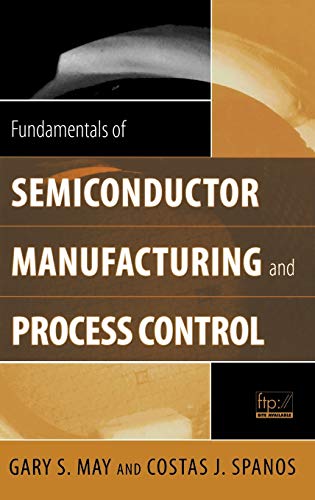
Fundamentals of Semiconductor Manufacturing and Process Control (IEEE Press)
As an affiliate, we earn on qualifying purchases.
As an affiliate, we earn on qualifying purchases.
Next Steps in Policy, Investment, and Industry Collaboration
South Korea’s government is expected to release detailed implementation plans and funding schedules in the coming months. Industry leaders like Samsung and SK Hynix will likely announce specific projects, R&D initiatives, and manufacturing expansions. Monitoring these developments will be critical to understanding how quickly the country can realize its AI-chip ambitions and how it will influence global market dynamics.

ESP32-S3 1.83inch Touch Display Development Board, 240 x 284, Onboard Audio Codec Chip, Built-in Microphones and Speaker, Supports Offline Speech Recognition and AI Speech Interaction,Wi-Fi/BLE 5
Powerful Processor: Equipped with ESP32-S3R8 Xtensa 32-bit LX7 dual-core processor, up to 240MHz main frequency. Supports 2.4GHz Wi-Fi…
As an affiliate, we earn on qualifying purchases.
As an affiliate, we earn on qualifying purchases.
Key Questions
What is the main goal of South Korea’s $576 billion AI-chip plan?
The primary goal is to establish South Korea as a global leader in AI chip development and manufacturing, reducing reliance on foreign suppliers and strengthening its technological sovereignty.
Which companies are involved in this initiative?
Samsung and SK Hynix are the key industry partners, with the government providing strategic funding and support.
How does this compare to other countries’ efforts?
While the U.S. and China have announced their own AI hardware initiatives, South Korea’s investment is notably larger and aims to leverage its existing semiconductor industry to secure a dominant position.
When will we see tangible results from this plan?
Specific timelines are not yet available, but industry sources expect initial research and development milestones within the next 1-3 years, with commercial products following thereafter.
Why is AI-chip development so important now?
AI chips are critical for powering advanced AI applications, data centers, and high-performance computing, making them a strategic technological asset for economic and military competitiveness.
Source: google-trends