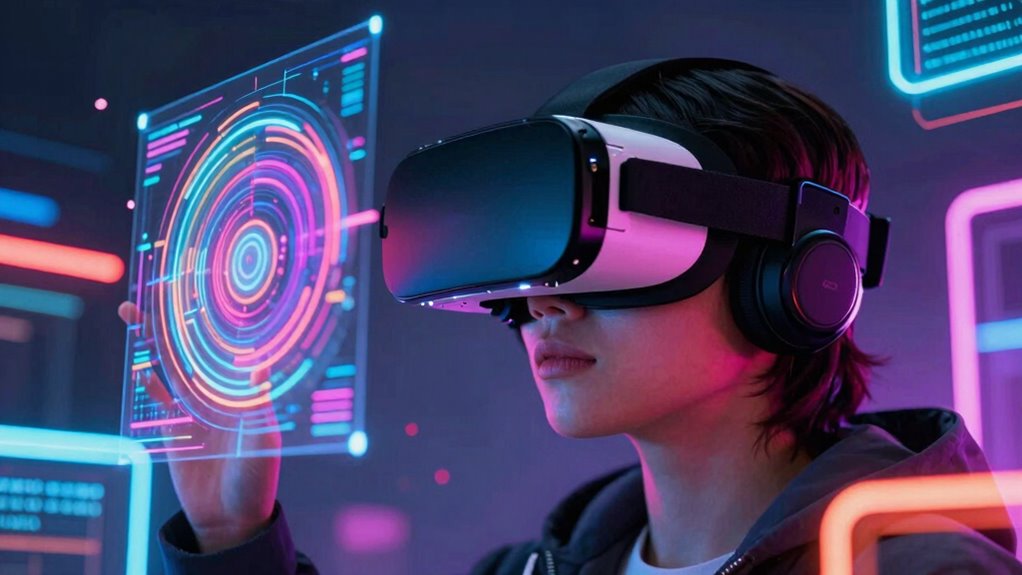

VR tools could become a major player in AI storytelling because they allow you to immerse yourself fully in the narrative, making your experience more emotional and engaging. They enable you to explore environments, interact with objects, and influence story outcomes, making each experience unique and personal. AI enhances this by creating dynamic worlds that adapt in real-time to your choices. If you want to discover how these technologies are shaping the future of storytelling, keep exploring additional insights.

Get business pricing on tech for your team
- Business-only prices and quantity discounts
- Tax-exempt purchasing
- Multiple users, one account, clear invoices
Key Takeaways
- VR provides immersive environments that enhance AI-driven interactive storytelling, increasing user engagement and emotional connection.
- The combination allows real-time adaptation of narratives based on user actions, creating personalized experiences.
- VR’s sensory engagement deepens emotional responses, making AI-generated stories more impactful and memorable.
- Interactive VR tools enable repeated exploration and dynamic story evolution, promoting sustained interest.
- Advances in digital publishing and AI integration make immersive, personalized VR storytelling more accessible to diverse audiences.
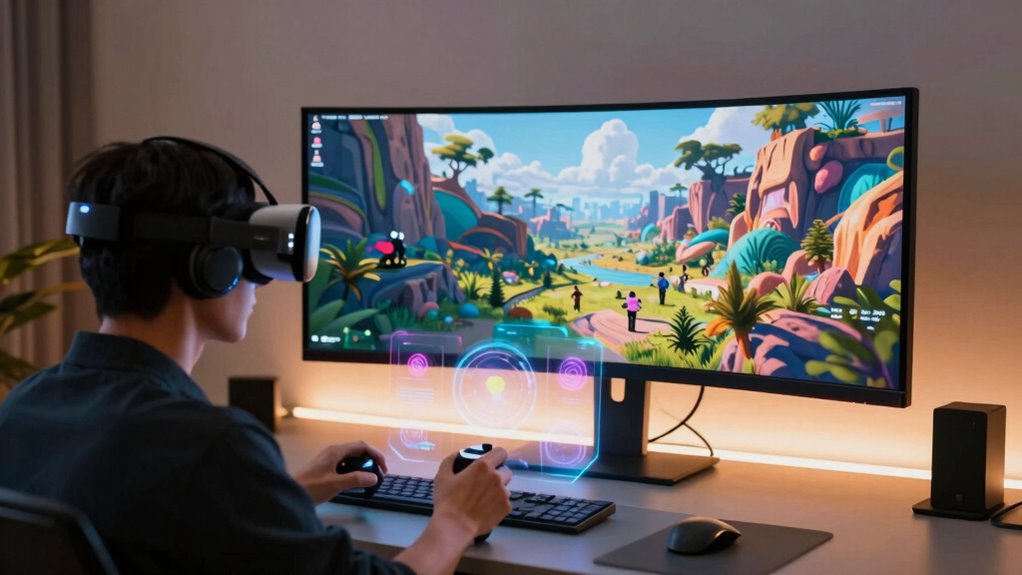
Have you ever wondered how virtual reality is transforming the way stories are told? With VR tools, you’re no longer just a passive observer; you become immersed in the narrative, experiencing stories on a level that was previously impossible. This immersion creates a sense of presence, making every twist and turn feel real. As a result, you’re more likely to feel emotionally connected to the characters and their journeys, boosting narrative engagement. Unlike traditional media, VR allows storytellers to craft environments where you can explore freely, interact with objects, and influence the story’s outcome. This interactivity makes the experience deeply personal, breaking down the barriers between audience and story.
VR tools are opening new frontiers for AI-driven storytelling because they enable creators to design rich, dynamic worlds that adapt to your choices in real-time. When AI is integrated into these immersive environments, stories become flexible and responsive—tailoring themselves to your actions and preferences. Imagine steering through a virtual city where every decision you make influences how the story unfolds, all powered by AI algorithms that generate content spontaneously. This level of adaptability keeps you engaged longer and makes each experience unique, encouraging repeated exploration. It also leverages interactive storytelling to make narratives more compelling and engaging. It’s a powerful way to deepen engagement because the story isn’t static; it evolves with you, making every journey distinctive.
Furthermore, VR’s capacity for immersive experiences means you’re no longer just watching a story unfold—you’re inside it. This shift from viewing to participating elevates narrative engagement exponentially. You can examine details up close, overhear conversations, or even step into different characters’ shoes. This level of immersion taps into your senses, creating a vivid, memorable experience that sticks with you long after you remove your headset. For AI storytellers, this presents a golden opportunity to craft personalized narratives that respond to your emotional state, preferences, or previous interactions. As a result, stories become more meaningful and impactful, resonating with you on a deeper level. Additionally, advances in digital publishing are making these immersive experiences more accessible to diverse audiences.
VR headset for immersive storytelling
As an affiliate, we earn on qualifying purchases.
As an affiliate, we earn on qualifying purchases.
Frequently Asked Questions
How Affordable Are VR Tools for Independent Storytellers?
VR tools are becoming more affordable for independent storytellers, especially when you compare costs to traditional filmmaking equipment. With a variety of options available, from budget-friendly headsets to accessible software, you can find equipment that fits your budget. The cost comparison shows lower entry barriers, making VR tools more accessible. This affordability encourages more creators like you to explore immersive storytelling without breaking the bank, opening new creative possibilities.
What Are the Technical Challenges of Integrating AI With VR?
You face technical challenges when integrating AI with VR, especially around delivering realistic haptic feedback and immersive spatial audio. Ensuring these elements respond dynamically to user actions requires advanced programming and hardware synchronization. You also need to optimize AI algorithms for real-time interactions without causing latency. Balancing high-quality sensory experiences with seamless AI integration demands innovation, making it a complex but exciting frontier in VR storytelling.
How Does User Experience Vary Across Different VR Platforms?
Imagine you’re exploring diverse worlds through different portals—each VR platform offers a unique journey. Your experience varies with immersive interfaces, affecting how deeply you’re drawn into the story. Some platforms emphasize sensory immersion, making you feel truly part of the environment, while others focus on ease of use or graphical fidelity. Your comfort, motion tracking, and display quality all shape how rich and engaging your adventure becomes across these virtual domains.
Can VR Storytelling Be Accessible to People With Disabilities?
Yes, VR storytelling can be accessible to people with disabilities by implementing accessible design and addressing sensory considerations. You can include features like audio descriptions, adjustable text sizes, and customizable controls. Sensory considerations like reducing flashing lights or providing alternative sensory inputs guarantee a wider audience can enjoy immersive stories. By prioritizing these elements, you create inclusive experiences that cater to diverse needs, making VR storytelling more universally accessible.
What Future Innovations Might Enhance Ai-Driven VR Storytelling?
You might think AI-driven VR storytelling is still limited, but future innovations like advanced haptic feedback and real-time adaptive narratives will greatly enhance sensory immersion and interactivity. These improvements will create more compelling, personalized experiences, making stories feel truly alive. As technology advances, you’ll find immersive, interactive narratives engaging and accessible, transforming storytelling into a deeply immersive art form that responds to your actions and senses seamlessly.
AI-powered virtual reality tools
As an affiliate, we earn on qualifying purchases.
As an affiliate, we earn on qualifying purchases.
Conclusion
Think of VR tools as the keys to a vast, uncharted domain where AI storytellers become explorers. With each step you take inside this immersive sphere, you’re opening doors to new worlds and stories that breathe and evolve around you. As you venture deeper, these tools transform the narrative landscape from simple pages into living, breathing adventures. Embrace this journey, and you’ll discover that the future of storytelling isn’t just written — it’s experienced firsthand.
interactive VR environments for storytelling
As an affiliate, we earn on qualifying purchases.
As an affiliate, we earn on qualifying purchases.
personalized VR story experiences
As an affiliate, we earn on qualifying purchases.
As an affiliate, we earn on qualifying purchases.
Fall Picks
fall essentials
As an affiliate, we earn on qualifying purchases.