
📊 Full opportunity report: The Role Of AI In Shaping Smart Cities' Self-Monitoring Systems on ThorstenMeyerAI.com — validation score, market gap, and execution plan.
TL;DR
Artificial intelligence is playing a growing role in the development of self-monitoring systems within smart cities, improving urban management capabilities. However, this integration raises questions about data governance, privacy, and social impact that remain unresolved.
Artificial intelligence is increasingly embedded in smart cities’ self-monitoring systems, enabling real-time data analysis for urban management. This development is transforming how cities monitor traffic, pollution, and infrastructure, with significant implications for governance and privacy. The integration of AI-driven tools is expanding rapidly, driven by technological advances and municipal ambitions to create more efficient, responsive urban environments.
Recent implementations include Barcelona’s AI-powered twin platform, which analyzes mobility and environmental data to optimize city services. Experts note that AI enhances the accuracy and speed of data processing, allowing cities to respond more effectively to crises such as floods or traffic congestion. However, these systems often operate with limited transparency, raising concerns about data control and citizen privacy.
One confirmed trend is the increasing use of AI algorithms to automate decision-making within city management. For example, AI models predict traffic flow, optimize emergency responses, and monitor air quality with minimal human intervention. These capabilities are becoming standard features in many urban digital twin projects, which create virtual replicas of cities fed by sensors and other data streams.
At the same time, authorities and vendors face challenges in establishing clear governance structures. The European Union’s GDPR laws complicate data handling, especially when operational data includes personal information such as delivery routes or employee movements. Critics have raised issues over opaque data processing and the lack of standardized consent protocols, with some cities like Barcelona facing scrutiny over privacy practices.
The City That Watches Itself Has a Business Model —
That’s the Governance Problem
Same-day-verified · follow the money, the liability, and the social cost — not the state-vs-citizen framing
Three layers the privacy headlines skip
- Lock-in is the quiet scandal: once planning, flood response & traffic run through one vendor’s replica, exit costs are civilizational-grade
- Real service economy downstream: architects speed compliance, developers expedite approvals
- Counter-model: Rotterdam’s shared ownership — twin as governed infrastructure, not licensed product
- You’re in the twin whether you signed or not: logistics, energy signatures, employee movements become someone else’s data layer
- Unsettled GDPR joint-controller questions; Barcelona already criticized for opaque citizen-data processing
- Upside: compliance-grade twin infrastructure as a European market position — jurisdiction as feature
- Chilling effects on assembly & expression; algorithmic mediation can automate inequality into planning
- Function creep is the mechanism: drainage model → crowd model → protest model — each an upgrade ticket, not a political decision
- Contestability erodes: you can argue with a planning officer, not with a simulation’s false objectivity
The ladder nobody voted on — Gartner hype-cycle history
STEELMAN: BUILD THE TWINS ANYWAY
Refusing has social costs too: flood twins demonstrably cut emergency costs, traffic twins cut emissions and improve ambulance access. The honest position isn’t twin-or-no-twin — it’s that the same replica serves radically different ends depending on governance.
Watch three indicators, not the headlines: does Rotterdam-style shared ownership spread; does purpose limitation get enforcement teeth; do enterprises demand contractual standing in the twins that ingest them. Those three decide whether the city that watches itself answers to anyone.
Impacts of AI-Driven Self-Monitoring on Urban Governance
The integration of AI into city self-monitoring systems offers potential benefits such as improved emergency response, reduced emissions, and better resource allocation. However, it also introduces risks related to data privacy, social inequality, and loss of democratic oversight. How cities govern these AI tools will determine whether they serve the public interest or deepen existing social divides.
Key concerns include the possibility of algorithmic bias, function creep, and the erosion of contestability in urban decision-making. The debate over ownership models, such as Rotterdam’s shared governance approach versus vendor lock-in, highlights the importance of transparent, accountable frameworks. Ultimately, AI’s role in self-monitoring could reshape urban life—if managed responsibly.

2K Security Camera System, 5GHz&2.4GHz WiFi Solar Wireless Cameras for Home Security, Wire-free Installation, AI Detection, Two-way Audio, Mobile alerts, SD/Cloud Storage, Color Night Vision, 4 Packs
- Wireless Solar & Battery Power: No outlets or cables needed
- 2K Color Night Vision: Clear details with smart spotlight
- 360° Pan-Tilt & Weatherproof: Remotely monitor in all conditions
As an affiliate, we earn on qualifying purchases.
As an affiliate, we earn on qualifying purchases.
Evolution of AI in Smart City Monitoring
Over recent years, AI’s role in smart city systems has expanded from simple sensor data analysis to complex autonomous decision-making. Early projects focused on traffic management and pollution monitoring; now, AI underpins comprehensive digital twins that simulate and optimize entire urban environments. This evolution reflects broader trends in digital transformation, driven by advances in machine learning, sensor technology, and data analytics.
However, the push for smarter cities has outpaced the development of governance standards. Many projects operate in a legal and ethical gray area, especially concerning data privacy and citizen rights. The debate over who controls the data and how it is used remains unresolved, with some cities experimenting with shared ownership models to mitigate vendor dependency.
“The lack of standardized consent and clear governance in city twin platforms could lead to serious privacy violations.”
— European data privacy expert
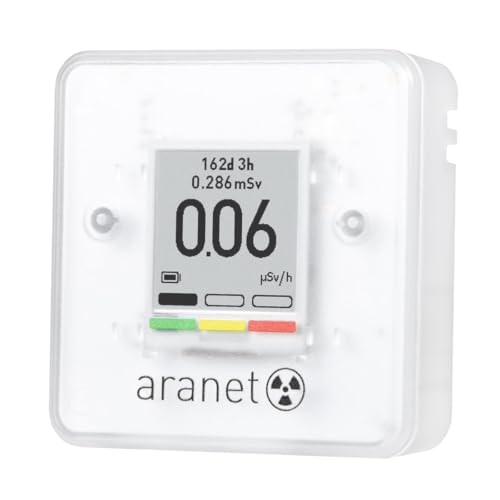
SAF Aranet Radiation Detector, Dosimeter, Portable, Measures Dose Rate & Total Dose of Ionizing Radiation, E-Ink Display, 4-Year Battery Life, Bluetooth Connection, Free App with Graphics & Alarm
- Radiation Type Coverage: Measures γ, β, and x-ray radiation
- Dose Measurement Range: Tracks dose rate and total dose
- Battery Life: Up to 4 years of operation
As an affiliate, we earn on qualifying purchases.
As an affiliate, we earn on qualifying purchases.
Unresolved Issues in AI-Enabled City Monitoring
It remains unclear how many cities will adopt shared ownership models like Rotterdam’s or enforce purpose limitation regulations effectively. The long-term social impacts of pervasive AI monitoring, including potential chilling effects on public assembly and expression, are still being evaluated. Additionally, the development of privacy-preserving AI architectures is progressing but not yet widespread enough to guarantee comprehensive citizen protection.

AI Marketing Blueprint: 7 New Rules for Driving Pipeline and Revenue
As an affiliate, we earn on qualifying purchases.
As an affiliate, we earn on qualifying purchases.
Future Directions for AI in Smart City Oversight
Key developments to watch include the adoption of shared governance models for city digital twins, enforcement of purpose limitation measures, and increased contractual demands from enterprises involved in data ingestion. Policymakers and city officials are expected to craft clearer regulations and standards to address transparency, accountability, and privacy concerns. Further technological innovations in privacy-preserving AI are likely to influence how cities balance efficiency with citizen rights.

Digital Twins, Simulation, and the Metaverse: Driving Efficiency and Effectiveness in the Physical World through Simulation in the Virtual Worlds (Simulation Foundations, Methods and Applications)
As an affiliate, we earn on qualifying purchases.
As an affiliate, we earn on qualifying purchases.
Key Questions
How does AI improve city management systems?
AI enables real-time data analysis, automates decision-making, and optimizes resource allocation, making urban management more efficient and responsive.
What are the main privacy concerns with AI in smart cities?
AI systems often process personal data such as mobility patterns and social behaviors, raising risks of privacy violations and data misuse without proper safeguards.
Are there models for shared ownership of city digital twins?
Yes, Rotterdam is experimenting with a shared ownership structure, aiming to prevent vendor lock-in and promote public control over urban data platforms.
What legal frameworks govern AI data use in cities?
European laws like GDPR set standards for data protection, but many cities lack specific regulations for AI-driven monitoring and governance, leading to ongoing legal debates.
What are the social implications of AI self-monitoring?
AI can reduce emergency costs and emissions, but it also risks chilling effects on free assembly, reinforcing inequalities, and reducing contestability in urban decision-making.
Source: ThorstenMeyerAI.com