
TL;DR
AMD has announced the acquisition of Taalas, a company specializing in silicon etching of AI models, to boost inference performance. The deal aims to embed models directly into hardware, potentially transforming AI deployment. Details about the acquisition’s scope and timeline remain limited. To learn more about enhancing AI models, check out Boost Your AI Models With Nunchaku 4-Bit Diffusion Inference In Diffusers.
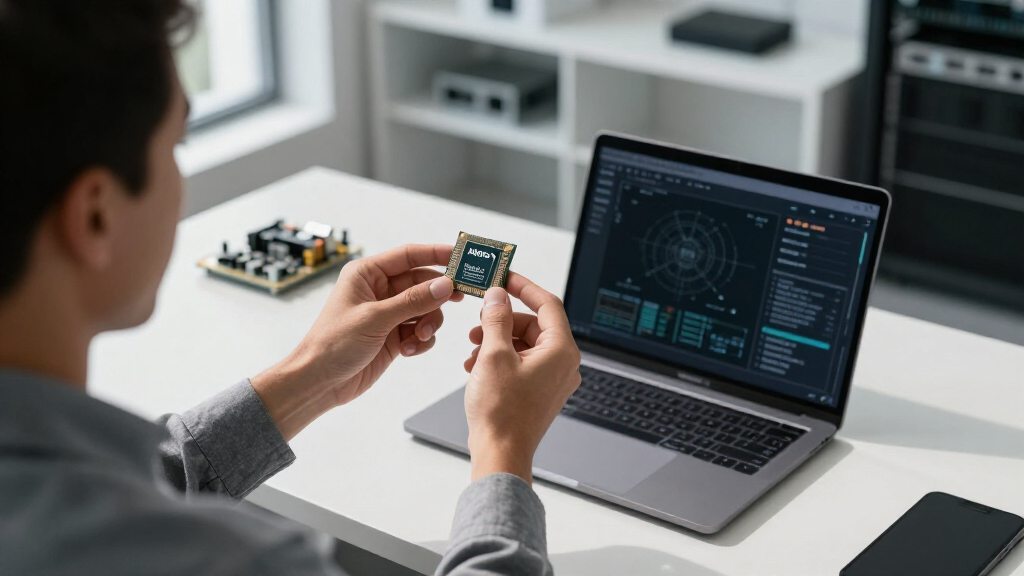
AMD has acquired Taalas, a company specializing in etching AI models directly into silicon, to enhance inference performance. This strategic move aims to embed models at the hardware level, potentially revolutionize AI deployment and efficiency. The deal was publicly announced by AMD on March 2024, with the company emphasizing the importance of hardware-embedded AI for future computing needs.
The acquisition aims to leverage Taalas’s silicon etching technology to embed AI models directly into hardware, reducing inference latency and power consumption. AMD officials stated that this approach could significantly improve performance for AI applications across data centers, edge devices, and consumer electronics.
While AMD confirmed the deal, specific terms, financial details, and timelines for integration are not yet publicly disclosed. Taalas’s technology involves etching AI models into silicon wafers, a process that could allow for more efficient inference compared to traditional software-based models.
Impact of Silicon-Etched AI Models on Hardware Performance
This acquisition signals a shift toward hardware-level AI optimization, which could drastically improve inference speed and energy efficiency. Embedding models in silicon may reduce reliance on cloud-based processing, enabling faster, more secure AI applications at the edge. For AMD, this move positions the company as a leader in next-generation AI hardware solutions, potentially giving it a competitive edge in the rapidly growing AI market.
AI inference hardware accelerators
As an affiliate, we earn on qualifying purchases.
As an affiliate, we earn on qualifying purchases.
Previous AMD Initiatives in AI Hardware Development
AMD has been investing in AI hardware, including specialized accelerators and integrated solutions, to compete with industry leaders like NVIDIA and Intel. The company has also announced partnerships with cloud providers to optimize AI workloads. The Taalas acquisition represents a new direction, focusing on embedding AI models directly into silicon, a technology that has been explored by other hardware firms but is still emerging.
Prior to this, AMD’s AI efforts centered around software and hardware accelerators, with limited focus on silicon-etched models. The move to acquire Taalas indicates a strategic pivot toward more integrated, hardware-embedded AI solutions.
“Embedding AI models directly into silicon is a game-changer for inference performance, and Taalas’s technology accelerates this vision.”
— Dr. Lisa Chen, AMD Senior Vice President
As an affiliate, we earn on qualifying purchases.
Details on Integration Timeline and Scope Remain Unclear
AMD has not disclosed specific timelines for integrating Taalas’s technology into its product lines. It is also unclear whether the acquisition will lead to new products or be integrated into existing AMD hardware solutions. The full scope and potential market impact are still developing as AMD and Taalas continue discussions.
As an affiliate, we earn on qualifying purchases.
Next Steps in Technology Development and Market Deployment
AMD is expected to begin integrating Taalas’s silicon etching technology into its upcoming hardware platforms, with potential product announcements in the coming quarters. Further details on the technology’s performance benefits and commercial availability are anticipated as development progresses. AMD may also explore collaborations with OEMs and cloud providers to accelerate adoption.
As an affiliate, we earn on qualifying purchases.
Key Questions
What is silicon etching of AI models?
Silicon etching of AI models involves embedding neural network models directly into the silicon hardware during manufacturing, enabling faster and more efficient inference.
How will this acquisition affect AMD’s product lineup?
While specific products are not yet announced, this technology could lead to new hardware optimized for AI inference, potentially enhancing performance and energy efficiency across AMD’s offerings.
When will we see products using this technology?
AMD has not provided a timeline, but development and integration are likely to take several quarters, with potential product launches expected within the next year.
Does this mean AMD is competing directly with NVIDIA and Intel in AI hardware?
This move positions AMD more strongly in AI hardware, especially in inference acceleration, which could place it closer to competitors like NVIDIA and Intel in this market segment.
What are the potential advantages of silicon-etched AI models?
Embedding models in silicon can significantly reduce inference latency, lower power consumption, and improve security by limiting access to model data.
Source: hn