🔍 Read the full analysis: 9 Best High Refresh Gaming Monitors For Smooth Play In 2027 on ThorstenMeyerAI.com

Get business pricing on tech for your team
- Business-only prices and quantity discounts
- Tax-exempt purchasing
- Multiple users, one account, clear invoices
TL;DR
A roundup from ThorstenMeyerAI.com compares nine gaming monitors, including QHD models rated at 300Hz and 180Hz and Full HD options rated from 240Hz to 310Hz. The source frames these as use-case picks, not the results of performance testing; buyers should verify current specifications, pricing and connection requirements before purchasing.
ThorstenMeyerAI.com has published a nine-monitor gaming roundup that compares high refresh rates with resolution and screen size, naming the ASUS TUF VG27AQM5A its overall pick for combining QHD with a stated 300Hz refresh rate. The list also includes a 310Hz Full HD ASUS model and several 240Hz alternatives, but the source describes its rankings as use-case judgments rather than findings from performance testing.
The roundup’s central tradeoff is between QHD detail and the lower graphics workload of Full HD, a consideration also explored in this guide to high-refresh gaming monitors. Its author recommends the VG27AQM5A for players seeking 1440p resolution alongside a high stated refresh rate, while positioning the ASUS TUF VG259QMR5A as a competitive-play option at 310Hz and 24.5 inches. A QHD alternative, the ASUS TUF VG27AQ3A, is listed at 180Hz.
Full HD choices include the Dell SE2426HG and Dell SE2726HG, both described as 240Hz displays, in 24- and 27-inch formats respectively. The source also identifies curved options from SANSUI and Sceptre, alongside other OLED gaming monitor options worth comparing. It cautions that a larger Full HD screen—particularly a 32-inch model—can look less sharp than a smaller one at the same resolution.
The article says its rankings weigh how refresh rate, resolution and size fit together, rather than treating the biggest hertz figure as an automatic win. It says it does not rely on unprovided testing of response behavior or image quality. The supplied source material does not give a complete model-by-model specification table for all nine products, so some details and the exact ninth pick cannot be independently established from it.
The 9 picks
- 1
 ASUS TUF Gaming VG27AQM5A 27-inch QHD 300Hz Gaming MonitorView on Amazon →
- 2
 SANSUI 32-Inch Curved 240Hz FHD Gaming MonitorView on Amazon →
- 3
 ASUS TUF Gaming VG27AQ3A 27-Inch QHD 180Hz Gaming MonitorView on Amazon →
- 4
 Dell SE2726HG 27-Inch FHD 240Hz Gaming MonitorView on Amazon →
- 5
 SANSUI 27-Inch Curved 240Hz FHD Gaming MonitorView on Amazon →
- 6
 ASUS TUF Gaming VG259QMR5A 24.5-Inch Full HD 310Hz Fast IPS Gaming MonitorView on Amazon →
- 7
 Sceptre 24.5-Inch Curved 240Hz Full HD Gaming Monitor (C255B-FWT240)View on Amazon →
- 8
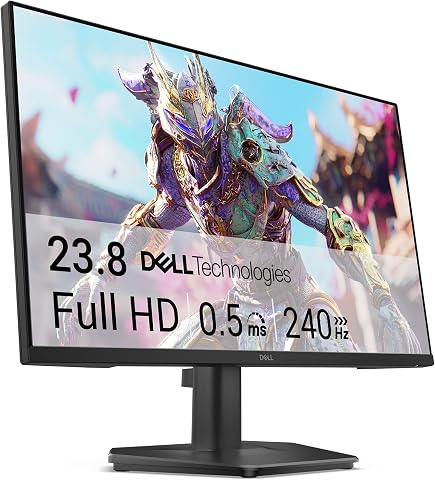 Dell 24 240Hz Gaming Monitor – SE2426HG – 23.8-inch FHD (1920×1080) 240Hz Dis…View on Amazon →
- 9
 Sceptre 27-Inch Curved Full HD Gaming Monitor, 180Hz, 1ms, 1500RView on Amazon →
Matching Refresh Rate to Your Setup
The list highlights a practical buying decision: a monitor’s maximum refresh rate only helps if a gaming system can supply enough frames at the selected resolution. Competitive games and a powerful PC may make a 300Hz-class screen useful, while demanding single-player games may lead buyers to favor higher resolution over maximum speed.
Screen size changes the tradeoff. A compact 24- or 24.5-inch Full HD display can keep pixel density relatively high, while 27- or 32-inch Full HD spreads the same resolution across a larger area. The source’s recommendations are therefore best read as a shortlist by intended use, not a universal ranking that establishes which display performs best.
Products Worth Considering

LG UltraGear 27-inch QHD OLED Gaming Monitor, 240Hz

LG UltraGear 32GX850A-B 32-inch 4K UHD OLED Gaming Monitor

Samsung Galaxy Tab S7 11-inch Android Tablet 128GB Wi‑Fi with S Pen Mystic Black
As an affiliate, we earn on qualifying purchases.
The Roundup’s Selection Criteria
The source groups its recommendations around QHD versus Full HD, screen sizes from roughly 24 to 32 inches, and flat versus curved designs. Its stated method gives weight to whether the resolution and refresh target are practical for a player’s setup, as well as desk space and viewing distance.
It advises buyers to check the graphics hardware and connection needed to reach a monitor’s maximum refresh rate at the chosen resolution. It also recommends verifying manufacturer specifications for ports, adaptive sync, stand adjustments and mounting support. The supplied material does not include publication date, prices, full port lists or links to independent test results.
“The main tradeoff is choosing between higher resolution and screen detail or lower-resolution speed that is easier to drive at very high frame rates.”
— ThorstenMeyerAI.com roundup
Specifications Still Need Checking
The source material does not state the roundup’s publication date, the nine products’ current prices, or the complete specifications for every pick. It also provides no independent benchmark results to verify response times, image quality or real-world motion performance. Product availability and specifications can vary by market, so the stated model names and refresh rates should be checked against manufacturer listings before buying.
The article’s recommendation of the VG27AQM5A as the overall pick is an editorial judgment, not a confirmed industry-wide assessment. The source does not establish how each monitor compares under standardized testing or whether all systems can reach the listed maximum refresh rates at their target resolutions.
Verify Models Before Buying
Readers can use the roundup to narrow choices by resolution, size and gaming style, then confirm the exact model’s refresh-rate support, ports and adaptive-sync features with its manufacturer. The next useful step is matching those specifications to the graphics card or console, measuring desk space and checking current pricing and availability. No follow-up testing or additional update is identified in the supplied source.
Key Questions
Which monitor does the roundup name as its overall pick?
It names the ASUS TUF VG27AQM5A, citing its combination of QHD resolution and a stated 300Hz refresh rate. That is the source’s editorial recommendation, not a result established by independent testing in the supplied material.
Which model has the highest refresh rate in the source?
The source lists the ASUS TUF VG259QMR5A at 310Hz. It is a 24.5-inch Full HD option positioned for competitive play.
Is Full HD or QHD better for a high-refresh monitor?
It depends on the game, graphics hardware and screen size. The source presents Full HD as easier to drive at very high frame rates, while QHD offers more detail and demands more from the graphics card.
Does the roundup confirm performance through testing?
No. The source says its rankings reflect fit by use case and do not make claims based on unprovided performance testing, response behavior or image-quality measurements.
Source: ThorstenMeyerAI.com