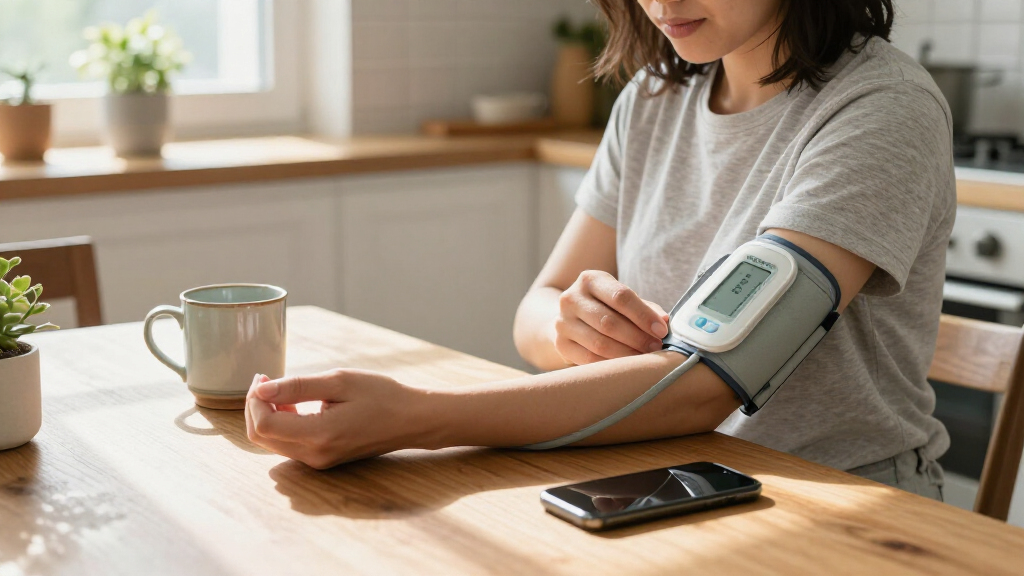

The Withings BPM Vision is a connected upper-arm blood pressure monitor with FDA clearance, on-screen guidance, and automatic app syncing. Its strongest case is convenience: a bright display and color-coded results make readings easier to interpret, while Wi-Fi and Bluetooth can store them in the Withings app. The main tradeoffs are its pacemaker incompatibility and a household syncing setup that does not let two users share one phone. It is a persuasive option for an individual who wants a guided, low-maintenance tracking routine, but less compelling for some families or people who need broader device compatibility.

Get business pricing on tech for your team
- Business-only prices and quantity discounts
- Tax-exempt purchasing
- Multiple users, one account, clear invoices

Withings BPM Vision Blood Pressure Monitor
- ✔ Cuff Size: 8.7–16.5 inches (22–42 cm)
- ✔ Battery Life: 1 year
- ✔ Connectivity: Wi‑Fi, Bluetooth
Why This Product Stands Out
The BPM Vision stands out by making interpretation part of the device itself. Many home monitors center on the measurement and leave users to record or make sense of the numbers elsewhere. Here, a 2.8-inch LCD and color-coded feedback give a clearer immediate readout. That matters most for someone who checks pressure consistently but does not want every measurement to feel like a data-entry task.
Its place in the category is shaped by that guided, connected approach. Wi-Fi and Bluetooth syncing and app history add convenience beyond a basic cuff, while built-in tutorials aim to support more consistent measurement habits. Those additions make it a strong fit for a solo user already comfortable with a phone-based health record. They are less decisive for someone who mainly wants a straightforward monitor, or whose household needs shared-device support.
The product’s most meaningful exception is compatibility. Pacemaker incompatibility is a hard constraint, not a minor inconvenience, and a person affected by it should compare other monitors before buying. The single-phone syncing limitation also changes the equation for shared households. For those buyers, the Omron Platinum Upper Arm Blood Pressure Monitor, OMRON Complete 2-in-1 Upper Arm Blood Pressure Monitor with EKG, or Trakr Smart Blood Pressure Monitor may be worth comparing based on their own requirements and compatibility.
Key Features and What They Mean
On-screen measurement guidance helps address a common challenge with home monitoring: taking readings in a consistent way. The tutorials walk users through the process, which can make it easier for someone new to routine checks or returning after a gap to follow the same steps each time. That consistency can make a record more useful to review over time. It is an aid, not a guarantee of accuracy, so users should still follow the device instructions and their clinician’s advice.
Color-coded readings turn numbers into a quick visual reference against U.S. hypertension guidelines. This can help someone who finds charts or raw measurements hard to interpret see when a result may warrant attention, without looking up a range after each check. The benefit is faster orientation, not a diagnosis; readings that concern you should be discussed with a healthcare professional.
The 2.8-inch bright LCD displays results on the monitor itself, so users can see a measurement without opening a phone or navigating an app. That is particularly useful for someone who wants a simple check at the moment of measurement, or who prefers a large dedicated screen. It also keeps the immediate result accessible when app syncing is not convenient.
Wi-Fi and Bluetooth connectivity can transfer readings automatically to the Withings app, where the product description says users can keep unlimited data. For a person monitoring regularly, an ongoing record can reduce handwritten logging and make it easier to review patterns or share information with a clinician. This convenience depends on a compatible phone and the listed requirements of iOS 18 or later or Android 12 or later, so it offers little value to someone who prefers not to use an app.
The stated one-year battery life means less frequent charging, helping keep the monitor ready for a regular routine. The cuff fits arms measuring 8.7 to 16.5 inches (22 to 42 cm), which covers many adults but not everyone. Measuring first helps buyers avoid a poor fit that could make the monitor unsuitable regardless of its other conveniences.
Performance and Real-World Use
In everyday use, the BPM Vision is designed to make the sequence from measurement to record fairly simple: the user follows on-device guidance, reads the result on the screen, then lets the monitor sync through Wi-Fi or Bluetooth. That combination may suit people who want to take readings at home and keep a longer-term record without copying numbers by hand. The cuff’s listed range covers many adults, but fit still depends on the user’s actual arm measurement.
The screen and immediate feedback reduce reliance on a phone during the measurement itself. Automatic syncing can make repeated checks more convenient, though it relies on a compatible device and a working app connection. The stated one-year battery life also reduces routine charging, but real battery life can depend on use and conditions; the stated figure is best treated as a guide.
The biggest practical complication comes when more than one person wants a connected record. Since two users cannot share one phone for syncing, households should check whether their own phone and account arrangements will work before choosing it. People with a pacemaker should also treat the listed incompatibility as a reason to choose another monitor and ask a healthcare professional which option is suitable.
Who Should Buy This
The BPM Vision makes the most sense for a solo user who takes regular home readings, wants a visible result without opening a phone, and values automatic history in the Withings app. It is especially suited to someone who appreciates on-device instructions and visual context, has an arm within the 8.7–16.5-inch cuff range, and uses a compatible iOS or Android phone. If those conveniences will help sustain a monitoring routine, its connected design has a clear purpose.
Who Should Skip This
Skip the BPM Vision if you have a pacemaker, since the product is listed as incompatible. It is also a poor fit for a couple or family that needs two users syncing through one shared phone. Consider another monitor if your phone does not meet the stated operating-system requirements, your arm falls outside the cuff range, or you want a simpler device without an app-based record. People choosing a monitor for a medical condition should check suitability with their clinician.
Value for Money
The BPM Vision is worth its premium price for a solo user who will regularly use its guidance, clear screen, and automatic app history. Those features can make readings easier to take, check, and keep over time, so the added cost buys practical convenience for someone building a consistent home-monitoring routine. It is not strong value for occasional checks, someone who does not want an app, or anyone whose phone or household setup cannot use its connected features. If shared household use is central, compare the OMRON Complete 2-in-1 with EKG; if you want another app-focused option, consider the Trakr Smart. The Omron Platinum is also worth reviewing when the Withings compatibility limits are decisive. Compare current prices, cuff fit, and features before choosing.
Withings BPM Vision Blood Pressure Monitor
The BPM Vision stands out by making interpretation part of the device itself. Many home monitors center on the measurement and leave users to record or make sense of the numbers elsewhere.
Pros:
- FDA-cleared readings include systolic pressure, diastolic pressure, and heart rate, giving users a useful set of measurements to record and discuss with a clinician.
- Color-coded feedback puts results in context against U.S. hypertension guidelines, which can make a reading easier to understand at a glance.
- The bright 2.8-inch LCD keeps the measurement visible on the device, so checking a result does not depend on opening a phone app.
- Wi-Fi and Bluetooth syncing can move readings into the Withings app automatically, reducing manual logging for people who want a record over time.
- A stated battery life of up to one year means less frequent charging for people who take readings regularly.
Cons:
- It is incompatible with pacemakers, which rules it out for some people who otherwise might value home monitoring.
- Two household users cannot share a single phone for syncing, limiting its convenience for couples or families with one shared device.
- App syncing and its newer operating-system requirements make the connected features dependent on a compatible smartphone and the Withings app.
- Color-coded guidance can help interpret a reading, but it is not a diagnosis or a substitute for advice from a healthcare professional.
Best for: An individual who wants guided readings, clear on-device results, and automatic tracking in the Withings app.
Not ideal for: People with pacemakers, or two household users who need to sync separate profiles through one shared phone.
Bottom line: The Withings BPM Vision is worth buying for the right individual user : someone who wants an easy-to-read monitor, guided measurements, and a connected record with little manual logging.
Frequently Asked Questions
Is the Withings BPM Vision FDA-cleared?
Yes. The product is described as FDA-cleared and provides systolic pressure, diastolic pressure, and heart-rate readings. Follow the instructions for taking measurements, and ask a healthcare professional how to interpret results for your situation.
Can people with pacemakers use the BPM Vision?
The listed product limitation says it is incompatible with pacemakers. People with a pacemaker should choose a different monitor and check with their healthcare professional about a suitable option.
Can two people sync readings using one shared phone?
No. The stated limitation is that two household users cannot share a single phone for syncing. A household that needs shared-device access should compare alternatives or confirm its account and phone setup before purchasing.
Will it work with my phone and fit my arm?
The listed requirements are iOS 18 or later or Android 12 or later. Its cuff fits arms from 8.7 to 16.5 inches (22 to 42 cm). Check your phone version and measure your arm before buying.
Final Thoughts
The Withings BPM Vision is worth buying for the right individual user: someone who wants an easy-to-read monitor, guided measurements, and a connected record with little manual logging. Its display, feedback, and battery life form a coherent convenience package for regular home tracking. Do not choose it if you have a pacemaker or need two people to sync through one phone. If either limitation applies, compare another monitor and confirm it suits your needs with a healthcare professional. For everyone else, the deciding question is whether the app and guided feedback will make monitoring easier often enough to warrant a premium connected model.
Halloween Picks
halloween
As an affiliate, we earn on qualifying purchases.