
Advances in computer vision now go far beyond face recognition, impacting many industries. You’ll see improvements in medical diagnostics, where AI detects tumors and abnormalities with high accuracy. In retail, cameras analyze customer behavior and enable augmented reality shopping experiences. Autonomous vehicles use vision to navigate, recognize obstacles, and interpret traffic signs. Security systems detect suspicious activities, while agriculture benefits from drone monitoring and crop analysis. To understand how these innovations are shaping the future, keep exploring further.
Key Takeaways
- Computer vision now includes object detection, scene understanding, and environment perception beyond just facial recognition.
- AI-powered medical imaging diagnostics detect abnormalities in X-rays, MRIs, and mammograms with high accuracy.
- Autonomous vehicles utilize vision systems for lane tracking, pedestrian detection, and traffic sign interpretation.
- Security systems employ behavior analysis, suspicious activity detection, and thermal imaging for comprehensive surveillance.
- Retail applications leverage visual data for customer behavior analysis, augmented reality, and automated checkout processes.
Transforming Medical Imaging Diagnostics
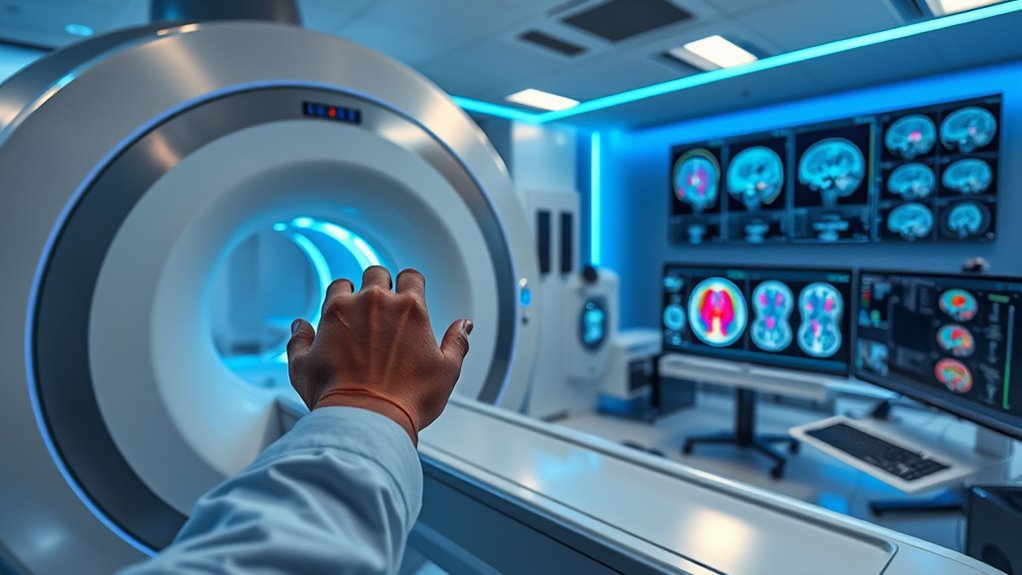
Transforming medical imaging diagnostics, computer vision has become an essential tool for improving accuracy and efficiency. You can now rely on AI systems to analyze X-rays, CT scans, and MRIs, quickly detecting abnormalities like tumors, fractures, and lesions. These tools help reduce diagnostic errors and speed up decision-making, leading to faster patient care. For instance, AI has shown a 5.7% improvement in breast cancer detection from mammograms, surpassing some human radiologists. In dermatology, AI models match or outperform dermatologists in identifying melanoma from skin images. Pathology labs use computer vision to automatically find cancerous cells in biopsy slides, saving time and increasing consistency. Automated image analysis manages large data volumes seamlessly, supporting healthcare providers in delivering more accurate, timely diagnoses. Additionally, advancements in diverse designs of imaging analysis tools have expanded the capabilities of computer vision in medical diagnostics, allowing for more tailored and effective patient assessments. This progress is facilitated by ongoing improvements in machine learning algorithms, which enhance the ability of AI systems to interpret complex medical images accurately. Furthermore, the integration of regulatory standards ensures these AI systems meet safety and efficacy requirements, fostering greater trust in clinical applications. As AI continues to evolve, integrating robust algorithms will further enhance diagnostic precision and reliability in clinical settings.
Enhancing Retail and Customer Engagement
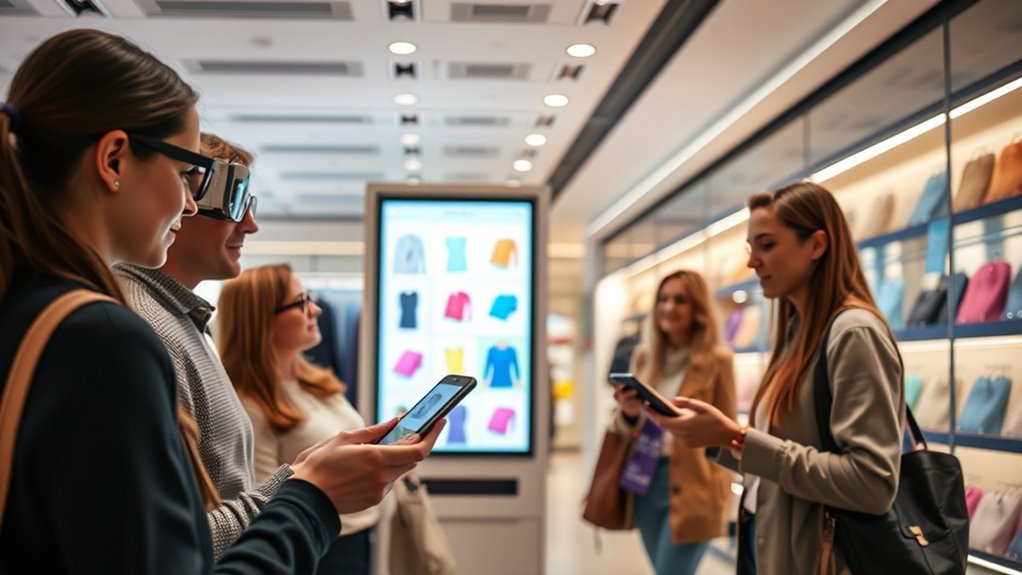
How is computer vision revolutionizing retail and customer engagement? You now experience personalized shopping like never before. Retailers use cameras to analyze customer movements, offering tailored recommendations. Augmented reality apps let you visualize products in your space before buying. Automated checkout systems identify items instantly, speeding up your shopping trip. Plus, AI tracks inventory and detects out-of-stock items seamlessly. Customer behavior analysis is also being integrated into retail environments to enhance customer experience with interactive displays and dynamic vehicle showcases. This technology is transforming retail analytics by providing real-time insights into consumer preferences and behaviors. Additionally, these advancements contribute to personalized marketing strategies, further improving customer satisfaction. The integration of computer vision enables retailers to gather detailed data, leading to more targeted and effective marketing campaigns.
Driving Innovation in Autonomous Transportation
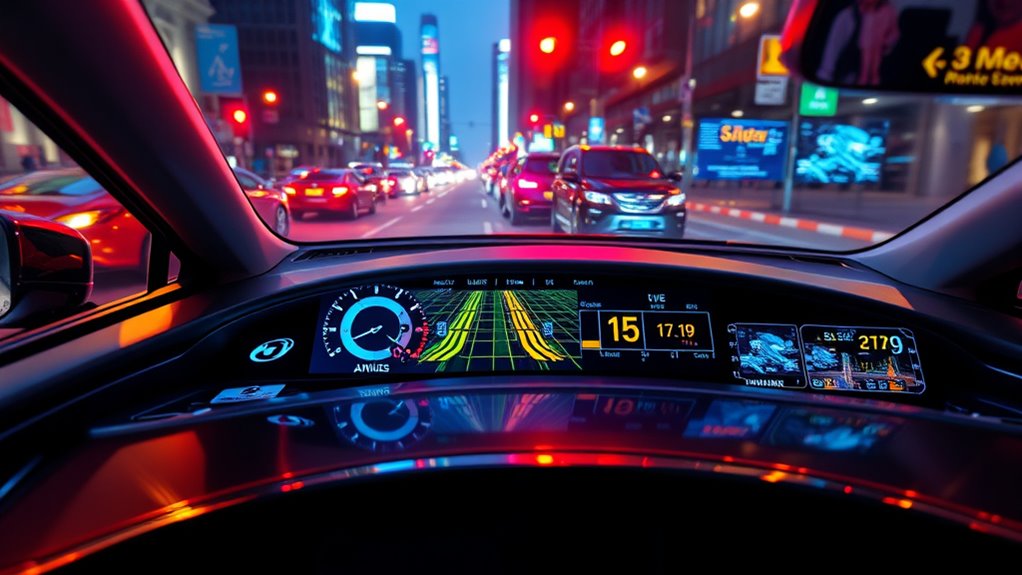
Have you ever wondered how computer vision is accelerating the development of autonomous transportation? You can see it in action through advanced object detection, lane tracking, and pedestrian recognition systems. These technologies help self-driving cars navigate complex environments safely and efficiently. By fusing vision data with LiDAR and radar, vehicles gain a more all-encompassing understanding of their surroundings, reducing accidents and improving reliability. Vision systems also enable vehicles to interpret digital traffic signs and respond to dynamic conditions in real time. Thermal imaging enhances low-light performance, allowing autonomous vehicles to operate safely at night or in adverse weather. Additionally, ongoing advancements in Honda Tuning technologies, such as ECU remapping and sensor integration, contribute to improved vehicle responses and safety features. As these innovations mature, fully autonomous taxis and trucks will become more common, transforming how we travel and transport goods. Quotes about fatherhood also emphasize the importance of love, guidance, and support in nurturing growth and confidence in future generations.
Strengthening Security and Surveillance Capabilities

Ever wonder how AI-powered vision systems are enhancing security and surveillance? They detect threats faster, improve accuracy, and operate in challenging conditions. Here’s how they’re making a difference:
- They identify suspicious behaviors and alert security teams instantly.
- Combine visual data with thermal imaging to see clearly in low-light or obscured environments.
- Reduce bias and protect privacy by blurring faces and anonymizing bystanders, while advancements in color accuracy help ensure these modifications maintain realistic visual representations.
- Automate threat detection, minimizing human error and response time.
- Ongoing research into AI vulnerabilities helps develop more robust safety measures for these systems.
- The integration of these systems with retail hours can optimize security staffing and response during peak times, further enhancing safety measures.
- The development of cybersecurity measures for vision AI systems is essential to prevent exploitation of vulnerabilities and ensure data integrity. Additionally, continuous improvements in machine learning algorithms contribute to more adaptive and reliable surveillance solutions.
These advancements enable real-time monitoring, improve safety, and optimize resource allocation. As regulations evolve, these systems become more ethical and transparent, ensuring they serve public interests while maintaining security. This evolution in vision AI is transforming how we protect spaces and people.
Revolutionizing Agriculture and Precision Farming
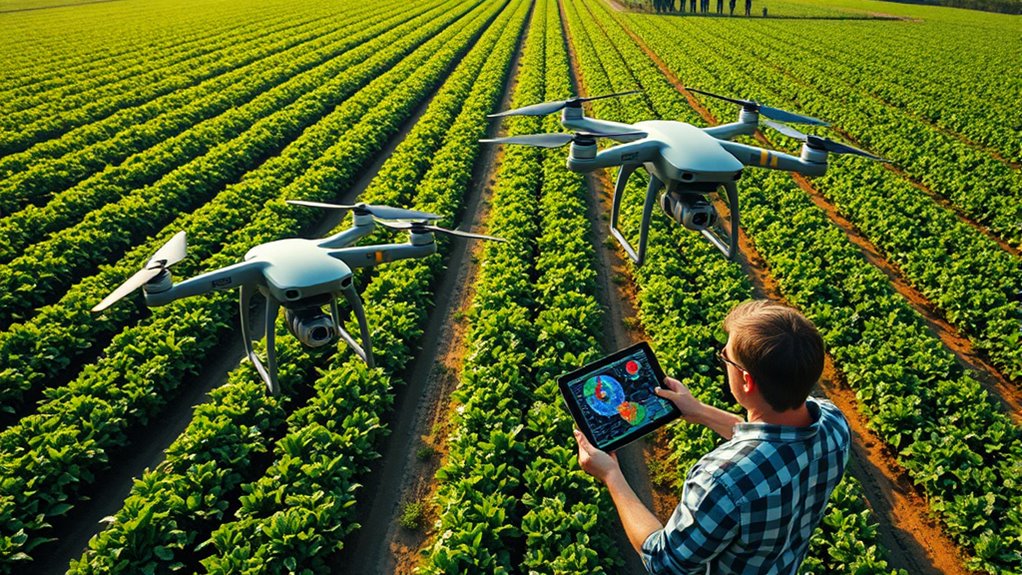
Imagine transforming traditional farming with cutting-edge technology—computer vision has become a game-changer in agriculture. You can now use drones and ground cameras to monitor crop health in real time, spotting diseases and pest infestations early. Livestock tracking systems analyze animal behavior, alerting you to health issues before they worsen. Automated harvesting robots identify ripe fruits and vegetables with precision, increasing efficiency and reducing waste. Crop yield predictions improve by analyzing visual data from aerial and ground sensors, helping you plan better resource allocation. These innovations allow for data-driven decisions, optimizing water use, fertilization, and pest control. Incorporating AI-powered data analytics can help interpret the visual data more effectively, leading to even more precise farming interventions. Additionally, Industry trends inform you about emerging technologies, ensuring you stay ahead in sustainable agriculture. Embracing sensor technology can further enhance crop monitoring accuracy, providing real-time insights to farmers. Staying informed about market dynamics can help farmers adapt quickly to changing conditions, maximizing productivity and profitability. Incorporating Gold IRA strategies can further diversify your investment portfolio, providing financial stability for future generations.
Frequently Asked Questions
How Does Computer Vision Improve Real-Time Data Analysis in Manufacturing?
Computer vision enhances real-time data analysis in manufacturing by automatically inspecting products for defects, identifying anomalies, and monitoring assembly lines continuously. You can rely on AI-driven systems to detect issues immediately, reducing downtime and ensuring quality. These systems analyze visual data instantly, enabling quick decision-making, optimizing processes, and maintaining high standards. With real-time insights, you stay ahead of problems and improve overall efficiency and productivity on the factory floor.
What Are the Privacy Concerns With Deploying Vision AI in Public Spaces?
You might worry about privacy when deploying vision AI in public spaces, fearing constant surveillance. While these systems can enhance security, they often collect sensitive data without clear consent, risking misuse or breaches. To balance safety and privacy, it’s crucial to implement strict regulations, anonymize data, and guarantee transparency. By doing so, you protect individual rights while benefiting from the security and efficiency that vision AI offers in public environments.
How Is Computer Vision Used to Monitor Environmental Changes and Climate Impact?
You can use computer vision to monitor environmental changes and climate impact by analyzing satellite and drone imagery to track deforestation, urbanization, and melting ice caps. It detects changes in vegetation, water levels, and pollution over time, providing real-time data for climate research. This technology helps you identify patterns, predict future trends, and make informed decisions for conservation efforts and climate policy.
Can Vision AI Assist in Language Translation or Multimodal Communication?
Vision AI can assist in language translation and multimodal communication by analyzing visual cues like gestures, facial expressions, and contextual objects to enhance understanding. You can use it to interpret sign language, translate visual signs, or combine visual and audio data for more accurate communication. This integration helps bridge language barriers, making interactions more natural and accessible, especially for people with speech or hearing difficulties.
What Future Trends Are Expected in the Integration of Vision AI With Other Technologies?
You’ll see vision AI seamlessly fuse with technologies like IoT, robotics, and 5G, creating a hyper-connected world that feels almost magical. This integration will revolutionize industries, enabling real-time decisions, smarter automation, and personalized experiences at an unprecedented scale. Imagine autonomous drones inspecting crops, AI-powered robots in factories, and instant, immersive AR/VR interactions—all driven by the powerful synergy of vision AI and other cutting-edge tech.
Conclusion
As you explore these advances, picture a world where computer vision acts as your vigilant eye, transforming industries and shaping the future. Like a guiding lighthouse cutting through fog, these innovations illuminate new possibilities in medicine, retail, transportation, security, and farming. Embrace this technological dawn, knowing you’re on the cusp of a revolution where machines see clearer, deeper, and smarter—lighting the way to a brighter, more connected world.