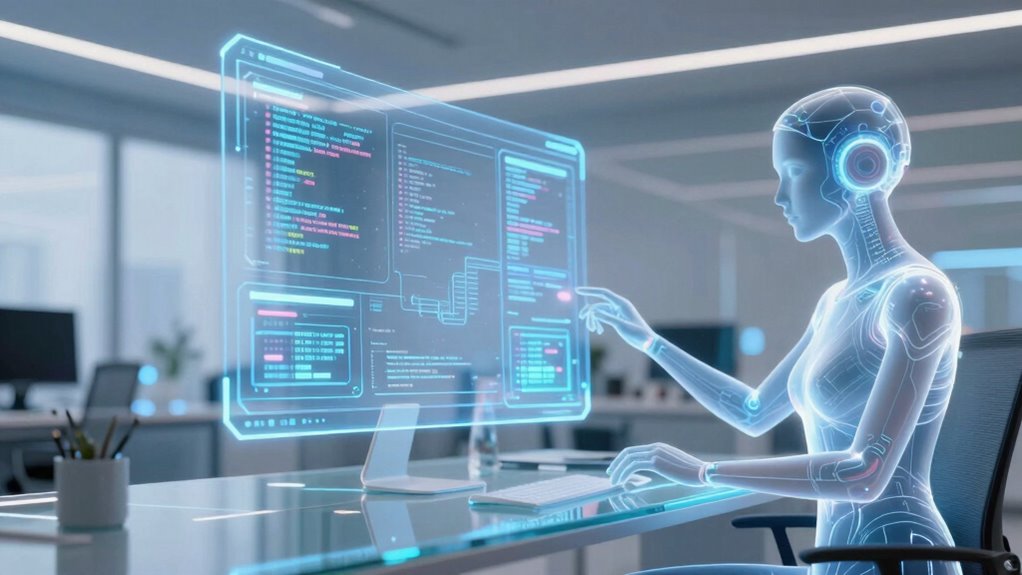

AI agents will transform your operating system into a smarter, safer partner that adapts to your habits and preferences. They personalize interfaces, optimize workspace organization, and enhance security by detecting threats early. Maintenance tasks become automatic, predicting issues before they cause problems. Security protocols tighten, and system performance improves through continuous learning. By embracing these changes, your device will become more intuitive and efficient — stay with us to explore exactly how these innovations will impact you day-to-day.

Get tech for your team delivered free — and shop member deals
- Fast, free delivery on millions of items
- Access to Prime Big Deal Days deals on October 6–7
- Prime Video, Amazon Music and more included
Key Takeaways
- AI agents enable personalized user interfaces that adapt automatically to individual preferences and behaviors.
- They enhance security by proactively detecting threats and automating response measures.
- AI-driven maintenance predicts issues and optimizes system resources, reducing downtime.
- Operating systems become more intuitive with seamless controls and real-time system health updates.
- Overall, AI agents make OS experiences smarter, safer, and more tailored to user needs.
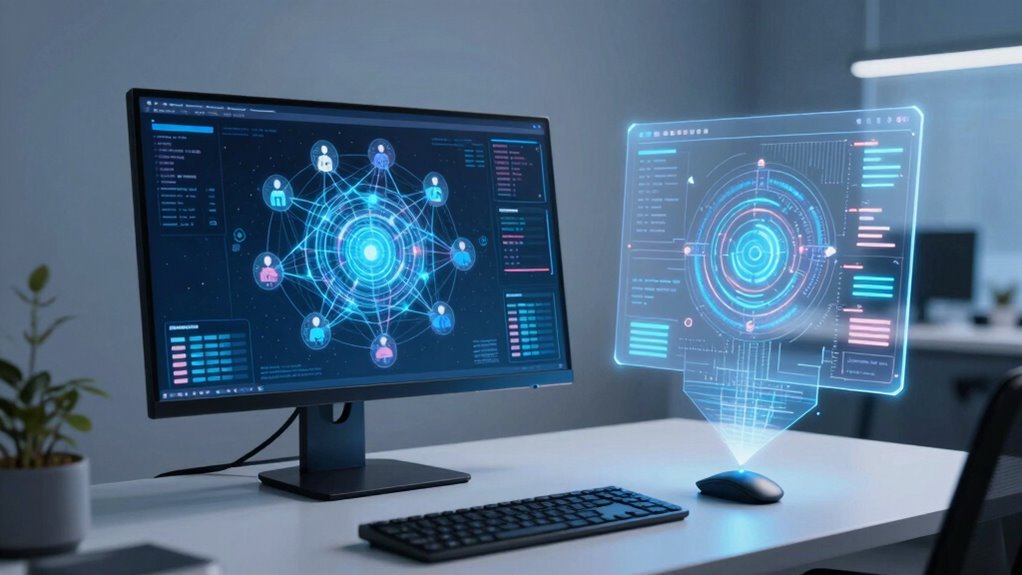
Artificial intelligence agents are transforming how operating systems function by making them more intelligent and responsive. Instead of relying solely on static commands or manual inputs, your OS begins to anticipate your needs, adapting its user interface to suit your preferences and habits. When you log in, AI-driven interfaces can personalize menus, suggest applications, or organize your workspace based on your previous interactions. This creates a seamless experience that feels intuitive and effortless. As you work, the OS learns from your behavior, adjusting notifications or display settings to optimize your productivity. All of this is possible because AI agents continuously analyze your usage patterns and make real-time adjustments, making your interaction with the system smoother and more natural. Additionally, these intelligent systems can incorporate emerging trends to further enhance functionality and user experience.
AI agents personalize and adapt your OS for a seamless, intuitive, and productive experience.
Another significant way AI agents will change operating systems is through enhanced security protocols. Traditional security measures often rely on static rules and user credentials, which can be vulnerable to evolving threats. With AI-powered security protocols, your OS can proactively detect suspicious activity and respond instantly. For example, if the system notices unusual login attempts or anomalies in your behavior, it can automatically initiate additional verification steps or isolate potential threats. This proactive security approach not only minimizes risks but also reduces the need for you to manually monitor security alerts. The AI agents provide a dynamic shield, constantly learning from new threats and updating security measures without requiring your intervention. As cyber threats grow more sophisticated, AI-enabled security ensures your data stays protected with minimal effort on your part. Real-time threat detection is becoming a critical component in modern operating systems.
Furthermore, AI agents will streamline maintenance tasks, freeing you from routine updates and troubleshooting. Instead of waiting for scheduled updates or reacting to system errors, your OS will use AI to predict and resolve issues before they impact your work. It can optimize resource allocation, close vulnerabilities, or even suggest hardware upgrades based on usage trends. This proactive management keeps your operating system running smoothly and reduces downtime. The user interface will also evolve to facilitate these new capabilities, providing clear insights into system health and security status while offering simple controls for advanced features. You won’t need to be an expert to understand or manage complex security protocols or system optimizations, as the AI handles much of this behind the scenes, presenting you with straightforward options and notifications.
In short, AI agents will make operating systems smarter, safer, and more personalized. They’ll enhance how you interact with your device, improve security defenses, and simplify maintenance. As these technologies mature, your experience will become more seamless, efficient, and tailored to your needs, allowing you to focus on your tasks without worrying about the underlying complexities.
AI-powered operating system security software
As an affiliate, we earn on qualifying purchases.
As an affiliate, we earn on qualifying purchases.
Frequently Asked Questions
How Secure Are AI Agents Within Operating Systems?
AI agents within operating systems can be quite secure, but behavioral vulnerabilities pose risks if they learn or adapt in unpredictable ways. You need to stay vigilant, updating security protocols regularly. Ethical considerations also matter, as ensuring AI acts responsibly helps prevent misuse or bias. By addressing these issues proactively, you can enhance the safety of AI agents, making them more reliable and trustworthy within your OS environment.
Will AI Agents Replace Human Developers in OS Creation?
AI agents won’t fully replace human developers in OS creation. Instead, they’ll enhance your work through autonomous coding and creative automation, handling routine tasks and generating initial code. You’ll focus more on complex problem-solving and innovative design, while AI handles repetitive elements. This collaboration accelerates development, improves accuracy, and frees you to concentrate on the strategic aspects, making the process more efficient and less error-prone.
How Do AI Agents Handle User Privacy Concerns?
Did you know that 81% of users worry about their data privacy? AI agents handle user privacy concerns by prioritizing user data protection through strict consent management. They guarantee you control what information is shared and when, actively seeking your permission before accessing sensitive data. By continuously monitoring data access and complying with privacy regulations, AI agents help maintain your trust, making privacy an integral part of your OS experience.
Can AI Agents Adapt to All Types of Operating Systems?
AI agents can adapt to many operating systems, but cross-platform compatibility varies. They often require a learning curve, especially when integrated into different environments. You might find that some AI agents work seamlessly across Windows, macOS, and Linux, while others need specific adjustments. Your success depends on the agent’s design and your willingness to learn these differences. Overall, many AI agents are increasingly versatile, but full adaptation takes effort and understanding.
What Are the Potential Risks of Relying on AI Agents?
Did you know that 60% of AI experts worry about over-reliance on autonomous decision making? Relying on AI agents poses risks like unintended actions or errors, especially when ethical considerations aren’t fully addressed. You could face security vulnerabilities, privacy issues, or loss of human oversight. It’s essential to develop strict guidelines and safeguards, ensuring AI acts responsibly and aligns with human values to avoid potentially harmful consequences.
personalized AI assistant for Windows or Mac
As an affiliate, we earn on qualifying purchases.
As an affiliate, we earn on qualifying purchases.
Conclusion
As AI agents become more integrated into operating systems, the future holds incredible possibilities—and unforeseen challenges. You might soon rely on intelligent agents that anticipate your needs before you even realize them. But with this power comes a vital question: what happens when these agents surpass our understanding? The next chapter in OS evolution is just on the horizon, and you won’t want to miss what’s coming next. The real transformation is only beginning.
system maintenance automation tools
As an affiliate, we earn on qualifying purchases.
As an affiliate, we earn on qualifying purchases.
real-time system health monitoring software
As an affiliate, we earn on qualifying purchases.
As an affiliate, we earn on qualifying purchases.
Halloween Picks
halloween
As an affiliate, we earn on qualifying purchases.