

AI is transforming assistive technologies by creating smarter prosthetics, wearables, and communication tools that adapt to your needs. These innovations help you move more naturally, communicate more effectively, and participate fully in daily life. Access to AI-powered devices like sign language translators and real-time transcription is breaking down barriers and increasing independence. As new breakthroughs emerge, you’ll discover how these tools continue to improve, making lives more accessible and empowering every step of the way.
Key Takeaways
- AI-powered assistive devices like adaptive prosthetics and smart wearables enhance mobility and independence for people with disabilities.
- Real-time translation, transcription, and communication tools bridge language and accessibility gaps.
- Inclusive design and user involvement ensure AI systems address diverse needs and reduce bias.
- Data security and privacy policies protect sensitive user information from misuse and cyber threats.
- Policy frameworks and standards promote equitable, accessible, and accountable AI assistive technologies globally.
Top picks for "assistive tech empower"
Open Amazon search results for this keyword.
As an affiliate, we earn on qualifying purchases.
Advancements in AI-Powered Prosthetics and Wearables

Recent advancements in AI-powered prosthetics and wearables are transforming mobility and independence for people with disabilities. You can now benefit from devices like BionicM’s Bio Leg, which adapts to your gait patterns, helping you move more naturally and with less fatigue. Wearables such as Ray-Ban Meta glasses use AI to deliver real-time audio descriptions, making the world more accessible if you’re visually impaired. Robotic vacuums with mechanical arms showcased at CES 2025 are now aiding those with limited mobility around their homes. Additionally, smart gloves translate sign language into speech, bridging communication gaps. These innovations are breaking down barriers, giving you greater control and freedom in daily life. AI safety measures continue to evolve to ensure that these assistive technologies remain secure and trustworthy. The integration of assistive technology development is vital for ensuring these devices meet high standards of safety and reliability.
Enhancing Communication Accessibility Through AI Technologies
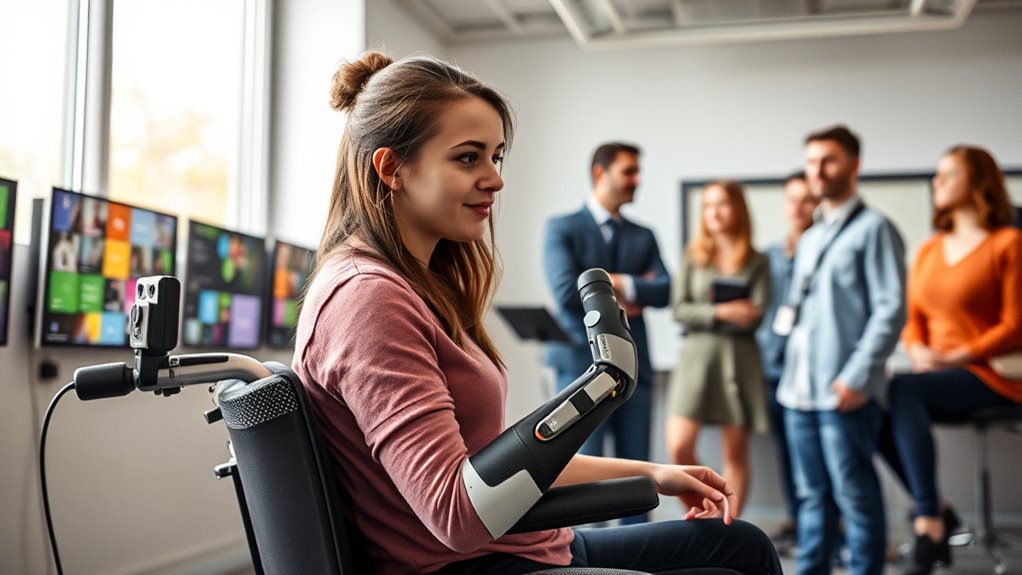
AI technologies are revolutionizing communication for people with disabilities by making interactions more accessible and seamless. You can now communicate more effectively with AI-powered tools that break down barriers. Here are three ways AI enhances communication accessibility:
- Real-time transcription and translation: Services like Otter.ai convert speech into text instantly and support multiple languages, enabling clearer communication in diverse settings. Additionally, many of these tools utilize natural language processing to improve accuracy and contextual understanding. Incorporating astrological traits into AI algorithms can personalize communication methods based on individual preferences, further enhancing user experience. Advances in automation also contribute to more consistent and reliable communication support systems.
- Smart hearing aids: Devices such as Auracast technology broadcast audio directly to hearing aids or smartphones, reducing background noise and improving understanding.
- Conversational AI and predictive text: These tools adapt to your preferences, helping with speech impairments and supporting faster, more natural conversations.
- Understanding contrast ratio in visual displays helps optimize visual communication devices for better clarity and readability.
These innovations empower you to connect more confidently and independently every day.
Transforming Education for Students With Disabilities

Transforming education for students with disabilities means leveraging innovative technologies to create more inclusive and accessible learning environments. AI-powered tools help tailor educational content to meet diverse needs, making lessons more engaging and easier to understand. For example, AI platforms can summarize complex texts, allowing students with cognitive disabilities to grasp key ideas quickly. Adaptive interfaces adjust difficulty levels based on individual progress, supporting varied learning paces. Real-time translation and transcription break language barriers, ensuring all students can participate fully. Digital assistants and navigation aids help students move confidently through school facilities and digital resources. These advancements empower students with disabilities to learn independently, build confidence, and achieve their academic goals, fostering a more equitable educational landscape for everyone. Maximize Space and Organization Additionally, integrating assistive technologies into classroom design can optimize the learning environment, making it more functional and accommodating for diverse needs. Moreover, leveraging AI security ensures that sensitive student data remains protected as these technologies are implemented.
Ethical Challenges and Risks in AI Assistive Devices

You need to ensure how bias and discrimination can creep into AI assistive devices, potentially reinforcing stereotypes or creating new barriers. Privacy and data security are also critical, as sensitive information must be protected from misuse or breaches. Addressing these ethical challenges is essential to ensure AI tools truly serve and empower all users without unintended harm. Incorporating ethical frameworks into development processes can help identify and mitigate ethical concerns proactively.
Bias and Discrimination Risks
Despite the promise of assistive devices powered by AI, there’s a significant risk that biases embedded in algorithms can lead to discrimination. These biases often stem from incomplete or skewed training data, causing AI to make unfair assumptions about users’ abilities or needs. You might encounter scenarios where an AI system favors certain disabilities over others, or unintentionally reinforces stereotypes. To understand this better:
- Algorithms may reflect societal biases, leading to unequal treatment of users based on disability type or background.
- Training data gaps can result in devices that don’t work effectively for all users, creating new barriers.
- Discriminatory outcomes may go unnoticed without ongoing review, risking unfair exclusion or misrepresentation.
- Ensuring inclusive design and diverse data collection is essential to mitigate these risks and promote fairness.
- Regular bias assessments of AI systems can help identify and correct unfair tendencies before they impact users. Additionally, understanding the role of training data diversity is crucial in developing equitable assistive technologies. Moreover, implementing feedback mechanisms from diverse user groups can help identify unforeseen biases early in the deployment process. Incorporating algorithm transparency can also enable stakeholders to better understand how decisions are made and ensure accountability.
Being aware of these risks helps you advocate for fair, inclusive AI solutions.
Privacy and Data Security
As AI-powered assistive devices become more integrated into daily life, concerns about privacy and data security grow. You store sensitive health and personal information that, if mishandled, could lead to breaches or misuse. These devices often transmit data to cloud servers, making them vulnerable to hacking. To understand the risks, consider this table:
| Data Type | Potential Threats |
|---|---|
| Personal health info | Unauthorized access, identity theft |
| Location data | Stalking, privacy invasion |
| Usage patterns | Profiling, discrimination |
| Communication logs | Eavesdropping, data leaks |
| Biometric data | Identity theft, false identification |
Protecting your data requires strict security protocols, transparent policies, and user control over data sharing. Implementing encryption software and hardware solutions is essential to safeguard sensitive information and mitigate security risks. Without these safeguards, your privacy and safety remain at risk, especially considering the increasing sophistication of cyber threats targeting connected devices.
Designing Inclusive and Universal AI Systems

Designing inclusive and universal AI systems requires intentionally embedding accessibility features from the outset rather than as afterthoughts. You should prioritize creating adaptable interfaces that serve diverse needs, ensuring barriers are minimized for all users. To achieve this, consider these key steps:
Embed accessibility from the start to create inclusive, adaptable AI systems for all users.
- Involve People with Disabilities: Incorporate their feedback during design, testing, and development to identify real-world challenges, ensuring the system addresses a broad range of needs.
- Adopt Universal Design Principles: Build systems that are usable by everyone, regardless of ability, without special accommodations.
- Embed Accessibility Data: Ensure training data includes diverse user scenarios, reducing bias and improving system responsiveness. Incorporating diverse datasets can significantly enhance system inclusivity and performance.
- Consider diverse mobility options, such as Electric Bikes, to inform inclusive mobility solutions within AI systems. Incorporating insights from Yoga practices, which emphasize adaptability and mindfulness, can further enhance the development of inclusive AI interfaces. Additionally, understanding the Vetted – Mother Baby Kids standards can help ensure AI tools provide appropriate support for caregivers and families.
Policy Frameworks Supporting Disability-Inclusive AI Development

You need to understand how inclusive design mandates guarantee AI systems serve everyone effectively. Data accessibility standards make certain that training data reflects diverse user needs, reducing bias. Accountability and oversight frameworks hold developers responsible for creating ethical, disability-inclusive AI solutions. Additionally, integrating universal design principles into AI development ensures accessibility benefits are embedded from the outset. Incorporating inclusive design mandates ensures that AI systems are built with diverse user needs in mind from the beginning. Moreover, establishing Data accessibility standards helps ensure that datasets used for training AI are representative and inclusive of different user experiences.
Inclusive Design Mandates
Why are inclusive design mandates crucial for advancing disability-inclusive AI development? They ensure AI products are accessible, equitable, and usable by everyone from the start. Without these mandates, developers might overlook diverse needs, reinforcing barriers rather than breaking them down. Implementing clear policies compels designers to prioritize accessibility and consider user feedback early.
Here are three key points:
- Mandates set minimum accessibility standards, guiding developers to create inclusive solutions.
- They promote user involvement, ensuring AI systems meet real-world needs of people with disabilities.
- Mandates foster accountability, encouraging ongoing evaluation and updates to address emerging challenges.
Data Accessibility Standards
Establishing robust data accessibility standards is essential to guaranteeing AI systems serve people with disabilities effectively. You need clear guidelines on collecting, storing, and sharing data that reflect diverse user needs. These standards ensure AI models are trained on inclusive datasets, reducing bias and improving accuracy for all users. When data is accessible, developers can create assistive tools that better adapt to individual disabilities, such as visual or hearing impairments. You also need policies that mandate transparency about data sources and handling practices, fostering trust and accountability. Ensuring data interoperability across platforms allows seamless integration of assistive technologies. Ultimately, strong data accessibility standards support innovation, promote equality, and help deliver AI solutions that genuinely empower people with disabilities.
Accountability and Oversight
Effective accountability and oversight are essential to ensuring AI systems serve people with disabilities fairly and responsibly. Without proper checks, AI can reinforce biases or create new barriers. To promote inclusive AI development, you should focus on three key actions:
- Develop clear legal frameworks that mandate transparency, fairness, and non-discrimination in AI systems designed for disabilities.
- Engage diverse stakeholders, including disability communities, in the design, testing, and oversight processes to ensure their needs are prioritized.
- Implement continuous monitoring and auditing of AI tools to identify and rectify biases or ethical concerns promptly.
Emerging Trends in AI-Driven Assistive Innovations

Emerging trends in AI-driven assistive innovations are transforming how you access support and enhance independence. AI-powered prosthetics, like BionicM’s Bio Leg, adapt to your gait, reducing fatigue and improving mobility. Wearables such as Ray-Ban Meta glasses provide real-time audio descriptions for visually impaired users, offering greater environmental awareness. Robotic vacuums with mechanical arms, showcased at CES 2025, assist those with limited mobility around the house. Smart gloves now translate sign language into speech, bridging communication gaps for deaf users. Tactile 3D screens, like Samsung’s Bulging TV, combine AI with haptic feedback to create sensory experiences. These innovations are making assistive devices more intuitive, responsive, and tailored to your needs, paving the way for more inclusive and accessible technology.
The Role of AI in Promoting Independence and Mobility

AI-driven innovations are transforming how you achieve greater independence and mobility. These technologies adapt to your needs, making daily tasks easier. For example:
- AI-powered prosthetics like BionicM’s Bio Leg adjust to your gait, reducing fatigue and increasing stability.
- Smart navigation tools, including AI-enabled mobility scooters, help you find routes and avoid obstacles in real-time.
- Wearables with AI, such as smart glasses or haptic feedback devices, guide visually or hearing-impaired users, enhancing spatial awareness and communication.
These advances enable you to move more freely, participate actively in your community, and perform tasks confidently. As AI continues to improve, your independence becomes more accessible, empowering you to live life on your terms.
Future Directions for Inclusive AI and Assistive Technologies
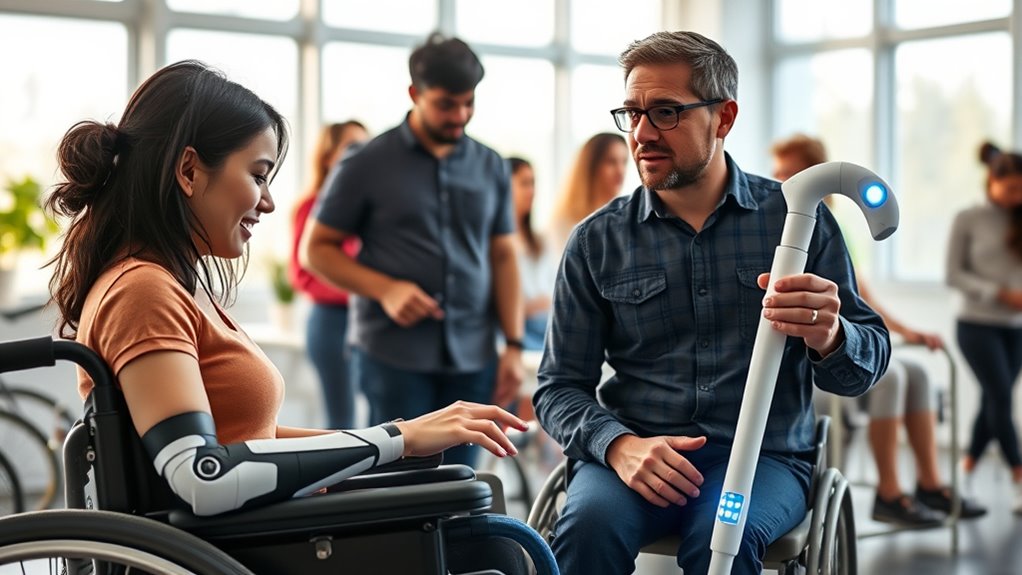
As technology continues to advance, the future of inclusive AI and assistive devices lies in seamless integration and personalized support. You can expect AI assistants that quickly scan and process information, delivering instant answers to your questions in under two seconds. Wearables and prosthetics will become smarter, adapting in real time to your movements and needs, enhancing independence. Emerging innovations will merge AI with tactile feedback, audio streaming, and real-time translation, broadening accessibility. You’ll benefit from AI-powered tools that are more intuitive, efficient, and tailored to your specific challenges. Integration across platforms will create cohesive support systems, reducing barriers and empowering you to navigate daily life more confidently. The focus will be on making assistive tech more responsive, effective, and seamlessly embedded into your routines.
Frequently Asked Questions
How Do AI Assistive Devices Ensure User Privacy and Data Security?
You can trust AI assistive devices to protect your privacy by using strong encryption and secure data storage. They often anonymize your information and follow strict privacy policies to prevent unauthorized access. Regular updates and security audits help identify vulnerabilities, while user control features let you manage what data is shared. Manufacturers prioritize your confidentiality, ensuring your sensitive information stays safe as you benefit from assistive technology.
What Are the Costs and Accessibility Options for Ai-Powered Assistive Technologies?
You might find that AI-powered assistive technologies can be costly initially, but many options now offer affordable or subsidized plans. Some devices are covered by insurance or government programs, making them more accessible. To guarantee you get the best fit, explore community resources and non-profit organizations that often provide discounted or free devices. Staying informed about new funding opportunities can help you access these life-changing tools more easily.
How Are AI Systems Tested for Unbiased and Equitable Performance Across Disabilities?
You can guarantee AI systems are unbiased and equitable by involving people with diverse disabilities in testing. They provide invaluable feedback on real-world performance, helping identify biases or gaps. Developers should also use diverse datasets and rigorous validation processes to detect and eliminate stereotypes or inaccuracies. Regularly reviewing and updating the AI, based on user input, guarantees the system remains inclusive, fair, and effective for all users.
What Measures Are in Place to Prevent Reliance on AI at the Expense of Human Support?
You might worry about AI replacing human support, but measures are in place to prevent that. Policies encourage blending AI with human assistance, guaranteeing personalized care remains central. Regular audits identify over-reliance on automation, while training emphasizes human judgment’s irreplaceable value. Collaboration with disability communities guides ethical AI use, keeping human support essential. This balance safeguards dignity and ensures technology enhances, not replaces, human connection.
How Can People With Disabilities Participate in the Development of AI Assistive Tools?
You can participate in developing AI assistive tools by sharing your experiences and needs with developers, joining advocacy groups, and providing feedback during testing phases. It’s essential to be part of the design process, ensuring your perspectives shape new features. Collaborate with researchers and companies, attend workshops, and advocate for inclusive policies. Your input helps create more effective, accessible AI solutions that truly serve your community’s diverse needs.
Conclusion
As you explore the evolving world of AI and assistive tech, remember that each breakthrough opens new possibilities—and new questions. Will future innovations fully break down barriers or introduce unforeseen challenges? The journey toward truly inclusive technology is ongoing, and the next leap could change everything. Stay tuned, because what’s coming next might just redefine independence and accessibility in ways you never imagined. The future of assistive AI is waiting to be revealed—are you ready?