

AI infrastructure has become a geopolitical story because nations are investing heavily to secure economic and strategic dominance. Controlling data centers, networks, and hardware allows countries to influence global norms, shape future industries, and boost sovereignty. This race impacts international power, diplomacy, and standards. If you stay informed, you’ll discover how these technological advantages are transforming global influence and how the competition for AI infrastructure shapes our world’s future.

Get business pricing on tech for your team
- Business-only prices and quantity discounts
- Tax-exempt purchasing
- Multiple users, one account, clear invoices
Key Takeaways
- Nations are investing heavily in AI infrastructure to secure strategic dominance and influence global technological standards.
- Control over AI infrastructure enhances a country’s geopolitical power and ability to shape international norms.
- The development of advanced hardware and high-speed networks has become a critical element of national security.
- AI infrastructure investments serve as diplomatic tools, signaling strength and fostering alliances.
- The race for AI infrastructure determines future global influence, security, and sovereignty.
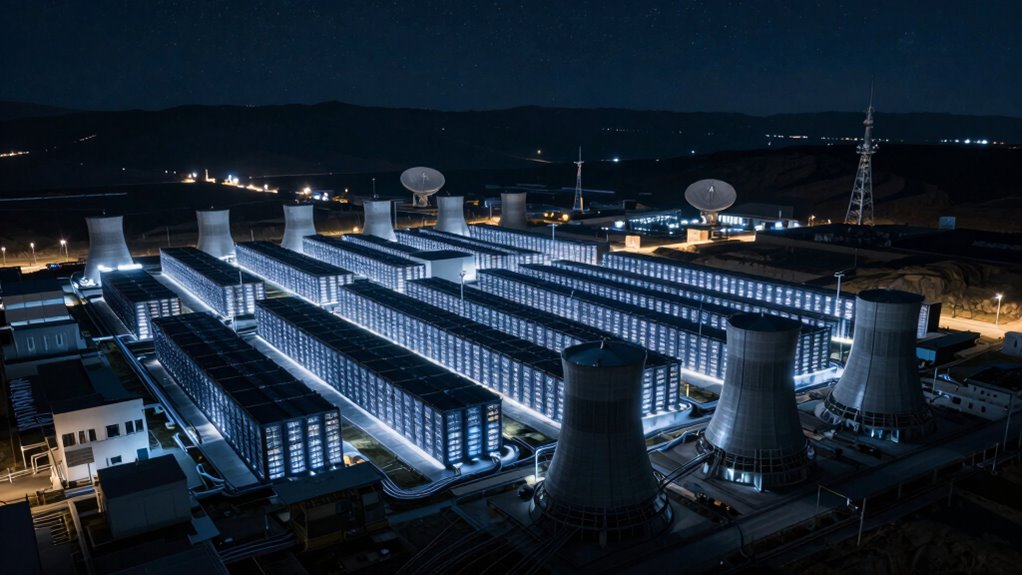
Across the globe, nations are racing to build the AI infrastructure that will define economic and strategic dominance in the coming decades. This effort isn’t just about technological advancement; it’s about securing a position in the global hierarchy. When you consider the race for AI infrastructure, it’s clear that achieving technological dominance is central. Countries that lead in AI capabilities will shape the future of industries, security, and innovation. Building robust AI infrastructure—powerful data centers, high-speed networks, and advanced hardware—becomes a strategic move to outpace rivals. It’s no longer enough to develop AI algorithms; the infrastructure supporting these systems becomes a critical asset. This shift transforms AI from a technological pursuit into a geopolitical battleground.
Building AI infrastructure is a strategic move shaping global power and technological dominance.
Your country’s success hinges on how well you can integrate AI into your diplomatic strategy. Leaders recognize that controlling AI infrastructure grants influence beyond borders. It’s a tool to foster alliances, set standards, and even exert economic pressure. Countries with advanced AI infrastructure can shape global norms and secure their interests more effectively. For instance, by investing in AI-driven communication networks, you can strengthen diplomatic ties and project power. Conversely, falling behind in AI infrastructure risks marginalization, making you dependent on others’ technologies and standards. The competitive landscape now involves not just military or economic strength but also control over the digital backbone of AI systems.
This intertwining of AI and geopolitics means that infrastructure investments serve dual purposes. They’re about boosting internal capabilities and signaling strength to the world. When you prioritize AI infrastructure, you’re fundamentally establishing a foundation for future technological sovereignty. It’s about ensuring your voice remains influential as AI becomes embedded in global commerce, security, and governance. Nations with the most advanced infrastructure can set the rules of AI engagement, influencing international policies and standards. The importance of high-performance hardware and reliable networks cannot be overstated in this context. Additionally, investing in cybersecurity measures is crucial to protect these vital assets from cyber threats and sabotage. This strategic positioning transforms infrastructure from a technical concern into a core element of diplomatic strategy.
In addition, the development of AI infrastructure is closely linked to the broader concept of digital sovereignty, which emphasizes a nation’s control over its digital assets and infrastructure. This strategic positioning transforms infrastructure from a technical concern into a core element of diplomatic strategy.
In essence, the development of AI infrastructure is a reflection of broader geopolitical ambitions. It’s a strategic chess move, where controlling the digital backbone translates into power and influence. As you watch this race unfold, remember that the outcomes will shape the global order for decades. Building AI infrastructure isn’t just a matter of technology—it’s about securing your place on the world stage, asserting technological dominance, and crafting a diplomatic strategy that ensures your country’s future influence and security.
high-performance data center servers
As an affiliate, we earn on qualifying purchases.
As an affiliate, we earn on qualifying purchases.
Frequently Asked Questions
How Does AI Infrastructure Impact Global Economic Power Dynamics?
AI infrastructure shapes global economic power by enabling countries to pursue global dominance in technology and innovation. When you invest in advanced AI systems, you strengthen your country’s competitive edge, influencing trade and economic influence. Forming technological alliances becomes essential, as collaboration amplifies resources and expertise. This dynamic shifts power, making countries with superior AI infrastructure more influential in shaping international policies, markets, and technological standards worldwide.
What Are the Environmental Implications of Expanding AI Infrastructure?
Expanding AI infrastructure markedly spikes energy consumption, leaving a hefty environmental footprint. You might notice data centers demanding immense power, often relying on non-renewable resources, which worsens climate change. As AI infrastructure grows, so does the strain on ecosystems, leading to increased carbon emissions and resource depletion. To mitigate this, embracing sustainable solutions and optimizing energy efficiency become essential, helping balance technological progress with protecting our planet’s health.
How Do International Regulations Influence AI Infrastructure Development?
International regulations, like treaties, profoundly influence your AI infrastructure development by setting standards and restrictions. Data sovereignty laws, for example, require you to store and process data within specific borders, affecting where and how you build your systems. These rules can slow down progress, increase costs, or force you to adapt your infrastructure to comply with various countries’ policies, shaping the global landscape of AI development.
What Are the Cybersecurity Risks Associated With AI Infrastructure?
Imagine your AI infrastructure as a delicate web of interconnected lights, vulnerable to sudden blackouts. Cybersecurity risks, like data privacy breaches and cyber vulnerabilities, threaten this web’s stability. Hackers can exploit weaknesses, steal sensitive data, or disrupt operations. You must fortify your defenses, regularly patch vulnerabilities, and monitor for intrusions to keep your AI systems resilient against evolving cyber threats, safeguarding your data and maintaining trust.
How Does AI Infrastructure Affect Global Technological Sovereignty?
AI infrastructure influences your country’s technological sovereignty by emphasizing data localization, which guarantees sensitive data stays within borders, reducing reliance on foreign entities. It also demands infrastructure resilience, so your nation can maintain AI operations amid cyber threats or geopolitical conflicts. By developing autonomous, secure AI systems, you strengthen control over technology, safeguarding your sovereignty and fostering independence in global digital ecosystems.
As an affiliate, we earn on qualifying purchases.
Conclusion
As you see, AI infrastructure isn’t just about technology; it’s the new battleground shaping global power, like a chess game played on a massive, invisible board. Countries are racing to build the fastest, most advanced systems, knowing that whoever controls these digital highways holds the key to influence and dominance. Staying aware of these shifts helps you understand a world where AI infrastructure is the new geopolitical currency, changing the game faster than you can blink.
As an affiliate, we earn on qualifying purchases.
As an affiliate, we earn on qualifying purchases.
Halloween Picks
halloween
As an affiliate, we earn on qualifying purchases.