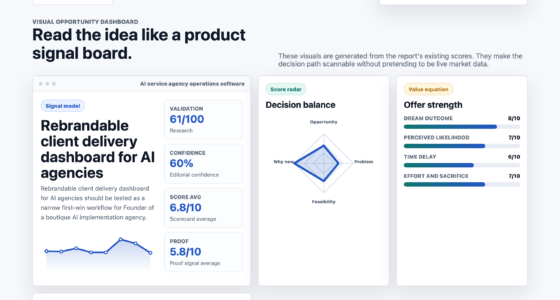

📊 Full opportunity report: Capital: The Lever Beneath the Levers on ThorstenMeyerAI.com — validation score, market gap, and execution plan.
TL;DR
In 2026, major AI companies like SpaceX, Anthropic, and OpenAI are going public with valuations totaling around $4 trillion, revealing how capital flows shape AI development. This funding cycle creates risks of market fragility due to circular investments and heavy debt.
In June 2026, SpaceX’s xAI listed on the Nasdaq at a valuation near $1.77 trillion, and Anthropic and OpenAI are preparing for public offerings valued at hundreds of billions each. These listings mark the culmination of a wave of private AI valuations exceeding $4 trillion, highlighting how capital allocation underpins AI infrastructure growth and the risks associated with this concentrated funding.
Over the past year, three of the most valuable private AI companies—SpaceX’s xAI, Anthropic, and OpenAI—have transitioned into public markets, raising significant capital. SpaceX’s xAI IPO alone was oversubscribed several times, with a valuation approaching $1.77 trillion, briefly making it the world’s first trillion-dollar company. Meanwhile, Anthropic and OpenAI are expected to list later in 2026, with valuations estimated at $965 billion and between $730 billion and $850 billion, respectively. These listings are part of a broader cycle where private risk is transferred to the public, with insiders cashing out billions before retail investors join.
The flow of capital reveals a complex, circular pattern: tech giants like Microsoft, Amazon, and Google funnel money into Nvidia, which supplies AI chips, while Nvidia invests back into AI startups. Microsoft’s investments in OpenAI are partly made through Azure credits, and Amazon’s support for Anthropic is via AWS credits—creating a self-reinforcing loop. This circularity inflates demand and risks mispricing capacity, making the entire system vulnerable to shocks. Notably, Microsoft has recently reduced its commitments to OpenAI’s compute needs, signaling caution amid an overheated cycle.
Capital: The Lever Beneath the Levers
Every chokepoint costs money — so whoever can fund the buildout decides who builds at all. In 2026 the bill came due in public: a trillion-dollar IPO wave, financed by a circle of firms paying each other, now sold to everyone else.
The meta-chokepoint: it gates the other five, because you can’t build any of them without clearing the capital bar. A synchronized machine has no natural brake — no one can slow first — and the IPO wave moves the risk to the public as insiders take gains. The hedge is solvency that doesn’t depend on the music playing: sane burn, own what’s cheap, self-host where you can.
Why AI Funding Cycles Pose Systemic Risks
The concentration of AI valuations and the circular flow of capital create systemic vulnerabilities. Heavy debt financing, coupled with demand that remains weak outside a small paying base, increases the risk of a market correction. If demand falters or if major players slow spending, the entire AI infrastructure—worth hundreds of billions—could face a sudden downturn. This fragility extends beyond tech, impacting broader financial markets as AI companies now dominate stock indices. The current cycle, driven by liquidity and greed, could unravel quickly, with repercussions for the wider economy.

Compiler Engineering for AI Hardware: MLIR, TVM, XLA, and Custom Backends for Neural Network Accelerators (AI Infrastructure, Hardware & Compiler Engineering Series)
As an affiliate, we earn on qualifying purchases.
As an affiliate, we earn on qualifying purchases.
The 2026 AI Valuation Surge and Funding Dynamics
Leading up to 2026, private AI valuations surged as companies like SpaceX’s xAI, Anthropic, and OpenAI attracted record investments. These firms have transitioned into public markets amid a wave of IPOs, with valuations reaching trillions of dollars. The cycle is characterized by a transfer of risk from early investors to the public, facilitated by a network of corporate and financial flows that reinforce each other. This pattern echoes previous tech bubbles but is amplified by the high stakes and strategic importance of AI infrastructure.
Meanwhile, established tech giants continue to pour money into Nvidia and cloud services, fueling the circular demand. Recent signals of caution, such as Microsoft’s reduced commitments, indicate that the cycle may be nearing a turning point, but widespread optimism persists due to abundant liquidity and market complacency.
“There is more greed than fear right now, and liquidity remains abundant, but that could change rapidly if market sentiment shifts.”
— Goldman Sachs executive

Digital Technology 360°: Leverage technology to build a secure and sustainable digital future (English Edition)
As an affiliate, we earn on qualifying purchases.
As an affiliate, we earn on qualifying purchases.
Unclear Risks and Potential Market Reversals
It remains uncertain how deeply the current valuations are disconnected from actual demand outside the tech sector, and whether a slowdown in spending by key players like Microsoft will trigger a broader correction. The extent of the impact from potential shocks in private credit markets or a decline in AI adoption is still developing, and market reactions could accelerate rapidly if confidence erodes.

Practical Deep Learning for Cloud, Mobile, and Edge: Real-World AI & Computer-Vision Projects Using Python, Keras & TensorFlow
As an affiliate, we earn on qualifying purchases.
As an affiliate, we earn on qualifying purchases.
Next Steps in Monitoring AI Market Stability
Investors and regulators will closely watch upcoming public listings, especially those of OpenAI and Anthropic, for signs of valuation adjustments. Additionally, any shifts in corporate spending—such as Microsoft’s recent caution—will signal whether the cycle is cooling or overheating. Market analysts will also scrutinize private credit markets, which fund much of the infrastructure buildout, for signs of stress that could precipitate a wider downturn.

AI Strategy: Unleash the Power of Artificial Intelligence in Your Business
As an affiliate, we earn on qualifying purchases.
As an affiliate, we earn on qualifying purchases.
Key Questions
Why are AI valuations so high in 2026?
Valuations are driven by a combination of private investments, strategic corporate backing, and expectations of future AI dominance, creating a cycle of self-reinforcing demand that inflates perceived value.
What risks does the current funding cycle pose to the broader economy?
The heavy debt financing and circular demand make the AI infrastructure vulnerable to shocks, which could trigger a broader market correction if demand weakens or if key players slow spending.
How does the circular flow of capital impact AI development?
It accelerates growth by reinvesting profits into the same ecosystem, but also creates fragility because demand and capacity can become misaligned, increasing systemic risk.
What signals might indicate a turning point in the market?
Reduced commitments from major players like Microsoft, declining valuations in upcoming IPOs, or tightening private credit markets could signal a slowdown or correction.
Who controls the main capital chokepoint in AI funding?
The largest tech firms—Microsoft, Amazon, and Google—hold the key leverage, as their investment decisions directly influence the flow and valuation of AI infrastructure.
Source: ThorstenMeyerAI.com