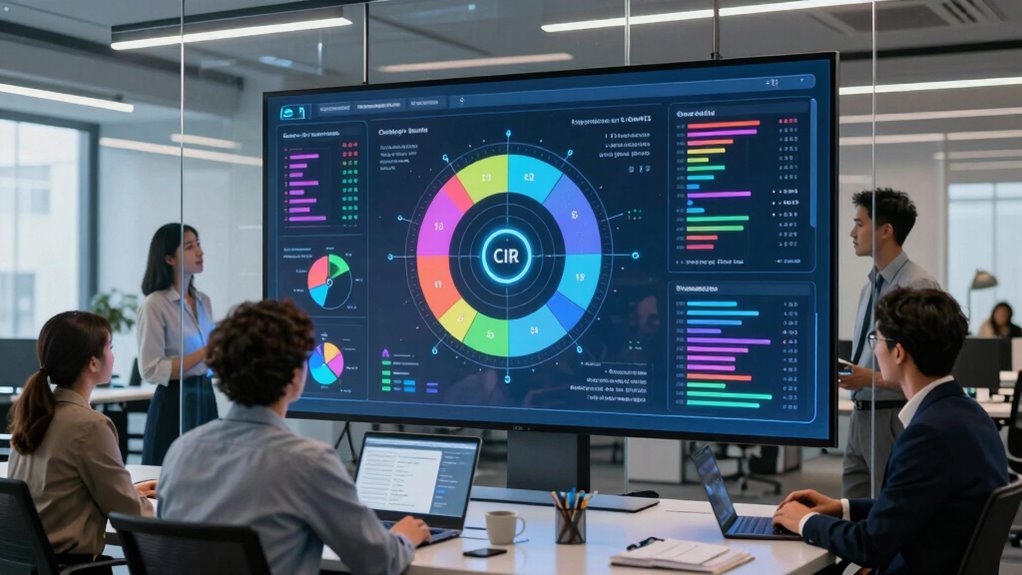

AI is transforming HR skills mapping and workforce planning by providing real-time insights into employee capabilities through analyzing large data sets. It helps you identify skill gaps quickly and anticipate future workforce needs with predictive analytics. You can proactively plan roles, personalize development, and reduce talent shortages. AI also assists in understanding evolving skill trends, keeping your organization agile and future-ready. Stay with us to uncover how these tools can boost your HR strategies even further.

Get business pricing on tech for your team
- Business-only prices and quantity discounts
- Tax-exempt purchasing
- Multiple users, one account, clear invoices
Key Takeaways
- AI analyzes large data sets to accurately identify critical skills and workforce gaps, enabling targeted development.
- Predictive analytics forecast employee turnover and future skill needs, supporting proactive workforce planning.
- Real-time insights into employee capabilities facilitate personalized training and continuous skill monitoring.
- AI visualizes workforce trends, helping organizations prepare for emerging roles and evolving skill requirements.
- HR functions become strategic and data-driven, improving engagement, retention, and organizational agility.
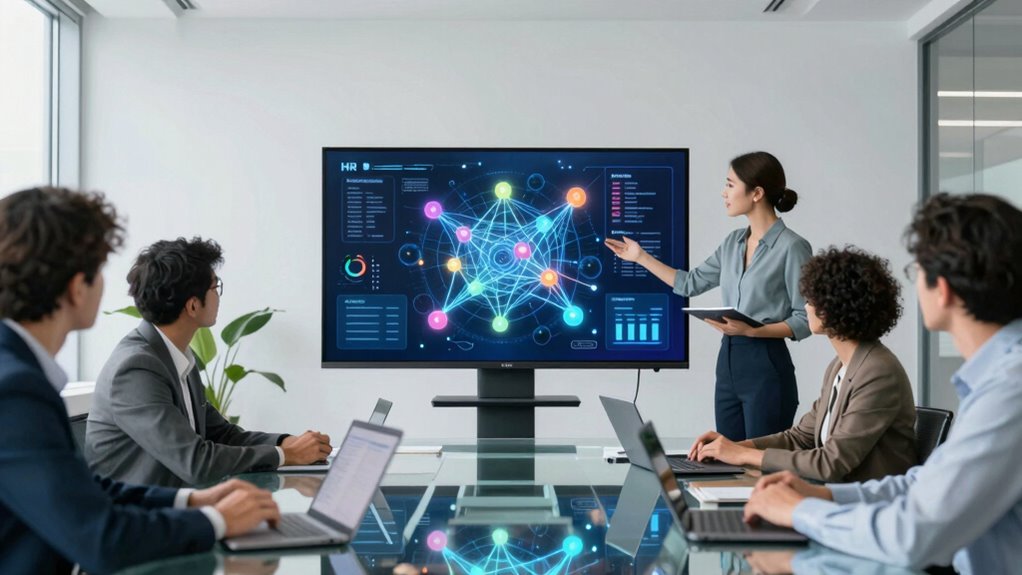
Artificial Intelligence is transforming how HR professionals identify and develop skills within organizations. With AI-powered tools, you can now analyze vast amounts of data to pinpoint the skills most critical for your company’s success. This shift allows you to move beyond traditional methods, which often relied on subjective assessments or limited performance reviews. Instead, AI provides real-time insights into employee capabilities, helping you understand where your workforce stands and what areas need improvement. As a result, you can create more targeted training programs that foster employee engagement, making staff feel valued and invested in their growth. Moreover, AI enhances talent retention by enabling you to predict potential turnover risks accurately. By analyzing patterns in employee data—such as engagement levels, work performance, and even external factors—AI can flag individuals who might be considering leaving. This early warning system allows you to intervene proactively, offering personalized development opportunities or addressing concerns before they escalate. When employees feel understood and supported through tailored growth paths, they’re more likely to stay with your organization. AI-driven workforce planning also helps you identify skill gaps across departments, ensuring you’re not just filling roles but strategically aligning talent to future needs. This proactive approach reduces the risk of skill shortages and keeps your organization agile in a competitive landscape. Additionally, integrating skills mapping with other HR strategies can optimize talent deployment and development efforts. As AI continues to evolve, it’s reshaping how you approach skills mapping by providing dynamic, data-driven insights. Instead of relying solely on annual reviews or gut instincts, you can continuously monitor skill development and adjust your strategies on the fly. This agility allows you to respond to market changes swiftly, ensuring your team remains capable and adaptable. Furthermore, understanding the natural beauty of your workforce and its potential can help you craft a more inclusive and holistic development environment. Incorporating predictive analytics enables organizations to better anticipate future skill needs and workforce trends, making planning more precise and effective. Additionally, AI helps you visualize workforce trends over time, enabling better succession planning and leadership development. As the demand for specialized roles like AI Ethicist Jobs grows, organizations can better prepare by cultivating relevant skills and expertise. By understanding the evolving skills landscape, you can build a resilient talent pipeline that supports your company’s long-term objectives. Leveraging emerging trends in AI and HR technology can also keep your organization ahead of competitors and foster a culture of innovation.
AI-driven insights revolutionize skill development, boosting engagement and fostering a motivated, future-ready workforce.
In essence, AI is not just a tool but a strategic partner in transforming HR functions. It empowers you to foster a culture of continuous learning, improve employee engagement, and retain top talent—ultimately driving organizational success. By leveraging AI for skills mapping and workforce planning, you position your organization at the forefront of innovation, ensuring you’re prepared for whatever the future holds.
AI-powered skills mapping software
As an affiliate, we earn on qualifying purchases.
As an affiliate, we earn on qualifying purchases.
Frequently Asked Questions
How Does AI Identify Hidden Skill Gaps in Employees?
AI analyzes employee data, such as performance metrics and engagement levels, to spot hidden skill gaps you might overlook. It compares individual skills with job requirements, highlighting areas needing development. By identifying these gaps early, you can boost employee engagement and improve talent retention. This proactive approach helps you tailor training programs, ensuring your workforce stays skilled, motivated, and aligned with your organization’s evolving needs.
Can AI Predict Future Workforce Skill Requirements Accurately?
AI, through predictive analytics and talent forecasting, can often predict future workforce skill requirements with a good degree of accuracy. You can analyze historical data and current trends to identify upcoming skill needs, enabling proactive training and hiring strategies. While predictions aren’t foolproof, AI’s ability to adapt and learn from evolving data makes it a valuable tool for planning your workforce’s future capabilities effectively.
What Ethical Concerns Arise With AI in Skills Mapping?
You should be aware that AI in skills mapping raises ethical concerns like data privacy and algorithm bias. When AI processes personal data, there’s a risk of exposing sensitive information if security isn’t tight. Additionally, biased algorithms can lead to unfair assessments, affecting employees’ career growth. To address these issues, you must guarantee transparent data handling and regularly audit algorithms for fairness, promoting ethical AI use in workforce planning.
How Does AI Personalize Employee Development Plans?
You might be surprised to learn that 78% of employees prefer personalized learning experiences. AI tailors employee development plans by analyzing individual skills, learning styles, and career goals. It uses personalization strategies to recommend targeted training and create customized learning pathways, ensuring growth aligns with each person’s strengths and aspirations. This approach boosts engagement, accelerates skill acquisition, and helps you build a more capable, motivated workforce.
What Challenges Exist in Implementing Ai-Driven HR Tools?
You might face challenges with AI-driven HR tools, especially around data privacy and bias mitigation. Ensuring sensitive employee data stays protected requires robust security measures. Additionally, addressing bias in algorithms is essential to prevent unfair treatment and promote diversity. Implementing these tools demands careful planning, ongoing monitoring, and transparency to navigate legal, ethical, and technical hurdles effectively, making sure the technology benefits everyone fairly.
employee skills assessment tools
As an affiliate, we earn on qualifying purchases.
As an affiliate, we earn on qualifying purchases.
Conclusion
So, congratulations! Thanks to AI, you no longer need to rely on dusty spreadsheets or guesswork for skills mapping. Now, you can sit back and watch algorithms do the heavy lifting—predicting skill gaps before they even happen. Sure, it’s almost like having a crystal ball, but with fewer witches involved. Just remember: in this brave new world, the only thing more unpredictable than AI is still probably your boss’s opinion. Cheers to the future!
predictive analytics HR software
As an affiliate, we earn on qualifying purchases.
As an affiliate, we earn on qualifying purchases.
personalized employee training platforms
As an affiliate, we earn on qualifying purchases.
As an affiliate, we earn on qualifying purchases.
Columbus Day / Indigenous Peoples' Day Picks
long weekend sales
As an affiliate, we earn on qualifying purchases.