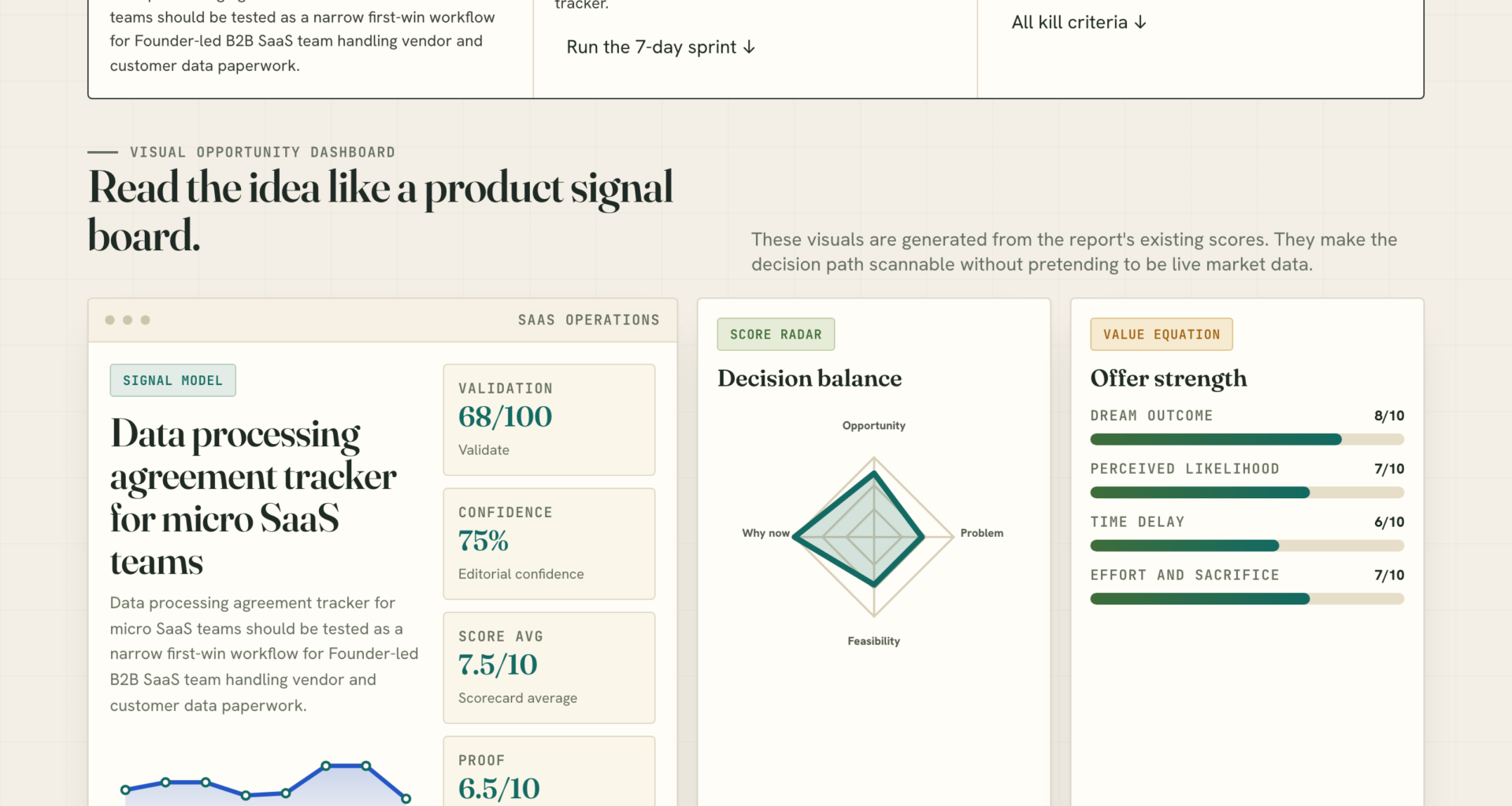

📊 Full opportunity report: Data processing agreement tracker for micro SaaS teams on IdeaNavigator AI — validation score, market gap, and execution plan.

Get business pricing on tech for your team
- Business-only prices and quantity discounts
- Tax-exempt purchasing
- Multiple users, one account, clear invoices
TL;DR

A startup is testing a data processing agreement (DPA) tracker designed for small SaaS teams handling privacy and vendor documentation. This tool aims to simplify compliance workflows and reduce repetitive questions during vendor reviews.
A new data processing agreement (DPA) tracker tailored for founder-led micro SaaS teams is entering a pilot testing phase to streamline the management of vendor and customer data paperwork. This development addresses a significant gap for small SaaS companies that handle privacy agreements but lack dedicated tools, potentially improving compliance efficiency and reducing duplicated efforts.
The tracker is designed specifically for small SaaS teams, focusing on core elements such as customer, vendor, and subprocessor information, renewal dates, clause statuses, and source document links. The initial validation involves reviewing three SaaS teams’ privacy and vendor folders manually to measure how many repeated questions can be eliminated through the tracker, according to sources from IdeaNavigator AI.
The concept emerged because small SaaS companies are increasingly facing privacy and vendor review expectations earlier in their sales processes. Currently, these teams often juggle multiple spreadsheets and documents without a centralized system, leading to inefficiencies and potential compliance gaps. The tracker aims to serve as a lightweight, easy-to-adopt operating system that helps teams keep track of their agreements and related documentation in one place.
Revenue models for the tool include a subscription service targeted at founder-led SaaS teams selling into other businesses, with a focus on simplicity and affordability. The product’s success hinges on its ability to reduce repetitive questions and manual review efforts, thereby saving time and minimizing errors during vendor and customer assessments.
Potential Impact on Small SaaS Compliance Workflows
This tracker could significantly reduce the administrative burden for small SaaS teams managing privacy and vendor agreements, enabling faster onboarding and ongoing compliance. By providing a centralized platform, it may also improve data accuracy and facilitate easier updates, which are critical as privacy regulations evolve. If successful, this approach could set a new standard for lightweight compliance tools tailored to the needs of micro SaaS companies, impacting how they handle data agreements in early sales stages.
Products Worth Considering

Anker SOLIX S2000 Portable Power Station, 2,010Wh, 1,500W

LG UltraGear 27-inch QHD OLED Gaming Monitor, 240Hz, 0.03ms, G-SYNC Compatible, FreeSync Premium Pro, HDR True Black 400

LG 27GR83Q-B 27-inch Ultragear QHD IPS Gaming Monitor
As an affiliate, we earn on qualifying purchases.
Growing Privacy Demands Push Smaller SaaS Companies to Seek Simpler Tools
As privacy regulations such as GDPR and CCPA become more prominent, SaaS vendors face increased scrutiny during vendor reviews and customer onboarding. Larger companies typically have dedicated legal teams and compliance systems, but smaller SaaS teams often rely on manual processes, spreadsheets, and scattered documentation. This gap has led to a demand for simplified tools that can help small teams manage their data processing agreements and related documentation efficiently. The proposed DPA tracker aims to fill this niche, addressing an emerging need among founder-led SaaS startups and small teams.
Previous efforts in this space have focused on comprehensive legal platforms or enterprise-grade solutions, which are often too complex or expensive for small teams. The new tracker is positioned as a minimal viable product (MVP) that emphasizes ease of use, quick deployment, and targeted functionality, aligning with the operational constraints of micro SaaS teams.
“Small SaaS teams are often overwhelmed by privacy documentation requirements, yet they lack simple tools to manage these processes effectively.”
— an anonymous researcher
Unconfirmed Aspects of the Tracker’s Effectiveness and Adoption
It is not yet clear how widely the tracker will be adopted by small SaaS teams or how effectively it will reduce manual effort in practice. The results of the pilot testing are still pending, and feedback from initial users has not been publicly disclosed. Additionally, questions remain about the tracker’s scalability, integration capabilities, and long-term compliance benefits.
Next Steps for Validation and Market Adoption
The tracker is currently in the pilot testing phase, with initial validation involving three SaaS teams. Following this, developers plan to gather user feedback, refine the product, and potentially expand testing to a broader user base. If successful, the team intends to launch a subscription-based service targeted at founder-led SaaS companies selling into other businesses. Future developments may include integrations with existing SaaS management tools and expanded features based on user needs.
Key Questions
How will the tracker improve compliance workflows for small SaaS teams?
The tracker centralizes and simplifies management of data processing agreements, reducing repetitive questions and manual review efforts, which streamlines compliance workflows.
Is the tracker suitable for all small SaaS teams?
It is designed primarily for founder-led teams handling vendor and customer data paperwork, especially those early in their compliance journey. Its suitability for larger or more complex teams remains untested.
When will the tracker be generally available?
The product is currently in pilot testing, with a broader release planned after validation and refinement based on user feedback, likely within the next few months.
What are the costs associated with the tracker?
Pricing details are not yet finalized, but the business model targets subscription plans for small SaaS teams, emphasizing affordability and ease of use.
Will the tracker integrate with existing SaaS tools?
Integration plans are still under consideration; initial versions focus on core functionality, with potential future integrations based on user demand.
Source: IdeaNavigator AI