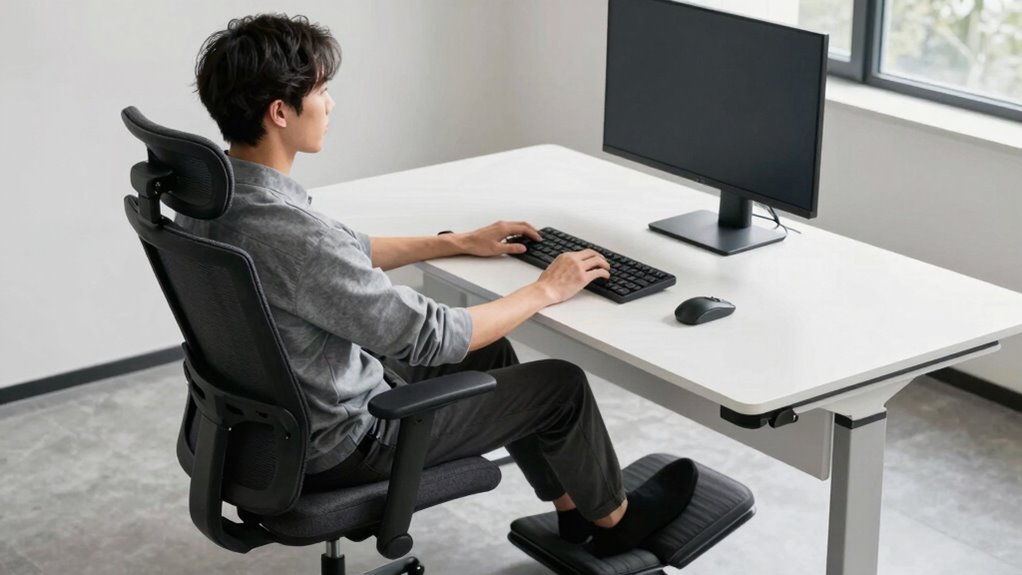

Improving your desk ergonomics helps reduce neck, shoulder, and wrist strain, preventing common musculoskeletal issues. It promotes proper body alignment, which lessens pain and boosts focus. Better setup encourages you to take regular breaks and stretch, supporting long-term health and comfort. By becoming more aware of your posture, you can prevent injuries and stay productive. Keep exploring to discover even more ways ergonomic adjustments can enhance your well-being and work performance.

Get business pricing on tech for your team
- Business-only prices and quantity discounts
- Tax-exempt purchasing
- Multiple users, one account, clear invoices
Key Takeaways
- Proper ergonomics reduce musculoskeletal strain, preventing pain and long-term injuries for AI workers.
- Adjustable setups promote correct posture, decreasing the risk of neck, shoulder, and wrist discomfort.
- Ergonomic accessories enhance focus and productivity by minimizing discomfort and distractions.
- Consistent ergonomic practices support overall health, reducing fatigue and the need for frequent breaks.
- Awareness of body signals encourages healthier habits, sustaining ergonomic benefits over time.
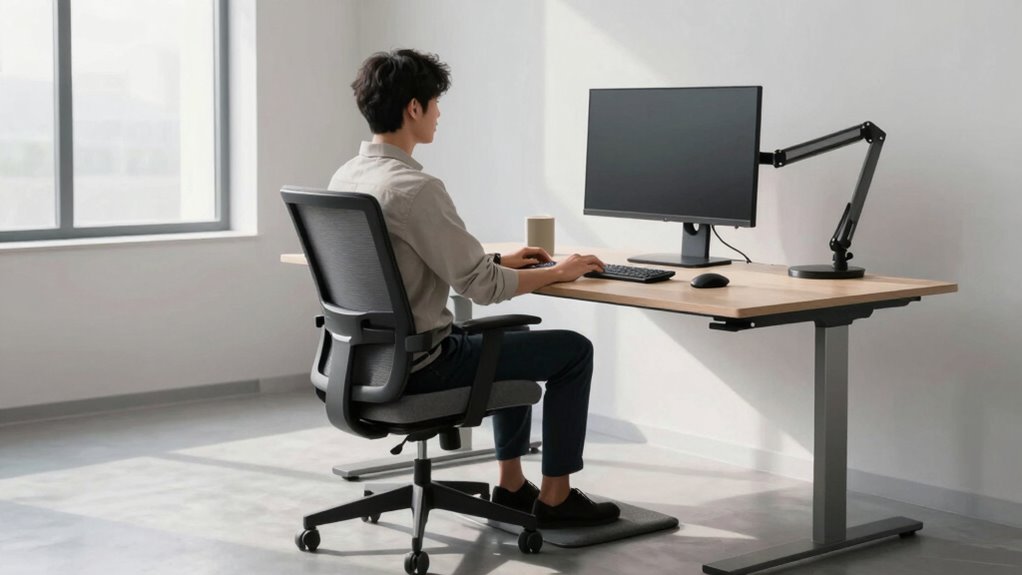
As an AI worker spending long hours at your desk, maintaining good ergonomics isn’t just about comfort—it’s indispensable for your health and productivity. When you focus on ergonomic accessories, you’re taking proactive steps to support your body during extended periods of work. Items like adjustable chairs, keyboard stands, and monitor risers aren’t just luxuries—they’re investments in your well-being. These accessories help align your body properly, reducing strain on your neck, shoulders, and wrists. Proper alignment means less fatigue and discomfort at the end of the day, allowing you to stay focused and efficient.
Posture correction plays a key role in preventing chronic pain and musculoskeletal issues. When your posture is poor, you may unconsciously slouch or crane your neck forward, putting unnecessary pressure on your spine. Over time, this can lead to persistent pain, headaches, and decreased mobility. Incorporating ergonomic accessories into your workspace encourages better posture naturally. For example, an ergonomic chair with lumbar support promotes a neutral spine position, while an adjustable monitor ensures your screen is at eye level. This alignment minimizes the tendency to lean forward or hunch over your desk, which are common posture mistakes among AI workers. Additionally, proper workspace setup is essential for supporting healthy habits and preventing discomfort. Creating an environment that prioritizes ergonomic principles can further reinforce these healthy habits and reduce risk factors. Practicing body awareness helps you identify early signs of discomfort and make necessary adjustments before problems develop. Incorporating ergonomic concepts into your routine can help sustain these improvements over time.
Beyond immediate comfort, good desk ergonomics contribute to long-term health benefits. You’re less likely to develop repetitive strain injuries such as carpal tunnel syndrome or tendinitis when your wrists and hands are properly supported with ergonomic keyboards and mouse pads. These accessories distribute pressure evenly, reducing the risk of nerve compression. Additionally, ergonomic setups can boost your productivity by reducing discomfort and the need for frequent breaks to stretch or adjust your posture. When you’re not distracted by pain or fatigue, you can focus more effectively on your tasks.
Investing in your workspace ergonomics also encourages healthy habits. Setting up your desk correctly reminds you to take regular breaks, stretch, and move around—behaviors that are crucial for circulation and mental clarity. Over time, these small adjustments can lead to a significant improvement in your overall well-being. Remember, good ergonomics isn’t a one-time fix but an ongoing commitment to creating a workspace that supports your health. By integrating ergonomic accessories, prioritizing posture correction, and maintaining awareness of your body’s signals, you set yourself up for sustained productivity and reduced health risks. Your body will thank you for the effort, and your work will benefit from the comfort and focus that come with a properly aligned workspace.
ergonomic adjustable office chair with lumbar support
As an affiliate, we earn on qualifying purchases.
As an affiliate, we earn on qualifying purchases.
Frequently Asked Questions
How Often Should I Take Breaks During Work?
You should take a break every 30 to 60 minutes during work. During these breaks, incorporate stretching routines to reduce muscle tension and improve circulation. Use this time for posture correction to prevent strain and discomfort. Moving around regularly helps maintain your focus and energy, while stretching and adjusting your posture can prevent long-term health issues. Consistently taking short breaks makes a significant difference in your overall comfort and productivity.
What Are the Signs of Poor Ergonomic Setup?
You might notice poor ergonomic setup through signs like persistent neck, back, or shoulder pain, eye strain, or frequent headaches. It can also cause discomfort in your wrists or hands. To fix this, focus on posture correction and avoid ergonomic myths like “one size fits all” solutions. Properly adjusting your chair, monitor height, and keyboard placement helps prevent these issues and keeps you comfortable and productive.
Can Ergonomic Chairs Improve Mental Focus?
Yes, ergonomic chairs can boost your mental focus like a shot of espresso. When you prioritize posture correction and adopt an ergonomic mindset, you reduce discomfort and physical stress, clearing your mental fog. Better support keeps you alert and engaged, making it easier to concentrate on your tasks. By investing in an ergonomic chair, you’re not just caring for your body but also sharpening your mind’s edge for peak productivity.
Are Ergonomic Accessories Worth the Investment?
Yes, ergonomic accessories are worth the investment because they directly contribute to productivity enhancement. By providing better support, reducing discomfort, and minimizing strain, these tools help you stay focused and work more efficiently. When you use ergonomic accessories like adjustable keyboard stands or supportive wrist rests, you create a healthier workspace. This leads to fewer distractions caused by discomfort, enabling you to perform at your best during long work sessions.
How Do I Adjust My Desk for Optimal Comfort?
As you sit at your desk, you notice your shoulders relaxing and your back feeling supported—this is where proper adjustment makes a difference. To optimize comfort, start by adjusting your desk height so your elbows are at a 90-degree angle, promoting good posture alignment. Make sure your monitor is at eye level, and your feet rest flat on the floor. Small tweaks can considerably improve your comfort and reduce strain.
monitor riser for proper eye level
As an affiliate, we earn on qualifying purchases.
As an affiliate, we earn on qualifying purchases.
Conclusion
Improving your desk ergonomics isn’t just about comfort; it boosts your productivity and reduces health risks. You might think it’s a hassle or expensive, but small adjustments—like proper chair height or screen placement—make a big difference. Don’t wait until discomfort turns into pain; investing in good ergonomics now can save you time, money, and unnecessary suffering later. Prioritize your health today, and you’ll thank yourself tomorrow.
ergonomic keyboard and mouse pad set
As an affiliate, we earn on qualifying purchases.
As an affiliate, we earn on qualifying purchases.
desk height adjustable standing desk
As an affiliate, we earn on qualifying purchases.
As an affiliate, we earn on qualifying purchases.
Fall Picks
fall essentials
As an affiliate, we earn on qualifying purchases.